Robinhood Launches $200M IPO Plan With High Fees and Big Startup Bets


Robinhood Announces $200M IPO: Fees, Risks and YC Startup Investments
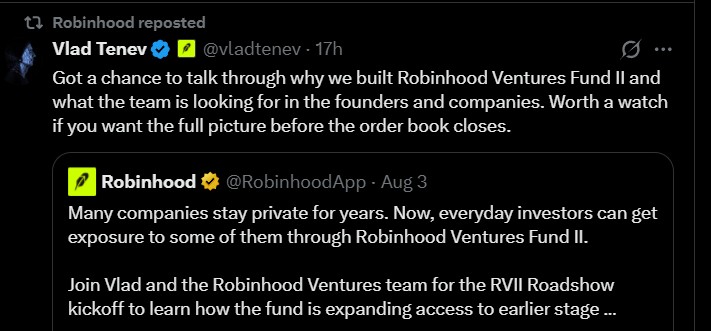
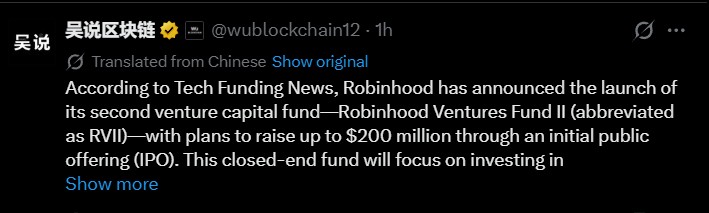
Robinhood is opening the door to early-stage startup investing for everyday traders. The company has filed to raise up to $200 million through an initial public offering for Robinhood Ventures Fund II, known as RVII.
Unlike its first venture fund, which leaned on established late-stage names, RVII is aimed squarely at seed and early-stage companies tied to Y Combinator.
The launch signals Robinhood ecosystem's growing appetite for bringing private-market access to retail investors — but it comes with a steeper fee structure and considerably more risk.
Robinhood Announces $200M IPO for Ventures Fund II
Robinhood Ventures Fund II is the trading platform's second closed-end venture capital vehicle, and it's structured to give retail investors a stake in startups long before they ever reach a public listing.
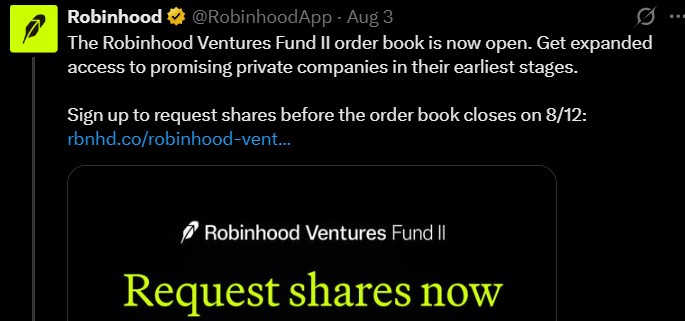
The fund is seeking to raise up to $200 million by offering 7.6 million shares priced at $25 each, with Robinhood itself selling an additional 400,000 shares.
It is expected to begin trading on the New York Stock Exchange under the ticker symbol RVII, with listing targeted for August 13, pending regulatory approval. The share request window is set to close on August 12.
This launch matters because it marks a distinct shift in Robinhood's venture strategy. Where its first fund offered exposure to household names nearing maturity, it pushes further down the risk curve into unproven, seed-stage territory — a bet that retail appetite for early startup access outweighs the added volatility.
What Is Robinhood Ventures Fund II (RVII)?
RVII is a closed-end fund, meaning it issues a fixed number of shares that trade on an exchange rather than being continuously created or redeemed like a typical mutual fund.
Its purpose is to give ordinary investors a way to participate in private startup growth that has traditionally been reserved for venture capital firms and accredited investors.
The fund's mandate centers on seed-stage and early-stage startups connected to the Y Combinator ecosystem — either current or former YC participants, or companies founded by YC alumni. At launch, RVII holds an initial portfolio spanning 80 private companies.
Sarah Pinto, head of Robinhood Ventures, framed the fund as a way to let retail investors participate in a company's early growth journey instead of waiting until its IPO.
RVII vs Robinhood Ventures Fund I
Robinhood chain first venture fund, RVI, went public in March and raised $658.4 million, holding positions in later-stage private companies such as Databricks, Stripe, OpenAI, and SpaceX.
Despite that comparatively conservative positioning, RVI fell 16% on its opening day before recovering about 30%, underscoring how unpredictable private-market vehicles can be even when the underlying companies are well established.
RVII takes the opposite approach, trading brand-name late-stage holdings for a diversified basket of 80 early-stage YC-linked startups. It also introduces a performance fee that RVI never charged.
| Feature | Fund I (RVI) | Fund II (RVII) |
| Funds Size | $658.4 million | Up to $200 million |
| Investment Stage | Late-stage private firms | Seed & early-stage startups |
| Portfolio | Databricks, Stripe, OpenAI, SpaceX | 80 YC-backed startups |
| Performance Fee | None | 20% realized gains |
| Management Fee | 2% | 2% |
| Risk Level | Lower | Higher |
| IPO Year | 2026 | 2026 |
Why Robinhood Is Betting on Y Combinator Startups
Y Combinator is one of the most prolific startup accelerators in the world, having backed more than 5,000 companies with a combined valuation of roughly $1.3 trillion since its founding in 2005.
That portfolio includes more than 100 unicorns, along with fast movers like AI safety startup Atla and insurance platform Corgi, which reached unicorn status just four months after its Series A.
Rich Aberman, RVII's portfolio manager and a former YC founder and visiting partner, described the fund's broader ambition: as Robinhood Ventures scales, the goal is for retail participation to become standard on seed and Series A cap tables.
The bet reflects Robinhood's larger strategy of moving retail investors further upstream — away from waiting for a company's public debut and toward participating while a startup is still finding its footing.
RVII Fees, Risks, and Investor Considerations
It carries a traditional hedge-fund-style fee structure: a 2% annual management fee plus a 20% incentive fee on realized gains. Combined, the estimated annual expense ratio comes to roughly 4.18% — far above what investors typically pay for a retail ETF.
There are additional risks beyond cost. It offers no shareholder redemption rights, meaning investors can't simply cash out their shares directly from the fund; they must rely on secondary market trading. Robinhood itself has labeled the fund's holdings "speculative," carrying substantial risk of loss.
Seed-stage companies, by nature, have far higher failure rates than established private firms, making RVII a fundamentally riskier product than its predecessor.
Timeline of Robinhood Ventures Expansion
| Date | Event |
| March 2026 | Robinhood Ventures IPO launched |
| August 5, 2026 | Robinhood files for IPO |
| August 12, 2026 | Share request window closes |
| August 13, 2026* | Expected NYSE listing of RVII (subject to approval) |
| After Listing | Investments continue across 80 YC startups |
What RVII Means for Retail Investors and Startup Investing
Companies today are staying private far longer than they used to — the median has stretched to about 14 years, up from roughly five in 1999. That shift means retail investors who wait for an IPO to gain exposure often miss the bulk of a company's growth. Robinhood crypto news is positioning RVII as a way to close that gap.
For investors, that creates a genuine opportunity to access startups earlier, but it also means committing to higher volatility and a longer investment horizon with no guaranteed liquidity.
Understanding venture capital risk — including the real possibility that many portfolio companies fail — is essential before participating.
The IPO carries institutional weight, with Goldman Sachs serving as lead bookrunner and Citigroup, J.P. Morgan, UBS, and Wells Fargo acting as joint bookrunners.
Conclusion
Robinhood Token clearest move yet toward democratizing access to venture-stage investing, giving retail participants a seat at the table for seed and early-stage startups tied to Y Combinator.
The tradeoff is real: higher fees, higher risk, and no redemption rights compared to more conventional investment vehicles.
How the market receives it after its expected August 13 listing will offer an early signal of whether retail investors are willing to pay hedge-fund-style economics for a shot at the next generation of startup winners.
Disclaimer: This article is for informational purposes only and does not constitute financial or investment advice. Investing in venture capital funds, including closed-end funds like RVII, involves substantial risk, including the potential loss of principal. Always conduct your own research or consult a licensed financial advisor before making investment decisions.