Spacecoin and WLFI Defi-Satellite Deal Brings Crypto to Space

How the Spacecoin and WLFI Defi-Satellite Deal Works Globally
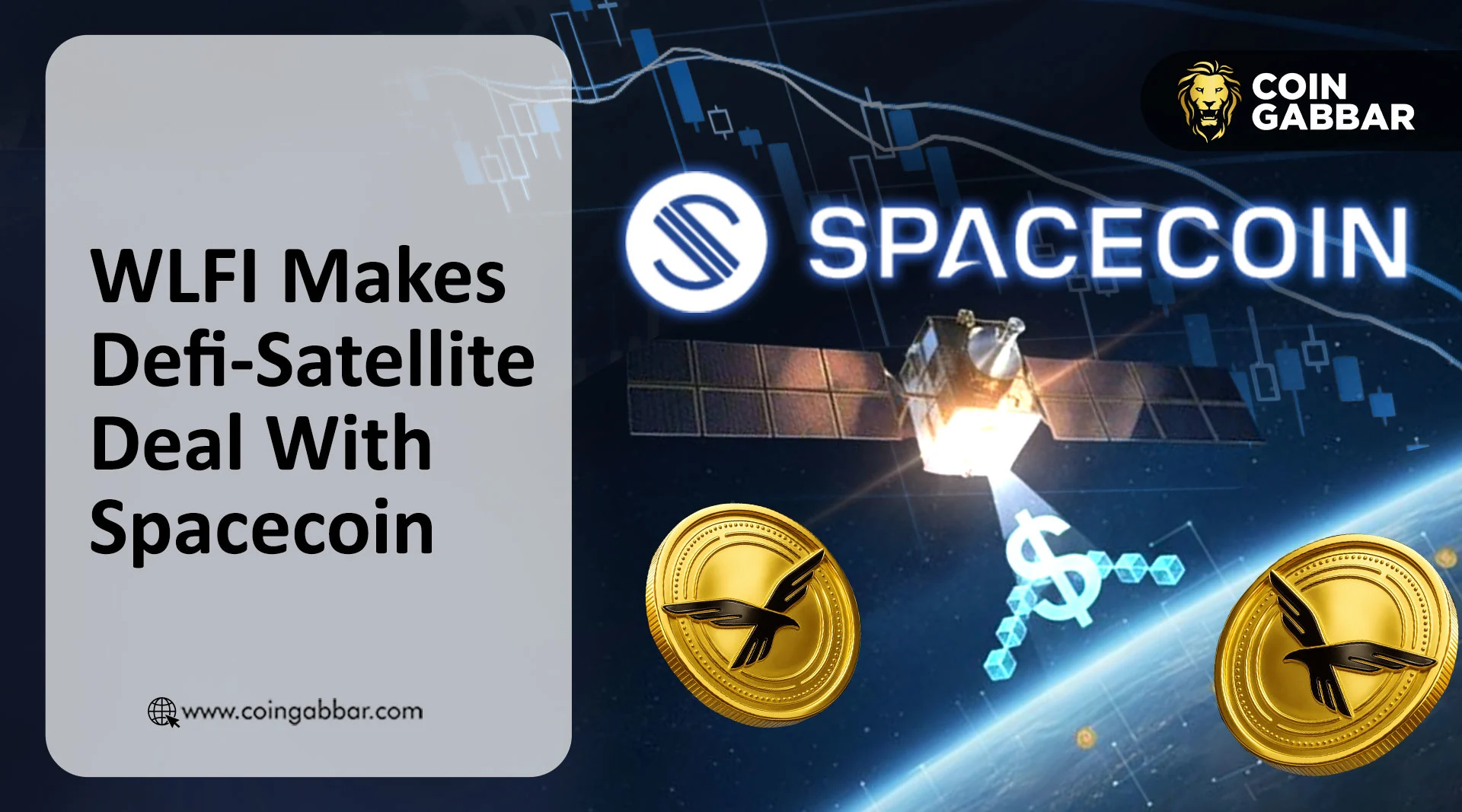
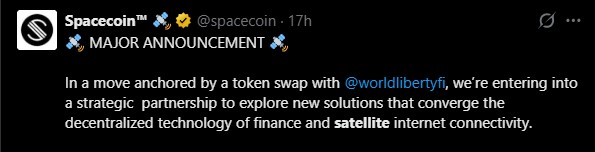
The Spacecoin and WLFI DeFi-Satellite deal marks a major step in merging decentralized finance with satellite internet technology. World Liberty Finance (WLFI), a DeFi platform backed by the Trump family, has announced a strategic partnership and token swap with Spacecoin, a blockchain-powered connectivity project.
Source: Official Announcement
This collaboration aims to bring DeFi settlements directly into satellite networks, allowing crypto payments and stablecoin transfers even in areas without traditional internet access. The move highlights how cryptocurrency use in satellite systems is evolving from theory into real-world applications.
How the Space-Coin and WLFI DeFi-Satellite Deal Works
Spacecoin operates as a decentralized physical infrastructure network (DePIN). It uses small nanosatellites in LEO (low-earth orbit), which reduces latency and improves coverage compared to traditional satellite systems.

Source: Deal’s Information
Under the Spacecoin WLFI Deal, WLFI’s decentralized payment infrastructure will integrate with Spacecoin’s low-Earth orbit (LEO) satellite network. This allows financial transactions to settle over satellite links instead of relying on round-based interest.
Blockchain technology uses Spacecoin tokens to keep everything running smoothly on the network like payment making, governance decisions support, and day-to-day management of network’s operations.
How This Involvement of Crypto In Space Projects Will Benefit
The DeFi-Satellite model targets regions with weak or no banking and internet infrastructure. Spacecoin estimates that nearly 2.6 to 3 billion people remain underserved globally. Satellite-based crypto access could provide basic financial tools where banks and mobile networks fail.
The combination of crypto services and Spacecoins' satellite based decentralized connectivity, users can send payments, store data, and access DeFi tools from almost anywhere in the world.
Peer-reviewed blockchain studies cited in similar pilots suggest 20–30% latency reductions when using optimized satellite routes. This supports real-time crypto settlements, even across borders.
Blockchain Exploring Network Technologies
Other projects like Helium, DAWN, WayRu, and Chirp also use blockchain tokens to build decentralized connectivity networks. The main difference is that Spacecoin uses orbital level while these explore ground levels.
Helium (HNT): A decentralized wireless network where people install hotspots and earn tokens. The ground-based network started with IoT and is now moving into 5G.
Dawn: A community-driven broadband project that uses local nodes to provide internet access. It focuses on open, permissionless connectivity similar to Spacecoins', but without satellites.
Grass: A DePIN project that rewards users for sharing unused internet bandwidth.
However, Blockstream works in a similar way, it broadcasts the Bitcoin blockchain globally through satellite-services, enabling access without internet but offering only one-way data transmission.
Bigger Picture: Crypto Covering World Needs
There was a time when they were taken as only virtual coins which are volatile in nature, then they transformed into a store of value, reserves, hedge assets, and now used in traditional systems as a medium of exchange.
Not only regular traders, but common people, large public as well as private institutions, and even governments are approaching them.
Crypto and its technology are already in use for payments of daily commodities like clothes, bookings, restaurants, data management, networks, and reserves through continuous initiatives by different platforms.
Now as it enters into space with Spacecoin’s integration, although not directly into space’s working, it already paved its way.
So, will the development and operation of space objects also become connected to distributed networks, and will space travel services accept cryptocurrency as payment?
Whatever happens, one thing is certain: crypto is rapidly breaking barriers to work in mainstream.
Note: This article is for informational and news purposes only and does not constitute financial, investment, or trading advice.