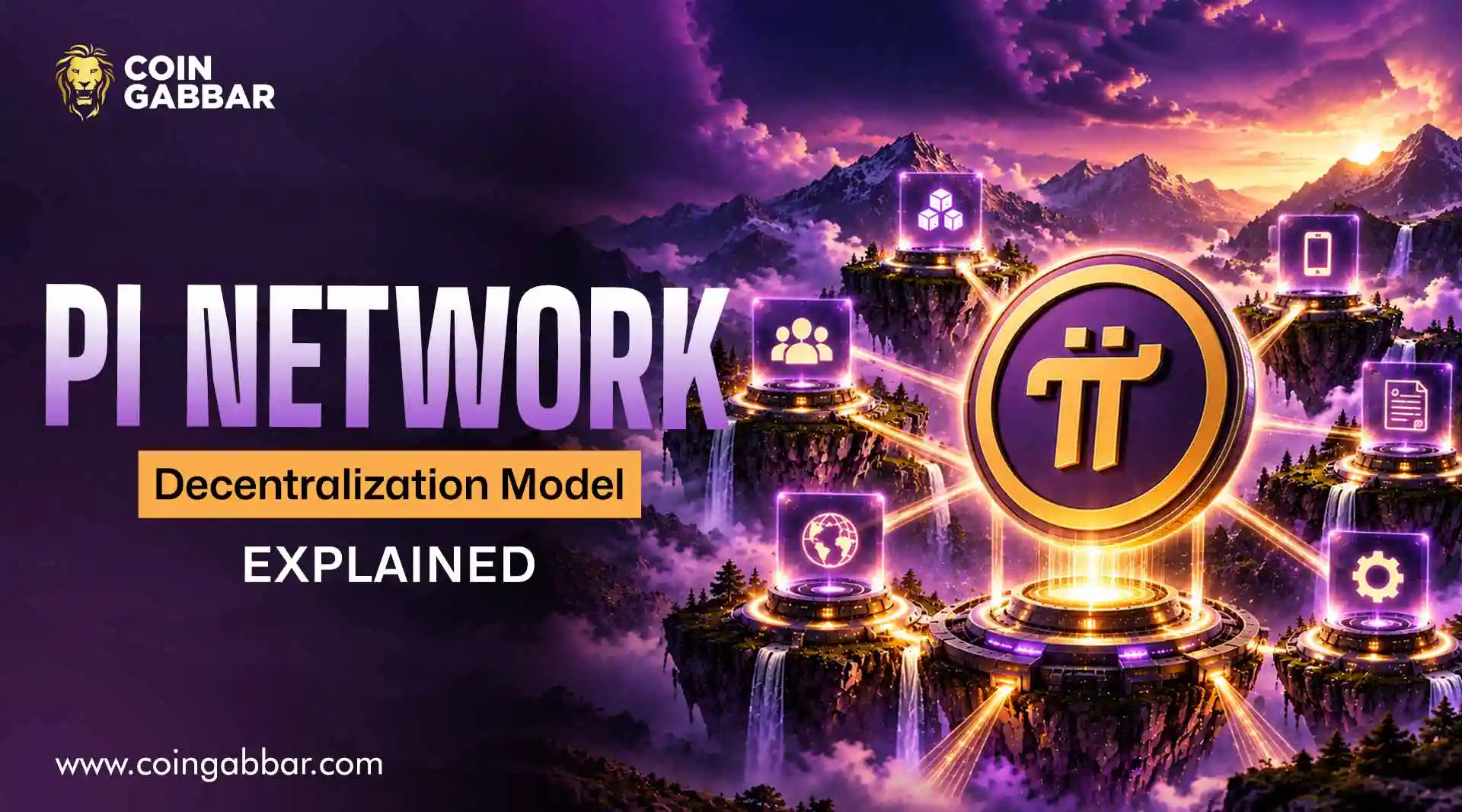
Pi Network Decentralization Explained: How the Current Model Works

What Is Pi Network Decentralization, and How Does It Work?
Ask ten people what Pi Network decentralization actually means, and most will point to the mobile mining app. That's only part of the picture. The real question is who, or what, actually keeps the ledger running once a transaction is submitted, and the answer isn't a single company sitting behind a server.
Pi's own whitepaper frames this directly: ordinary phone users, not industrial mining rigs, do the work of securing the chain. Nicolas Kokkalis and Chengdiao Fan, two Stanford researchers, put that idea on paper back in 2018, and the document went public on March 14, 2019, the same day the app first launched.
The app itself is still listed through official channels, including the iOS App Store, which is worth checking before installing anything claiming to be Pi Network from elsewhere.
How Does the Current Pi Network Model Support Decentralization?
Pi doesn't use proof-of-work. It runs a modified version of the Stellar Consensus Protocol, which relies on trusted connections between participants rather than raw computing power competing to solve a puzzle.
That choice is why mining can happen from a phone screen instead of a warehouse full of hardware.
It's a genuinely different approach from Bitcoin-style chains, one that shapes how the Pi Network model is expected to hold up over time, though it brings its own set of open questions, which come up later in this piece.
What Role Do Pi Network Nodes Play in Network Control?
Nodes are really the technical backbone of the whole thing. These are the people running Pi's node software on their desktop or laptop, and they're the ones actually validating transactions and proposing new blocks for the chain to add.
Apart from nodes, there are three other types of participants that make up the network:
-
Pioneers: app users who log in every day just to keep their mining streak going
-
Contributors: people who vouch for others they personally trust, helping strengthen the network's trust graph
-
Ambassadors: users who help the network grow by bringing in new people through referrals
-
Nodes: the only role among the four that directly validates and confirms what actually happens on-chain
How Do Validators Help Secure the Pi Network?
Here's where it gets interesting. Node operators don't answer to a central list of approved validators. Each one picks its own set of trusted peers, called a quorum slice, and when enough of these overlapping circles agree, the network reaches consensus on a shared state.
That structure is supposed to stop any one node from dictating outcomes while skipping the energy cost of mining altogether.
What isn't publicly available, at least not in the kind of detail serious researchers would want, is exactly how many independent operators are running nodes right now or where they're located.
How Does Pi Network Reach Consensus Across Its Nodes?
Consensus plays out through rounds of voting between quorum slices. Once a large enough set of trusted groups lines up behind a transaction batch, that batch gets written to the Pi Network ledger, usually within seconds rather than minutes.
This is really the crux of the whole Pi Network decentralization argument: the system only works as intended if those quorum slices are genuinely diverse.
If too many nodes end up trusting the same small circle, the math still runs, but the independence behind it thins out.
How Is Network Control Distributed Across Pi Participants?
Four groups share responsibility here: Pioneers, Contributors, Ambassadors, and Nodes. No single one of them can unilaterally redirect Pi Network, at least by design.
The project frames this split as intentional, meant to keep the chain from leaning on any one operator or company.
Whether that balance holds steady as the user base keeps growing is something worth watching rather than assuming a question this recent Pi Network price coverage keeps circling back to as new developments unfold.
Ask any Pioneer how Pi Network actually runs day to day, and you'll get four different answers depending on who's talking because the project genuinely splits authority four ways, and that's not an accident. It's baked into how Pi Network was built from day one.
What Role Does the Pi Community Play in Network Development?
Pioneers are, by a huge margin, the largest group in the whole ecosystem, and it's easy to underestimate just how much their daily check-ins actually do.
Every single tap of that button feeds quietly into the trust graph that the network's entire consensus system depends on. It doesn't look like much from the user's side, but that simple daily Pi mobile mining action is genuinely what keeps things running underneath the surface.
Sitting right at the center of this whole setup is the Security Circle, a small, personal cluster of just three to five people that each user handpicks and vouches for themselves.
It sounds like a small feature, but it's actually where a lot of the network's real trust-building happens.
How Does Pi Network Governance Affect Decentralization?
Right now, most of the real decision-making still runs through the Pi Core Team. They set technical direction and manage each phase of the network's rollout, which honestly isn't unusual for a project this young.
Team members have described this setup as a phase rather than a permanent arrangement.
That's worth treating as a stated intention, not a locked-in roadmap, since there's no published date for when control actually shifts.
What Are the Main Limits of Pi Network Decentralization?
Look closely enough, and a handful of real gaps start showing up. For one, there's simply no detailed public data on how many nodes actually exist or how spread out they are geographically, which makes it genuinely hard for anyone outside the core team to verify these claims independently.
Then there's the KYC piece, and this is where things get a bit more nuanced. Every single Pioneer has to go through identity verification before they can fully access the network, and that entire verification process runs through a centralized system, even while the transaction layer underneath stays distributed across participants.
What Risks Could Affect Pi Network Decentralization Over Time?
If a small cluster of operators ends up anchoring a disproportionate share of trusted quorum slices, centralization risk climbs quietly in the background. A few independent analysts have flagged exactly this, tying it back to how much influence the core team still holds over network parameters.
Add in regulatory shifts, exchange listing decisions, and how the dApp ecosystem ends up developing, and the current balance could look different a year or two out. None of that is locked in either direction yet.
Readers keeping an eye on the token side alongside the technical roadmap might find a recent Pi coin price outlook worth a look for added context.
How Can Users Evaluate Pi Network Decentralization Today?
Skip the hype threads. The project's own technical documentation is a far more reliable starting point than price speculation floating around social media.
It also helps to track how the Core Team communicates updates to consensus rules and node requirements over time, rather than taking any single announcement at face value.
Stacking Pi's model up against other Federated Byzantine Agreement networks gives a useful sense of what a more mature version of this design tends to look like in practice.
Those weighing the bigger picture might also check a recent Pi Network price prediction alongside the technical details covered above, since market sentiment and network fundamentals often tell two different parts of the same story.
Conclusion:
Strip away the marketing, and Pi Network decentralization comes down to a Federated Byzantine Agreement model split across Pioneers, Contributors, Ambassadors, and Nodes. Mobile-first mining keeps the barrier to entry low, while node-level validation is what actually keeps the ledger honest.
Disclaimer:
This piece is meant purely for information; it isn't financial advice, so please don't treat it that way. Pi Network's tokenomics and its path toward full decentralization can still change quite a bit as things move forward, so it's worth doing your own research before making any decisions based on what's written here.