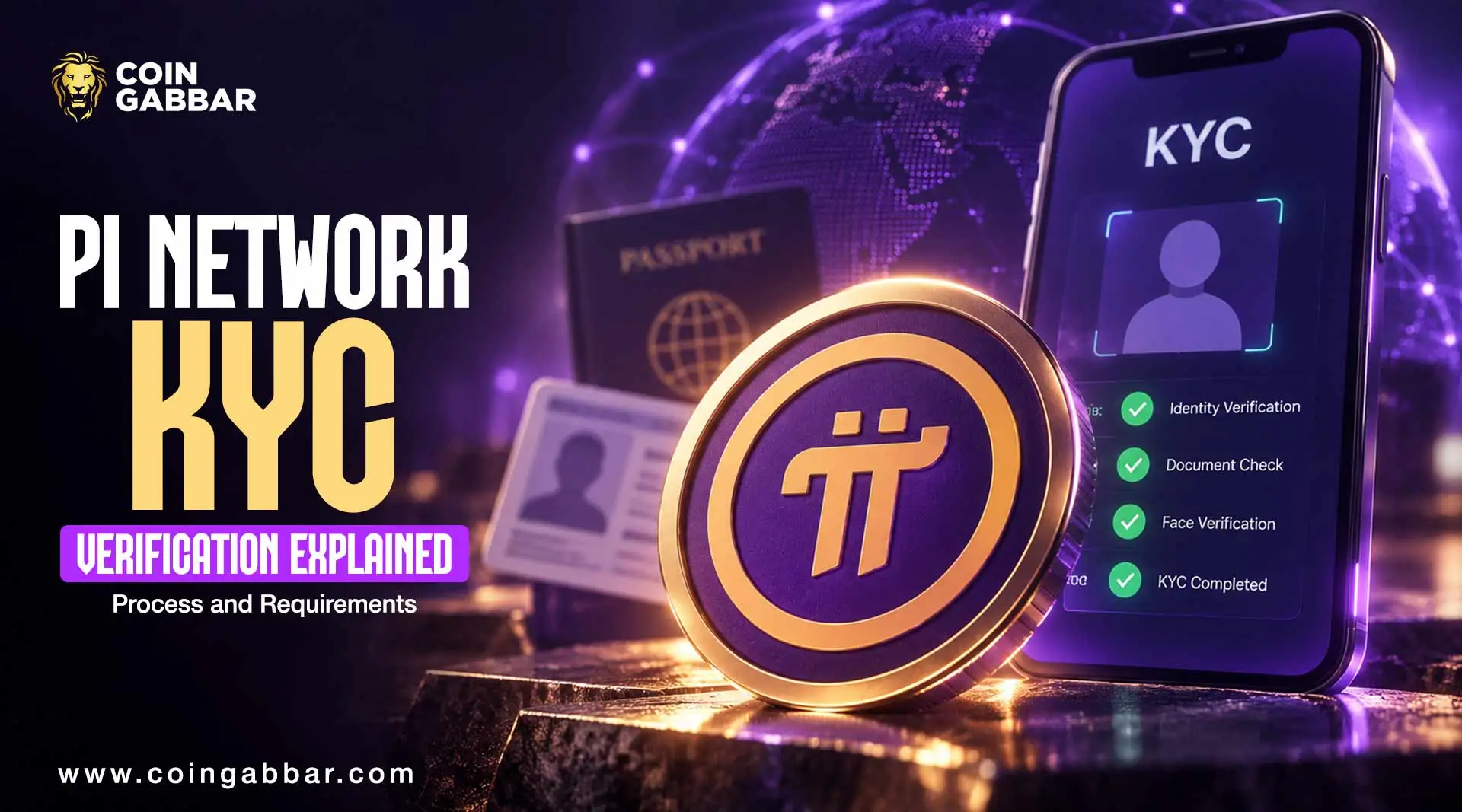
Pi Network KYC Verification Explained: Process and Requirements

How Does Pi Network KYC Work and Why Is It Important?
Your mining balance is sitting in the app, but you can't move it onto the blockchain yet. The missing piece is usually Pi Network KYC, the identity check that decides who gets through to the Mainnet.
Some Pioneers have passed it. Others are still waiting on a pending screen or a rejected ID. The project posted a fresh batch of fixes on September 17, 2026, at 21:02 UTC, and some cover hundreds of thousands of accounts.
This guide explains what the check is, how to apply step by step, what you'll need, and what the latest notes change. We've used only the project's official pages, so every figure below is project-reported.
What Is Pi Network and How Does It Work?
Pi Network is a crypto project that describes its goal as an inclusive, widely distributed digital currency and ecosystem. Its users are called Pioneers. The project says its mining mechanism is social-network based and relies on real people using its mobile app.
The native coin is Pi, often searched as Pi coin. Pioneers first collect a mobile balance in the app. To move it onto the blockchain, they must pass KYC and finish migration to the Mainnet.
Around that sit the Pi Browser, the Pi Wallet and apps built by developers. The project's 2023 explainer put its community in over 230 countries and regions. Whether those apps bring real-world adoption is a separate question.
What Is Pi Network KYC and Why Does It Exist?
KYC means Know Your Customer. It's a routine identity check that many financial services run. Pi describes its version as proof that each account belongs to one real person.
That matters because Pi mining is social. The project says a strict one-account-per-person rule stops people from hoarding coins through fake profiles. It also ties the check to anti-money laundering and anti-terrorism rules.
Only fully verified Pioneers can migrate to the Mainnet, meaning they move from the app's mobile balance to a blockchain wallet. The logic is fair. But it turns verification into the network's biggest bottleneck.
How Does the Pi Network KYC Process Work?
Here's the route from first tap to final approval.
Open the Pi Browser and go to the KYC app. Check your eligibility there. The project says the pop-up notification is only a reminder.
Submit your details and a supported ID. Name appeals need extra review, so match your account details carefully.
Automation processes your file. Software reads the documents and blurs personal data before anyone else sees it.
Human validators check the redacted pieces. They're Pioneers who already passed KYC, picked at random from the ID's country, and their work is cross-checked.
Complete liveness checks if prompted. These are short camera tests that show you're a live person.
Read your result screen. Only a full pass unlocks migration.
Finish the Mainnet Checklist. It includes confirming your Mainnet wallet, setting up 2FA (a second login step) and signing the terms for receiving tokens.
On December 5, 2025, the project said added AI cut the queue waiting for human review by 50%. It described the AI as conservative, so unsure cases still go to people.
Who Can Apply for Pi Network KYC and What Do You Need?
You apply through the KYC app inside the Pi Browser. Per the official KYC FAQs, you need the browser and your ID documents ready. Newer accounts must mine for a while first.
Here's the practical checklist:
Pi Browser with access to the KYC app
A supported government ID (accepted types vary by country)
A working camera for the selfie and liveness checks
Enough mining history, which the project puts at 30 mining sessions
An account that hasn't been flagged as fake or in violation
A small share of flagged accounts can't apply. Owners who think it's a mistake can submit their username for review.
The project's 2023 explainer called KYC free of out-of-pocket charges, with 1 Pi tied to paying validators. That's an older statement, so confirm current terms in the app.
What Do the Pi Network KYC Status Screens Mean?
After you submit, you'll see one of three screens:
Review in progress: checks are still running.
Tentative approval: accepted for now, with extra checks pending.
KYC passed: full approval, which unlocks migration.
Tentative approval doesn't allow migration. In December 2025, the project said about 3 million tentative Pioneers could self-unblock by submitting extra liveness checks. A liveness check is a short camera test that proves you're a live person.
Older FAQs said approval can arrive within 15 minutes when everything's correct. Treat that as a best case, not a promise.
How Is Fast Track KYC Different From Standard KYC?
Fast Track KYC launched on September 18, 2025. It's for users with fewer than 30 mining sessions, including people who haven't joined yet, and it runs through the Pi Wallet app.
Feature | Standard KYC | Fast Track KYC |
Who it's for | 30+ mining sessions | Under 30 sessions or non-users |
Where you apply | KYC app in Pi Browser | Pi Wallet app |
Result | Can unlock migration | Activates a Mainnet wallet only |
Enables migration | Yes, after the checklist | No |
The catch: Fast Track doesn't enable migration. The project also says its standards may be even more conservative because the process is automatic. The Fast Track KYC announcement has the full terms.
What Changed in the Latest Pi Network KYC Update?
Pi's KYC and Mainnet migration update landed on September 17, 2026. Here's the short version:
Duplicate flags: over 417,000 Pioneers can move forward after further evaluation confirmed they aren't duplicates. Other KYC checks still apply.
Fast-Track wallets: 497,000 Pioneers couldn't claim their migration balance because their wallets lacked enough Pi for the gas fee. That's a small network fee paid in Pi. A fix was promised within a week.
Liveness checks: eligibility now covers older or lower-spec phones.
Palm-print capture: a one-month trial for some Pioneers who need multiple liveness checks, rolling out gradually.
Indonesian IDs: applicants rejected over a KIA ID can resubmit with another supported ID.
The project says groups get unblocked in batches because each corner case needs its own fix. That's why KYC and migration news often arrives in waves.
We couldn't confirm the gas-fee fix has shipped. Check the app before assuming anything.
What Happened to the Grace Period Deadline?
Pi's Grace Period gave Pioneers six months to finish KYC and migration. After several extensions, the final cutoff was 8:00 UTC on March 14, 2025. Missing it means keeping only Pi mined in the rolling six months before migration, the project says.
Migrated balances may also sit under lockup timelines that control when Pi can move.
What Can You Do If Your Pi Network KYC Is Stuck?
The project says stuck cases usually trace to a specific corner case. Start with these checks, all drawn from its published guidance:
Open the KYC app and see whether it offers a resubmit option.
Complete liveness checks whenever you're prompted.
Retry claiming your Pi if an earlier attempt failed over the gas fee.
Submit your username through the project's review form if you think your account was flagged by mistake.
Trust the KYC app over pop-ups for your true status. The FAQs say the Mainnet Checklist can lag behind.
Stay safe while you wait. Use only the official Pi Browser for KYC, and never share your wallet passphrase. Anyone asking for either is a red flag.
Final Thoughts
Pi Network KYC combines automation, AI and human validators to decide who can migrate mined Pi. The latest update shows real fixes, especially for duplicate flags and Fast-Track wallets.
Timing is what's uncertain. Batches arrive unevenly, and current totals aren't public. Check your status in the KYC app, read the project's newest notes, and never share your wallet passphrase with anyone. Verification is one piece of the project's wider 2026 roadmap update.
Disclaimer
This article is for information only and isn't financial, legal or investment advice. Crypto is high risk, and outcomes are uncertain. Verify every detail on the project's official pages before you act.