Chainlink Staking Explained: LINK Security Model Guide

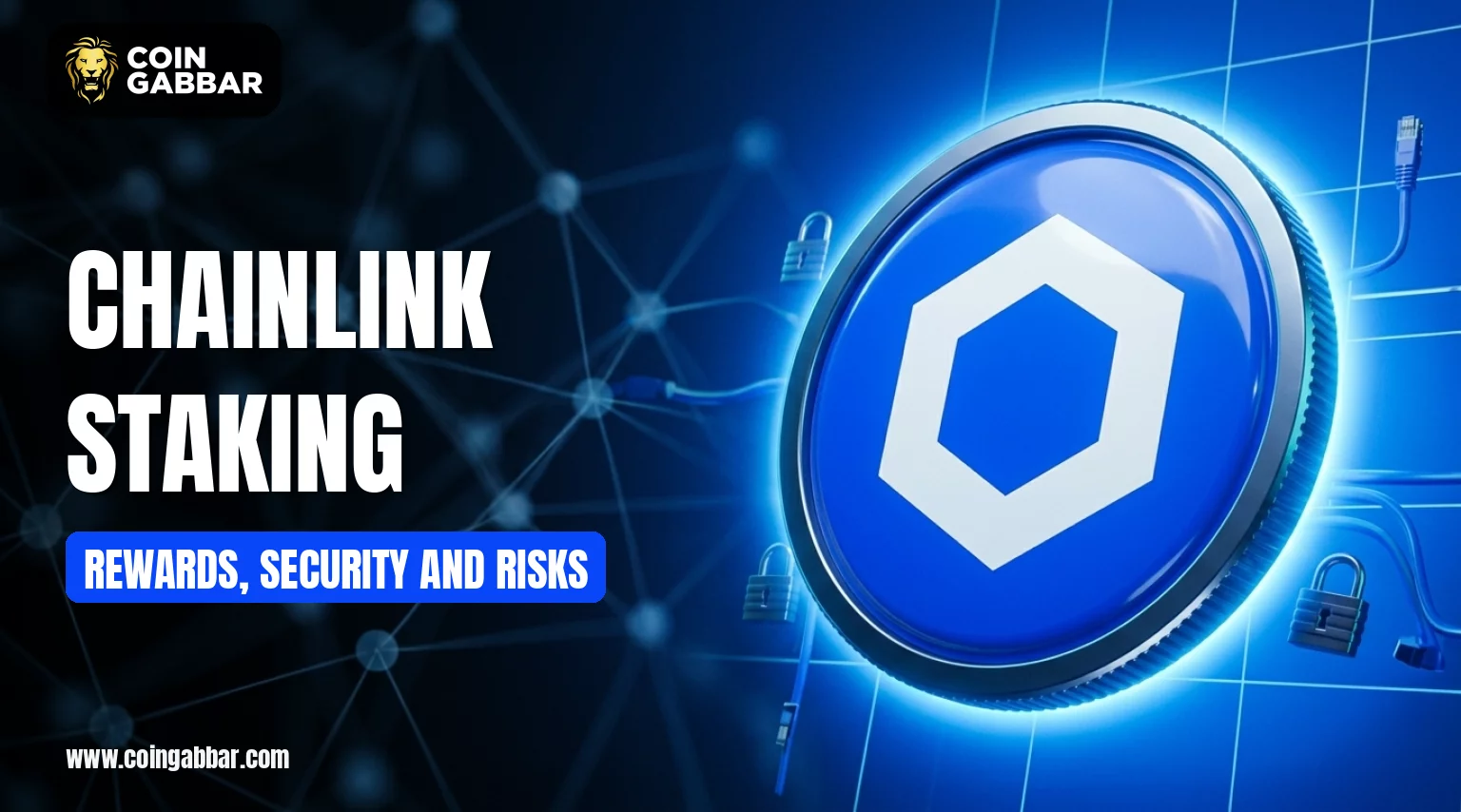
How Chainlink Staking Works and Why It Matters
Most people hear "staking" and think of yield. Chainlink Staking works differently. LINK holders lock tokens in smart contracts to back the performance of oracle services, and they earn rewards for helping keep those services honest. It's not a savings account.
That makes it a security tool first and an income stream second. The current version, v0.2, went live on Ethereum mainnet in November 2023, and the project still calls the protocol a beta.
This guide covers how the system works, the reward and un staking rules, where slashing applies, and the risks worth weighing. The details matter, because penalties and exit rules differ sharply between staker types.
What Is Chainlink Staking and How Does It Work?
An oracle is a service that feeds real-world data, like asset prices, into smart contracts. If that data is wrong or late, lending apps and other DeFi protocols can break. New to oracles? This Chainlink oracle and DeFi guide covers the basics.
Staking adds a financial consequence to bad performance. Stakers commit LINK to back specific service guarantees. Node operators who fail can lose part of their stake, while watchful community members can raise alerts and earn a reward.
It's a core piece of Chainlink Economics 2.0. The project's original roadmap lists four goals: stronger oracle security, wider participation, rewards tied to real usage, and a stake-based reputation system for node operators.
How Did Chainlink Staking Change From v0.1 to v0.2?
The first beta, v0.1, arrived in December 2022. It held 25 million LINK and focused on one job: monitoring the ETH/USD Data Feed on Ethereum through an alerting system.
The v0.2 upgrade followed in November 2023. The official v0.2 overview describes a rebuilt, modular design with an unbonding mechanism, node operator slashing and a variable reward rate.
What Are the Chainlink Staking Parameters?
These are the launch values the project published for v0.2.
Parameter | Launch value |
Total pool size | 45,000,000 LINK |
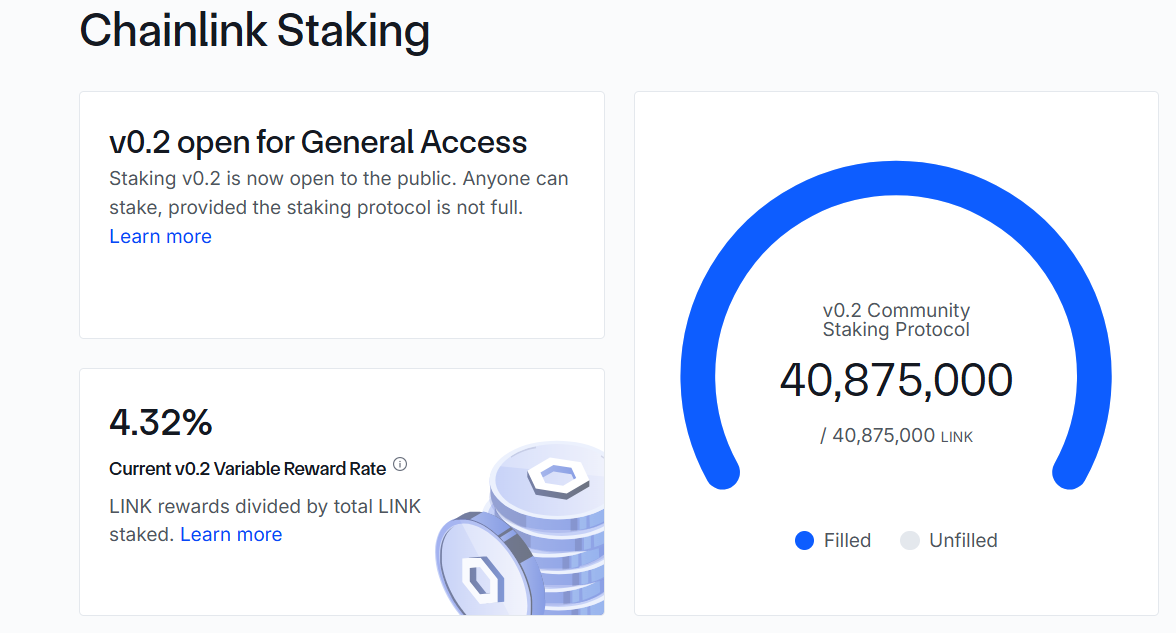
Community allotment | 40,875,000 LINK |
Node operator allotment | 4,125,000 LINK |
Community stake range | 1 to 15,000 LINK |
Node operator stake range | 1,000 to 75,000 LINK |
Base floor reward rate | 4.5% a year |
Effective community rate | 4.32% a year |
Cooldown and claim window | 28 days and 7 days |
Reward ramp-up | 90 days |
Slash per node operator | 700 LINK |
Alerter reward | 7,000 LINK |
The 4.32% is what community stakers keep after 4% of rewards go to node operators. It assumes a full pool: a fuller pool lowers the rate per staker, an emptier one raises it. So it's a floor, not a promised return.
The 45 million LINK pool is also a cap. The project says it expects the cap to grow, so check the live dashboard for today's size.
How Do Chainlink Staking Rewards Work?
Rewards build up as Attributed Rewards. Part is claimable straight away. The rest stays locked and unlocks in a straight line over a 90-day ramp-up period, tracked for each staker. Halfway through the ramp-up, half your earned rewards are claimable.
Here's the catch. Completing an unstake resets the ramp-up to zero and forfeits any locked rewards, which flow back to other stakers. Adding more LINK to the same address also restarts the 90-day clock, though locked rewards aren't lost.
You can track the current variable rate, locked rewards and claimable rewards on the official rewards dashboard.
Base rewards started as LINK-token emissions, which the project expects to fade as fee income grows. In March 2025 it launched Payment Abstraction, which converts service fees into LINK. The project expects fees from its Smart Value Recapture (SVR) services to reach stakers later, half supporting the base rate and half as an extra reward. Official pages don't show how much has arrived so far.
Payment Abstraction also powers the Chainlink Reserve, a strategic onchain pool of LINK. Recent Chainlink Reserve news covers its latest milestone.
Where Does Slashing Apply in Chainlink Staking?
Slashing means a staker loses part of their stake as a penalty. In v0.2, only node operator stakers face it. Community stakers are not at risk.
At launch, the system secures the ETH/USD Data Feed on Ethereum. Community stakers can raise an alert if more than three hours pass without a valid oracle report. Node operators get 20 minutes of priority to raise it first. A valid alert slashes each affected node operator 700-LINK and pays the alerter 7,000-LINK.
The contracts are non-custodial, so nobody else can unstake your LINK. Security-critical upgrades also pass through a timelock, which gives stakers time to exit first. The project says the code passed several independent audits and a public competitive audit.
How Do You Stake and Unstake LINK?
Before You Stake
You need LINK on Ethereum in a self-custody Web3 wallet, plus ETH for network fees. Use only the official Chainlink Staking site and bookmark it. The project warns that look-alike pages may be malicious.
The community pool can also fill up. When it does, new LINK can enter only after an existing staker completes an unstake.
When You Unstake
Starting an unstake triggers a 28-day cooldown. A seven-day claim window follows. LINK you don't withdraw in that window rolls back into the pool automatically. Rewards keep accruing during both periods.
What Does the Data Say About Chainlink Staking?
The stronger signal is transparency. The project publishes its parameters, contract addresses and slashing rules.
The main concern is scope. At launch, v0.2 secured one feed, and community stakers can't be slashed. A 700 LINK penalty is small next to the 75,000 LINK a node operator can stake, so the deterrent looks modest for now.
The biggest unknown is what comes next. The original roadmap mentions wider slashing, user-fee rewards and loss protection, but those are plans, not confirmed features. Demand for oracle security could grow as institutions build on the network, like this recent bank payments launch using CCIP and CRE.
Staking is one trust layer. Proof of Reserve is another, built to verify the reserves behind tokenized assets.
Readers should verify the live pool size, current reward rate and official site address themselves before acting.
What Are the Main Risks to Consider?
Beta status: the project says the protocol remains in beta, and rules can change.
Full pool: entry may be blocked until someone unstakes.
Variable rewards: the rate moves, and rewards are paid in LINK.
Exit delay: the 28-day cooldown rules out an instant exit.
Lost rewards: unstaking forfeits locked rewards.
Contract and phishing risk: audits reduce risk without removing it, and fake staking sites exist.
LINK's market price affects every outcome above, since rewards are paid in LINK.
Conclusion
Chainlink Staking lets LINK holders back oracle services with real value at risk, and the design rewards useful monitoring. What stands out is the clear rulebook and the non-custodial model. What remains uncertain is how fast fee-based rewards, wider slashing and larger caps arrive.
Before acting, check the live pool size, the reward rate and the official site address. Readers can also follow crypto news updates for any change to caps, rewards or slashing rules.
Disclaimer
This article is for information only and is not financial, investment or tax advice. Crypto assets are volatile, staking rules can change, and losses are possible. Do your own research and speak to a licensed advisor before making decisions.