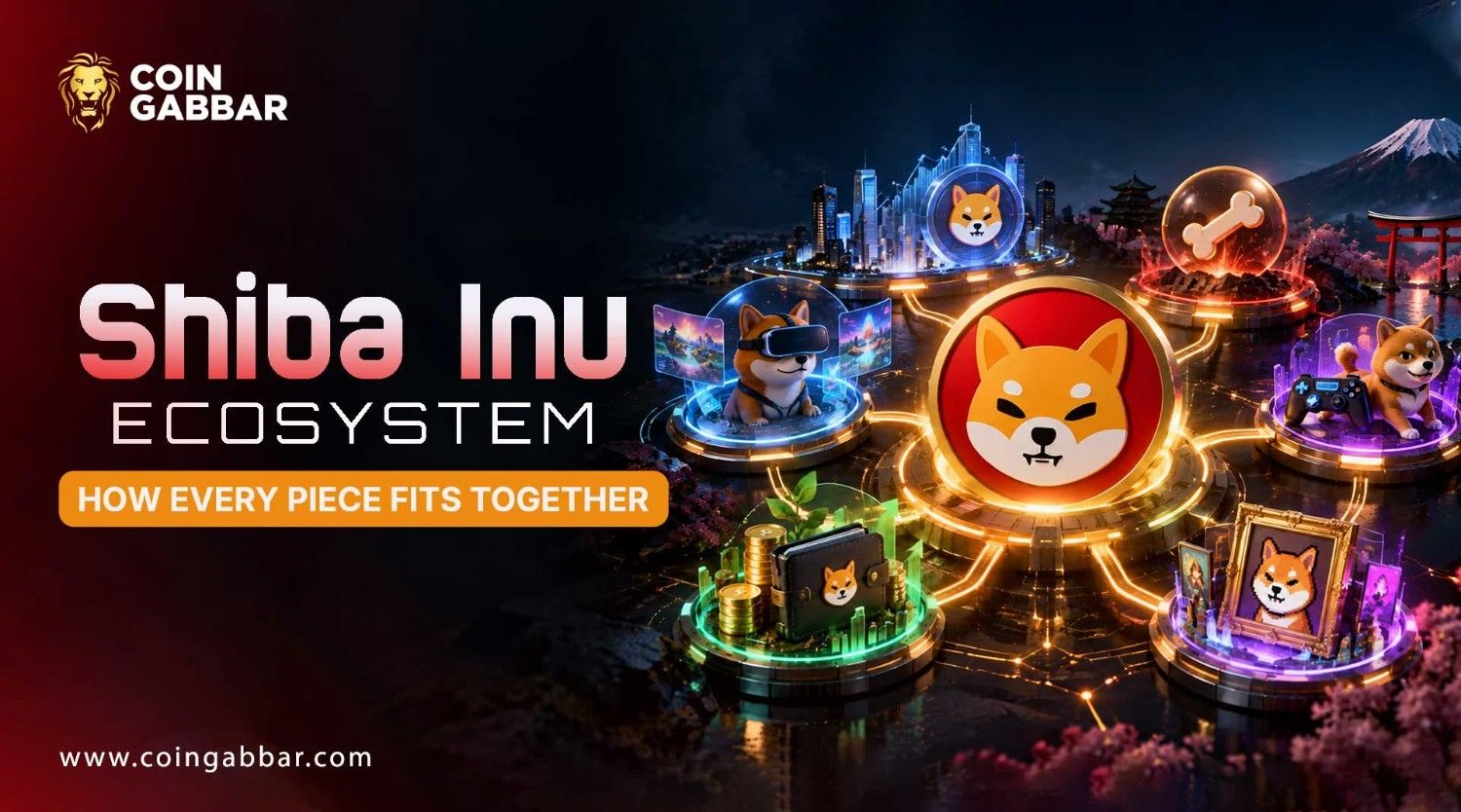
Shiba Inu Ecosystem Explained: How SHIB, BONE, and LEASH Work Together

How the Shiba Inu Ecosystem Grew From a Meme Into a Real Network
SHIBA INU is an initiative within the cryptocurrency world initiated in August 2020. It uses a token called SHIB that is built on the Ethereum platform.
Initially, it was perceived as a joke coin, but today, it has become much more. The initiative now owns an exchange platform, various coins, and even its own ecosystem.
It is attractive due to low costs of transactions, open access for everyone, and huge communities. Those readers who track news about Shiba Inu often come across information about such tools.
The ecosystem of Shiba Inu works on the basis of smart contracts, which are small decentralized programs.
SHIB (Shiba Inu)
SHIB is a meme coin that launched in August 2020 on the Ethereum blockchain. An anonymous founder known as "Ryoshi" created it as a fun, community-led project inspired by Dogecoin.
It started with a very large supply of 1 quadrillion tokens, so each coin trades at a tiny price. In 2021, a big share of the supply was sent to Ethereum co-founder Vitalik Buterin, who burned most of it and donated the rest to COVID relief in India.
Today, SHIB has a large community called the "SHIB Army" and a wider ecosystem built around it.
BONE (Bone ShibaSwap)
BONE is the governance token of the Shiba Inu ecosystem. Holders can vote on community proposals through the Doggy DAO, which gives them a say in the project's direction.
BONE is also paid out as a reward to people who provide liquidity or stake tokens on ShibaSwap, the ecosystem's decentralized exchange.
It is also used as the gas token on Shibarium, the ecosystem's layer-2 network. Its total supply is much smaller than SHIB's, at around 250 million tokens.
LEASH (Doge Killer)
LEASH began in 2020 as a rebase token, which means its supply changed automatically to follow the price of Dogecoin. The name "Doge Killer" came from that original idea.
Later, the team removed the rebase feature and turned it into a fixed-supply token. Its total supply is very small, about 107,000 tokens, which makes each LEASH coin far more expensive than SHIB or BONE.
It is now mainly used for rewards, staking, and other benefits within the ShibaSwap ecosystem.
How SHIB, BONE, and LEASH Work Together
Each token has its own job. SHIB is the main coin. People use it to trade, pay, and earn rewards. BONE is the voting token.
Holders use it to vote on community ideas through the Doggy DAO. BONE also pays network fees on Shibarium. LEASH began as a token whose supply moved with the Dogecoin price.
Later, the team made it a fixed token with a very small supply, so it's rare. Together, these three tokens cover daily use, voting, and scarcity.
How Shibarium Improves the Shiba Inu Ecosystem
Shibarium is the project's own Layer 2 network. It went live in August 2023. It moves transactions faster than Ethereum, and its fees are much lower.
This makes small payments and app use far easier. It also helps builders. Developers can create games, wallets, and finance tools without paying high Ethereum fees.
The network supports token burns too, since a share of each fee leaves the supply for good. In simple terms, Shibarium gives SHIB more real use.
How the Shiba Inu Ecosystem Grew From a Meme Into a Real Network
In 2020, SHIB was seen as a joke coin inspired by Dogecoin. Growth came in stages.
In 2021, the team launched ShibaSwap, an exchange where users can trade, stake, and earn rewards. More tokens and community tools followed.
Later, a burn portal let the community remove tokens from supply. In 2023, Shibarium gave the project a network of its own. Each step added a new piece, and together they turned one coin into a connected system.
How It Grew Beyond a Meme Coin
Many meme coins depend only on hype. The Shiba Inu team chose a different path. It built tools people can use over time, such as ShibaSwap, Shibarium, and a voting system.
The team also worked on a metaverse project called SHIB: The Metaverse released a mobile game named Shiba Eternity. Because of these products, the project now gives users places to play, vote, earn, and build.
Is It More Than Just SHIB?
It is. SHIB is the most popular token, but it’s not all there is to it. BONE is responsible for voting and network fees. LEASH is a rare token for staking. TREAT is a reward token that is used at ShibaSwap.
Shibarium, ShibaSwap, and the burn portal add new layers. The project works like a full toolbox, not a single coin. Each part supports the others, and that makes the whole system stronger.
The Layer 2 Behind the Shiba Inu Ecosystem
A Layer 2 is a network built on top of another blockchain. Shibarium sits on top of Ethereum.
It executes transactions by itself, which reduces costs and the time spent waiting. Users transfer the tokens from one network to the other with the help of a bridge.
Validators check each of the transactions while taking care of Shibarium as well.
In its design, more users can connect to the network simultaneously without overwhelming Ethereum, a point often discussed in Shiba Inu news, while keeping the costs low for both gaming and smaller transactions. Readers can find updates about this network in the latest Shiba Inu news.
Token Utility
Utility means what a token can actually do. SHIB is used for trading, payments, staking, and rewards. BONE pays gas fees on Shibarium and gives voting rights. LEASH can be staked on ShibaSwap. TREAT rewards users who stake or add liquidity.
Many readers check the Shiba Inu price each day. Nevertheless, the utility illustrates the actual use of the network.
With the increased number of apps, games, and payments that are done via this network, the tokens will have even more actual meaning.
Tokenomics Step by Step
Tokenomics describes how token issuance is arranged, as well as how it carries the token supply over time.
Step 1: SHIB launched with one quadrillion tokens.
Step 2: Half of the supply went to Vitalik Buterin. He gave a large part to charity and burned about 40 percent of the total supply.
Step 3: The rest went into liquidity pools, so people could trade.
Step 4: Ongoing burns keep lowering the supply, including burns from Shibarium fees.
Step 5: BONE and LEASH each have their own smaller supply.
Supply changes are often linked to the Shiba Inu price. Still, demand, market mood, and wider crypto trends also matter.
Roadmap Step by Step
The roadmap shows where the project wants to go, and Shiba Inu news today often reflects those goals. Plans can change, so this is only an outline.
Step 1: Grow Shibarium with more apps, wallets, and users.
Step 2: Raise token burns through more network activity.
Step 3: Expand identity tools and the metaverse project.
Step 4: Launch more games and real-world uses.
Step 5: Keep community voting active through BONE.
Why Community Power Matters in the Shiba Inu Ecosystem
The Shiba Inu ecosystem grew mostly because of its community, known as the SHIB Army.
Members spread the word, vote with BONE, test new tools, and take part in burns. This support gave the project attention when it had little else.
A strong community also keeps the team honest. People ask questions and push for better tools. Still, a large community doesn't remove risk. Crypto prices can move fast, so readers should do their own research before any money decision.
Conclusion
Shibarium gives the Shiba Inu ecosystem faster transactions, lower fees, and more real use.
Along with SHIB, BONE, LEASH, and an active community, it takes the project far beyond its meme coin roots.
Disclaimer
The content in this article is shared for learning purposes only. It does not offer financial, investment, or trading advice. Shiba Inu, SHIB, BONE, LEASH, and other tokens carry high risk, and their prices can rise or fall quickly. Facts, plans, and dates may also change over time. Readers should check official sources and make their own choices at their own risk.