GTech Network vs Pi Network vs Notcoin: Mining Token Comparison

GTech Network vs Pi Network vs Notcoin: Mining Token Review
GTech Network vs Pi Network vs Notcoin is a useful comparison because all three projects attract people who want to earn crypto through apps, tasks, mining, community activity or simple engagement. However, they are not at the same stage. GTech Network is still mainly searched for listing, withdrawal and legitimacy checks. Pi Network has a long mobile-mining history and a large community. Notcoin has already moved from a Telegram tap-to-earn game into a live traded token.
The main question is not only which project gives more coins. The better question is which project gives more usable value after mining, claiming, withdrawing and trading. A participant may collect many app points, but those points matter only when they become transferable, liquid and supported by real market demand.
This article compares GTC, PI and NOT from the perspective of mining effort, earning model, investor risk, exchange access, withdrawal status, token liquidity, community strength, scam exposure and long-term value. It also explains why readers should avoid fake contracts, private-message support accounts, copied APKs and unrealistic price claims.
For more detail on GTC alone, read CoinGabbar’s GTC mine withdraw guide and GTech scam review.
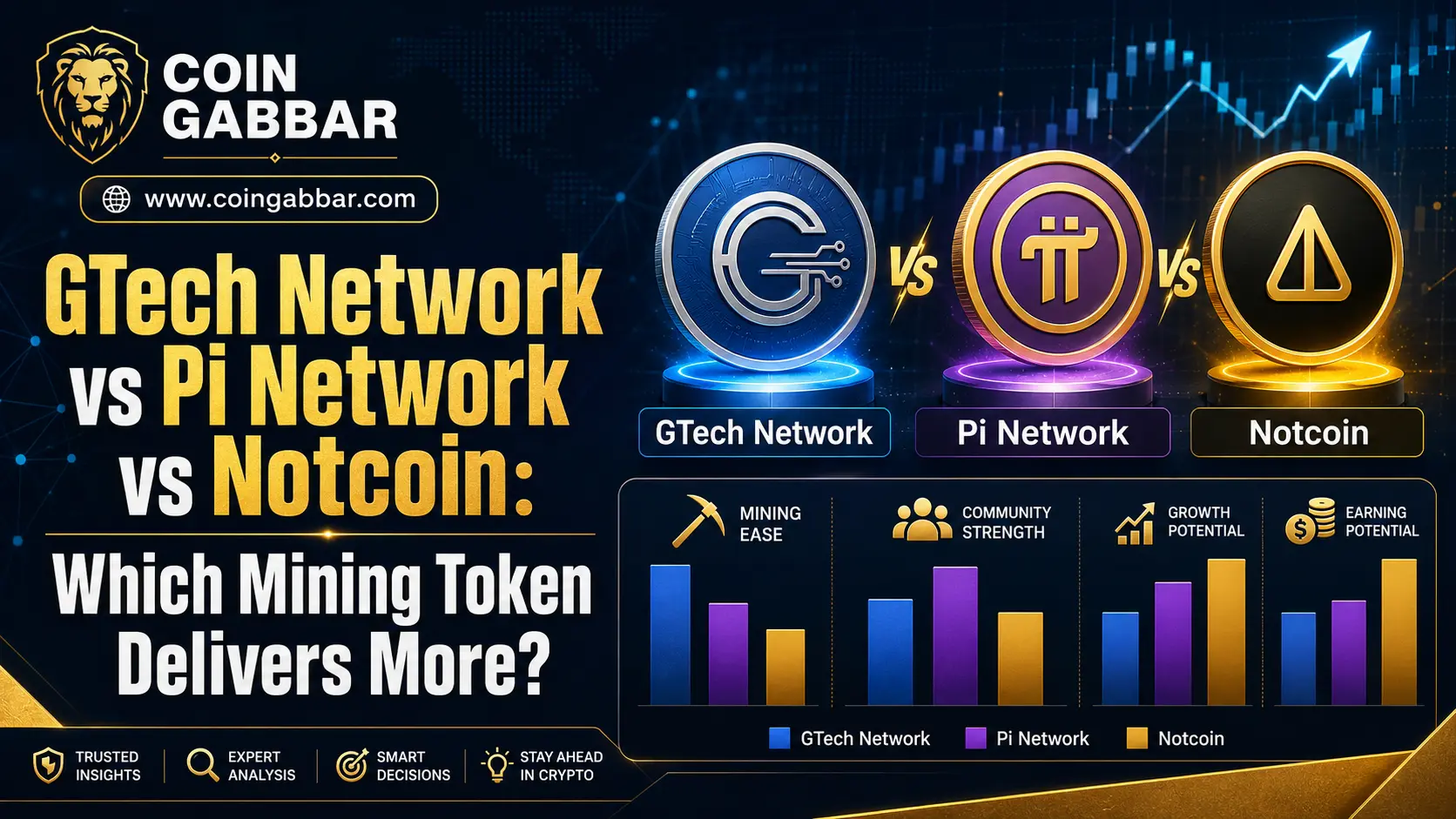
Quick Comparison: Which Mining Token Delivers More?
| Factor | GTech Network | Pi Network | Notcoin |
|---|---|---|---|
| Main earning model | App mining, tasks, presale and community growth | Mobile mining and ecosystem participation | Telegram tap-to-earn and later campaign rewards |
| Token | GTC | PI | NOT |
| Best for | Early participants willing to take high listing risk | Mobile-first miners seeking long-term network growth | People who want an already traded tap-to-earn case study |
| Trading clarity | Limited; current exchange status needs verification | Market access varies by platform and region | Live traded token with market data |
| Withdrawal risk | High until app, chain and exchange routes are verified | Depends on KYC, mainnet migration and wallet access | Lower than pre-listing tokens, but still market-risk exposed |
| Scam-copycat risk | High due to listing and contract-address searches | High due to large global community and fake Pi pages | High around fake claim links and fake Telegram bots |
| Liquidity signal | Weak until live markets and volumes are confirmed | Better than closed app-only models, but still volatile | Strongest of the three due to live traded status |
| Overall earning visibility | Speculative | Community-driven | Most proven post-listing example |
What Is GTech Network?
GTech Network is promoted as a mobile-first mining and earning project built around the GTC coin. Its appeal comes from simple participation, app activity, community growth, referral-style engagement and the expectation that mined or presale balances may later become tradable.
For early miners, the biggest attraction is early access. If a token is not yet widely traded, early participation can feel valuable. The risk is also higher because participants may not know the final listing date, real circulating supply, live order-book depth, withdrawal process or open-market price.
GTC search demand is heavily focused on listing date, contract address, price, withdrawal, mining, airdrop and legitimacy checks. That means the market is still trying to confirm whether the project is ready for real trading. Until live markets, wallet routes and tokenomics are fully visible, GTC should be treated as a high-risk early mining token.
For listing context, readers can compare CoinGabbar’s GTC burn update, GTC presale details, and GTC utility update.
What Is Pi Network?
Pi Network is one of the best-known mobile mining projects. It became popular because people could mine from a phone without expensive hardware, large electricity costs or technical setup. The official positioning is simple: make crypto mining accessible to everyday people through an energy-light mobile app.
Pi’s main strength is community size and long-term recognition. Many miners have collected PI for years, completed KYC, migrated balances and followed the project’s mainnet journey. Its earning model is more mature than many new app-mining projects because it has built a broad network effect over time.
The main limitation is that final value depends on wallet access, KYC approval, market availability, ecosystem usage, token unlocks, exchange liquidity and regulatory clarity. Mining PI inside an app is not the same as instantly selling it for guaranteed value.
People researching Pi should verify all updates from official sources, app notices and recognized market-data platforms before making assumptions about price, migration or withdrawal value.
What Is Notcoin?
Notcoin is different from GTC and PI because it already completed the most important transition: from user engagement to live traded token. It started as a Telegram tap-to-earn game where players clicked, completed actions and built balances through simple participation.
Notcoin became a major example of how Telegram mini-app engagement can turn into exchange-traded value. The NOT token later gained market visibility, exchange access and live price data. This gives Notcoin stronger post-listing proof than an app-only mining reward system.
The main lesson is that Notcoin delivered because participants eventually received a tradable token, exchange support and market liquidity. However, its price still moves with market demand, token unlocks, trading volume, TON ecosystem sentiment and broader crypto conditions.
Mining Model Comparison
GTech Network Mining Model
GTC mining appears closer to app-based reward collection, task activity, referrals and community participation. This model can attract early miners because it is easy to start, but the value remains uncertain until withdrawals and trading are clearly available.
Pi Network Mining Model
Pi uses phone-based mining sessions and a trust-network style model. It does not require high-energy hardware mining. The earning process is simple, but final value depends on KYC, migration, marketplace activity and market access.
Notcoin Earning Model
Notcoin used a tap-to-earn game format inside Telegram. Players earned through clicking and campaign activity. Its advantage is that it later moved into real token distribution and live exchange markets, which makes it a stronger proof-of-concept for app-based earning.
Which Project Delivered More Real Earning?
From a practical investor perspective, Notcoin has delivered the clearest earning outcome because it became tradable and developed live market data. Holders could compare NOT price, volume, supply and liquidity after listing.
Pi Network delivered a large-scale mobile mining network, but value depends heavily on migration, ecosystem utility, market depth and account access. It is stronger than most unknown mining apps, but people still need caution around fake Pi offers and unofficial trading claims.
GTech Network has the highest uncertainty among the three. Early miners may benefit if GTC gains real liquidity, but the project still needs stronger confirmation around listing status, contract address, withdrawal success, trading volume and supply transparency.
Token Listing and Trading Comparison
Listing status is the biggest difference between these projects. A mining token becomes more useful when holders can withdraw, deposit, trade and price it against real liquidity. Without those steps, a person only holds an internal balance or speculative claim.
GTC Listing Status
GTC-related searches show strong demand for listing date, exchange launch, BingX, LBank and Binance Alpha. Readers should verify each claim from the official exchange page. Binance Alpha visibility, if present, should not be confused with a full Binance spot listing.
PI Trading Status
PI has live market references on several data platforms, but traders should check where trading is available, whether deposits and withdrawals work, and whether local exchanges support their region.
NOT Trading Status
NOT has the clearest trading history because it is already listed and tracked by large market-data platforms. It has live price, circulating supply and volume data, which makes it easier for holders to value rewards.
For more exchange-angle research, readers can review CoinGabbar’s exchange listing analysis, GTC TGE update, and GTC price prediction.
Withdrawal and Claim Risk
Mining rewards have no real value until they can be claimed, withdrawn or traded. This is where many app-mining projects create confusion. A miner may see a large balance, but the withdrawal window may be limited, delayed or linked to KYC, wallet submission, app rules or token generation schedules.
GTech Network Withdrawal Risk
GTC participants should check whether withdrawals are open, which chain is supported, whether the BSC contract is correct, whether gas fees are required and whether exchange deposits are available. A wrong contract or fake claim page can cause permanent loss.
Pi Network Withdrawal Risk
Pi holders should focus on KYC, wallet migration, mainnet balance and official app notices. Fake Pi wallet pages and private-message support scams are common risks around large communities.
Notcoin Withdrawal Risk
Notcoin has lower app-balance risk because NOT is already traded, but holders can still lose funds through fake Telegram bots, fake claim links, malicious wallet approvals or wrong deposit networks.
Price and Market Value Comparison
Price is where the three projects differ most. GTC price is still difficult to evaluate until real trading depth is clear. PI has wider market attention but remains volatile. NOT has clearer live data because it already trades on major platforms.
A projected listing price is not the same as real market value. Real price depends on buyers, sellers, circulating supply, exchange liquidity, unlock schedule, market mood and trust. This applies especially to GTC because readers may see expected prices before live order-book data.
Best Price Transparency
Notcoin has the strongest price transparency because it has live market data, circulating supply and trading volume.
Best Community Valuation Story
Pi Network has the strongest community valuation story because it has a long mobile-mining history and a large user base.
Highest Speculative Upside and Risk
GTech Network has the highest speculative uncertainty because early-stage tokens can rise sharply if exchange access improves, but they can also fail to deliver liquidity.
For deeper GTC price context, see CoinGabbar’s Binance BingX outlook, mining end notice, and GTC phishing guide.
Scam and Safety Comparison
All three projects attract scams because they target retail participants. The risk is highest when people are trying to claim rewards, connect wallets, import contract addresses or check a listing before official confirmation.
| Risk Type | GTech Network | Pi Network | Notcoin |
|---|---|---|---|
| Fake contract risk | High before verified liquidity | Medium to high from fake Pi assets | Medium from fake NOT copies |
| Fake support risk | High around withdrawal claims | High around KYC and migration | High around claim links |
| Fake listing risk | High due to exchange rumours | Medium due to unofficial markets | Lower, but fake pages still exist |
| Liquidity risk | High until markets are confirmed | Medium to high depending on platform | Lower because NOT is already traded |
| Education need | Very high | High | Medium |
Which Project Is Best for Beginners?
Pi Network is the easiest to understand for basic mobile mining because people can start through a phone app and participate without technical trading knowledge. However, beginners still need to learn KYC, wallet migration and fake-link safety.
Notcoin is easier for readers who want to understand how tap-to-earn can convert into a listed token. It is not as useful for fresh mining in the same original format, but it is the clearest example of a successful earning-to-market transition.
GTech Network may attract beginners because of simple mining and expected launch narratives, but caution is required. Early-stage projects often carry higher risk because withdrawal rules, contract data and exchange liquidity may not be fully confirmed.
Which Project Is Best for Active Traders?
Notcoin is the strongest option for active traders among the three because it already has live markets. Traders can review price, volume, support levels, volatility and exchange depth.
Pi Network can be traded on some platforms, but investors should verify deposit and withdrawal routes before treating it like a normal liquid asset. Market access can vary by region and exchange.
GTC is not ideal for active trading until a real exchange market, confirmed pair, order book and deposit-withdrawal route are visible. Traders should avoid copycat tokens and fake DEX pools.
Which Project Has the Strongest Earning Story?
GTech Network
GTC has a strong early-participation story but weak confirmed earning proof. It may become more interesting after listing, but readers should wait for verified trading and withdrawal data.
Pi Network
PI has a strong long-term participation story because people have mined through a mobile app for years. Its earning value depends on market access, ecosystem growth and account migration.
Notcoin
NOT has the strongest proven earning story because players saw a tap-to-earn game convert into a listed token with live markets. It remains volatile, but the earning route is easier to verify after the fact.
Exchange Angle: Binance, BingX and Other Venues
Exchange access creates trust, but readers must distinguish between confirmed spot listing, launchpool farming, wallet discovery, DEX trading and unofficial community claims.
GTC Exchange Angle
GTC has strong search demand around BingX, LBank and Binance Alpha. Readers should verify official exchange notices before depositing. A trading guide or market-data preview is not the same as a live, liquid market.
Pi Exchange Angle
Pi holders should check whether a platform supports real deposits and withdrawals. Some price pages can show market values even when access remains limited by platform rules.
Notcoin Exchange Angle
Notcoin has the strongest exchange proof because it already gained broad market visibility after its Telegram game phase. Still, traders should check liquidity and volatility before buying.
For more GTC exchange updates, review CoinGabbar’s Binance Alpha update, delayed listing report, and official update watch.
Tokenomics: Supply, Unlocks and Selling Pressure
Mining tokens often face heavy selling pressure when rewards unlock. People who mined for free may sell quickly. Presale buyers may exit after listing. Early promoters may take profit when liquidity appears.
This is why supply matters. A project with many mined rewards can have large community interest but also large sell pressure. Notcoin already passed through a major claim and market phase. Pi still depends on ecosystem growth, unlocks and migration. GTC readers should watch circulating supply, burn records, presale allocation and miner reward release.
Tokenomics Questions to Ask
- What is the total supply?
- What is the circulating supply?
- How many tokens are mined by the community?
- How many are held by team, ecosystem or treasury wallets?
- Are presale tokens locked?
- Are app rewards released at once?
- Is liquidity locked and visible?
Do’s and Don’ts for Mining Token Participants
Do’s
- Use official websites and app-store links only.
- Verify every contract address before wallet import.
- Check exchange announcements before trading.
- Use a separate wallet for airdrop and claim activity.
- Start with a small test transfer.
- Track claim, KYC and withdrawal deadlines.
- Save transaction hashes and account records.
- Compare price data from trusted market pages.
- Use two-factor authentication where available.
- Read scam warnings before clicking links.
Don’ts
- Do not share seed phrases or private keys.
- Do not trust private-message support.
- Do not buy fake contracts from social posts.
- Do not treat app balance as guaranteed cash value.
- Do not assume listing rumours are official.
- Do not use borrowed money to buy high-risk tokens.
- Do not connect your main wallet to unknown claim pages.
- Do not ignore tax records after selling or swapping.
- Do not chase launch candles without checking liquidity.
- Do not confuse ticker symbols with verified project identity.
Final Verdict: Which Mining Token Delivers More?
GTech Network vs Pi Network vs Notcoin comes down to maturity. Notcoin has delivered the most visible market result because NOT became a live traded token. Pi Network has the strongest long-term mobile-mining community. GTech Network has the highest early-stage uncertainty but may appeal to readers who want a speculative pre-listing or early-listing opportunity.
For pure earning proof, Notcoin wins. For mobile-mining community scale, Pi Network is stronger. For early high-risk participation, GTC is the speculative pick, but only after people verify official links, contract address, withdrawal route and exchange status.
The safest approach is simple. Mine or earn only through official apps, avoid fake claim pages, verify exchange listings, never share wallet keys, and do not treat free app rewards as guaranteed income. In mining tokens, the winner is not the project with the biggest app balance. The winner is the one that turns effort into liquid, verifiable and safely accessible value.
For continuing GTC updates, readers can follow CoinGabbar’s launch delay explainer, Telegram game update, and June listing update.
Key Takeaways
- Notcoin has the strongest proof of earning conversion because NOT is already traded.
- Pi Network has the strongest mobile-mining community and long-term ecosystem story.
- GTech Network offers early exposure but carries higher listing, withdrawal and contract risk.
- Mining rewards matter only when they become withdrawable and liquid.
- Readers should verify official links, contract addresses and exchange announcements before acting.
- Fake support accounts, fake claim links and copycat tokens are major risks for all three.
- The best mining token is the one that converts effort into safely tradable value.
Glossary
- GTC
- The coin associated with GTech Network. The exact contract should be verified before trading.
- PI
- The coin associated with Pi Network, a mobile-first crypto mining ecosystem.
- NOT
- The token associated with Notcoin, a Telegram tap-to-earn project that became tradable.
- Mobile Mining
- A low-energy app-based model where people earn through daily sessions or participation instead of hardware mining.
- Tap to Earn
- A simple Web3 game model where participants earn points or tokens through taps, tasks or social activity.
- Listing
- The launch of a tradable market on an exchange or trading platform.
- Liquidity
- The available market depth that allows buying or selling without large price movement.
- Contract Address
- The blockchain address of a token smart contract. It must be verified before wallet import or trading.
- KYC
- Know Your Customer checks used by apps or exchanges to verify identity.
- Claim Window
- A time period during which eligible participants can claim earned tokens or rewards.
Disclaimer
This article is for educational and informational purposes only. It is not financial, legal, tax or investment advice. GTech Network, Pi Network, Notcoin, app mining, tap-to-earn rewards, token listings, withdrawals, contract addresses and prices carry high risk. Listing dates, exchange access, supply data, reward rules, market liquidity and tax treatment can change quickly. Always verify official project sources, exchange announcements, wallet details, local tax rules and risk disclosures before mining, claiming, buying, selling or holding any cryptoasset.