Is GTech Network Legit? Scam Red Flags vs Real Signals - Full Review

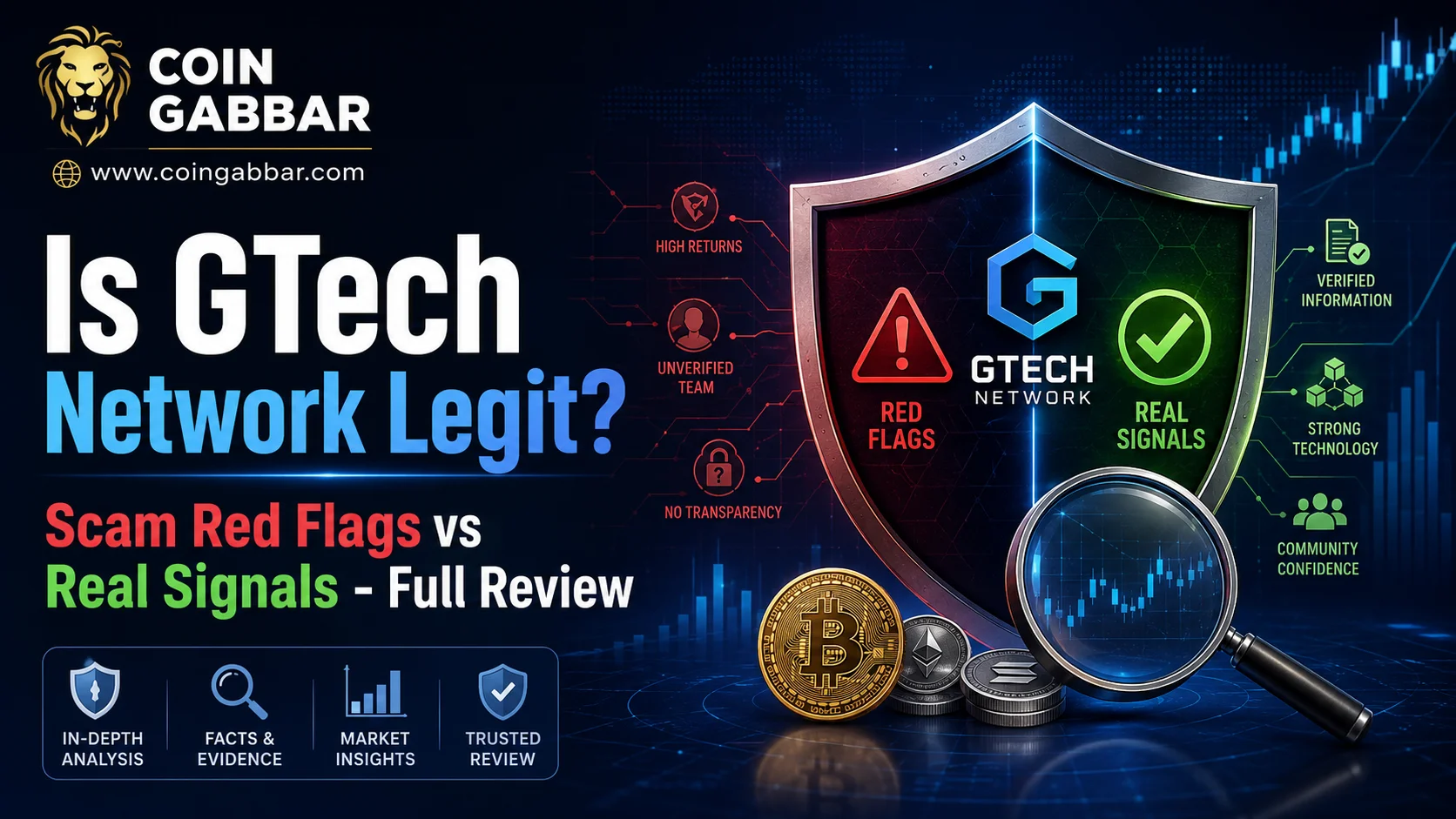
GTech Network Legit Review: Scam Risks vs Real Signals
Is GTech Network Legit is now one of the most important questions around GTC because users are not only searching for the listing date. They also want to know whether the project is real, whether the app is safe, whether mining rewards can be withdrawn, whether the contract address is genuine, and whether GTC can be traded without falling into a fake-token trap.
This review gives a balanced 2026 view. It does not blindly call GTech Network a scam, and it does not promote it as risk-free. Instead, it separates real signals from warning signs, explains what users should verify, and shows how to avoid phishing, fake contracts, copycat coins, fake support accounts and exchange-listing rumours.
At the time of review, public data still needs caution. CoinGecko marks Gtech Coin as unavailable to trade on listed exchanges. The Google Play page shows a GTC app by GTechNetwork with 50K+ downloads and user reviews. BingX’s public guide discusses how users may buy Gtech Coin when available, but also says users should watch official BingX announcements for trading availability. These are mixed signals, not final proof of safety.
For mining and trading steps, readers can also check CoinGabbar’s GTC mine withdraw guide, GTC presale details, and GTC utility update.
Quick Verdict: Is GTech Network Legit?
The safest answer is: GTech Network shows some real public signals, but users should still treat it as a high-risk crypto project until listing, withdrawal, supply, contract and liquidity details are fully verifiable.
Positive signs include an official website, a public app listing, active community interest, GTC-related market-data pages and repeated coverage around listing expectations. Risk signs include unavailable trading data on major trackers, ticker confusion, unverified contract sharing, phishing exposure, unclear open-market price, and possible fake tokens using the same name or symbol.
Review Score by Evidence Type
| Check | Current Signal | User Risk Level |
|---|---|---|
| Official website | Visible public website | Medium |
| App presence | Google Play listing visible | Medium |
| Exchange trading | Not clearly live on major trackers | High |
| Contract address | Must be matched with official sources | High |
| Price data | Limited or unavailable live data | High |
| Withdrawal status | Must be checked in official app notices | High |
| Scam-copycat risk | High for searched, pre-listing coins | High |
Real Signals That Support GTech Network
A fair review starts with evidence that supports the project. Real signals do not guarantee profit or safety, but they help separate a visible project from a random fake token created overnight.
1. Public Website Signal
The project has a visible official website. A live site with branding, project information, app direction and user-facing messaging is a basic positive signal. Users should still check domain age, spelling, links, SSL status, team information, whitepaper quality and whether all social handles match.
2. App Listing Signal
The GTC app appears on Google Play under GTechNetwork. The listing describes task-based engagement, network growth and rewards. A public app listing with downloads and reviews is better than an anonymous APK link, but app presence alone does not prove token liquidity, exchange listing or future price.
3. Community Search Demand
Search data shows strong interest in the project. Queries include listing date, launch date, coin price, mining, airdrop, contract address and legitimacy checks. High search demand can support visibility, but it can also attract copycat tokens and phishing campaigns.
4. Market-Data Visibility
GTC appears on some market-data pages, although live trading may still be unavailable or incomplete. This is a partial signal. Users should not treat a preview page as proof of active liquidity.
5. News and Listing Coverage
Several CoinGabbar updates have tracked GTC listing expectations, delays, burn notices, presale details, exchange rumours and safety risks. This gives users a timeline to compare claims instead of relying only on Telegram screenshots. Read more from the exchange listing analysis, GTC TGE update, and GTC price prediction.
Scam Red Flags Users Must Check
Most user losses in pre-listing crypto projects do not come from one single source. They come from fake contracts, fake support accounts, fake exchange pages, fake claim links, fake airdrop forms, malicious wallet approvals and rushed buying decisions.
1. Fake Contract Address
Any searched token can be copied by scammers. A fake GTC contract may use the same name, same symbol and similar logo. Users should never copy a contract address from random Telegram, Facebook, WhatsApp, YouTube or X comments.
2. Fake Withdrawal Support
If someone privately messages you and says they can unlock withdrawal, restore mining rewards or activate your GTC wallet, treat it as a scam attempt. Real project support should never ask for seed phrases, private keys or exchange passwords.
3. Fake Listing Screenshots
Pre-listing projects often attract edited screenshots claiming Binance, BingX, LBank, MEXC or another exchange has confirmed trading. A real listing must appear on the exchange’s official announcement page, spot market page, deposit page or app notice area.
4. Guaranteed Price Claims
A projected listing price is not a guaranteed open-market price. GTC price can change sharply after launch based on liquidity, sell pressure, market mood, circulating supply, unlock rules and exchange depth.
5. Seed Phrase Requests
No real airdrop, mining app or claim portal needs your seed phrase. If a website asks for 12 or 24 words, it is trying to steal your wallet.
6. Pay-to-Withdraw Offers
Scammers may say users must pay a “release fee,” “gas activation fee,” “tax clearance fee” or “KYC unlock fee” to a private wallet. Users should not send money to private accounts for withdrawals.
7. Copycat Ticker Confusion
GTC can also refer to other crypto assets, including Gitcoin. Always check the full project name, logo, website, contract address and exchange page before buying.
GTech Network Scam or Legit: Evidence Checklist
Users searching “GTech Network scam or legit” should use a checklist instead of emotional judgment. The goal is to classify the project as verifiable, partially verifiable or unverified across different categories.
Website Checks
- Does the domain match official branding?
- Is the website secured with HTTPS?
- Does the site link to the same app and social channels?
- Does the whitepaper explain supply, utility and roadmap?
- Are team, company or audit details visible?
App Checks
- Is the app listed under the correct developer name?
- Are reviews organic or suspiciously repetitive?
- Does the app ask for unnecessary permissions?
- Does it require seed phrases or wallet keys?
- Does it show clear mining and claim rules?
Token Checks
- Is the contract address posted by official channels?
- Is the contract verified on a blockchain explorer?
- Can the owner mint more tokens?
- Are transfers restricted?
- Is liquidity locked or transparent?
Exchange Checks
- Is there an official listing announcement?
- Are deposits and withdrawals open?
- Does the order book show real depth?
- Is volume organic or suspiciously thin?
- Does the exchange page match the official project link?
For listing-specific history, compare CoinGabbar’s May 30 listing update, mining end notice, and delayed listing report.
GTC Mining: Real Opportunity or Risk?
GTC mining appears to be app-based participation rather than hardware mining. Users may complete tasks, grow their network, follow social handles, check in daily or collect rewards through the app. This model is common in mobile-first crypto campaigns.
The opportunity is low-cost participation. Users may spend time instead of money. The risk is that app rewards are not the same as liquid coins. Rewards may depend on claim rules, withdrawal windows, eligibility checks, referral quality, KYC, burn notices or final token distribution terms.
Mining Safety Rules
- Download only from official links.
- Avoid unofficial APK files.
- Use a separate password.
- Do not connect your main wallet early.
- Save account and claim records.
- Verify all deadlines from official posts.
- Do not pay private accounts for mining boosts.
GTC Withdrawal Risk Review
Withdrawal is the stage where risk becomes serious. A user may have rewards inside an app, but that does not automatically mean funds can be transferred, traded or sold. Withdrawal depends on project rules, chain support, wallet compatibility, gas fees, contract status and claim timing.
Before You Withdraw
- Check whether withdrawal is officially open.
- Confirm the supported chain.
- Verify the correct contract address.
- Use your own wallet, not an address from a group admin.
- Keep enough gas token if required.
- Check minimum withdrawal limits.
After You Withdraw
- Check the transaction hash on the correct explorer.
- Do not connect the wallet to unknown claim websites.
- Do not approve unlimited token spending.
- Do not sell through a pool unless the contract is verified.
- Save all records for future tax and support needs.
Users who need a practical withdrawal and trading flow can read CoinGabbar’s GTC trading guide for step-by-step user checks.
GTC Listing Risk: What to Verify First
The listing date is the strongest search-intent driver for GTC. Users search for listing date today, launch date, coin listing date, price today and exchange names because they want immediate action. That urgency creates a high scam risk.
A valid exchange listing should have several signs: official exchange notice, verified asset page, trading pair, deposit status, withdrawal status, market depth, 24-hour volume and matching project links. Without these, users should wait.
BingX, LBank and Binance Alpha Notes
BingX-related searches are common, but users should verify the exchange’s own listing page before depositing. LBank rumours should also be checked from official exchange announcements. Binance Alpha exposure, if present, is not the same as a full Binance spot listing.
For context, see CoinGabbar’s Binance Alpha update, Binance BingX outlook, and official announcement watch.
Price Red Flags: Why GTC Value Is Uncertain
Users search for GTech Network price, GTech coin price and GTC token price, but price data is risky before confirmed open trading. A presale price, expected listing price or community target is not the same as market value.
Real price forms only when buyers and sellers trade through a real market with enough liquidity. First-day trading can be unstable because miners, presale buyers, bots and late buyers may enter at the same time.
Price Questions to Ask
- Is the price from a real exchange order book?
- Are deposits open?
- Are withdrawals open?
- Is the volume real or thin?
- What is the circulating supply?
- Are miner rewards unlocked?
- Are presale allocations vested or fully liquid?
Contract Address Risk: BSC and Copycat Tokens
Searches around the GTC contract address and BSC token address are important because users may try to add the asset to a wallet before listing. This is also one of the highest-risk stages.
Fake contracts can be created quickly. Some scam tokens allow buying but block selling. Others include hidden mint functions, blacklist controls, high transfer taxes or liquidity traps. Academic research on decentralized exchanges has shown that scam tokens and rug-pull patterns are a major issue in open token markets, so users should treat unverified contracts with extreme caution.
Contract Red Flags
- Contract shared only in comments or private groups
- Unverified source code
- Unknown owner wallet with large control
- Minting function still active
- Sell restrictions or blacklist functions
- Very low liquidity
- Trading pool created by unknown wallets
Social Media and Giveaway Scam Risk
Free mining, airdrops and listing hype often attract social scams. Fake accounts may pretend to be support, moderators, exchange staff or early investors. They may offer guaranteed allocation, private withdrawals, bonus mining power or special listing access.
Crypto giveaway scams on social platforms are well documented. Researchers studying Twitter-list giveaway scams found large-scale coordinated activity, fake domains and victim losses, which shows why users should be careful around “free token” and “claim now” links.
Social Scam Signs
- Support contacts you first in private
- Message says your account is locked
- Link uses a misspelled domain
- Admin asks for seed phrase
- Claim form asks for private key
- Post promises fixed profit after listing
- Profile was created recently
GTech Network vs Typical Scam Patterns
A serious review should compare the project against common scam patterns. This does not prove guilt or safety, but it gives users a structured way to judge risk.
| Scam Pattern | What It Looks Like | How Users Should Respond |
|---|---|---|
| Fake listing | Edited exchange screenshot or fake announcement | Check exchange website directly |
| Fake contract | Unknown address shared in groups | Use only official verified sources |
| Withdrawal unlock scam | Private message asks for fee | Do not pay private wallets |
| Seed phrase theft | Claim page asks for recovery words | Close the page immediately |
| Guaranteed price | Fixed profit or fixed launch value claim | Treat as misleading |
| Ticker confusion | Another GTC token appears in search | Check full asset identity |
How to Verify Official GTech Network Updates
Users should build a simple verification routine before clicking links or moving funds. The best sources are official project channels, official exchange announcements, market-data platforms, app notices and credible crypto news coverage.
Verification Routine
- Open the official website directly.
- Check whether the app link matches the official source.
- Check verified X or social accounts.
- Search the exchange announcement page manually.
- Compare CoinGecko or other market-data status.
- Match the contract address across multiple trusted sources.
- Read latest CoinGabbar updates for timeline context.
Two external sources users can check are the GTech official website and the GTC CoinGecko profile. External links should be used for verification, not as investment approval.
Do’s and Don’ts for GTC Users
Do’s
- Use the official website and app links only.
- Verify listing status from exchange websites.
- Check contract address before importing tokens.
- Use a separate wallet for airdrops and claims.
- Start with a small test transfer.
- Keep screenshots and transaction hashes.
- Enable two-factor authentication where available.
- Track mining, claim and withdrawal deadlines.
- Compare price data from multiple sources.
- Read scam warnings before buying.
Don’ts
- Do not trust private-message support.
- Do not share seed phrases or private keys.
- Do not buy from random contract links.
- Do not assume a preview page means active trading.
- Do not confuse GTech Coin with Gitcoin.
- Do not pay private wallets for withdrawal unlocks.
- Do not use borrowed money for high-risk tokens.
- Do not connect your main wallet to unknown claim sites.
- Do not treat community price targets as guaranteed.
- Do not ignore tax records after selling or swapping.
Final Review: Real Signals vs Red Flags
Is GTech Network Legit is not a question that should be answered with hype. The project has visible public signals, including a website, app listing, community interest and market-data presence. At the same time, users must treat it as high risk until trading, withdrawal, supply and contract details are confirmed by reliable sources.
The best approach is to participate cautiously, avoid private links, verify every contract, wait for real exchange pages, and never assume that app rewards equal liquid money. Users who already mined GTC should focus first on safety, not speed. Users who plan to buy should wait for confirmed markets, visible liquidity and official announcements.
For ongoing updates, readers can follow CoinGabbar’s launch delay explainer, Telegram game update, and June listing update.
Key Takeaways
- GTech Network shows some real public signals, but it should still be treated as high risk.
- CoinGecko availability, exchange listings, contract address and withdrawal status must be verified.
- Fake contracts, fake support accounts and fake listing screenshots are major risks.
- App-based mining rewards are not the same as liquid exchange-traded coins.
- GTC price is uncertain until real market trading and liquidity are visible.
- Users should never share seed phrases, private keys or wallet approvals with unknown sites.
- The safest approach is verification first, trading second.
Glossary
- GTC
- The coin associated with GTech Network. Users must verify the exact project, ticker and contract before trading.
- App Mining
- A reward model where users earn points or tokens through tasks, check-ins, referrals or app activity.
- Listing
- The launch of a tradable market on an exchange or trading platform.
- TGE
- Token Generation Event, the stage where a token is created or distributed under project rules.
- Contract Address
- The blockchain address of a token smart contract. It must be verified before wallet import or trading.
- BSC
- BNB Smart Chain, a blockchain commonly used for lower-cost token transfers and Web3 apps.
- Phishing
- A scam method where attackers use fake links, forms or support accounts to steal login data or wallet access.
- Rug Pull
- A scam where token creators remove liquidity, block selling or abandon the project after attracting buyers.
- Liquidity
- The available market depth for buying and selling a token without large price movement.
- Binance Alpha
- A discovery feature inside the Binance Web3 ecosystem. It is not the same as a full Binance spot listing.
Disclaimer
This article is for educational and informational purposes only. It is not financial, legal, tax or investment advice. GTech Network, GTC mining, app rewards, presale claims, contract addresses, exchange listings, withdrawals and token prices carry high risk. Listing dates, trading availability, total supply, burn events, wallet rules and roadmap items can change quickly. Always verify official project sources, exchange announcements, wallet details, local tax rules and risk disclosures before mining, withdrawing, buying, selling or holding any cryptoasset.
Also read: