What Is a Dex Aggregator? Concept of crypto DEX aggregator technology

What Is a DEX Aggregators? Explained Crypto Trading Guide
If you've ever traded on a decentralized exchange, you already know the feeling. You check the price, click swap, and somehow end up with less than you expected.
That gap between the price you saw and the price you actually got is usually caused by slippage, low liquidity, or high fees. This is exactly the problem that led to the creation of it..
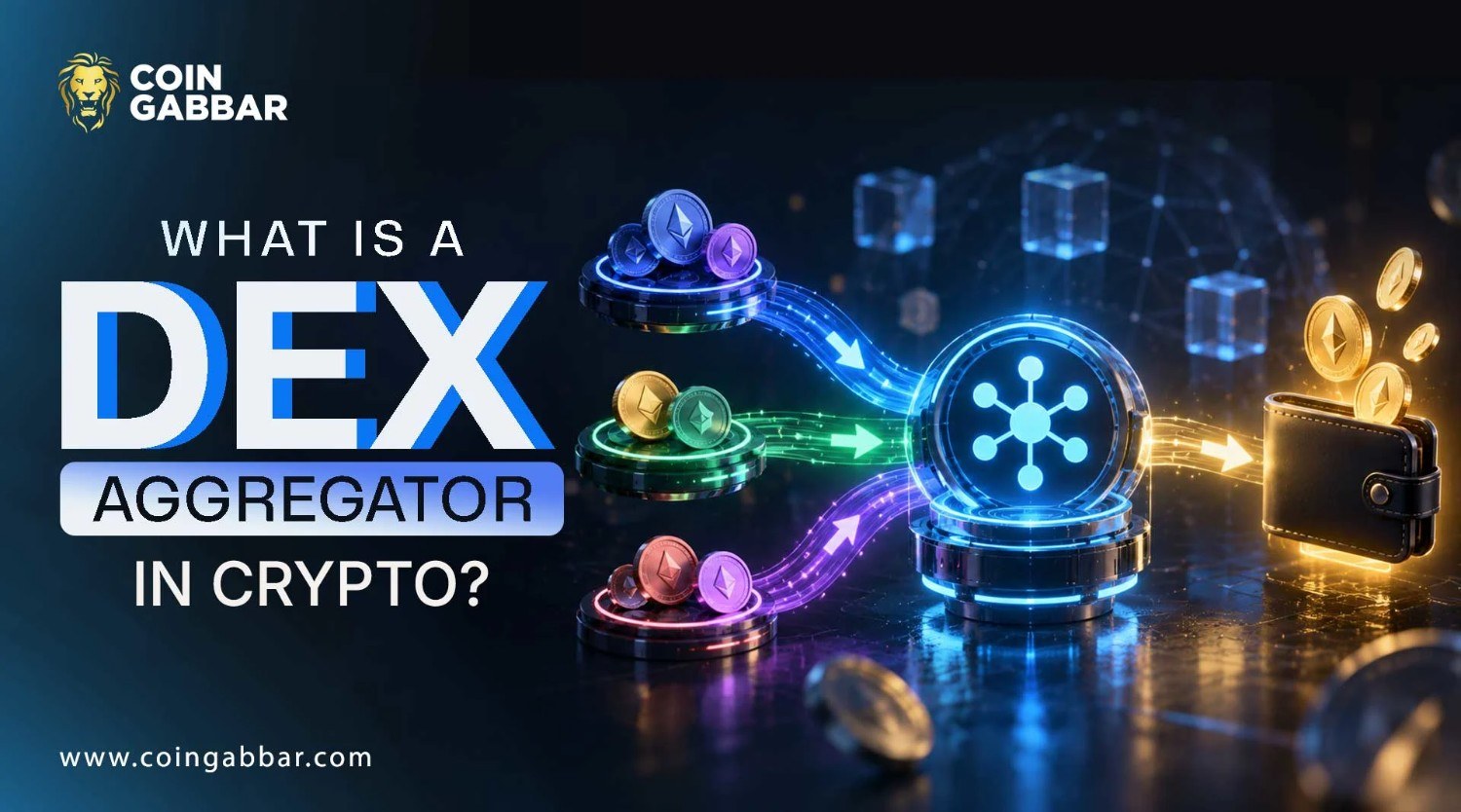
So, what is a Dex Aggregator? Put simply, it's a platform that connects to many decentralized exchanges at the same time and finds you the best possible deal, instead of making you check every exchange on your own.
A simple way to picture this is a flight comparison website. Instead of visiting every airline's website separately to compare fares, you use one platform that pulls prices from all of them and shows you the cheapest option in a few seconds.
That's basically what is a Dex Aggregator does for crypto traders. It links up with dozens of decentralized exchanges, compares rates instantly, and sends your trade wherever it will get you the most value for your money.
Why Did Dex Aggregators Come Into Existence?
To really understand what is a Dex Aggregator, it helps to look at the problem it was built to fix. In the early days of decentralized finance, every decentralized exchange operated as its own separate island.
Each platform had its own liquidity pool, and prices could vary quite a bit from one exchange to another for the same token pair. A trader had no easy way to know which platform offered the better rate without manually visiting each one and comparing numbers by hand.
This created a real inefficiency in the market. Traders were losing money simply because they didn't have visibility into where the best price was sitting.
In order to solve the problem, aggregators came up with a solution to collect all of that liquidity in one place so that users could trade more efficiently without having to do research on their own.
How Exactly Does a Dex Aggregator Work?
After getting an understanding of what is a Dex Aggregator from a theoretical perspective, let’s take a closer look at how it works when in use. As soon as you make a trade, the aggregator does not simply transfer your order to one random exchange.
Instead, it scans liquidity pools across multiple DEXs, such as Uniswap, SushiSwap, Curve, and several others, and works out the most efficient path for your trade.
Sometimes the entire trade goes to one exchange because that exchange happens to offer the best rate at that exact moment. In other cases, especially with larger trades, the aggregator might split your order across two or three exchanges to reduce the impact on price.
This technique is commonly known as smart order routing, and it sits at the core of what is a Dex Aggregator and why traders find it so valuable. All of this calculation and routing typically happens within a matter of seconds, so from your side, it just feels like a normal, smooth transaction.
Why Users Rely on Dex Aggregator for Prices
At this point, you might be wondering why people bother using an aggregator instead of simply trading on one exchange directly. The straightforward answer is better prices, lower fees, and far less manual effort. Once you understand what is a Dex Aggregator actually provides, the reasoning becomes clear.
Individual exchanges often have limited liquidity for certain token pairs. This means that if you place a large trade, the price can move against you before your order is even fully filled, a problem known as slippage.
An aggregator spreads out your order intelligently so that you aren't the one absorbing that entire cost. There's also the matter of network fees.
On chains like Ethereum, gas costs can add up quickly, and a well-built router takes this into account too, sometimes routing trades in a way that saves money on fees as well as on the swap rate itself.
Beyond the technical savings, there's also plain convenience. Nobody really wants to keep ten browser tabs open just to compare prices before making one simple trade.
What is a Dex Aggregator really comes down to, in the end, is having all of that comparison work done automatically so you can focus on making the trade rather than researching where to make it.
Key Features of a Reliable Dex Aggregator
Not every aggregator is built to the same standard, so it's worth knowing what separates an average platform from a genuinely good one. When people ask, "What is a Dex Aggregator worth trusting?" These are usually the features that matter most.
Wide exchange coverage: The more decentralized exchanges it connects to, the higher the chance of finding the best available price.
Slippage control: A solid router lets you set your own slippage tolerance so your trade doesn't execute at a price far different from what you expected.
Gas fee optimization: Some platforms are genuinely smart about batching or routing orders to keep network costs as low as possible.
Security and audits: Since your funds pass through smart contracts, it matters a great deal that the platform's code has been reviewed by a reputable security firm.
Clear and simple interface: Even the smartest routing system doesn't help much if the app itself is confusing or cluttered to use.
A platform that checks most of these boxes is generally considered a safe and dependable choice. This is also where what is a Dex Aggregator stops being just a technical idea and becomes something you can actually evaluate and compare before choosing where to trade.
Dex Aggregator vs a Single Dex: What's the Real Difference?
It's worth pausing here to compare the two directly, because the difference isn't always obvious at first glance. A single decentralized exchange only shows you liquidity and pricing from its own pools.
If that specific exchange has thin liquidity for the pair you're trading, you're simply stuck with whatever rate it offers, slippage included.
An aggregator, on the other hand, isn't tied to one pool of liquidity. It functions just like a search engine for trades, continuously comparing various sources and opting for the best combination based on your order size.
To summarize, whereas it offers a single choice, an router provides the best combination of various choices all at once for your trade.
Some Popular Dex Aggregators Available in the Market
Although this article does not aim to promote any particular platform, it's always better to understand that routers such as 1 inch, Matcha, ParaSwap, and OpenOcean are some widely popular platforms that function according to our discussion so far.
Each platform has its unique way of optimizing fees, but the essence of their functionality remains the same. It involves helping traders optimize their price by combining various trading options into one.
Common Risks to Take Note Of
However, despite all these benefits, it's important to not see these router as completely risk-free platforms. The reason being that since you're using smart contracts, there is always room for risks.
Some common tips to keep in mind include checking the contract addresses before sending funds, avoiding new platforms without any audit and history, and never granting unlimited spending rights to any platform.
Conclusion
In short, what is a Dex Aggregator comes down to is one idea: it does the price-hunting for you, pulling liquidity from multiple exchanges to get you a better rate with less effort and lower fees.
For anyone who trades regularly in decentralized finance, skipping an router is a bit like paying full price when a better deal was sitting one click away.
Once you get used to trading through an router, going back to a single exchange can feel like an unnecessary step backward.
And that, in short, what is a Dex Aggregator is a fairly simple tool that makes a genuinely meaningful difference in how efficiently you trade.
Disclaimer
This article is for informational purposes only and does not constitute financial or investment advice. Cryptocurrency trading involves risk, and prices, platforms, and features mentioned here may change over time. Always do your own research and consult a qualified financial advisor before making any trading decisions.
Also read: