Flash Loan Attack Explained: How It Works and Why It Matters

Understanding Flash Loan Attacks
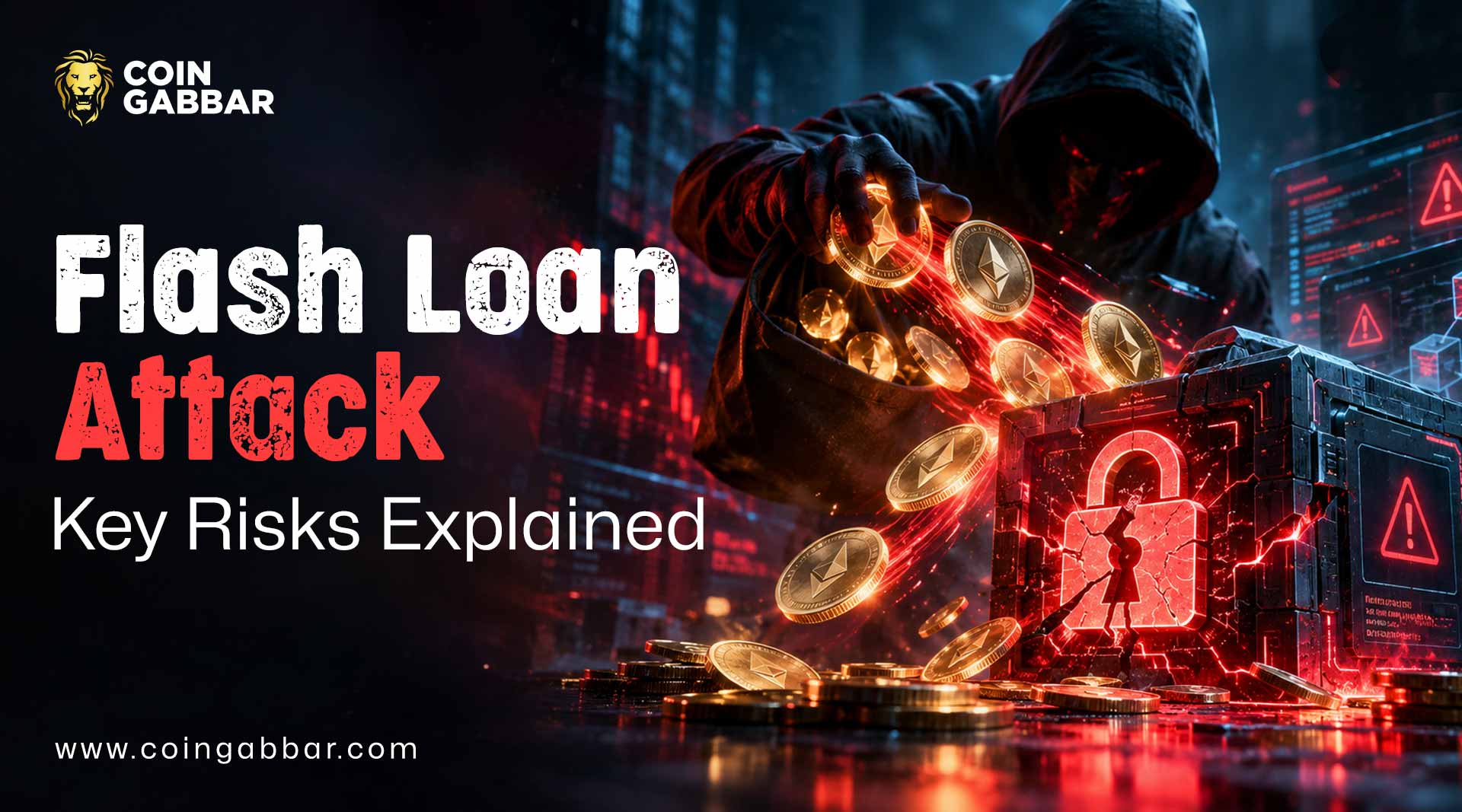
Picture borrowing ten million dollars with zero collateral and paying it all back within ten seconds. No bank allows that. On a blockchain, it's routine, and sometimes it's a flash loan attack doing the damage.
The loan itself is normal. Decentralized finance protocols offer it as a legitimate trading tool. The attack starts only when someone bends it to exploit a weak spot in another platform's code or pricing.
This exploit has quietly drained tens of millions of dollars from DeFi in recent years. Here's what a flash-loan attack involves, how it plays out, and what separates a protocol that resists one from a protocol that becomes the next headline.
What Is a Flash Loan?
Here's the odd part: a flash-loan doesn't need collateral at all. You borrow it and repay it inside the same transaction, so if you can't pay it back, the whole thing just unwinds. Nothing happened. No debt, no default, no record.
That's possible because blockchain transactions are atomic. Everything inside one either goes through together, or none of it does. There's no middle ground where you're holding the money but haven't paid it back yet.
And flash loans aren't inherently sketchy, to be clear. Traders lean on them for arbitrage opportunities, debt refinancing, or swapping out collateral without tying up their own cash first. Borrow, trade on a price gap somewhere, repay, keep the leftover. Ten seconds, tops.
What Is a Flash Loan Attack?
So where does it go wrong? A flash loan attack is basically the same mechanic, pointed at a target instead of a legitimate trade. Someone borrows big, uses that firepower to break a protocol's pricing or logic, and cashes out before repaying the loan.
They never needed real capital in the first place. That's the whole appeal for an attacker: borrow it, weaponize it for a few seconds, give it back.
A decent comparison: imagine grabbing a truckload of cash for ten seconds, using it to fool a vending machine into spitting out free products, then putting the cash back before anyone even clocks it.
How Does a Flash Loan Attack Work Step by Step?
Every exploit looks a little different in the details, but the skeleton is usually the same:
Borrow a large sum through a flash-loan from a lending protocol.
Move funds into a target protocol, often one with thinner liquidity.
Manipulate a price feed or pool balance, typically with one lopsided trade.
Exploit the distorted price somewhere else that trusts that same feed.
Repay the flash-loan and pocket whatever's left over.
All of it happens inside one block. By the time anyone's watching, it's already over.
Why Do Flash Loan Attacks Happen?
Honestly, the flash loan rarely deserves the blame. It's usually the target protocol's own math that fails.
Price oracle manipulation is the repeat offender. A lot of protocols pull prices straight from a single decentralized exchange pool. Thin liquidity there means one big trade can shove the price around, even if just for a moment, and that moment is all an attacker needs.
Then there's plain bad code. Reentrancy bugs, sloppy balance checks, or a quiet assumption that "no one would ever move that much money at once." Turns out, someone will.
And DeFi's whole design invites this. It's permissionless. Anyone can show up and interact with a contract, no ID, no reputation, nothing to lose if it doesn't work.
What Do Flash Loan Attacks Target?
A handful of spots keep showing up:
Lending and borrowing protocols with weak collateral pricing
Decentralized exchanges with shallow liquidity pools
Yield farming platforms that calculate rewards using on-chain prices
Governance systems where borrowed tokens can briefly swing a vote
Smaller, newer protocols get hit more. Less liquidity means prices move easier, and the code just hasn't been battle-tested yet.
What Are the Risks for Crypto Users?
Most people never get attacked directly. The real risk is simpler: your money happens to be sitting in a protocol when it gets hit.
Deposited liquidity can lose value if a pool gets drained
Lending markets can end up undercollateralized after a price manipulation event
Governance votes can get pushed through with borrowed voting power
Protocol tokens can crash fast once news of an exploit spreads
Checking audit history before you deposit anything is one of the easier habits to build, even though an audit was never a promise of safety.
How Do Protocols Prevent Flash Loan Attacks?
Teams have learned a lot from watching these exploits unfold over and over.
Time-weighted average price (TWAP) oracles that average prices over a longer window instead of trusting one snapshot
Pulling price data from multiple independent sources instead of one pool
Capping how much a single transaction can move a pool
Running third-party smart contract audits before anything goes live
Building in circuit breakers that pause things when prices swing unusually fast
None of it makes a protocol bulletproof. It just makes the attack harder to pull off.
How Common Are Flash Loan Attacks Today?
The stronger signal here: protocols running long-window oracles report far fewer manipulation incidents than ones leaning on a single thin pool.
The main concern going forward is how interconnected everything is. DeFi protocols plug into each other constantly, so a flaw buried in one obscure contract can ripple straight into bigger platforms that quietly depend on it for pricing.
The biggest unknown is simply how fast new projects catch up on safer oracle design before they launch. Worth checking a project's oracle design and audit reports yourself rather than trusting a polished interface to mean anything about what's underneath.
Conclusion
At its core, a flash loan attack just borrows a legitimate DeFi tool and points it at someone else's weak spot. The loan was never the problem. The gap it exposes is.
These exploits aren't going away, especially not for newer protocols running thin liquidity and unproven code. Before depositing anywhere, it's worth checking a project's audit reports, oracle setup, and liquidity depth, and treating unusually high yields as a reason to look closer, not a reason to relax.
Disclaimer
This article is for informational purposes only and does not constitute financial or investment advice. DeFi protocols carry real technical and financial risks. Always do your own research before interacting with any platform.