Fed Rate Cut Expectation Rises After US CPI Data: FOMC Meeting Next?

Fed Rate Cut Hopes After 3.5% US Inflation Ahead of FOMC Meeting 2026
One inflation report. One eight-hour window. A hike probability that went from live possibility to near-zero.
That kind of swing is exactly what makes crypto traders nervous — because Bitcoin and altcoins don't wait for the federal to actually move, they react to what the market thinks is coming.
So which number is right: CME's model or Polymarket's? And why won't their own chair give a straight answer on crypto? Here's what most reports aren't telling you.
CPI Surprise Rattles Fed Rate Hike Bets
US Inflation News took center stage on July 14 when the Bureau of Labor Statistics reported June CPI at 3.5% year-over-year, undershooting the 3.8% forecast. Core CPI, which strips out food and energy, came in at 2.6% against an expected 2.8%.
Month-over-month, headline inflation fell 0.4%, the sharpest single-month decline since 2020, driven largely by a 5.7% drop in energy prices and a 9.7% slide in gasoline costs. The Kobeissi Letter noted stock futures spiked immediately on the release, and Polymarket's implied probability of a Fed rate hike at the July 29 FOMC meeting crashed to just 8%.
Some traders pushed back on the rally, questioning whether the data fully accounts for recent oil price gains and lingering geopolitical risk, calling the move a possible short-term trap rather than a genuine trend reversal.
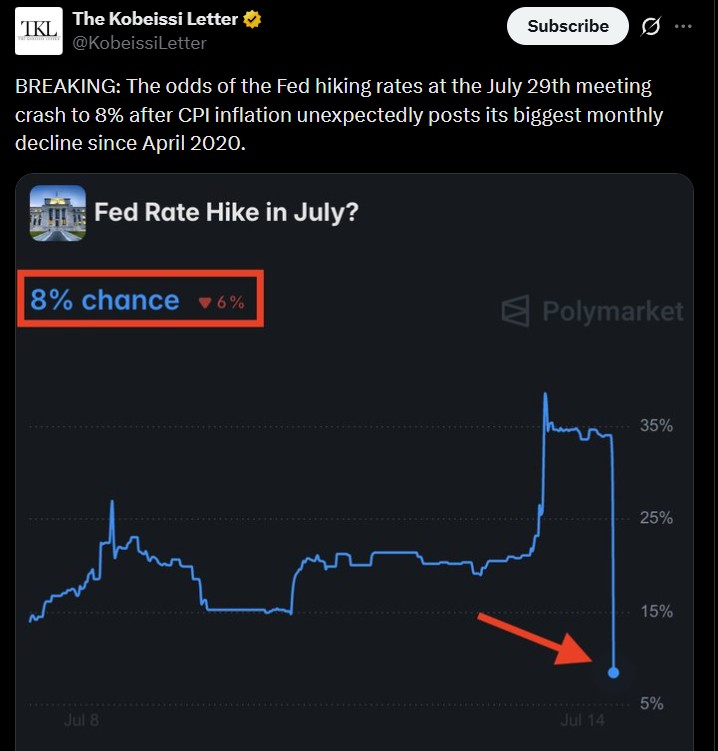
Source: The kobeissi Letter
What CME FedWatch Says About Federal Interest Rate 2026
CME Group's FedWatch tool tells a more layered story about U.S. interest rates. For the July meeting, it currently prices a 63.1% probability that the Federal Reserve interest rates stay unchanged, versus 36.9% odds of a cumulative 25 basis point hike.
Looking further out, the Fed meeting date in 2026 in September shows a very different picture. FedWatch data puts just 28.3% odds on no change, while a 25bp hike carries 51.4% probability and a 50bp hike sits at 20.4%.
This divergence between Polymarket's near-zero July hike odds and CME's still-meaningful 36.9% reading shows just how unsettled Fed rate cut expectations remain heading into the FOMC Meeting Minutes July 2026 release. The two platforms measuring the same event so differently is itself a signal worth watching.
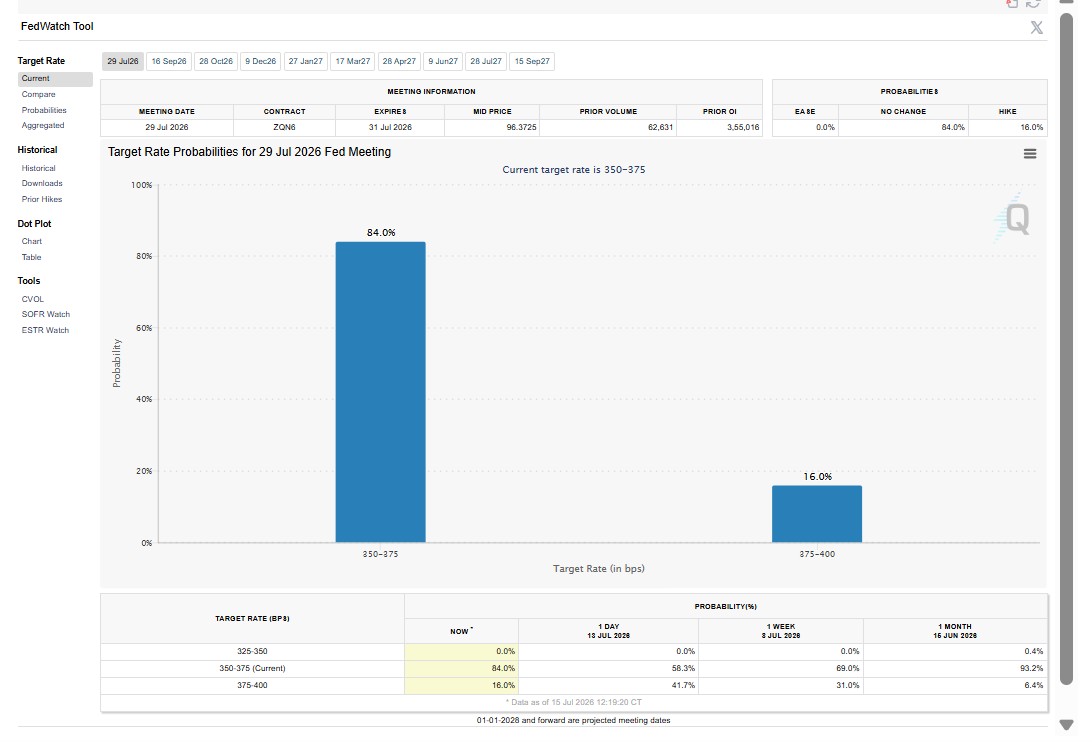
Source: CMEgroup Data
Fed Chair Kevin Warsh Won't Rule Out Crypto Intervention
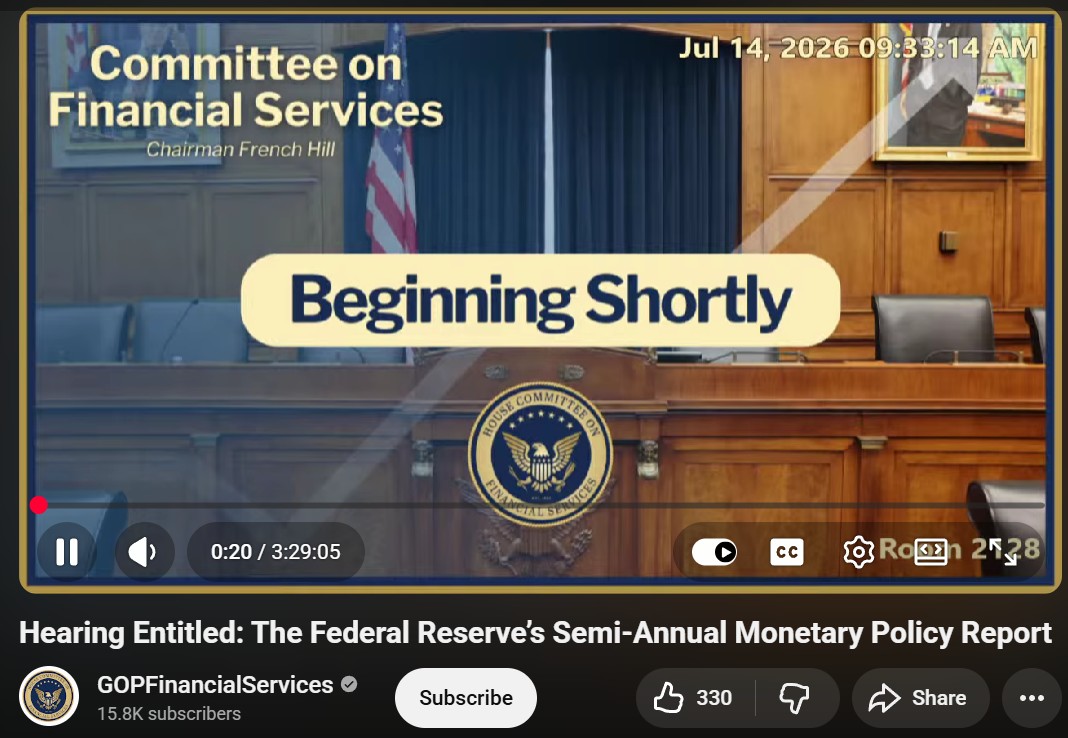
Adding another layer to this Federal Reserve news cycle, Fed chair Kevin Warsh testified before the House Financial Services Committee this week. Warsh stated the central bank does not want to run bailout operations and prefers a financial system where no entity — including crypto firms — ever needs rescuing.
When directly pressed on whether the federal reserve would step in during a stablecoin run or broader crypto market stress, Warsh stopped short of a firm no. That ambiguity leaves the door open, and traders watching Fed Rate cut 2026 policy signals are taking note of the gap between rhetoric and commitment.
Source: Wu Blockchain X
What to Watch Next
Three dates now matter most for anyone tracking Fed rate cut news: the July 29 FOMC decision, the next CPI print due before the September meeting, and September's decision itself, where hike odds currently run hotter than July's despite cooling inflation data.
Watch also for how officials respond publicly to this week's CPI print — any pushback or confirmation from voting members could move both CME and Polymarket odds again before July 29 arrives.
Conclusion
The gap between falling inflation and still-elevated September odds shows the Fed rate cut news cycle is far from settled. Traders should treat July 29 as a checkpoint, not a conclusion, especially with Warsh leaving crypto-specific policy questions unanswered.
Disclaimer: This article is for informational purposes only and does not constitute financial, investment, or trading advice. Cryptocurrency markets are highly volatile. Please conduct your own research before making any investment decisions.
Also read:







