Ethereum News: Metalpha Withdraws $30M ETH, NFT Exploit Hits $1.7M


Ethereum News Today: Limit Break Attack, Metalpha ETH Move and Supply
Ethereum is facing a busy news cycle today. Security firm Blockaid has flagged an active exploit hitting Limit Break's Payment Processor V2, while on-chain trackers are watching a sizable ETH withdrawal from Binance.
At the same time, fresh data shows the amount of ETH sitting on exchanges has dropped to one of its lowest points in years. Together, these three stories offer a snapshot of where Ethereum stands right now.
At a Glance
Limit Break on Ethereum is reportedly under an ongoing attack targeting Payment Processor V2.
Roughly $1.7 million worth of NFTs have been transferred through the exploited contract.
Blockaid is urging anyone who authorized Payment Processor V2 as an NFT operator to revoke that permission immediately.
Metalpha withdrew 11,179 ETH, worth about $30.12 million, from Binance.
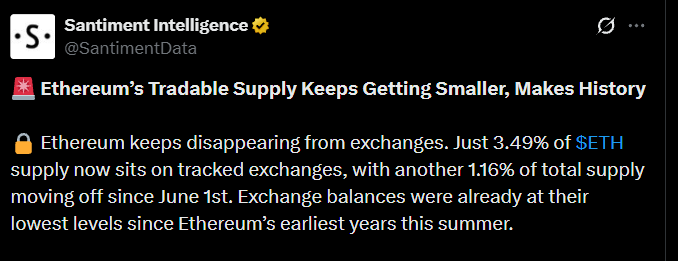
Only 3.49% of ETH's total supply currently sits on tracked exchanges, according to Santiment.
Ethereum (ETH) price today is at $2710.6, up 2.6% over 24 hours. Ethereum recorded about $14 billion in trading volume, while its market capitalization stood near $330.8 billion.
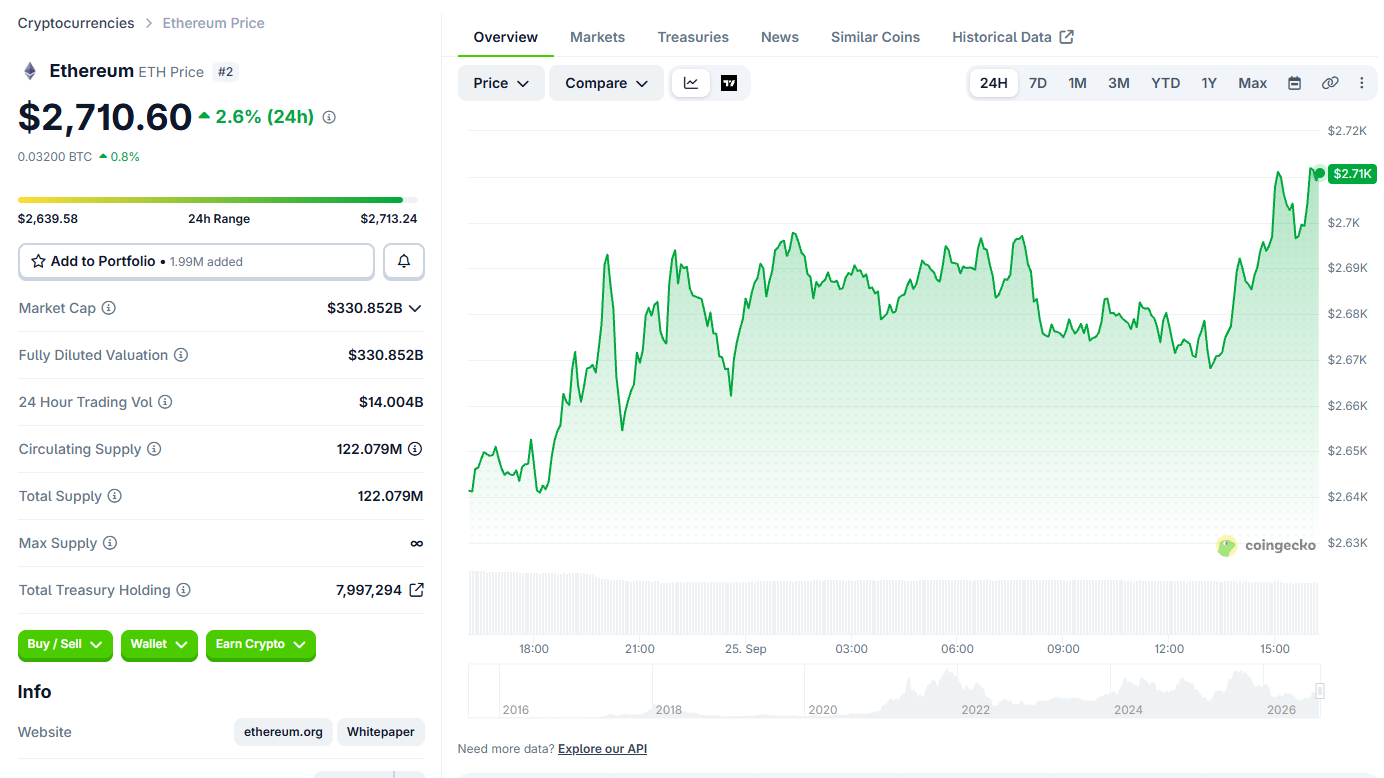
Source: CoinGecko Data
Ethereum Limit Break Attack: What Happened?
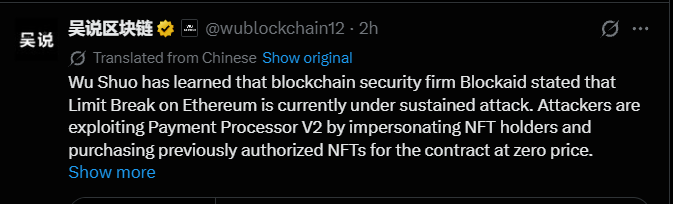
Blockchain security firm Blockaid disclosed on September 25 that Limit Break, an NFT infrastructure project on Ethereum, is experiencing a continuous attack.
According to Blockaid, attackers are impersonating legitimate NFT holders and using Payment Processor V2 to buy previously authorized NFTs at a price of zero. At the time the incident was reported, around $1.7 million in NFT exploit had already changed hands across roughly three transactions, and Blockaid noted the attack was still active.
In simple terms, when a user grants a smart contract permission to act as an "operator" for their NFTs, that permission can sometimes be misused if the contract is compromised or exploited. This is what appears to be happening here, meaning the affected NFTs belong to users who had previously approved Payment Processor V2 for transactions, not to every Limit Break or NFT user broadly.
Source: Wu Blockchain
Blockaid Urges Users to Revoke Payment Processor V2 Authorization
Blockaid's core recommendation is direct: anyone who has set Payment Processor V2 as an NFT operator should revoke that authorization right away. Revoking an approval is different from selling or transferring an NFT. It simply removes a smart contract's permission to move your assets on your behalf, closing off the pathway attackers are reportedly exploiting.
A quick security checklist for NFT holders:
Check your wallet's active token and NFT approvals using a reputable revocation tool.
Revoke any authorization tied to Payment Processor V2.
Avoid clicking unfamiliar links or interacting with unverified contracts until the situation is resolved.
It's worth stressing that not every NFT holder or Limit Break user is necessarily affected, but checking approvals is a low-effort precaution.
Metalpha Withdraws 11,179 ETH From Binance: What Does It Mean?
Separately, on-chain analytics account Lookonchain reported that Metalpha withdrew 11,179 ETH, valued at approximately $30.12 million, from Binance on September 25. Large withdrawals like this tend to draw attention from traders because they can hint at shifts in custody, staking plans, or treasury strategy.
That said, a single withdrawal doesn't confirm intent. It could reflect a move to cold storage, preparation for staking, internal treasury management, or something else entirely. Without further on-chain follow-up, it's best treated as a notable data point rather than a bullish or bearish signal on its own.
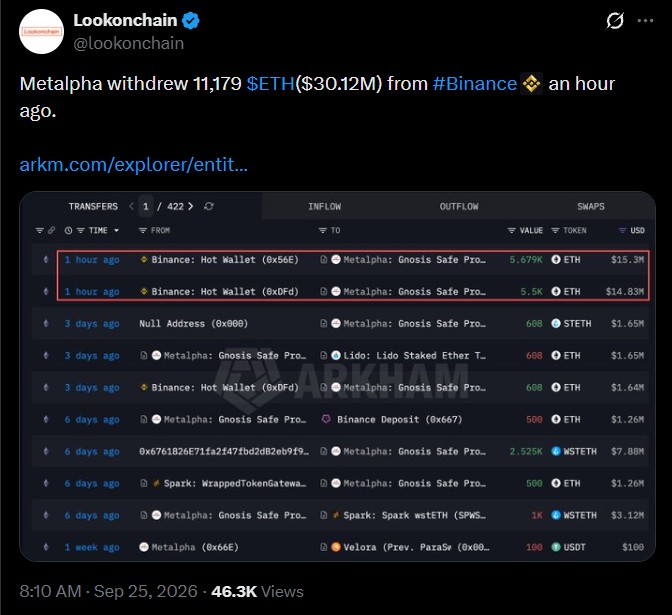
Source: Lookonchain Post
Ethereum Exchange Supply Falls to Historic Low: Santiment Data
Analytics platform Santiment reported that just 3.49% of ETH's total supply is currently held on tracked exchanges, with 1.16% of total supply having moved off exchanges since June 1. Santiment noted that exchange balances had already fallen to their lowest levels since Ethereum's early years earlier this summer.
Fewer coins sitting on exchanges generally means fewer coins that could be sold immediately, though Santiment was careful to note this doesn't guarantee price appreciation.
Staking and DeFi appear to be absorbing much of that supply: Santiment estimates roughly 35% of ETH is staked, and the Ethereum DeFi ecosystem holds about $53 billion in value. As added context, BitMine reportedly staked more than 5 million ETH earlier in September.
Source: Santiment Intelligence
What These Developments Mean for ETH Holders
Taken together, these stories touch three different layers of the Ethereum ecosystem: security hygiene, whale-level asset movement, and broader supply dynamics.
The Limit Break incident is a reminder to review wallet approvals regularly. Metalpha's withdrawal shows meaningful capital movement, though its purpose remains unconfirmed.
And the drop in exchange-held reflects a structural shift toward staking and DeFi rather than a guaranteed market signal. None of these factors should be read in isolation as a predictor of ETH's next price move.
Conclusion
Today's Ethereum news spans an ongoing security exploit at Limit Break, a $30.12 million ETH withdrawal by Metalpha, and Santiment's finding that only 3.49% of ETH supply remains on exchanges. Rather than concluding any single metric, holders are better served by monitoring wallet approvals and broader on-chain trends over time.
Disclaimer: This article is for informational purposes only and does not constitute financial advice. Reported figures are based on third-party sources and may change as on-chain data updates. Readers should independently verify wallet approvals, transaction details, and security alerts before taking any action.