Binance Wallet Adds New DeFi Security After $351M Bitget Hack 2026

Binance Security Update Targets DeFi Phishing After Bitget Hack
The crypto world faced new security worries this week. Bitget confirmed a major breach of its hot and warm wallets. Binance has now added new safety tools of its own.
This Binance security update follows the Bitget hack 2026 news. The wallet now spots risky requests in real time and can stop them. The tools aim at phishing attacks that trick users into DeFi approvals. These attacks often need no gas fee. One careless signature can be enough to empty a wallet.
At a Glance
-
Binance Wallet now spots risky DeFi signatures in real time.
-
The tools target phishing and harmful approval requests.
-
Users should check sites, permissions, and addresses.
-
The move comes after the Bitget breach and rising wallet worries.
-
Binance plans to cover more risks over time.
Binance Wallet Adds Real-Time Protection Against Risky Signatures
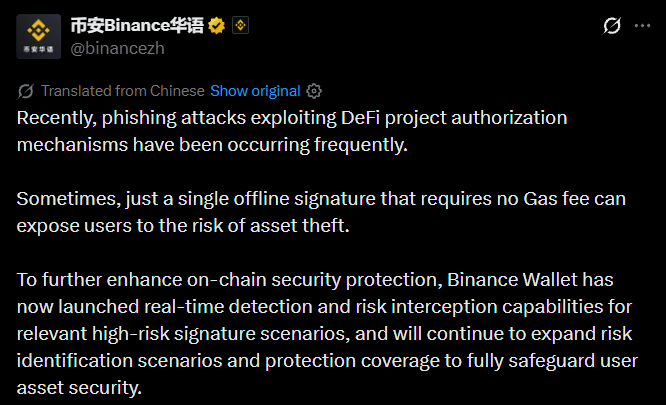
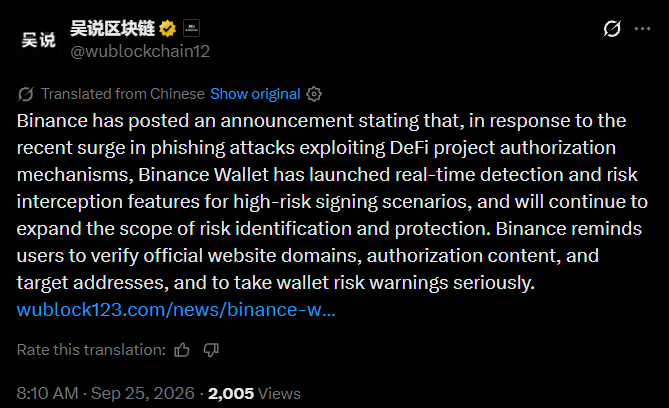
On September 25, 2026, the exchange said its wallet now checks for risky signing requests. It can also block suspicious approvals before they go through.
Binance said this responds to a recent wave of phishing scams. These scams misuse DeFi permission tools instead of stealing private keys.
The company called this just the start. It plans to spot and block more types of risk over time.
Source: Official X Post
How DeFi Phishing Can Steal Funds Without Gas Fees
Many users think danger only comes from actions that cost gas. That is not true. Off-chain signature requests can be just as harmful. They give others permission to use your tokens, and sometimes full control over them.
Scammers hide these requests in fake or lookalike sites. They hope you will sign without reading the details. Once you approve, it is usually too late to undo. Funds can vanish soon after.
What Users Should Check Before Signing
Binance gives simple advice, but it is easy to skip in real life. First, make sure the site address matches the official one exactly. Phishing sites often use nearly identical links.
Next, read the permission details instead of clicking through. Also check the address linked to the request.
Never wave away a wallet warning. These alerts exist to flag cases like the recent attacks. The key point from Binance is clear: a signature cannot be undone once you confirm it.
Source: Wu Blockchain
Bitget Hack 2026: New Questions About Exchange Security
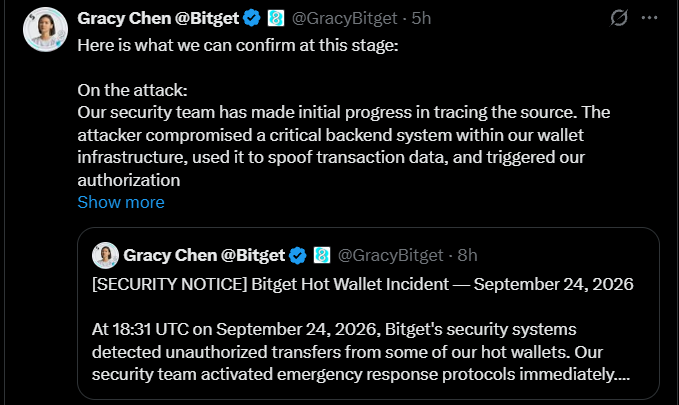
The latest Bitget crypto hack was found at 18:31 UTC on September 24, 2026. Bitget saw unauthorized transfers worth about $351.6 million.
According to the Bitget crypto exchange, only some hot and warm wallets were hit. Cold storage was safe. Withdrawals were paused as a precaution. Deposits and trading went on as usual.
CEO Gracy Chen said the attackers got in through a hacked backend system. They used it to fake transfer data. She said no private key was leaked.
Some experts point to web address patterns tied to a North Korea-linked group. Blockchain researchers say it may be Lazarus Group. This is not confirmed yet, as Bitget's full report is still pending.
Source: Official Bitget X
Binance vs. Bitget: Different Risks, Different Weak Spots
The two stories show two very different weak spots in crypto security.
| Security Area | Bitget Incident | Binance Wallet Response |
| Main worry | Unauthorized transfers from hot and warm wallets | Phishing that tricks users into risky signatures |
| Weak spot | Exchange backend systems | User signing and approvals |
| What users must do | Wait as withdrawals stay paused | Read warnings before signing |
| Protection focus | Contain the damage and use fund reserves | Spot and stop risks in real time |
| Probe status | Ongoing, report due within 24 hours | Covering more risks over time |
What the New Protection Means for Crypto Users
The new tool adds a checkpoint before a risky approval goes through. That could cut losses from phishing scams by a good margin.
Still, no tool removes all risk. Scammers keep changing their tricks. Safety tools work best with good habits. Check each link, read each permission, and treat every signature as a real money choice.
What Happens Next for Wallet and Exchange Security
It will widen the range of risks it can catch. It has not shared a firm date for the next update.
Bitget has promised a full report on the root cause and the fixes. Bybit CEO Ben Zhou has offered help with tracking through his firm's bounty platform.
Together, the two stories show two fronts to watch. One is strong backend systems at exchanges. The other is safer signing in wallets.
Timeline: From Phishing Threats to Real-Time Blocking
| Time | Development |
| Sep 24, 18:31 UTC | The exchange spots unauthorized transfers. |
| Sep 24-25 | Security teams trace the backend breach and follow the stolen funds. |
| Sep 25 | It pauses withdrawals as a precaution. |
| Sep 25 | Binance announces real-time signature checks and blocking. |
| Ongoing | Binance exchange plans to catch more types of risk. |
Conclusion
The Bitget crypto hack news and the new wallet tools landed close together. They show that crypto threats are growing on many levels at once.
Neither one guarantees safety from future attacks. Both show a wider move toward real-time checks on signatures and transfers. Users are safest when they pair platform tools with their own care.
Disclaimer: This article is for information only. It is not financial, investment, or legal advice. Crypto markets are volatile and carry risk. Security tools, probe results, and incident details may change as events unfold. Please check wallet alerts, site links, and official news yourself. Talk to a qualified expert before you make any money decisions.






