When Holding Cash Beats Immediately Swapping Into Another Coin

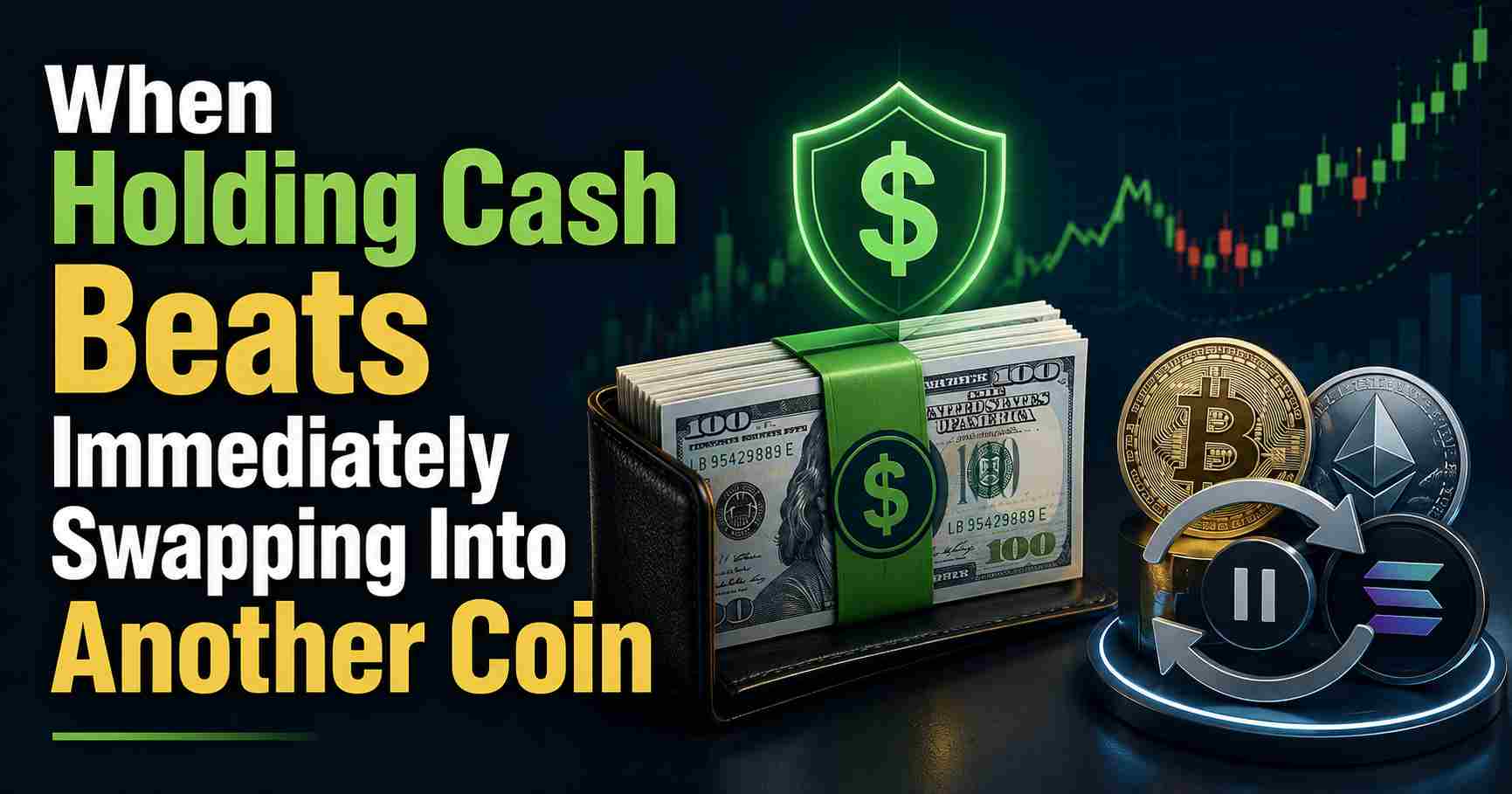
Holding cash is usually the better choice when you have sold one coin but cannot give a solid reason for buying the next one. In that situation, staying in cash feels more sensible than forcing another trade just to remain in the market.
A cash balance may look inactive, especially when crypto prices are rising. Still, it gives you breathing room, protects the money from immediate price swings, and leaves you free to buy later when the decision feels clearer.
Selling One Coin Does Not Mean You Need Another
After selling crypto, many people start searching for a replacement almost automatically. They check the biggest gainers, open a few charts, and choose another coin before asking whether they really want to own it.
That habit keeps your money exposed to the same broad market. Bitcoin, Ether, and smaller coins often fall together when sentiment changes. Swapping between them changes the asset in your account, but it may do little to reduce the risk.
Cash creates a real break between decisions. You may miss some gains if prices rise while you wait, though accepting that possibility can be healthier than buying a weak position out of impatience.
Cash Makes Sense When the Next Choice Is Unclear
Holding cash looks reasonable when recent price movement is your main reason for considering another coin.
Exchanges make buying very easy. Bitcoin can often be purchased with a Visa or Mastercard in a few steps, so the option to buy bitcoin with a debit card instantly can be helpful when you already understand the exchange, card fees, spending limits, and final rate. Quick access has practical value. It also makes emotional purchases easier.
Card processing charges and exchange spreads can leave you with less Bitcoin than the headline price suggests. The final confirmation screen usually tells the fuller story because it shows the amount you will actually receive.
A fast-rising coin creates urgency even when you know little about its supply, purpose, or future demand. After a loss, the pressure may come from wanting to recover money quickly. After a gain, extra confidence can lead to a larger trade than you would normally make. Holding cash gives both reactions time to settle.
Cash and Stablecoins Are Different Choices
Cash and stablecoins may both hold close to a dollar in value, yet the protections behind them are different.
Eligible deposits at an FDIC-insured U.S. bank are generally covered up to $250,000 per depositor, per bank, for each ownership category. Payment stablecoins do not receive the same federal deposit insurance or government guarantee.
| Choice | Main benefit | Main risk |
| Cash at an insured bank | Stable value, easy spending, and deposit protection within applicable limits | Inflation and missed market gains |
| Stablecoin | Convenient transfers and faster access to crypto trading | Issuer, platform, reserve, and loss-of-peg risks |
| Another cryptocurrency | Immediate exposure to possible growth | Continued volatility and possible sharp losses |
Stablecoins can be useful if you plan to keep funds on an exchange or make another trade soon. They should still be viewed as crypto-related assets with their own risks, rather than as ordinary cash under a different name.
Quick Swaps Can Cost More Than Expected
Every swap can include an exchange fee, a spread, or a blockchain charge. These amounts may seem small, but switching between coins repeatedly can slowly reduce your balance.
Imagine selling $10,000 of one coin and paying a 0.6 percent trading cost, then using the remaining balance to buy another coin at the same rate. The two transactions would cost close to $120 before withdrawal charges, network fees, or price movement are included.
Some exchanges advertise low or zero commissions while earning money through the difference between buying and selling prices. For that reason, the amount of crypto received is often more useful than the advertised market price.
Swapping Can Also Create a Taxable Event
In the United States, exchanging one cryptocurrency for another generally counts as disposing of the first asset. The IRS treats digital assets as property, so you may need to calculate a gain or loss even when no dollars enter your bank account.
Several quick swaps can create a messy trail of purchase prices, sale values, fees, wallets, and exchange records. Tax rules vary between countries, but the broader issue remains: a simple swap on the screen may create more paperwork than expected.
Selling into cash can also trigger a taxable event. Leaving the proceeds there, however, avoids adding another immediate purchase to your records.
The Reason Behind the Swap Says a Lot
A new position feels more convincing when the reason goes beyond online excitement or discomfort with holding cash. These thoughts usually point to a more considered decision:
-
You understand why you want to own the coin.
-
Its recent price increase is not the only attraction.
-
The money is not needed for normal expenses soon.
-
A sudden drop would be manageable.
-
Fees, spreads, and possible taxes fit the decision.
-
The coin adds something useful to your existing holdings.
These are not trading rules. They simply help show whether the swap comes from a genuine view of the asset or from the urge to keep doing something.
Waiting Is Still a Market Decision
Holding cash gives up possible returns in exchange for stability and flexibility. That trade feels reasonable when the market is chaotic, the next coin is poorly understood, or the money may have another purpose.
Returning later does not require one large purchase either. Some buyers spread their money across several dates, accepting that they will get different prices rather than trying to catch the exact bottom. Investor.gov calls this dollar-cost averaging, meaning equal investments made at regular intervals regardless of market movements.
The clearest case for holding cash appears when no coin offers a convincing reason to take the risk. A quiet balance can feel boring, but boring is sometimes better than entering another uncertain trade simply because buying takes only a few clicks.
Also read: