Best Crypto Exchange With Lowest Fees: 2026 Cost Guide

Best Crypto Exchange With Lowest Fees: Global Guide
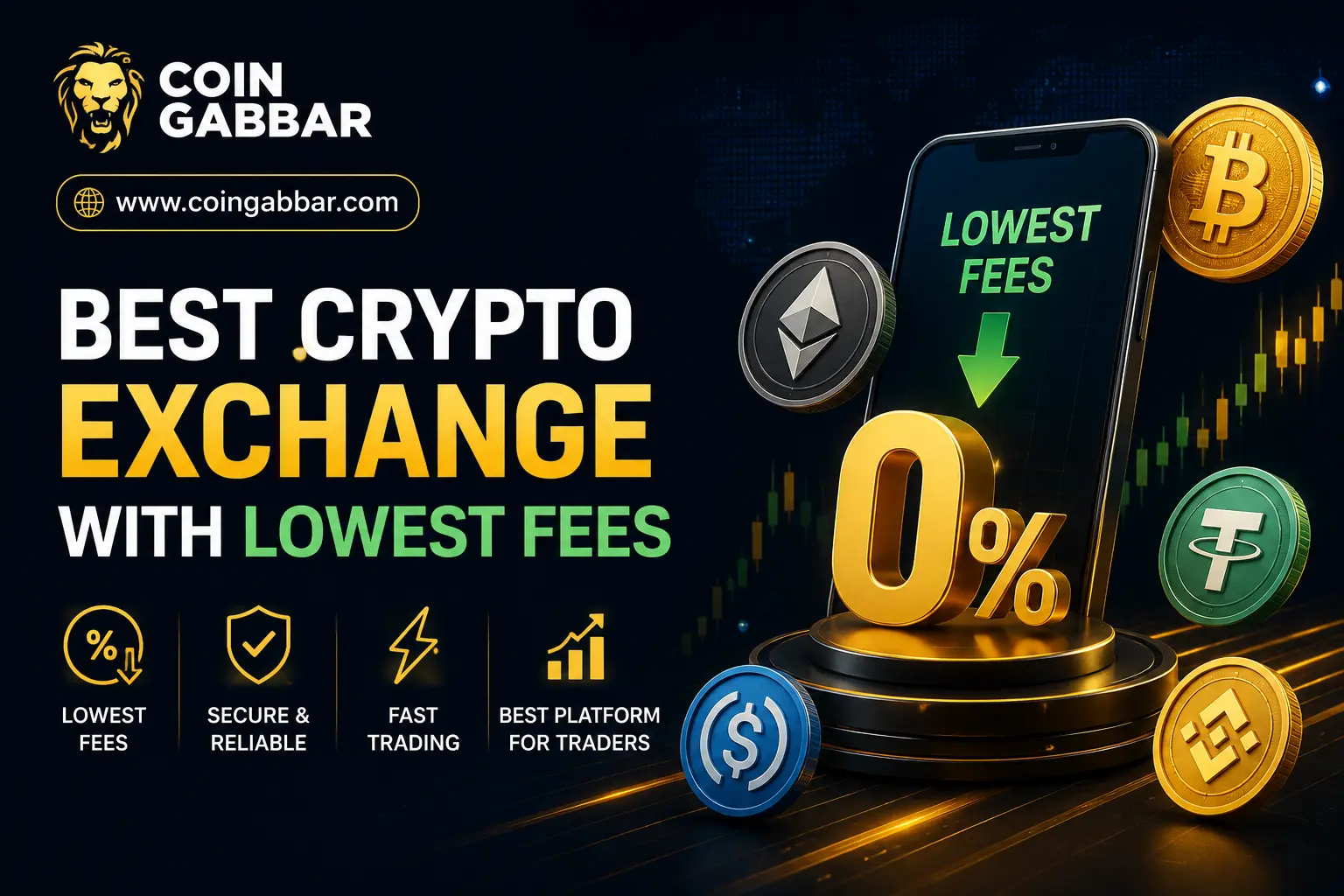
Best Crypto Exchange with lowest fees should be selected by total trading expense, not only by advertised maker or taker charges. A platform can show low trading charges but still become expensive through spreads, withdrawal charges, funding rates, card purchase margins, conversion rates, network expenses, and poor liquidity.
Best Crypto Exchange with lowest fees comparison also depends on trading style. A spot investor buying Bitcoin once a month has different needs from a futures user, an altcoin investor, a high-frequency account, or someone who withdraws assets to self-custody after every purchase.
This global guide compares 12 exchanges suitable for low-expense crypto trading: Binance, OKX, Bybit, MEXC, KuCoin, Gate.io, Bitget, Crypto.com, Kraken, Coinbase, Bitstamp, and CoinDCX. CoinDCX is included as the India-focused option because INR users must consider local tax, TDS, spreads, and withdrawal charges.
Readers comparing overall platform quality can review CoinGabbar’s best crypto exchange guide. For live global ranking and volume checks, use CoinGecko exchange rankings. For a direct official example of a tiered pricing model, readers can also review the Binance trading fee schedule.
What Makes a Crypto Exchange Low Cost?
Best Crypto Exchange with lowest fees is the platform that gives the lowest total outlay after trade execution, deposit method, withdrawal method, spread, liquidity, and tax impact. A 0% trading charge can still be expensive if the platform uses a wide spread.
Pricing Factors to Compare
- Maker charge: Applied when a limit order adds liquidity to the order book.
- Taker charge: Applied when an order fills immediately against existing liquidity.
- Spread: The price gap between buy and sell quotes.
- Slippage: The difference between expected price and final execution price.
- Deposit charge: Card deposits and payment partners can be more expensive than bank transfers.
- Withdrawal charge: BTC, ETH, USDT, SOL, and BNB transfers can have different network expenses.
- Conversion margin: Currency conversion can affect accounts trading in USD, EUR, GBP, INR, AUD, or other currencies.
- VIP tier: High-volume accounts may get reduced pricing after crossing monthly volume thresholds.
- Token discount: Some platforms reduce trading expenses when members hold or pay with platform tokens.
- Funding rate: Futures users must consider funding, not only entry and exit charges.
For beginners, CoinGabbar’s beginner exchange guide explains how KYC, deposits, withdrawals, and spot trading work before pricing optimization begins.
Best Low-Cost Crypto Exchanges: Quick Comparison
| Exchange | Best For | Pricing Strength | Main Hidden Expense | Beginner Fit |
|---|---|---|---|---|
| Binance | Global liquidity | Low spot pricing and deep order books | Withdrawal and regional limits | Good after basics |
| OKX | Advanced users | Competitive spot and derivatives pricing | Product complexity | Moderate |
| Bybit | Active market users | Competitive spot and futures structure | Leverage risk | Moderate |
| MEXC | Altcoins and low-cost spot access | Very competitive maker/taker model in many markets | Small-cap spread risk | Moderate |
| KuCoin | Altcoins | KCS discounts and wide token coverage | Pair-level liquidity varies | Good after basics |
| Gate.io | Wide asset coverage | Tiered pricing and token discounts | Small-token execution expense | Moderate |
| Bitget | Copy trading and futures | Competitive campaign and derivatives pricing | Copy-trading risk | Moderate |
| Crypto.com | Retail app and card users | Useful app access and exchange pricing tiers | App spread | Good |
| Kraken | Security-first investors | Transparent Kraken Pro pricing | Higher beginner instant-buy expense | Excellent |
| Coinbase | Regulated access | Advanced trading is cheaper than simple buy | Spread and convenience charge | Excellent |
| Bitstamp | Fiat-focused accounts | Simple pricing model and regulated access | Limited altcoin range | Good |
| CoinDCX | India INR accounts | Local INR access and Pro-style pricing | 1% TDS and spreads | Good for India |
1. Binance: Strong Global Liquidity and Low Trading Expense
Best Crypto Exchange with lowest fees searches often include Binance because it combines competitive base pricing with very strong liquidity. Low platform charges matter less if a venue has poor order-book depth. Binance usually performs well because major BTC, ETH, BNB, SOL, XRP, and USDT pairs have deep markets.
Operating regions: Binance operates through multiple entities and serves many global markets, though product access varies by jurisdiction.
Trading expense angle: Binance publishes a tiered spot pricing schedule. Standard accounts usually compare maker and taker charges, while high-volume accounts can reduce the final outlay through VIP tiers and platform-token discounts.
Coins offered: Binance supports hundreds of assets, including major coins, stablecoins, altcoins, and selected new listings.
Fiat access: Cards, bank partners, P2P, and local routes may be available depending on country.
Best for: Binance suits active spot users, high-liquidity accounts, and cost-conscious investors who use limit orders and batch withdrawals.
For platform-specific market access, readers can use CoinGabbar’s Binance token listing page.
2. OKX: Competitive Pricing for Advanced Users
Best Crypto Exchange with lowest fees also depends on whether the account uses spot, margin, futures, or options. OKX is strong for advanced users because it offers competitive tiers, deep markets, and multiple product types.
Operating regions: OKX serves many markets through regional entities, though access and products vary by country.
Trading expense angle: OKX uses maker and taker calculations across product lines. Pricing varies by product, market, user tier, and trading volume.
Coins offered: OKX supports hundreds of assets across spot, derivatives, Web3, DeFi, and stablecoin markets.
Fiat access: Cards, P2P, bank partners, and payment providers may be available depending on region.
Best for: OKX suits experienced market participants who understand order types, depth, futures charges, and risk management.
3. Bybit: Low-Cost Trading for Active Market Users
Bybit is popular because it combines spot trading, futures, copy trading, bots, and launch campaigns. It can be efficient for accounts that understand the difference between spot charges, futures charges, and funding rates.
Operating regions: Bybit serves global markets with restricted jurisdictions.
Trading expense angle: Bybit uses maker and taker tiers across spot and derivatives products. Active accounts should check whether discounts, VIP tiers, or campaign pricing apply.
Coins offered: Bybit supports hundreds of assets, including large-cap coins, stablecoins, and trending altcoins.
Fiat access: P2P, cards, and payment partners may be available in supported countries.
Best for: Bybit suits users who want efficient execution, active markets, and strong mobile tools. Beginners should avoid leverage until they understand liquidation risk.
4. MEXC: Competitive Pricing for Altcoin and New Listing Investors
Best Crypto Exchange with lowest fees for altcoin investors may include MEXC because it is known for aggressive pricing, many USDT pairs, and fast access to new assets. However, low platform charges can be offset by spread and liquidity risk on smaller coins.
Operating regions: MEXC serves many global markets, subject to restricted countries and compliance rules.
Trading expense angle: MEXC is often discussed for low or zero maker-charge campaigns in selected markets. Investors should verify the current schedule before placing orders.
Coins offered: MEXC supports a very large list of altcoins, community coins, AI tokens, GameFi coins, and new listings.
Fiat access: P2P, cards, and third-party payment routes may be available by region.
Best for: MEXC suits experienced altcoin users who use limit orders, check liquidity, and avoid market-buying thin pairs.
For new asset coverage, readers can review CoinGabbar’s MEXC new token listing page.
5. KuCoin: Low-Cost Altcoin Access With KCS Discounts
KuCoin is useful for accounts seeking many altcoins, bots, launch campaigns, and lower-cost access through tiered pricing or KCS-related discounts where available.
Operating regions: KuCoin serves many global markets, with country restrictions.
Trading expense angle: KuCoin uses maker and taker pricing with tiered discounts. Investors should check whether paying charges with KCS reduces the total outlay.
Coins offered: KuCoin supports hundreds of tokens across DeFi, AI, gaming, Layer 1, Layer 2, and emerging categories.
Fiat access: P2P, cards, and payment partners may be available by region.
Best for: KuCoin suits altcoin investors who want more assets than conservative regulated platforms. Pair-level liquidity should be checked before large orders.
6. Gate.io: Wide Asset Coverage With Tiered Pricing
Gate.io offers broad token coverage and a tiered pricing model. It can be useful for price-sensitive accounts that want access to many sectors, but small-token execution risk must be reviewed carefully.
Operating regions: Gate.io serves global markets, subject to local restrictions.
Trading expense angle: Charges can vary by tier and product. Investors should compare spot pricing, futures charges, GT-related discounts, and withdrawal expenses.
Coins offered: Gate.io supports a large number of assets, including new tokens, DeFi, AI, gaming, community coins, and RWA assets.
Fiat access: Card purchases and payment providers may be available in selected regions.
Best for: Gate.io suits research-driven altcoin users who understand that low platform pricing does not guarantee a low final outlay.
7. Bitget: Competitive Pricing for Copy Trading and Futures
Best Crypto Exchange with lowest fees for copy trading or futures users may include Bitget, but investors should separate trading expense from strategy risk. A copied trade with poor risk control can lose far more than any pricing saving.
Operating regions: Bitget serves many global markets with regional limitations.
Trading expense angle: Bitget uses maker/taker models for spot and derivatives. Copy trading, futures, and campaign rules should be reviewed separately.
Coins offered: Bitget supports hundreds of assets, including major coins, stablecoins, new listings, and campaign tokens.
Fiat access: P2P, cards, and payment partners may be available in supported countries.
Best for: Bitget suits accounts that want active markets, campaigns, and guided trading tools, but leverage should be used carefully.
Readers comparing high-volatility assets can also review CoinGabbar’s meme coin exchange guide.
8. Crypto.com: App Convenience Depends on Spread
Crypto.com is popular with retail app accounts, card users, and mobile-first investors. It can be convenient, but app-based buying may include spread. Anyone seeking lower expenses should compare app prices with exchange order-book pricing where available.
Operating regions: Crypto.com serves many countries through regional entities.
Trading expense angle: The exchange interface may offer clearer maker/taker pricing, while app-based buys can include spread or conversion margin.
Coins offered: Crypto.com supports hundreds of assets, depending on country and product availability.
Fiat access: USD, EUR, GBP, AUD, and other local routes may be available depending on location.
Best for: Crypto.com suits beginners who value app simplicity, but active users should compare the final trade expense before frequent buying.
9. Kraken: Transparent Pricing for Security-First Investors
Kraken is a strong option for investors who value security, bank rails, transparency, and stable execution. Kraken Pro usually offers a more efficient route than instant-buy features.
Operating regions: Kraken is US-based and serves many global markets, subject to restrictions.
Trading expense angle: Kraken Pro uses a tiered maker/taker model. Simple buy tools may be more expensive than order-book trading.
Coins offered: Kraken supports hundreds of assets, including major coins, stablecoins, and selected altcoins.
Fiat access: USD, EUR, GBP, CAD, AUD, and other routes are supported in relevant markets.
Best for: Kraken suits safety-first investors who prefer transparent pricing and reliable fiat access over aggressive token chasing.
10. Coinbase: Lower Expenses Require Advanced Trading
Coinbase is beginner-friendly and regulated, but casual buying can be more expensive than using Coinbase Advanced. Price-sensitive accounts should avoid repeated simple-buy conversions when lower-cost order-book trading is available.
Operating regions: Coinbase is US-headquartered and serves several global markets through regulated entities.
Trading expense angle: Coinbase Advanced typically gives clearer maker/taker pricing than basic app purchases, where spreads and convenience charges may apply.
Coins offered: Coinbase supports hundreds of assets, including major crypto assets and selected altcoins.
Fiat access: USD, EUR, GBP, INR, and other local currencies may be available by region.
Best for: Coinbase suits beginners and regulated-market users. Price-sensitive investors should compare simple buy versus advanced trading before placing orders.
11. Bitstamp: Simple Pricing Structure for Fiat-Focused Accounts
Bitstamp is one of the older regulated crypto platforms. It is not the widest altcoin marketplace, but it can suit accounts that want bank access, simple trading, and stable price visibility.
Operating regions: Bitstamp serves multiple global markets, especially fiat-focused users in the US and Europe.
Trading expense angle: Bitstamp uses volume-based pricing. Higher monthly volume can reduce total outlay.
Coins offered: Bitstamp supports fewer coins than altcoin-heavy platforms, but major assets are available.
Fiat access: USD, EUR, GBP, and selected bank routes are available where supported.
Best for: Bitstamp suits users who value simple fiat trading and do not need thousands of tokens.
12. CoinDCX: India INR Expense Must Include TDS
Best Crypto Exchange with lowest fees for Indian users cannot be judged only by exchange pricing. The uploaded India reference explains that 1% TDS, spreads, withdrawal batching, and refund timing can matter more than a 0.1% trading-charge difference.
Operating regions: CoinDCX primarily serves Indian users.
Trading expense angle: CoinDCX and similar INR platforms should be compared by trading charge, spread, INR deposit or withdrawal expense, crypto withdrawal charge, and tax-record support.
Coins offered: CoinDCX supports major assets and selected altcoins for Indian investors.
Fiat access: INR entry and exit support is the main advantage.
Best for: CoinDCX suits Indian users who need INR access, local KYC, tax records, and compliance context.
Indian readers can use CoinGabbar’s crypto fee calculator and India crypto tax guide to compare trading outlay, spread, withdrawal expense, and TDS timing.
Free Trading vs Low Trading Expense
Best Crypto Exchange with lowest fees does not always mean free trading. A zero-charge platform may earn through spread. A low-cost order-book platform may be cheaper for larger trades because execution is tighter.
| Expense Type | Why It Matters | How to Reduce It |
|---|---|---|
| Trading charge | Direct maker or taker amount | Use limit orders and tier benefits |
| Spread | Hidden amount in buy/sell quote | Compare order-book price before buying |
| Withdrawal amount | Amount paid to move assets off platform | Batch withdrawals and choose cheaper networks |
| Network amount | Blockchain transfer expense | Use appropriate network and timing |
| Funding rate | Ongoing futures payment | Avoid holding leveraged positions blindly |
| Tax timing | Can affect real working capital | Keep records and file on time |
Saving Checklist for Investors
Price-sensitive investors should compare full round-trip expense before choosing a venue. Buying, selling, spread, and withdrawal amount all matter.
Practical Rules
- Use limit orders instead of market orders where possible.
- Compare app buy price with order-book price.
- Batch withdrawals instead of making many small transfers.
- Use stable and low-cost networks only when they are safe and supported.
- Check withdrawal amount before buying an asset.
- Avoid low-liquidity pairs even if trading pricing is low.
- Compare VIP tiers only if monthly volume is high enough.
- Do not hold futures only because headline charges look low.
- Track tax records from the first trade.
- Check country restrictions before depositing.
For users who often buy new assets, CoinGabbar’s new token exchange guide explains why low expense must be checked alongside liquidity, spread, and order-book depth.
Privacy-focused readers can also compare account rules through CoinGabbar’s no KYC exchange guide, especially when low-cost trading is linked with withdrawal limits or restricted account access.
Best Exchange by Low-Cost User Profile
| User Type | Better Options | Reason |
|---|---|---|
| High-liquidity spot user | Binance, OKX, Bybit | Low expense plus deep order books |
| Altcoin investor | MEXC, KuCoin, Gate.io | Many coins and competitive pricing models |
| Copy or futures user | Bitget, Bybit, OKX | Active derivatives and campaign pricing |
| Security-first investor | Kraken, Coinbase, Bitstamp | Transparent trading and fiat access |
| Mobile app account | Crypto.com, Coinbase | Convenience, but spread must be checked |
| India INR user | CoinDCX | INR support, local records, tax context |
Glossary
Best Crypto Exchange with lowest fees
A platform that offers low total trading expense after considering maker charge, taker charge, spread, withdrawal amount, liquidity, and tax impact.
Maker Charge
An amount applied when a limit order adds liquidity to the order book.
Taker Charge
An amount applied when an order executes immediately against existing liquidity.
Spread
The difference between the buy price and sell price of an asset.
Slippage
The difference between expected trade price and actual execution price.
Withdrawal Batching
Combining withdrawals into fewer larger transfers to reduce repeated network expenses.
VIP Tier
A pricing discount level based on trading volume or platform-token holdings.
Funding Rate
A periodic payment between long and short futures positions.
Conclusion
Best Crypto Exchange with lowest fees depends on total outlay, not only headline trading charges. Binance, OKX, Bybit, MEXC, KuCoin, Gate.io, Bitget, Crypto.com, Kraken, Coinbase, Bitstamp, and CoinDCX each serve different pricing profiles.
Best Crypto Exchange with lowest fees for high-liquidity spot trading may be Binance, OKX, or Bybit. For altcoin access, investors may compare MEXC, KuCoin, and Gate.io. For regulated access, Kraken, Coinbase, and Bitstamp may fit better. Indian users should include TDS, INR spread, and withdrawal batching when comparing CoinDCX and other local options.
The safest way to reduce expenses is to use limit orders, avoid thin pairs, batch withdrawals, check spread, compare advanced trading interfaces, track tax records, and avoid futures unless the funding rate is understood.
Disclaimer
This article is for informational and educational purposes only. It is not financial, investment, tax, legal, or trading advice. Crypto trading involves high risk. Trading charges, spreads, withdrawal amounts, payment rails, country access, and tax rules can change without notice. Always verify the latest pricing schedule from the official platform before trading.
Also read: