Illinois Crypto Tax Delayed to July 2027? Judge Approval Still Pending


Illinois Crypto Tax Delayed to July 2027? Judge Approval Still Pending
One court order now stands between digital asset firms and a six-month reprieve. In this Illinois crypto tax lawsuit update, Wu Blockchain reported on X on October 1, 2026 that Illinois agreed with The Digital Chamber (TDC) and the Illinois Blockchain Association to move a 0.2% crypto tax from January 1 to July 1, 2027. 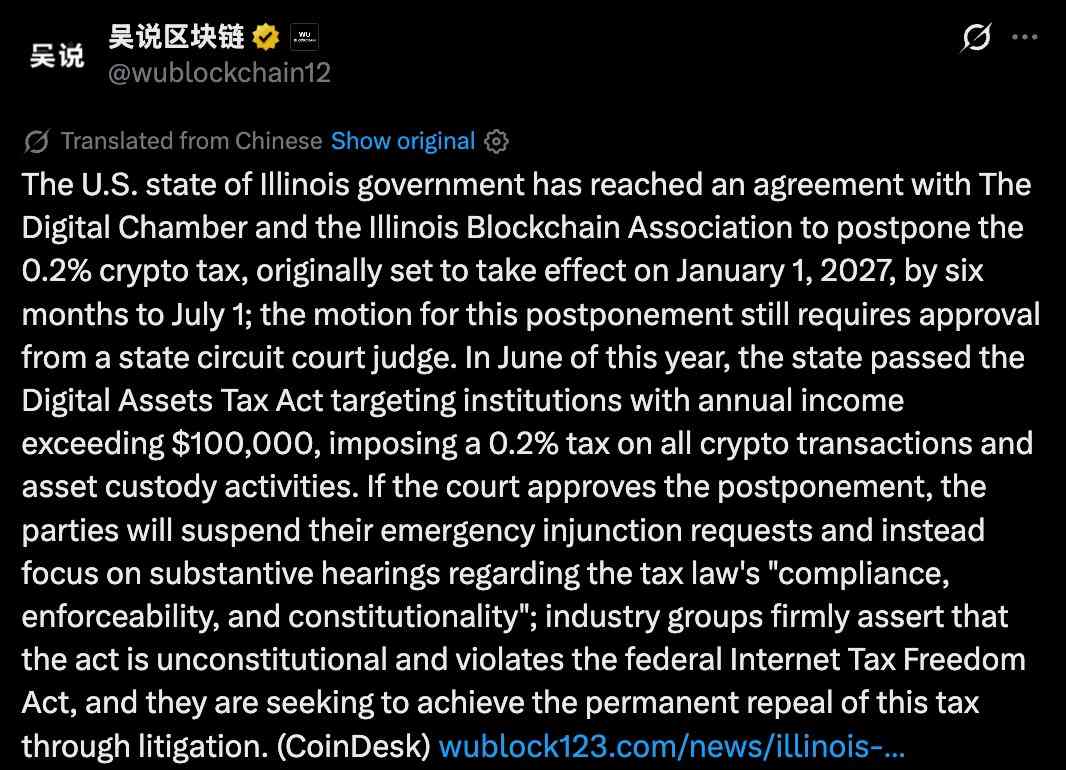
A state circuit court judge must still approve it. This is crypto news today, as of October 2, 2026.
What Did Illinois Agree to With the Crypto Industry?
According to that post, the state and both groups reached an agreement on a crypto tax postponement. The motion still needs the judge's approval.
If the court approves it:
-
The parties will suspend their emergency injunction requests.
-
Hearings will shift to compliance, enforceability and the constitutionality of crypto tax provisions.
-
Industry groups will keep pushing for permanent repeal.
Is the Illinois Crypto Tax Postponed, and When Does It Start?
Not yet. The Illinois Department of Revenue still lists January 1, 2027 as the start date.
| Date | Event |
| June 2026 | Act passed in state budget |
| July 21, 2026 | Suit filed in Sangamon County court |
| Sept 9, 2026 | Injunction motion by two trade groups |
| Oct 1, 2026 | Delay agreement reported |
| Oct 30, 2026 | Draft rule comments due |
| Jan 1, 2027 | Original start date |
| July 1, 2027 | Crypto tax postponed July 2027, if approved |
Illinois 0.2% Crypto Transaction Tax Explained
The Illinois Digital Asset Tax Act rate is 0.2% of the asset's value, charged on the privilege of receiving digital asset business activity. Wu Blockchain's post calls it the Digital Assets Tax Act. The statute sits at 35 ILCS 195.
Under the draft proposed rules, exchanges, transfers and storage handled by a broker are covered.
The draft rules leave these outside the levy:
-
NFTs
-
Network fees paid to miners or validators
-
Wallet-to-wallet transfers without an intermediary
-
Swap fees paid only to liquidity providers
A digital asset custody tax applies when a broker charges specifically for storage, and the draft taxes that storage once regardless of its duration.
Who Has to Pay the Illinois Crypto Tax?
Brokers collect and remit the levy. The draft rules name centralized exchanges, custodians, payment processors and DeFi platforms that charge protocol fees.
Out-of-state brokers count once gross receipts from Illinois customers reach $100,000. Wu Blockchain's post frames it as institutions with income above $100,000.
Individuals can still feel it. The draft rules define a customer broadly, and brokers must add the tax to the purchase price. Exchanges also carry registration duties and monthly returns.
Is the Illinois Crypto Tax Unconstitutional?
No court has ruled yet. TDC argues that no one should be taxed differently because of how ownership is recorded. Industry groups also say the measure breaks the Internet Tax Freedom Act crypto groups cite, which bars multiple and discriminatory taxes on electronic commerce.
The Digital Chamber lawsuit against Illinois seeks to halt the provision, which CEO Cody Carbone said was added the night before the bill's final consideration. TDC also says members are already paying compliance costs.
Will the Illinois Crypto Tax Be Repealed?
Industry groups want permanent repeal through litigation, according to Wu Blockchain. Nothing is guaranteed. If the judge agrees, substantive hearings follow, and public comments on the draft rules close October 30, 2026.
For market context, CoinGabbar's October 1 report put the global crypto market cap at $2.96 trillion.
Expert View: What the Pause Could Mean
Analysts tracking Illinois crypto regulation may read the delay as extra build time for brokers, since trade groups say compliance costs are already mounting. If the judge declines, January 1 could stand.
A state crypto tax that survives court review could also invite copycats, a concern the Blockchain Association has raised. Meanwhile, a separate Senate crypto tax bill targets federal rules.
Check back for more crypto news on the court ruling.
Disclaimer: This article is informational and is not tax, legal or investment advice.













