XRP MiCA License: What It Means for XRP Price Prediction 2026

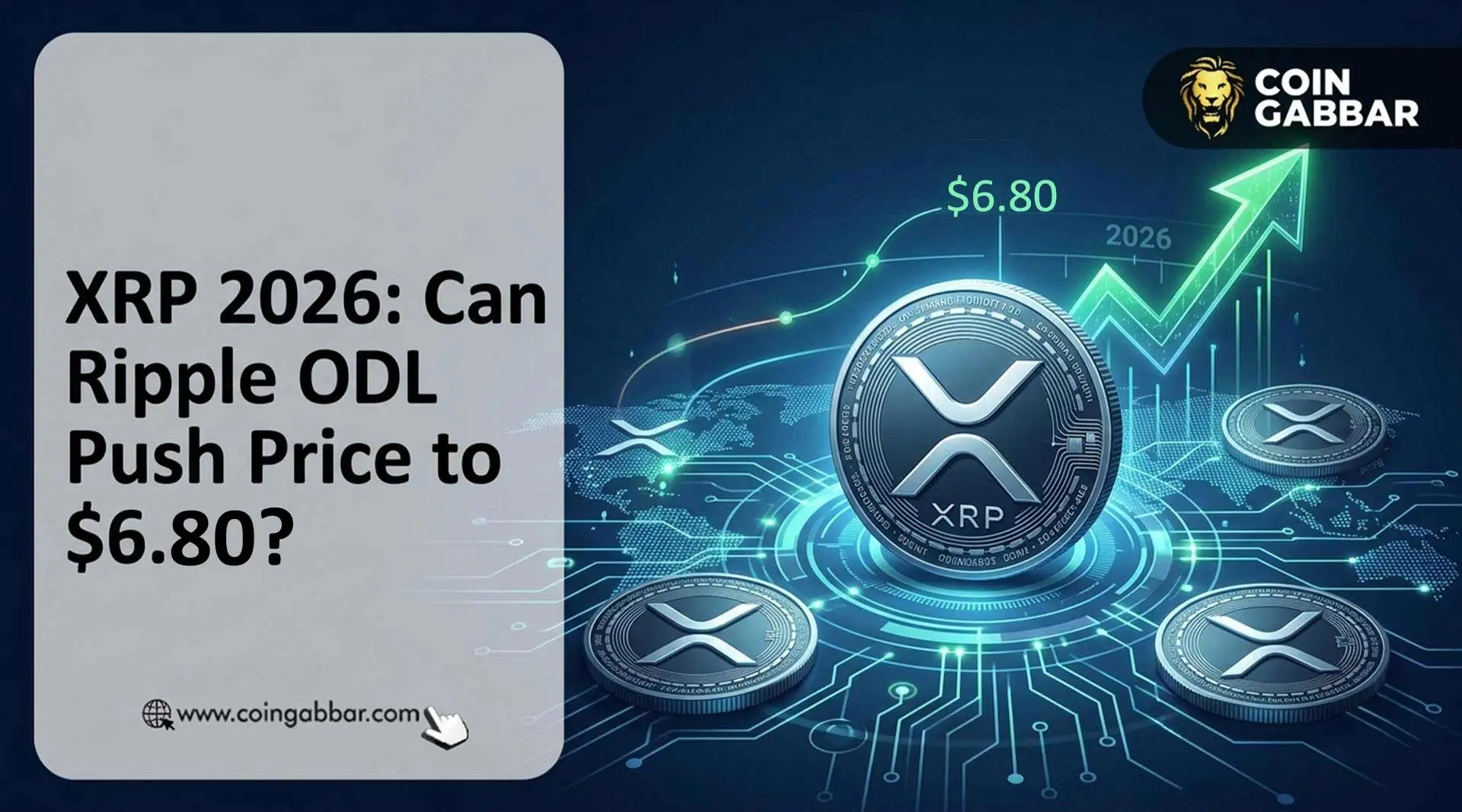
What Is Ripple ODL and How Does It Impact XRP Price in 2026?
Updated: July 24, 2026
Change Note: This update expands the XRP MiCA license analysiswith its EEA scope, Ripple Payments and RLUSD implications, technicalindicators, ETF-flow context, analyst targets, and 2026 bull/base/bearscenarios.
Refresh Cadence: Weekly during major XRP, Ripple, ETF, andregulatory developments; monthly for evergreen forecast sections.
The XRP MiCA license has become an important part of the broader $XRP investment story in 2026. Ripple received full Crypto Asset Service Provider (CASP) authorization from Luxembourg's CSSF in July, completing its MiCA requirements and allowing its regulated cryptoasset services to scale across the European Economic Area. The development comes as Ripple continues expanding its payments infrastructure and stablecoin ecosystem.
For investors, the key question is whether this regulatory milestone can translate into greater institutional adoption, stronger payment activity, and eventually higher demand . The answer is not straightforward. Ripple's European expansion is a major business development, but its price is also influenced by ETF flows, trading volume, XRP liquidity, Bitcoin's direction, regulation, and market sentiment.
What Is the $XRP MiCA License and Why Does It Matter?
Ripple's MiCA authorization comes through Luxembourg's financial regulator, the Commission de Surveillance du Secteur Financier (CSSF). Ripple previously received full approval for an EU Electronic Money Institution (EMI) license in February 2026, followed by preliminary MiCA CASP approval in June and full CASP authorization in July.
The combination is significant because Ripple says its regulated crypto payments infrastructure can now be offered across all 30 countries in the European Economic Area. The company describes the offering as allowing financial institutions, businesses, and corporates to access cryptoasset and stablecoin payment infrastructure through a regulated framework.
The $XRP MiCA license should therefore be viewed as an infrastructure and distribution milestone rather than an automatic $XRP price catalyst.
What Can Ripple Do Under Its MiCA Authorization?
| Area | Potential Scope |
| EEA reach | Services can be scaled across all 30 EEA countries |
| Cryptoasset services | Exchange and transfer-related services under the regulated framework |
| Payments | Supports Ripple's regulated crypto payments infrastructure |
| Institutional clients | Banks, fintechs, corporates, and financial institutions |
| Stablecoins | Strengthens the distribution framework around Ripple's stablecoin ecosystem |
| Passporting | MiCA authorization can support cross-border service provision within the EEA |
The French AMF's whitelist also identifies Ripple Payments Europe S.A. as a MiCA-licensed CASP with authorization covering cryptoasset-to-fiat exchange, cryptoasset-to-cryptoasset exchange, and cryptoasset transfer services under the European framework.
This gives Ripple a clearer regulatory foundation to expand across Europe. However, the license itself does not guarantee that every payment transaction will use it.
How Could the $XRP MiCA License Affect $XRP Price?
The potential connection between Ripple's European expansion and ir is indirect but important.
Ripple's payment infrastructure can use digital assets and stablecoins to facilitate cross-border transactions. It has historically been positioned as a bridge asset that can help move value between currencies, while RLUSD gives Ripple another asset for payment and settlement use cases.
Greater institutional access to Ripple's regulated infrastructure could increase awareness and adoption of the broader ecosystem. If more payment corridors eventually use it for liquidity or settlement, that could strengthen the asset's utility narrative.
However, investors should separate three different concepts:
- Ripple's regulatory adoption.
- Ripple Payments adoption.
- Actual usage and demand.
These are connected, but they are not identical. A company can expand its payments business without creating proportional demand. Therefore, the long-term XRP price prediction 2026 thesis should focus on measurable usage, transaction activity, liquidity, and institutional demand rather than license announcements alone.
Ripple ODL and the $XRP Price Impact
The Ripple's On-Demand Liquidity model is designed to reduce reliance on traditional pre-funded accounts in cross-border payments. In a simplified XRP-based flow, a sender's local currency can be converted into XRP, transferred through the XRP Ledger, and converted into the recipient's local currency.
This can potentially improve settlement speed and capital efficiency. However, the Ripple ODL price impact is difficult to calculate directly.
The reason is simple: It is also heavily traded in spot and derivatives markets. Speculation, ETF activity, Bitcoin performance, macroeconomic conditions, and liquidity can have a much larger short-term influence on price than payment settlement volume.
For investors, the most important metric is therefore not the number of announced payment corridors. It is whether those corridors generate sustained, measurable XRP-related activity.
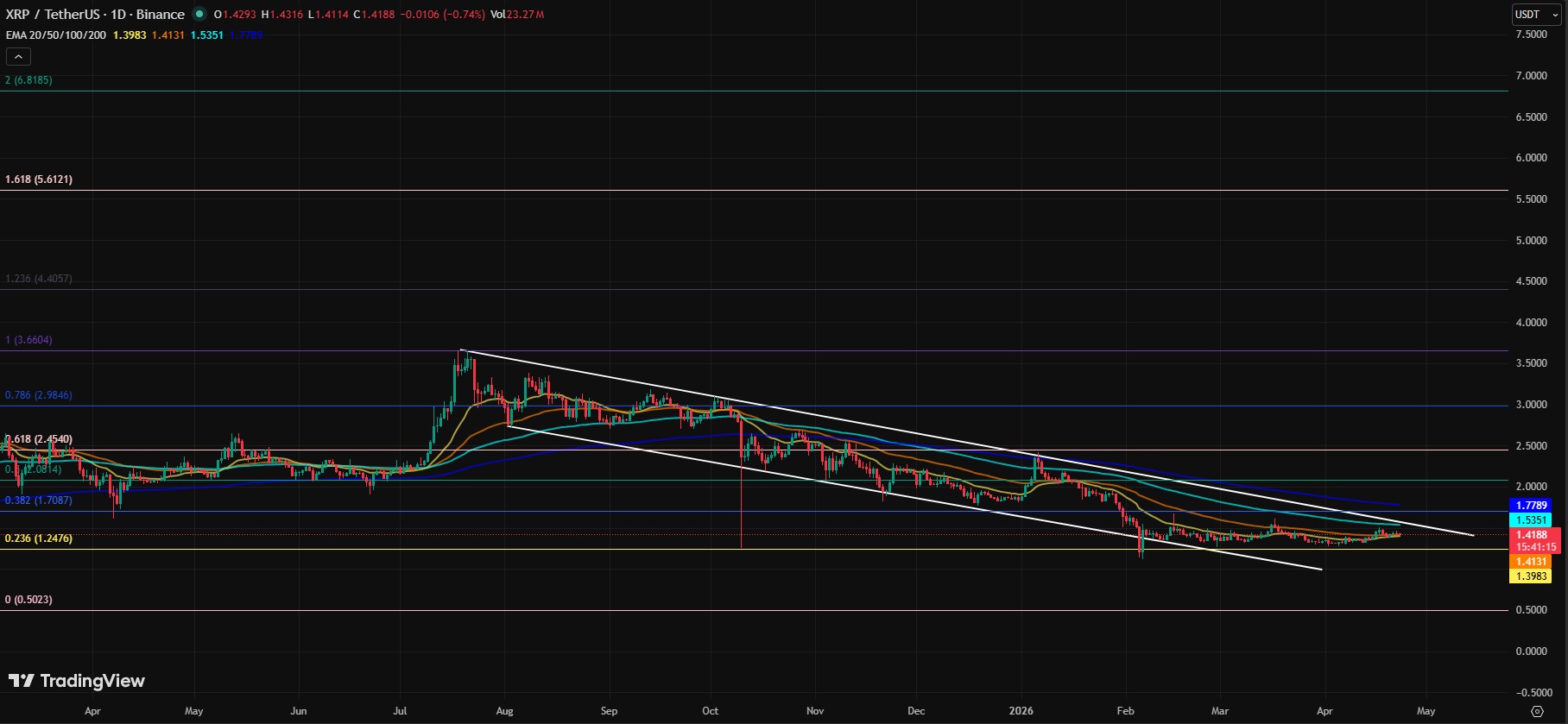
$XRP Technical Model: What Indicators Matter?
A transparent XRP forecast should combine several indicators rather than rely on one chart pattern.
The technical model used in this analysis considers:
- RSI: Measures momentum and identifies overbought or oversold conditions.
- EMA: Tracks short- and long-term trend direction.
- MVRV: Helps assess whether holders are sitting on historically high or low unrealized gains.
- Trading volume: Confirms whether price breakouts have genuine market participation.
- ETF flows: Provides an additional measure of institutional demand.
- Whale accumulation: Helps identify whether large holders are increasing exposure.
The model is currently mixed. A stronger rsi reading combined with a breakout above major moving averages would improve the bullish case. Rising trading volume during a breakout would provide additional confirmation.
Meanwhile, MVRV and whale accumulation can support the longer-term thesis, but neither indicator can predict a specific price target by itself.
$XRP ETF Flows: The Institutional Demand Test
XRP ETF demand remains one of the most important factors for the forecast because spot products provide traditional investors with regulated market exposure.
The ETF picture has not been consistently one-directional. Standard Chartered's Geoffrey Kendrick reportedly reduced his 2026 target to $2.80 in February, citing factors including slower ETF inflows, high interest rates, and geopolitical uncertainty. The bank's earlier 2026 target had been substantially higher.
More recent ETF data has shown that demand can return quickly. On July 16, U.S. spot $XRP ETFs reportedly attracted $6.78 million in net inflows, led by Bitwise and Franklin products, while cumulative net inflows reached approximately $1.49 billion.
This highlights why ETF flows should be monitored alongside price. Strong inflows combined with rising spot volume would strengthen the institutional adoption thesis. Persistent outflows, on the other hand, could pressure XRP even if Ripple's regulatory position continues improving.
$XRP Price Target 2026: Bull, Base and Bear Cases
The following scenarios combine the XRP MiCA license, institutional adoption, technical indicators, ETF demand, payment activity, and broader crypto-market conditions.
| Scenario | Target | Probability | Main Assumption | Invalidation |
| Bull case | $6.00–$10.00 | 25% | Strong ETF inflows, adoption, regulatory clarity, and broad crypto bull market | Sustained loss of major long-term support |
| Base case | $2.80–$5.60 | 50% | Gradual institutional adoption and improving liquidity | Weak ETF demand and prolonged market weakness |
| Bear case | $1.00–$2.50 | 25% | ETF outflows, weak volume, macro pressure, and delayed adoption | Strong breakout with sustained institutional inflows |
These probabilities are analytical estimates, not guarantees.
The base case is supported by more conservative institutional forecasts. Standard Chartered's reported $2.80 2026 target represents one of the more cautious major-bank projections. At the more bullish end, EGRAG Crypto has been associated with cycle targets in the $7–$10 range, although these are technical and market-cycle projections rather than institutional forecasts. Community-compiled forecasts also show 21Shares scenarios around the $1.60–$2.69 range, depending on the case.
The wide range demonstrates how uncertain the price target remains.
$XRP Forecast: Could MiCA Help Ripple's European Expansion?
The strongest potential benefit of the XRP MiCA license may be institutional confidence.
European financial institutions generally operate within strict regulatory requirements. Having a regulated framework can reduce uncertainty when businesses evaluate cryptoasset infrastructure and digital payment solutions.
Ripple's existing EU EMI authorization combined with its MiCA CASP license gives the company a stronger regulatory foundation to expand its services. Ripple has also stated that its global regulatory portfolio now includes more than 75 licenses.
The potential impact on XRP depends on how much of this institutional growth eventually translates into actual usage.
That distinction matters for the xrp analysis today. A larger Ripple business is positive for the ecosystem, but price appreciation ultimately requires sufficient demand relative to available supply and market liquidity.
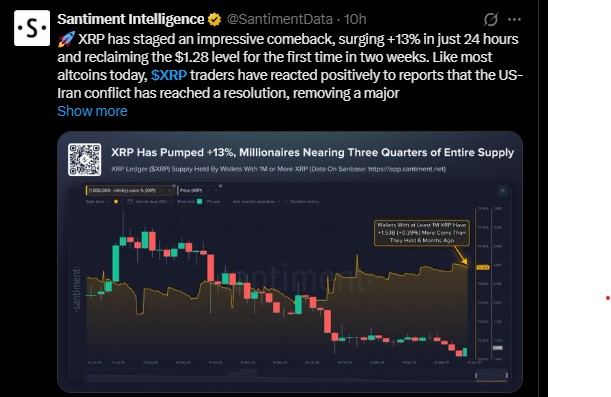
$XRP Price Prediction Today: What Should Traders Watch?
The short-term xrp price prediction today should focus on four signals.
First, watch $XRP's RSI. A recovery from oversold conditions can support a bounce, but momentum needs to remain strong.
Second, monitor the major moving averages. Reclaiming key EMAs with rising volume would provide stronger evidence of a trend reversal.
Third, watch fibonacci levels and established support and resistance zones. Breakouts that occur without volume are more vulnerable to failure.
Finally, track ETF flows. Institutional inflows can strengthen the bullish narrative, while renewed outflows may limit upside.
For readers researching $XRP support and resistance levels, these technical zones remain more useful for short-term decisions than distant cycle targets.
Is XRP a Good Buy Right Now?
Whether XRP is a good investment depends on the investor's timeframe and risk tolerance.
The bullish case is based on Ripple's expanding regulatory footprint, the MiCA license, institutional payment infrastructure, potential ETF demand, whale accumulation, and a possible increase in real-world utility.
The bearish case is equally important. XRP remains highly sensitive to Bitcoin, macroeconomic risk, ETF flows, and market liquidity. Ripple's MiCA authorization does not automatically create XRP demand, and payment adoption does not guarantee price appreciation.
Investors should therefore treat the license as a positive structural development rather than a guaranteed short-term catalyst.
Final XRP Price Prediction 2026
The XRP MiCA license represents a major regulatory milestone for Ripple's European strategy. Full CASP authorization in Luxembourg gives Ripple a regulated framework to scale cryptoasset services across the EEA, while its existing EMI license strengthens its position in the European payments market.
The next test is execution.
If Ripple converts regulatory access into meaningful institutional adoption, expands payment activity, and XRP usage grows alongside ETF demand, the bullish case toward $6–$10 becomes more plausible over a full market cycle.
If adoption remains limited, ETF flows weaken, and broader crypto markets struggle, the more conservative $2.80–$5.60 range may be more realistic.
For now, the XRP price prediction 2026 remains a balance between growing institutional infrastructure and the need for measurable XRP demand. The MiCA license improves Ripple's regulatory position, but the market will ultimately judge the development by adoption, liquidity, payment activity, and whether those factors translate into sustained demand for XRP.
Disclaimer: This article is for informational purposes only and does not constitute financial, investment, or trading advice. Cryptocurrency markets are highly volatile and carry significant risk, including the potential loss of capital. Analyst forecasts and price scenarios are speculative and should not be treated as guaranteed outcomes. Always conduct your own research and consult a qualified financial adviser before making investment decisions.