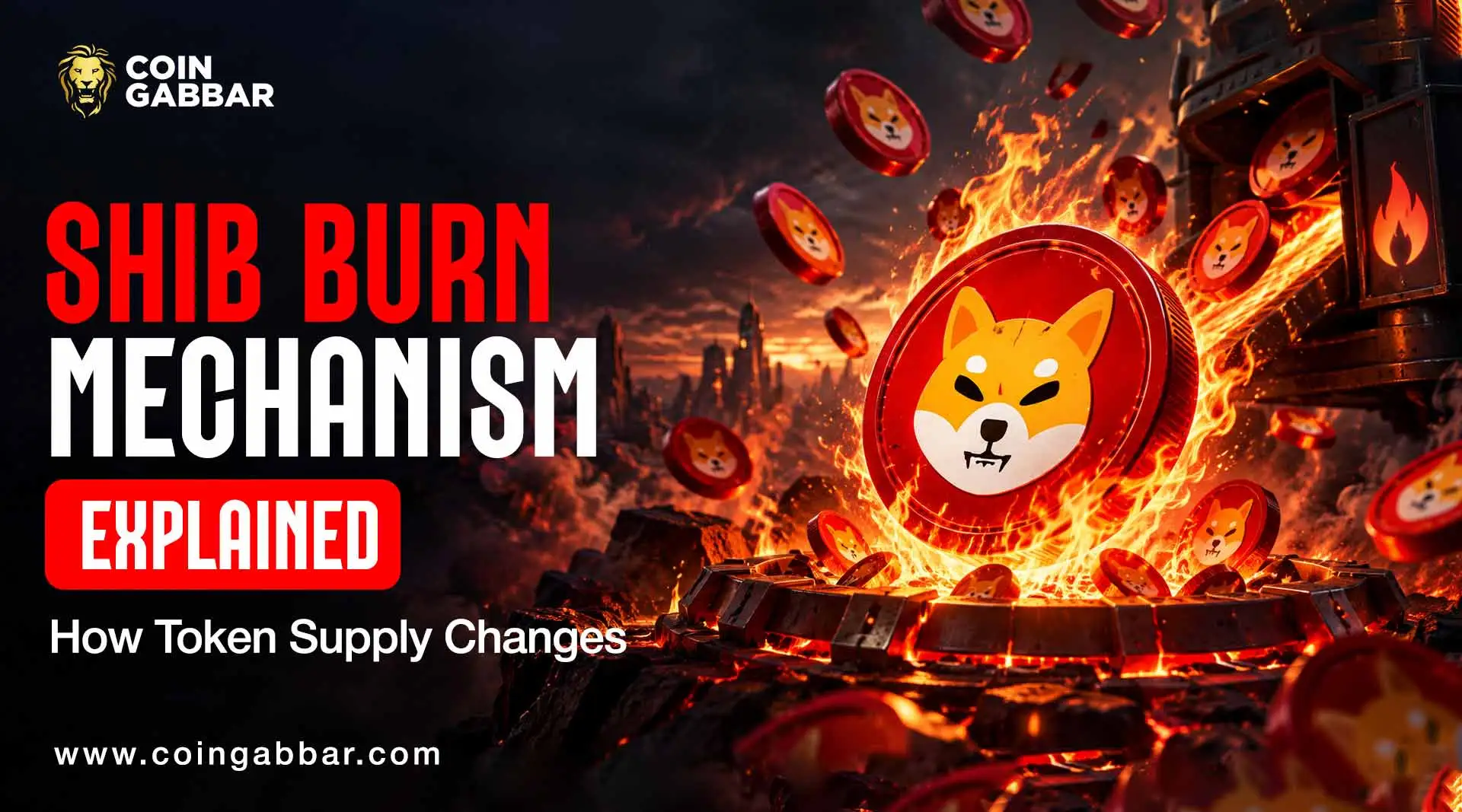
SHIB Burn Mechanism Explained: How Token Supply Changes

How Does the SHIB Burn Mechanism Affect Token Supply?
Ask any Shiba Inu holder what keeps the community busy, and burning comes up fast. The SHIB burn mechanism is the process of permanently removing SHIB tokens from circulation.
It matters because Shiba Inu launched with one quadrillion tokens, a figure confirmed on the project's official website. That is an enormous starting supply, and burns are the main tool used to work against it.
This guide breaks down how the burn process actually works, where the tokens go, and what the current numbers say about supply reduction.
What Is the SHIB Burn Mechanism?
Burning means sending tokens to a wallet address that nobody controls. Once SHIB lands there, it cannot be moved, sold, or used again.
The idea is simple: fewer tokens in circulation, in theory, means each remaining token represents a slightly larger share of the total supply. Whether that changes price is a separate question, covered further down.
How Does SHIB Token Burning Work?
Anyone can burn SHIB by sending tokens to a designated burn address. There is no single company that runs the process.
Instead, burns come from several directions at once: individual holders, community projects, exchanges, and the Shibarium and ShibaSwap ecosystem. Each burn transaction is recorded permanently on the blockchain, so anyone can verify it.
What Happens to SHIB Tokens After They Are Burned?
Once tokens reach a burn address, they sit there forever. The address has no private key that anyone holds, so the coins cannot be retrieved, spent, or transferred out again.
They still technically exist on the blockchain ledger. But for all practical purposes, they are gone from the usable supply.
How Does SHIB Burning Reduce Token Supply?
Total supply only drops when tokens move to a burn address. Regular wallet-to-wallet transfers, staking, or holding do not reduce supply at all.
That distinction matters. Trading volume and burn volume are two different things, and headlines sometimes blur them together.
Burn Addresses and Irrecoverable SHIB Tokens
The most recognized SHIB burn address is a null wallet, often described as a "dead" address with no known owner. Anyone can look up the balance on a public blockchain explorer and confirm it has never sent a single token back out.
This is what makes a burn different from simply moving tokens to a wallet that could later reappear on an exchange.
What Are the Main Sources of SHIB Burns
SHIB burns come from a mix of automated systems and manual community action. No single source accounts for all of it.
Shibarium and SHIB Burning
Shibarium, the project's own layer-2 network, folds a burn step into its transaction fees. A portion of each transaction's base fee is set aside and later converted into SHIB that gets burned, according to the network's published documentation.
Community-Driven SHIB Burns
Individual holders and community-built projects also contribute. Some websites and games route a share of their revenue toward buying SHIB on the open market and burning it, tied to the project's broader community governance model.
SHIB Burn Portals and Automated Burns
Before Shibarium launched, a dedicated burn portal let holders send SHIB to a burn address in exchange for reward points. That portal ran alongside voluntary burns and still gets referenced as an early example of organized, community-run burning.
How Does Shibarium Burn SHIB Tokens?
According to Shibarium's public documentation, the base transaction fee on the network is split once it is collected. Roughly 70% of that base fee is converted and burned, while the remaining share is set aside for network upkeep.
The burn only executes once a set threshold of the network's gas token accumulates in the contract. That makes Shibarium a steady, usage-linked source of burns tied directly to activity on the ShibaSwap decentralized exchange, rather than a one-time event.
How Can You Track SHIB Burn Transactions?
Every burn is public. Since burn addresses sit on the Ethereum blockchain, anyone can check the balance, transaction history, and timing of each transfer directly.
SHIB Burn Trackers and On-Chain Data
Dedicated tools exist specifically to monitor SHIB burns in real time, showing hourly, daily, and weekly totals. These tools pull straight from an on-chain burn tracker rather than relying on secondhand reports, which is why most coverage of SHIB burns cites them directly.
Does SHIB Burning Affect Its Price?
Not automatically. Shiba Inu's circulating supply still sits in the hundreds of trillions, so even large-sounding burns represent a tiny fraction of the total.
Roughly 476.96 million SHIB burned over a 30-day stretch worked out to about 0.00008% of circulating supply, based on published burn-tracker data. At that pace, cutting total supply by even 1% would take well over a thousand years.
Price still depends mainly on demand, trading volume, and broader market sentiment. Burns can support a SHIB price outlook narrative, but they have not shown a direct, reliable link to price moves on their own.
What Are the Benefits and Risks of the SHIB Burn Mechanism
Reduces usable supply: Every confirmed burn permanently lowers the tokens available to trade or hold.
Adds transparency: Burns are verifiable on-chain, so the process is not based on unverifiable claims.
Scale limits the impact: With trillions of tokens still circulating, individual burns rarely move the needle in any meaningful way.
No guaranteed price effect: A shrinking supply does not automatically translate into a rising token price.
Uneven pace: Burn rates swing sharply day to day, making the trend hard to predict from any single data point.
How Much SHIB Has Been Burned So Far
According to on-chain tracking data, more than 410 trillion SHIB has been burned since the token launched, out of an original one quadrillion supply. That leaves roughly 589 trillion SHIB in circulation as of September 2026.
Supply Metric | Approximate Figure |
Original total supply | 1,000 trillion (1 quadrillion) SHIB |
Total SHIB burned to date | Over 410 trillion SHIB |
Remaining circulating supply | Roughly 589 trillion SHIB |
Share of original supply burned | Around 41% |
A large portion of that total traces back to a single early event. Ethereum's co-founder received roughly half the original supply directly from the project's creators and burned the bulk of it in 2021, which still accounts for most of the all-time burn total today.
What Could Drive Future SHIB Burn Activity?
Shibarium's transaction volume is the clearest lever going forward. More activity on the network means more base fees collected, which means more scheduled burns over time.
Community initiatives can add to that, but they tend to be inconsistent. A single large voluntary burn can spike the daily rate, only for it to drop back down the next day.
What Should SHIB Holders Watch
Holders tracking the burn rate should watch Shibarium's actual usage numbers rather than single-day burn spikes, which can be misleading in isolation. It also helps to keep an eye on SHIB holders warned about security style updates, since burn addresses and legitimate burn tools are sometimes imitated by scam wallets asking for deposits.
Anyone interacting with burn portals or Shibarium contracts should stick to verified links and practice secure wallet practices before sending any tokens.
Conclusion
The SHIB burn mechanism removes tokens permanently by sending them to addresses nobody can access again. It runs through several channels at once, from Shibarium's built-in fee burns to voluntary community action, and every transaction is verifiable on-chain.
Over 410 trillion SHIB has been burned since launch, yet the circulating supply still runs into the hundreds of trillions. That scale is exactly why burns alone have not translated into a consistent price effect so far.
Disclaimer
This article is for informational purposes only and does not constitute financial advice. Cryptocurrency markets are volatile, and past burn activity does not guarantee future price movement. Always research independently before making any investment decision.