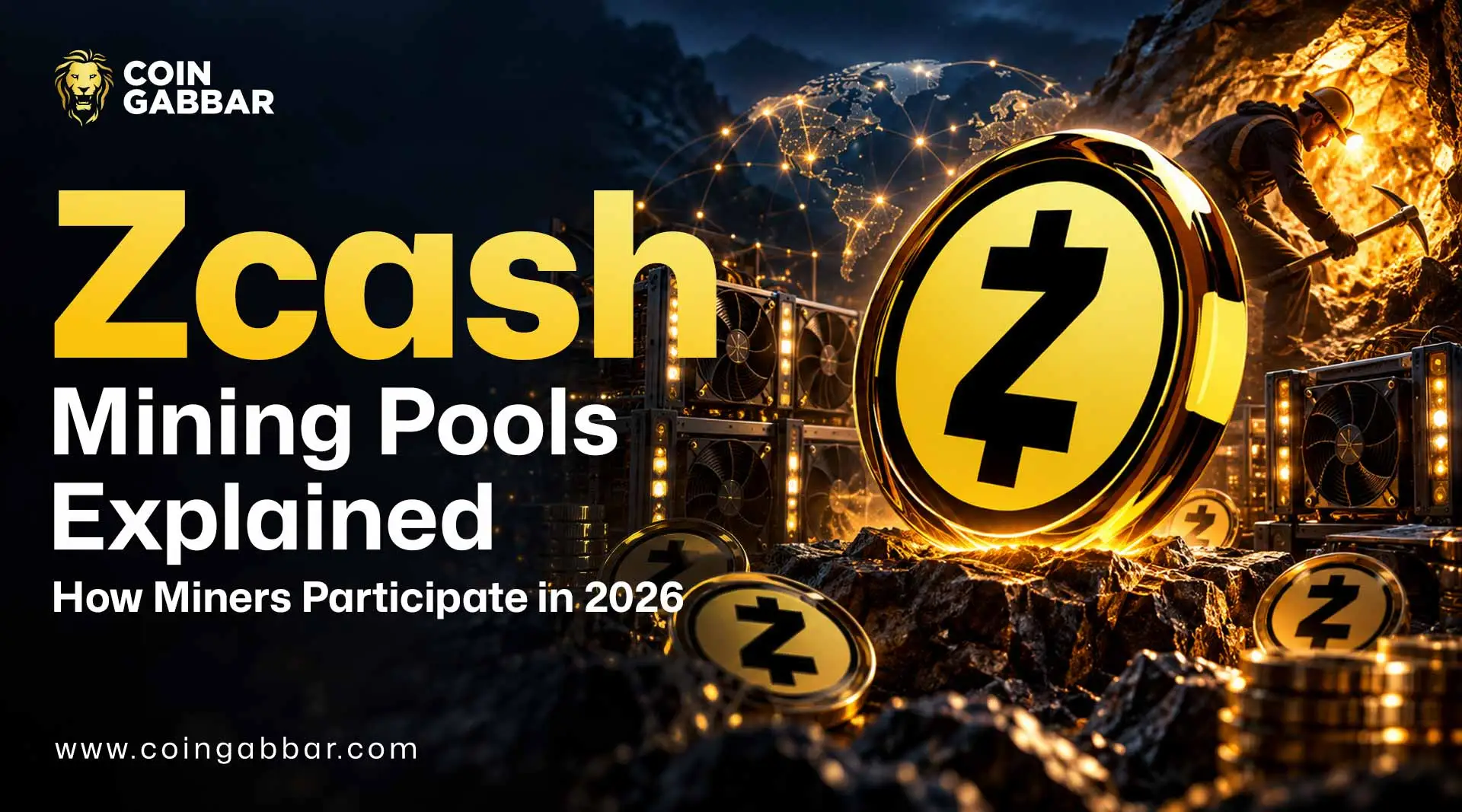
Zcash Mining Pools Explained: How Miners Participate in 2026

Zcash Mining Pools: How Pool Mining, Rewards & Payouts Work
Zcash has carved out a distinct place in the privacy coin market, and mining remains central to how the network stays decentralized. Zcash mining pools bring together individual-miners so hashing power is combined, rewards are shared, and payouts stay steady instead of relying on pure luck. This guide breaks down how Zcash-mining pools work, what miners should expect, and where the risks lie in 2026.
For anyone exploring crypto mining beyond Bitcoin, Zcash mining pools offer a slightly different experience shaped by the Equihash algorithm and the coin's privacy-first design. Solo mining Zcash is technically possible, but pool mining has become the practical default for most participants today.
What Are Zcash Mining Pools
A mining pool is simply a group of miners who combine their computing power to solve blocks faster than they could alone. Once a block reward is found, it gets split among participants based on their contributed work.
Zcash mining pools operate on the same basic principle but apply it to the Equihash proof-of-work algorithm, which Zcash uses instead of Bitcoin's SHA-256. Equihash is memory-hard, meaning it leans on RAM rather than raw processing speed, which changes the type of hardware that performs well.
For newer-miners, joining a pool removes the uncertainty of waiting days or weeks for a solo block. Instead, smaller, more frequent payouts arrive based on actual contributed hash power.
Understanding Equihash and Why It Matters
Equihash was designed to resist the kind of specialized ASIC dominance seen in Bitcoin mining, at least in its earlier years. It rewards memory bandwidth over pure computational brute force, which originally made GPU mining more viable for everyday users.
Over time, ASIC hardware built specifically for Equihash has appeared, shifting the balance again. Zcash mining pools today see a mix of GPU rigs and specialized ASIC-miners competing for the same rewards, which affects how profitable smaller setups remain.
This mixed hardware environment is one reason miners-research pool statistics carefully before committing resources, since hash rate distribution can vary a lot between platforms. Anyone wanting a deeper technical breakdown of how Equihash handles memory allocation can find it in the ecosystem documentation.
How Rewards Work in Zcash Mining Pools
Block rewards on the Zcash network are distributed to miners who successfully validate blocks, then split among pool participants using various payout formulas. Most pools rely on PPS, PPLNS, or a hybrid model to calculate individual shares.
PPS, or Pay Per Share, pays miners a fixed amount for every valid share submitted, regardless of whether the pool actually finds a block. This gives more predictable income but usually comes with slightly higher pool fees to offset the pool's risk.
PPLNS, or Pay Per Last N Shares, ties rewards more closely to the pool's actual block discovery, which can mean more variance but often lower fees over time. Miners choosing between these models usually weigh steady income against long-term average returns.
Zcash also has a defined halving schedule, so block rewards decrease periodically. This directly affects how much a mining pool can distribute, making it important for miners to track upcoming halving events when estimating future earnings.
Fees Charged by Zcash Mining Pools
Pool fees typically range between 0.5% and 3%, though this varies by platform and payout structure. These fees cover the pool's server infrastructure, uptime maintenance, and operational costs of coordinating thousands of connected miners.
Some pools also charge separate withdrawal fees or set minimum payout thresholds, meaning smaller miners might wait longer to receive funds. Comparing fee structures across a handful of pools before choosing one can meaningfully affect long-term profitability.
Transparent pools usually publish their fee percentage, payout method, and minimum withdrawal amount directly, which makes comparison easier for miners doing due diligence.
Choosing the Right Zcash Mining Pool
Server location matters more than many new miners expect, since latency between a miner's rig and the pool's server can affect share submission speed. Choosing a geographically closer server generally reduces rejected shares.
Pool size is another factor worth weighing. Larger pools tend to find blocks more consistently, which suits miners who prefer smaller, frequent payouts. Smaller pools may offer higher variance but sometimes lower fees or more direct community support.
Checking a pool's uptime history and reading community feedback through forums can help miners avoid unreliable platforms before committing hardware. For details on payout schedules and reward calculations, the network's technical documentation is usually the most reliable starting point.
Payout Methods and Withdrawal Options
Most Zcash mining pools support direct payouts to a personal wallet address, with some also offering integration with popular exchanges for easier conversion. Miners should confirm wallet compatibility before pointing hardware at any specific pool.
| Payout Method | How It Works | Typical Frequency |
| PPS (Pay Per Share) | A fixed reward is paid for each valid share submitted by the miner. | Daily or on-demand |
| PPLNS (Pay Per Last N Shares) | Rewards are based on the miner’s eligible shares when the pool finds blocks. | Varies with pool luck |
| Solo Mining via Pool | Miner keeps the full block reward, while the pool provides coordination and infrastructure. | Irregular; high variance |
Manual withdrawal thresholds also differ, with some pools processing payouts automatically once a balance hits a set minimum, while others require the miner to trigger withdrawal manually through their dashboard.
Hardware Considerations for Zcash Mining in 2026
GPU mining remains viable for Zcash, particularly for miners who already own rigs from earlier mining cycles across other coins. However, specialized ASIC units generally outperform GPUs in raw efficiency for Equihash specifically.
Electricity costs play a significant role in real-world profitability, since mining rewards must outweigh ongoing power consumption to make sense financially. Miners in regions with cheaper electricity naturally have an advantage over those paying higher rates.
Cooling and maintenance also factor into long-term costs, as continuous mining operations generate heat and wear on hardware components over extended periods of use.
Why Zcash Mining Pools Continue Attracting Miners
Zcash's privacy features, including shielded transactions, give the coin a distinct identity separate from fully transparent blockchains. This has kept a dedicated mining community active even as newer coins have entered the market.
Developers and miners tracking upcoming protocol changes usually start with the network's official page, since technical updates around mining difficulty are posted there first.
As halving events reduce block rewards gradually, pool mining becomes increasingly relevant since it smooths out income compared to the higher variance of solo mining attempts.
Risk Factors to Consider
-
Mining profitability can shift quickly if Zcash's price drops while electricity costs remain fixed or rise.
-
Pool downtime or server issues may cause missed shares and reduced payouts during outages.
-
Halving events reduce block rewards over time, directly lowering potential mining income.
-
Hardware costs for competitive ASIC miners can be high, with a long break-even period for smaller operations.
-
Regulatory changes around crypto mining in certain regions could affect operational legality or costs.
-
Pool fee structures vary widely, and unclear terms can quietly reduce actual take-home earnings.
Conclusion
Zcash mining pools remain a practical way for individual miners to participate in network validation without needing enterprise-level hardware or facing the extreme variance of solo mining. Understanding Equihash, payout structures, and fee models helps miners make more informed decisions.
As the Zcash network continues evolving through 2026, staying updated through official sources and comparing pool performance regularly will matter more than ever for anyone serious about consistent mining returns.
Disclaimer
This article is for informational purposes only and does not constitute financial or investment advice. Cryptocurrency mining involves financial risk, including hardware costs, electricity expenses, and market volatility. Readers should conduct their own research and consult a qualified financial advisor before making mining or investment decisions.