Zcash Enterprise Privacy Applications Explained in 2026

Why Privacy at the Protocol Level Matters for Business
Every payment made on a public blockchain turns into a permanent, searchable record, something competitors, vendors, or basic chain analysis tools can dig up later without much effort.
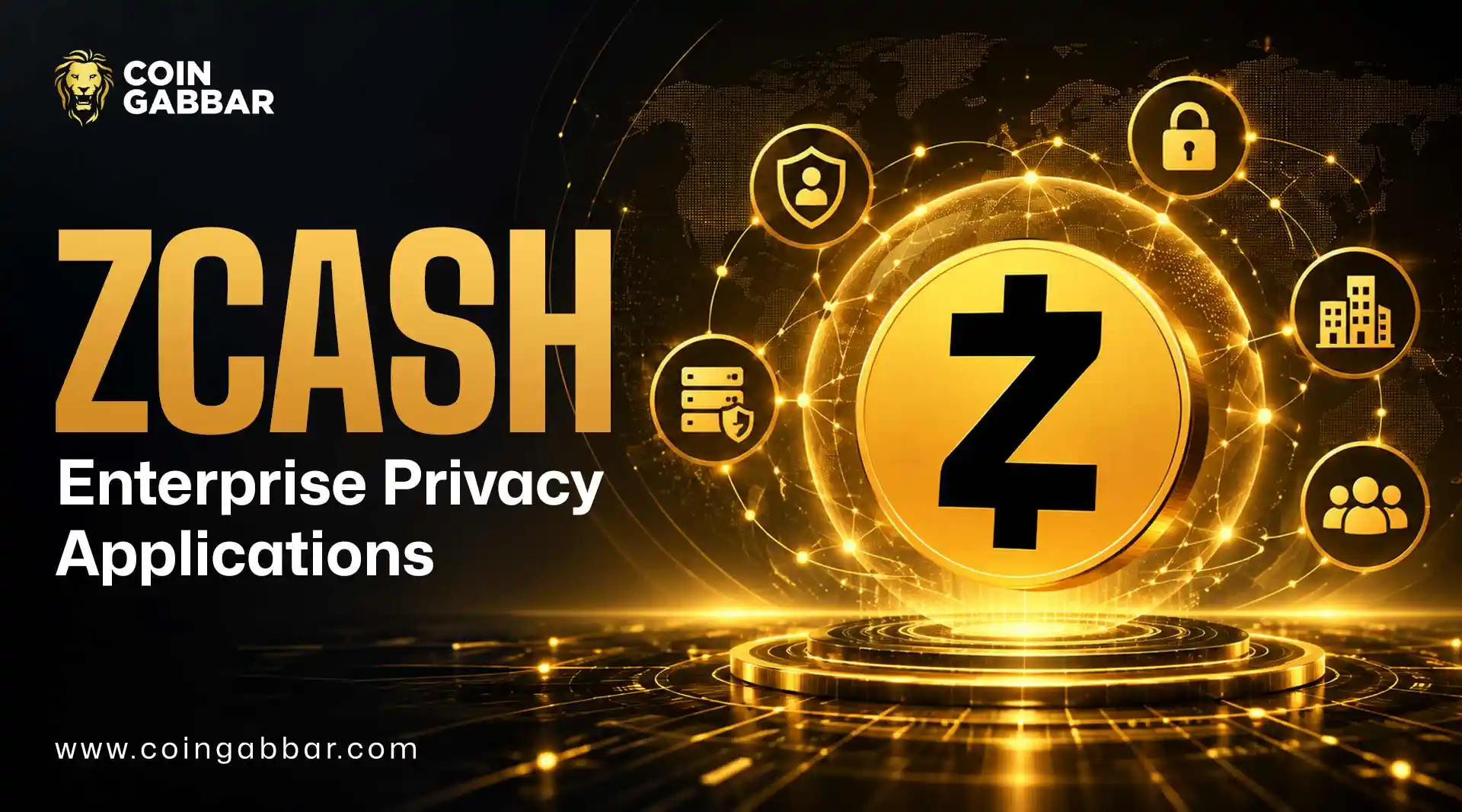
That's the exact gap Zcash enterprise privacy applications were built to close, sitting at one end of the broader Zcash and Monero privacy spectrum. Zcash lets a business pick between a fully transparent transaction and a shielded one that hides the sender, receiver, and amount from public view, while the transaction itself still stays verifiable on-chain.
For a company handling payroll, supplier payments, or sensitive settlements, that distinction carries a lot more weight than it might seem at first glance. This piece looks at how the technology actually works, where it fits into real business processes, and where its limits still show up.
Zcash Enterprise Privacy Applications and Their Business Role
At the center of this sits a fairly simple choice: transparent addresses that work like an ordinary public ledger, or shielded addresses that hide transaction details completely.
Zcash launched back in 2016 as one of the first large-scale uses of zero-knowledge cryptography outside academic research, and that same optional design still shapes.
how it compares to other privacy coins today, something laid out well: the Zcash vs. Monero comparison. That history matters for businesses looking into the technology, since it's a protocol with nearly a decade of real-world use behind it rather than something untested.
How Zcash Shielded Transactions Protect Business Data
A shielded, or z-to-z, transaction encrypts the sender, receiver, and amount so none of it appears on the public chain in readable form. The network still confirms the transaction is valid through zero-knowledge math, without ever exposing what's actually being hidden.
According to Zcash's own documentation on shielded addresses, the owner of a shielded address can generate a viewing key that grants read-only access to specific transaction details, letting an auditor or regulator check records without gaining the ability to spend funds.
That's the piece that turns a privacy coin into something closer to a business-usable ledger, a difference explored further in this Zcash vs Monero comparison.
Where Enterprises Can Use Zcash Privacy Technology
Selective disclosure is really the feature that opens the door for enterprise use. A business could, in principle, keep supplier payments or payroll shielded from public view while still handing over a viewing key during a tax audit or compliance check.
That kind of flexibility depends on the protocol staying stable and well-governed, something the community keeps shaping through its own network upgrade process. There isn't yet a widely documented case of a major named company running production payments through Zcash, so for now, the capability is real, but a long list of confirmed enterprise deployments simply doesn't exist yet.
How Zero Knowledge Proofs Support Private Payments
Zero-knowledge proofs, specifically zk-SNARKs, let one side prove a statement is true, in this case, that a transaction is valid, without ever showing the details behind it.
Zcash's Orchard shielded pool moved into a newer setup through the Ironwood upgrade, with over a million ZEC shifting into the new Ironwood shielded pool within just a week of rollout, adding stronger formal guarantees around the private supply.
The Zcash Foundation, a nonprofit separate from the network's former commercial developer, now keeps the Zebra node software running that helps power this infrastructure day to day.
Zcash Privacy Benefits and Limits for Enterprises
The core benefit really comes down to optionality. A business isn't forced into either full transparency or full privacy; it can pick whichever mode fits a given transaction. Institutional interest has grown right alongside that flexibility, with the privacy sector's 213% surge since late 2025 showing just how much renewed attention privacy-focused tokens have picked up.
The limits are just as real, though. Shielded adoption still isn't universal: Shielded Labs confirmed 4 million ZEC were shielded for the first time, putting only around 25 percent of all coins in private form as of that milestone.
A transaction moving between a shielded and a transparent address can still leak timing and amount information, and privacy only ever holds up as well as the habits of whoever's actually using it.
What Businesses Should Know Before Using Zcash
Rules for privacy-focused assets differ a lot from one country to another. Some exchanges restrict or limit shielded-asset trading depending on local regulations, so a business needs to check what its own jurisdiction and payment partners allow before anything goes live.
Security is the other side of the story. A critical flaw in the Orchard shielded pool was patched through an emergency upgrade called NU6.2 in early June 2026, as detailed in the Zcash Foundation's official release note. The Foundation stated that there was no evidence of exploitation and that user privacy was not affected.
Even so, the episode shows that a mature privacy protocol can still carry hidden risk, which means monitoring has to be ongoing rather than a one-time check.
Conclusion
Zcash enterprise privacy applications rest on a genuinely useful idea: transactions that stay private by default but remain provable and auditable when needed. What stands out is the maturity of the underlying cryptography and the selective disclosure model built around viewing keys.
What remains uncertain is how far actual enterprise adoption goes beyond the technical capability that exists today. Anyone evaluating this for a real business use case should check current shielded-pool security status and local regulatory guidance directly before building anything on top of it.
Disclaimer: This article is for informational purposes only and does not constitute financial or legal advice. Cryptocurrency regulations vary by region, and privacy-focused assets carry additional technical and regulatory uncertainty.