Zcash vs Monero 2026: Which Privacy Coin Has the Stronger Future?

Zcash vs Monero: Which Privacy Coin Offers Better Access and Security?
Privacy coins are having a strange year. One is heading toward a U.S. ETF. The other just got delisted from more exchanges, including in India. This Zcash vs Monero comparison breaks down what's actually different between ZEC and XMR right now using Zcash's own official site and real SEC filings, so you can see where each one genuinely stands in 2026.
Key Takeaways
Zcash makes privacy optional (shielded vs transparent addresses), while Monero makes privacy mandatory on every single transaction.
Grayscale's Zcash ETF cleared major SEC filing steps in August 2026, while XMR has no comparable filing anywhere in the pipeline.
XMR has become harder to buy in India after Kraken delisted-XMR there in April 2026, while Zcash remains available on major exchanges like Coinbase, Kraken, and Gemini.
What Is Zcash?
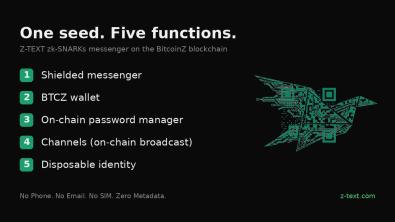
Zcash calls itself "encrypted electronic cash" the first cryptocurrency to use zero-knowledge encryption for private payments.
It launched in 2016, built on Bitcoin's original codebase, but added a major twist: optional privacy through zk-SNARKs, a form of zero-knowledge proof.
Users choose between transparent addresses (t-addresses), which behave like Bitcoin's public ledger, and shielded addresses (z-addresses), which hide sender, receiver, and amount entirely.
As of the latest data on Zcash's official website, the network's outstanding supply sits around 13.6 million ZEC, with roughly 1.3 million ZEC currently held in shielded form.
What Is Monero?
XMR takes a different starting position entirely: security isn't a setting you choose, it's the only way the network operates.
Every XMR-transaction automatically uses ring signatures (hiding the sender among decoys), stealth addresses (generating a one-time address for the receiver), and RingCT (hiding the amount).
There's no transparent mode to opt out of. Every XMR-transaction looks the same on-chain, which is precisely the design philosophy behind XMR-approach to fungibility.
Source: Official Website
Zcash vs Monero: The Core Privacy Difference
This is where the real Zcash vs Monero split begins.
Zcash's optional model means a transaction's security depends on user choice historically, a meaningful share of ZEC transactions have used transparent addresses rather than shielded ones, since shielding takes extra steps.
Monero's mandatory model removes that choice entirely. Every coin, every transaction, every time private by default, with nothing for a user to configure or forget.
Is Zcash or Monero More Private?
If the question is is ZEC or Monero more private in practice, XMR has the stronger default case. Since shielding isn't optional on XMR, there's no meaningful population of "unshielded" transactions weakening the anonymity set the way transparent ZEC transactions historically have.
Zcash's shielded pool, when used, relies on strong cryptography (zk-SNARKs) that's arguably more mathematically robust than Monero's ring signatures. But cryptographic strength only matters for the transactions that actually use it and ZEC doesn't force that choice.
So in a monero vs zcash security comparison: XMR-wins on default, universal security. Zcash wins on optional, cryptographically stronger security for users who choose to shield.
Why Did Zcash Get an ETF Filing and Not Monero?
This is the question driving most of 2026's Zcash vs Monero conversation, and the answer comes down to that exact same design difference.
According to SEC filings on EDGAR, Grayscale has been advancing The Zcash-ETF (formerly Grayscale ZEC Trust) through multiple amendments, with a Form 8-A12B and 424B3 prospectus filed as recently as August 24, 2026. The fund is set to list on NYSE Arca, with Coinbase Custody as custodian and Bank of New York Mellon as transfer agent.
Zcash's optional transparency is what makes this possible. Regulators and custodians can point to Zcash's transparent-address option as evidence the asset isn't inherently untraceable an argument that simply doesn't exist for XMR, where every transaction is private with no exception.
Monero has no comparable ETF filing anywhere in the pipeline, and its mandatory privacy model is precisely why. There's no transparent version of XMR a custodian or regulator can point to.
Which Is Easier to Buy in India: Zcash or Monero?
For anyone in India specifically weighing which is easier to buy in India Zcash-or-Monero, the practical gap has widened sharply in 2026.
Kraken delisted XMR in both Canada and India in April 2026, adding to a broader wave that already removed XMR from major platforms like Binance and OKX over the past two years.
Zcash hasn't faced the same wave. It remains listed on large, established exchanges including Coinbase, Kraken, and Gemini, according to own ecosystem page none of which have pulled ZEC in the way they've pulled XMR.
Practically, that means Indian buyers currently have a much more straightforward path to ZEC through mainstream exchanges, while XMR increasingly requires non-custodial swap services or peer-to-peer routes instead.
Privacy Coin Comparison: Side by Side
Feature | (ZEC) | (XMR) |
Privacy model | Optional (shielded/transparent) | Mandatory on every transaction |
Core technology | zk-SNARKs | Ring signatures + stealth addresses + RingCT |
Launched | 2016 | 2014 |
US ETF status | Filing advancing (Aug 2026) | No filing in progress |
Exchange access (2026) | Widely available | Delisted from major platforms, including in India |
This privacy coin comparison shows two fundamentally different bets: one on selective, regulator-friendly privacy, the other on uncompromising, universal privacy.
Is Zcash a Good Alternative to Monero?
For anyone specifically asking is ZEC a good alternative to XMR, the honest answer depends on what you actually need.
If regulatory access, exchange availability, and a clearer path toward mainstream financial products matter most, ZEC currently has the edge its optional-privacy design is exactly what's letting it move toward an ETF while XMR gets pushed further to the margins.
If uncompromising, default security on every single transaction is the priority, Zcash's shielded pool doesn't fully replace what XMR offers by design, since ZEC privacy still depends on users actively choosing to shield.
Zcash or Monero isn't really an either-or question of "better" it's a question of which trade-off matches what you're trying to protect.
Conclusion
Zcash vs Monero in 2026 comes down to one core design choice playing out in opposite directions. Zcash's optional privacy is opening doors an advancing ETF, continued exchange listings, mainstream custodians. Monero's mandatory privacy is closing them delistings across major markets, including India, with no ETF path in sight. Neither approach is wrong; they're simply built for different priorities, and understanding that difference matters more than picking a "winner."
Disclaimer
This article is for informational and educational purposes only and does not constitute financial or investment advice. Cryptocurrency markets are highly volatile, and regulatory treatment of privacy coins can change with little notice. Please do your own research (DYOR) and consult a qualified financial advisor before making any investment decisions.
Also read: