Moonberg, Solana, Chainlink or Kaspa: Which Crypto Is Best?

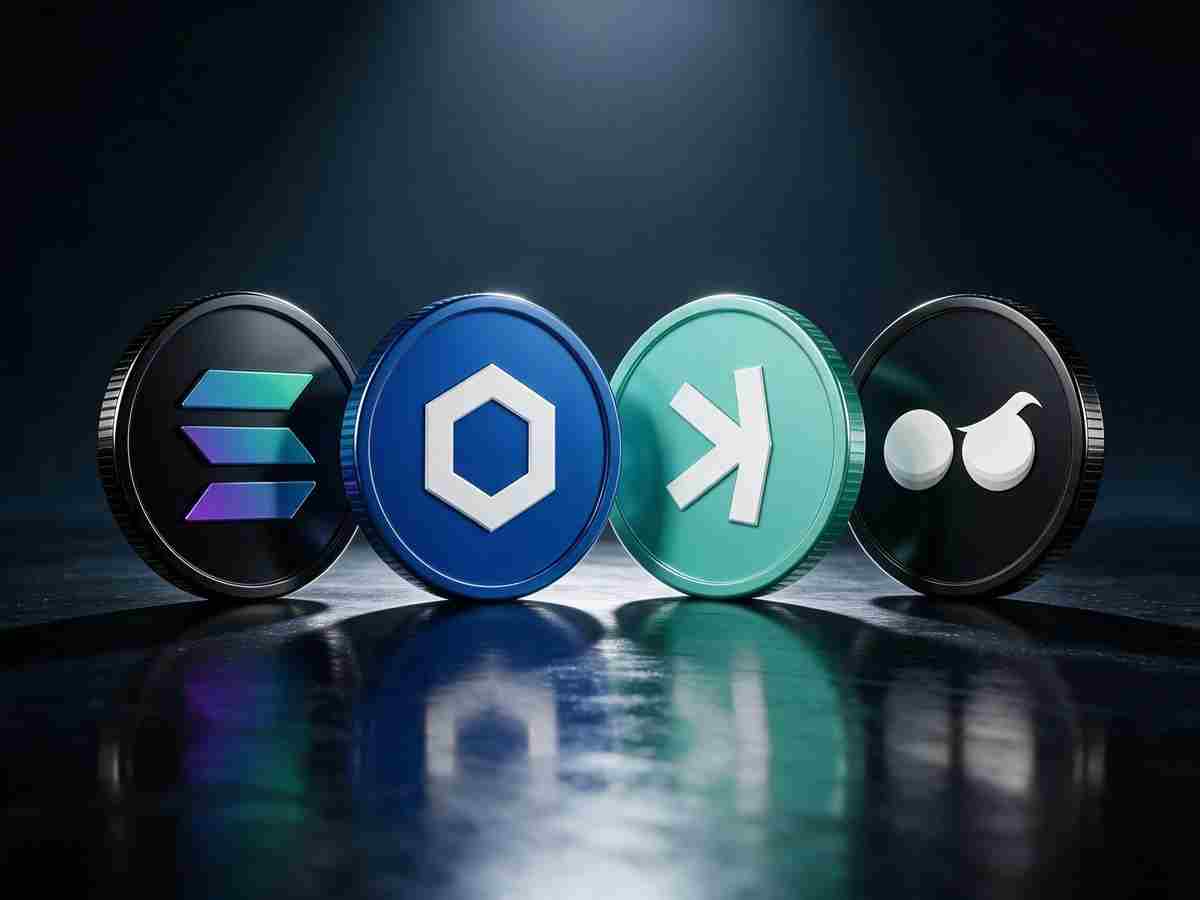
The best crypto to buy now based on the charts may not be one of the most well-known altcoins, with Solana, Kaspa, and Chainlink stuck in powerful bearish trends. As a result, many traders are turning to the presale market, with those interested in the AI-crypto niche increasingly moving capital into the Moonberg crypto presale.
Moonberg is an AI-native trading terminal that combines market research, on-chain analytics, strategy development, backtesting, and execution. Its native $MBX token will unlock premium intelligence and pay for the computing resources required by advanced AI agents. The terminal is already live, allowing potential buyers to test its underlying technology before purchasing the presale token.
Chainlink connects blockchains with external data, Solana supports high-speed decentralized applications, and Kaspa provides a scalable proof-of-work network. These projects are also focused on utility, but their native tokens have struggled throughout 2026. Their larger market capitalizations may also limit potential returns compared with $MBX, although they offer deeper liquidity and considerably longer public trading histories.
This article will compare all four tokens and assess their potential returns based on current price predictions, technical analysis, market capitalizations, utility, and overall risk.
1. Moonberg: AI-Native Infrastructure for Crypto Traders
Although many early AI-crypto tokens have failed or fallen more than 90% from their all-time highs, the niche remains one of the most exciting areas of the market. The two technologies have plenty in common and are expected to become increasingly integrated over the coming years. The Moonberg terminal targets one of the most lucrative areas of this crossover through its AI-native trading infrastructure.
Moonberg brings market research, on-chain analytics, strategy development, backtesting, and execution into a single terminal. Its infrastructure processes 53.4 billion data points covering more than 76 million tokens across multiple blockchains. Traders can use natural-language prompts to build AI agents without writing code. These agents can then monitor live data and respond to conditions established by the user.
Moonberg supports its performance claims through Moonscope, which tracks its algorithms and publishes a live results stream. According to Moonberg, its systems have generated almost 6,500 signals, recorded a win rate above 75%, and produced an average profit and loss (PnL) of approximately +280%. These figures are impressive, although they have not been independently verified.
The $MBX presale is now nearing the end of Stage 2. After the token generation event (TGE), $MBX will unlock premium intelligence, reduce fees, provide governance rights, and pay for the computing resources used by advanced agents.
Moonberg is targeting a $46 million market capitalization at the TGE. This makes $MBX considerably riskier than SOL, LINK, or KAS, but it also creates much more room for growth. Reaching even one-tenth of Solana’s current market capitalization would imply enormous returns, although achieving that valuation would require widespread terminal adoption.
2. Chainlink: The Established Oracle Leader
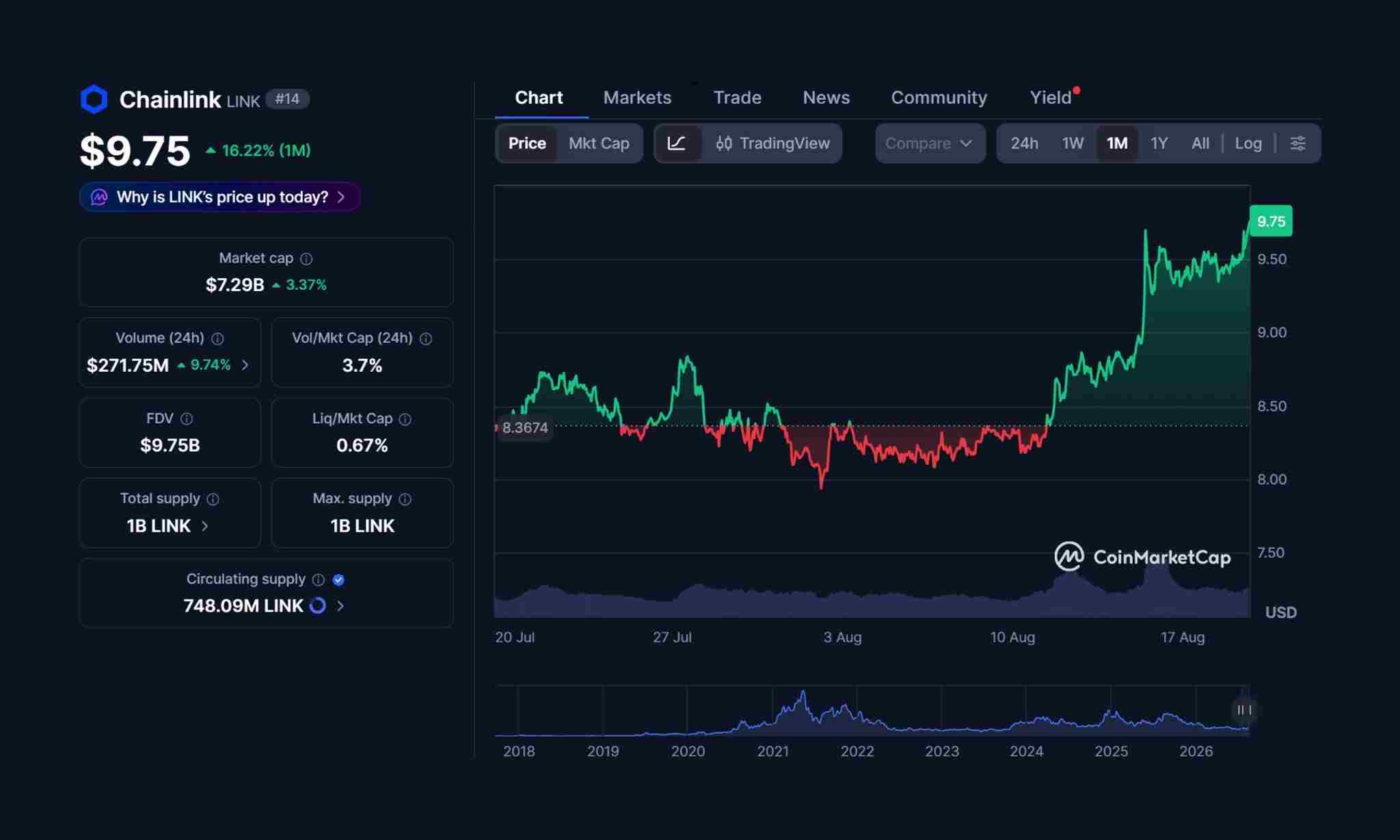
Of all the established altcoins, Chainlink ($LINK) has been one of the best short-term performers. It has rallied by over 15% during the past month, with several analysts suggesting that the bottom may have formed around $8. However, zooming out still produces a bearish picture. LINK has dropped 60% over the past year, meaning the recent recovery has repaired only a small part of the damage.
The rebound is probably being driven partly by dip buyers who remain confident in Chainlink’s underlying technology. Its decentralized oracle network supplies smart contracts with external data, while the Cross-Chain Interoperability Protocol (CCIP) allows data and tokens to move between different blockchains. Supporters believe demand for this infrastructure could eventually push LINK toward a new all-time high. However, its multibillion-dollar market capitalization means even a successful recovery may offer less potential upside than an early-stage token such as $MBX.
3. Solana: High-Speed Blockchain With a Bearish Chart
The Solana price has recovered from its recent low near $62 and appears to have established support around $75. However, SOL continues to struggle below $80, while the yearly chart remains firmly bearish. Some price predictions expect SOL to reach $100 before the end of 2026, but the token must first overcome resistance around $80 and $90.
Solana’s underlying network remains strong despite the weak chart. Its fast transactions and low fees support decentralized finance (DeFi), payments, gaming, and meme coin trading. This established ecosystem gives SOL greater liquidity and lower execution risk than $MBX, although its large market capitalization limits the potential for dramatic returns.
4. Kaspa: Proof-of-Work Scalability With Risk
Kaspa appears to be the riskiest buy. Even during 2025, when LINK and SOL were rallying alongside most of the market, KAS continued moving lower. It now trades almost 90% below its all-time high and has added another 6% to its losses over the past month. Kaspa remains technically distinct because its DAG architecture processes blocks in parallel while retaining proof-of-work security. This may appeal to buyers who prefer proof-of-work networks, but the persistent downtrend, weak liquidity, and repeated support failures make KAS a very high-risk purchase.

Final Thoughts
Finding the best crypto to buy now is challenging in the current altcoin market. The biggest names continue to struggle for momentum. Chainlink has recently bucked the trend slightly, as has Solana, but Kaspa remains trapped in a clear bearish structure. Overall, the $MBX crypto presale has several points of appeal, including the established AI-native technology behind the Moonberg terminal and its relatively low $46 million market capitalization target for the TGE.
Also read: