Solana Program Model Explained: How Smart Contracts Work

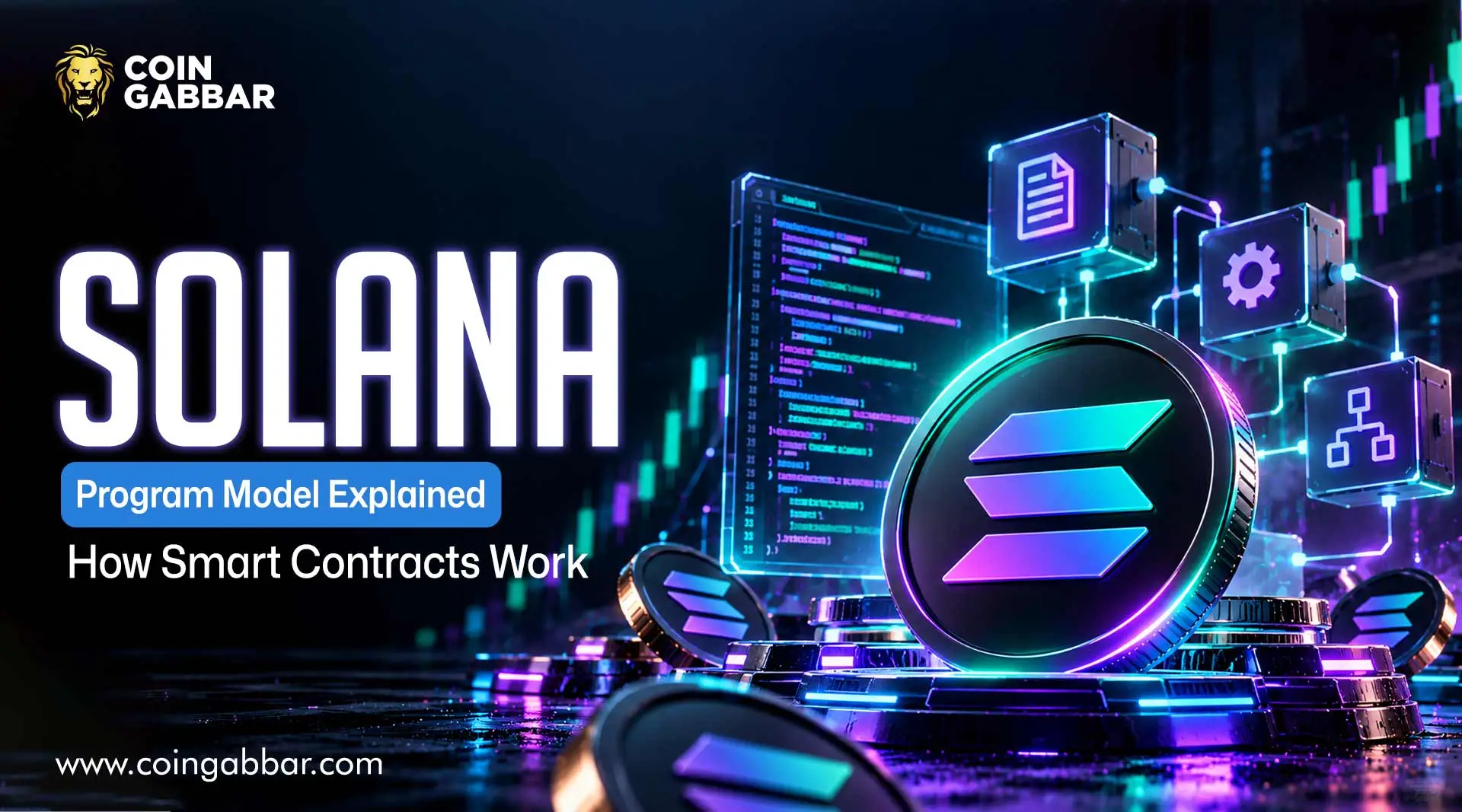
How the Solana Program Model Powers Smart Contracts
Anyone coming to Solana from Ethereum tends to hit the same wall pretty quickly; smart contracts here just don't work the same way.
The Solana program model separates code from data entirely, a design choice that confuses newcomers at first but explains a lot about why the network performs the way it does.
This article breaks down how the Solana program model actually works, what accounts are, and why this architecture looks so different from what most developers expect.
Anyone also curious how this underlying design supports real products can check this Solana Pay breakdown, since merchant payment flows run on the exact same program structure.
What Makes the Solana Program Model Different
On most blockchains, a smart contract holds both its logic and its own data together in one place. The Solana program model does something unusual by comparison; it keeps programs completely stateless.
A program on Solana contains only executable code, no stored variables, and no internal memory. Separate accounts handle every bit of actual data the program needs to read or write.
Understanding Accounts as the Building Blocks
Accounts are genuinely the core unit of everything in the Solana program model. Every piece of state on the network balances, program code, and ownership details all of it lives inside an account structure rather than inside a contract itself.
Program accounts: Store the compiled, executable code that defines how a program behaves
Data accounts: Hold the actual state a program reads from and writes to
System accounts: Managed directly by Solana's System Program, handling things like new account creation and SOL transfers
Token accounts: Created and managed by the Token Program to track balances for a specific token
Why Programs Don't Store Their Own Data
This stateless design might seem backwards at first, but it's deliberate. A program in the Solana program model reads from data accounts and writes to them, but it never holds onto that information internally.
This separation means a single program can operate across many different accounts without needing a fresh deployment every time someone wants to use it for something new.
Program Derived Addresses Explained
One of the more unusual pieces of the Solana program model is the Program Derived Address, or PDA. These are special addresses that let a program sign transactions without actually holding a private key.
Once the rules governing a PDA are set and the program is deployed, nobody can alter how those rules behave, which adds a layer of predictability developers rely on heavily.
How Parallel Execution Actually Works
A major reason the Solana program model supports high throughput comes down to how transactions declare their account usage upfront.
Solana transactions specify exactly which accounts they'll touch before execution begins
Accounts can be marked read-only to make parallel processing easier
If two transactions touch completely different accounts, Solana can run them at the same time
This explicit access pattern is what separates Solana's execution model from Ethereum's more sequential approach
Native Programs Versus Custom Programs
The Solana program model ships with a set of built-in native programs handling foundational network functions. The System Program, for example, administers new account creation and SOL transfers between parties.
The Vote Program is another native example, used specifically for validator consensus. Developers building their own applications write custom programs that sit alongside these native ones, often relying on the Solana Program Library for common functionality like token standards.
Those exploring the ecosystem further can follow ongoing development news through this Solana Weekly Update, which covers recent integrations tied to tokenized stocks built on this same account structure.
Understanding Rent and Account Lifetime
Accounts in the Solana program model aren't permanent by default the way files on a computer might be. Each account has a lifetime tied to an amount of lamports, Solana's smallest currency unit, paid to keep that account alive in validator memory.
This rent model exists specifically to discourage unlimited, unnecessary state growth across the network, keeping storage costs tied to actual usage.
Solana Program Model Versus Ethereum's Approach
Aspect | Solana Program Model | Ethereum Smart Contracts |
State storage | Separate data accounts | Stored inside the contract itself |
Execution style | Parallel, based on declared accounts | Largely sequential |
Code and data | Fully separated | Combined in one contract |
Mental model | Closer to an operating system | Closer to a single unified computer |
Why This Architecture Matters for Developers
Developers moving from Ethereum to the Solana program model generally need to rebuild their mental model from scratch rather than just learning new syntax.
Thinking in terms of programs providing logic and accounts providing storage tends to make the rest of the ecosystem click faster, from DeFi protocols to staking mechanisms built on the same underlying structure.
Anyone wanting to actually interact with this ecosystem hands-on can start with this guide on How to Buy Solana, since holding SOL is usually step one before testing any program directly.
Conclusion
The Solana program model represents a genuinely different way of thinking about smart contracts, built around stateless programs, flexible account structures, and transaction-level parallelism.
While it takes some adjustment for developers used to Ethereum's unified contract style, understanding this separation between code and data is really the foundation for understanding how almost everything else on Solana actually functions.
Market activity tied to this growing developer ecosystem is often reflected in broader coverage too, and this Solana Price Prediction October offers useful context for anyone tracking how network fundamentals and price movement tend to connect.
Disclaimer: This article is for educational purposes only and does not constitute technical or financial advice. Blockchain development carries inherent risk, and independent testing is recommended before deploying any program to mainnet.






.webp)