Stablecoin Treasury Rules: Could SEC Changes Disrupt Redemptions?


Stablecoin Treasury Rules: SEC Move Could Change Token Redemptions
Here's crypto news today that doesn't come from a crypto company at all; it comes from deep inside the $30 trillion US Treasury market, and it could ripple straight into how stablecoins actually work.
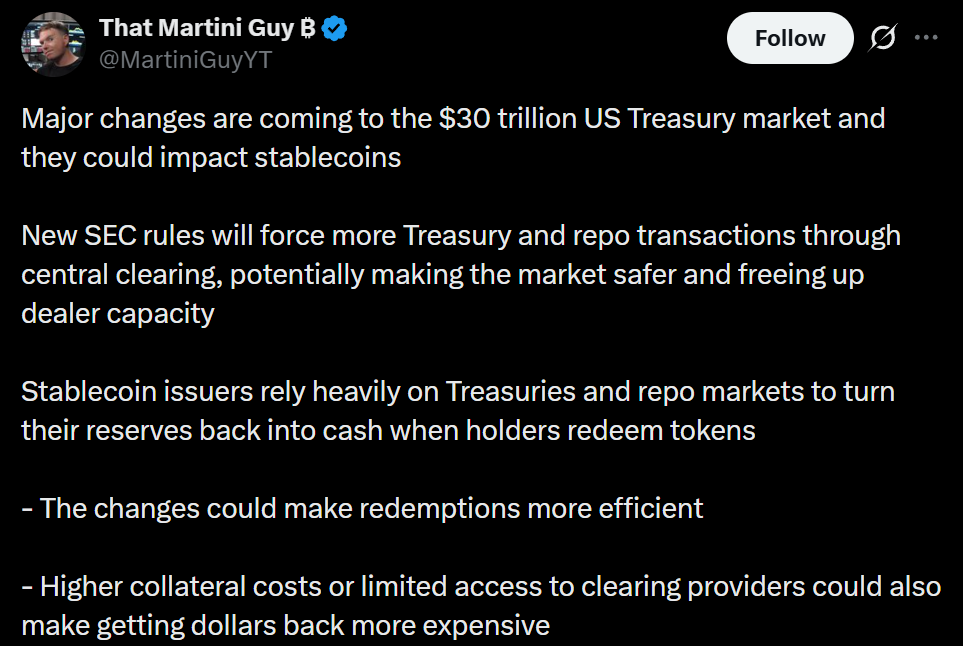
The SEC has been rolling out sweeping changes requiring far more Treasury and repo transactions to move through central clearing, and because stablecoin issuers lean so heavily on Treasuries to back their tokens, these new Stablecoin Treasury Rules carry real implications for anyone holding or redeeming a dollar-pegged token.
Source: X Post
What the SEC's Treasury Clearing Rule Actually Requires
According to remarks delivered by SEC Commissioner Mark T. Uyeda at the 2026 U.S. Treasury Market Conference, the Commission's Treasury Clearing Rule mandates that certain eligible secondary market transactions in US Treasury securities be cleared by direct participants in covered clearing agencies.
Before this rule, only about a quarter of Treasury cash trades and less than half of Treasury repo transactions were centrally cleared, leaving much of the market running through fragmented, firm-specific processes.
The underlying rule itself was originally finalized via the SEC's December 2023 release, with the agency later extending compliance timelines through a subsequent 2025 order.
The Hard Deadlines Now Approaching
This isn't a distant, theoretical rule anymore; it's running on a confirmed clock.
Per Uyeda's own remarks, two compliance dates are now set:
| Transaction Type | Compliance Deadline |
| Cash Treasury transactions | December 31, 2026 |
| Repo transactions | June 30, 2027 |
Uyeda was direct about the timeline, stating the SEC "does not currently intend to extend these deadlines" and urging market participants to maintain momentum on implementation.
Notably, even ahead of these hard deadlines, daily cleared Treasury volumes at the Fixed Income Clearing Corporation are already running approximately 165% higher than before the rule was first proposed, jumping from roughly $4.5 trillion to more than $12 trillion.
Why This Connects Directly to Stablecoins
This is the part that makes these stablecoin treasury rules relevant well beyond traditional finance circles.
Stablecoin issuers hold massive reserves, largely in short-term Treasuries and repo agreements, specifically so they can quickly convert those holdings back into cash whenever a holder redeems their tokens.
Because the Treasury and repo markets are the literal plumbing behind that redemption process, any structural change to how those markets clear transactions flows directly into how smoothly, and how cheaply, stablecoin redemptions can actually happen.
The SEC has been actively working to expand access to this clearing infrastructure.
Per Uyeda's remarks, the Commission has approved new margin-efficiency offerings, including collateral-in-lieu arrangements and expanded cross-margining with Treasury futures, while also registering two additional clearing agencies, CME Securities Clearing and ICE Clear Credit, giving market participants more choice in how they meet their obligations.
For full tracking of these ongoing changes, the SEC maintains a dedicated Treasury Clearing Implementation that updates as new actions are completed.
The Case for Smoother, Safer Redemptions
There's a genuine upside case here for stablecoin holders.
A few reasons these changes could make redemptions more efficient:
-
Central clearing brings netting and centralized risk management that bilateral trades never had
-
More standardized processes across dealers could reduce the operational friction issuers currently face when converting reserves to cash
-
Expanded clearing access specifically benefits buy-side institutions and smaller firms that previously had no practical way to clear Treasury activity directly
-
A more resilient Treasury market overall reduces the odds of disruptions during periods of market stress, exactly when stablecoin redemption demand tends to spike
The Risk of Higher Costs and Tighter Access
On the flip side, Uyeda's remarks also reveal real, unresolved friction points still being worked through.
Industry groups, including the Institute of International Bankers and SIFMA, have submitted outstanding exemptive relief requests tied to non-US transactions and inter-affiliate repo activity, concerns the Commission is still actively evaluating.
A few reasons costs could rise instead of fall:
-
Higher collateral or margin requirements under the new structure could raise the cost of accessing liquidity
-
Limited availability providers for certain participants could constrain capacity precisely when it's needed most
-
Operational complexity for firms managing cross-border or inter-affiliate Treasury activity remains genuinely unresolved as of this speech
Conclusion
These stablecoin treasury rules sit at a real inflection point, with firm compliance deadlines now locked in for both cash treasury transactions and repo transactions.
Whether this transition ultimately makes stablecoin redemptions faster and more reliable or introduces new costs and friction for issuers relying on this market will likely become clearer as the December 2026 and June 2027 deadlines approach and the SEC continues refining implementation details through its ongoing public comment process.
Disclaimer
This article is for educational and informational purposes only and should not be considered financial or investment advice. Always conduct your own research before making investment decisions.









