Best Crypto Launchpad in 2026: Pons vs Pump.fun Complete Guide

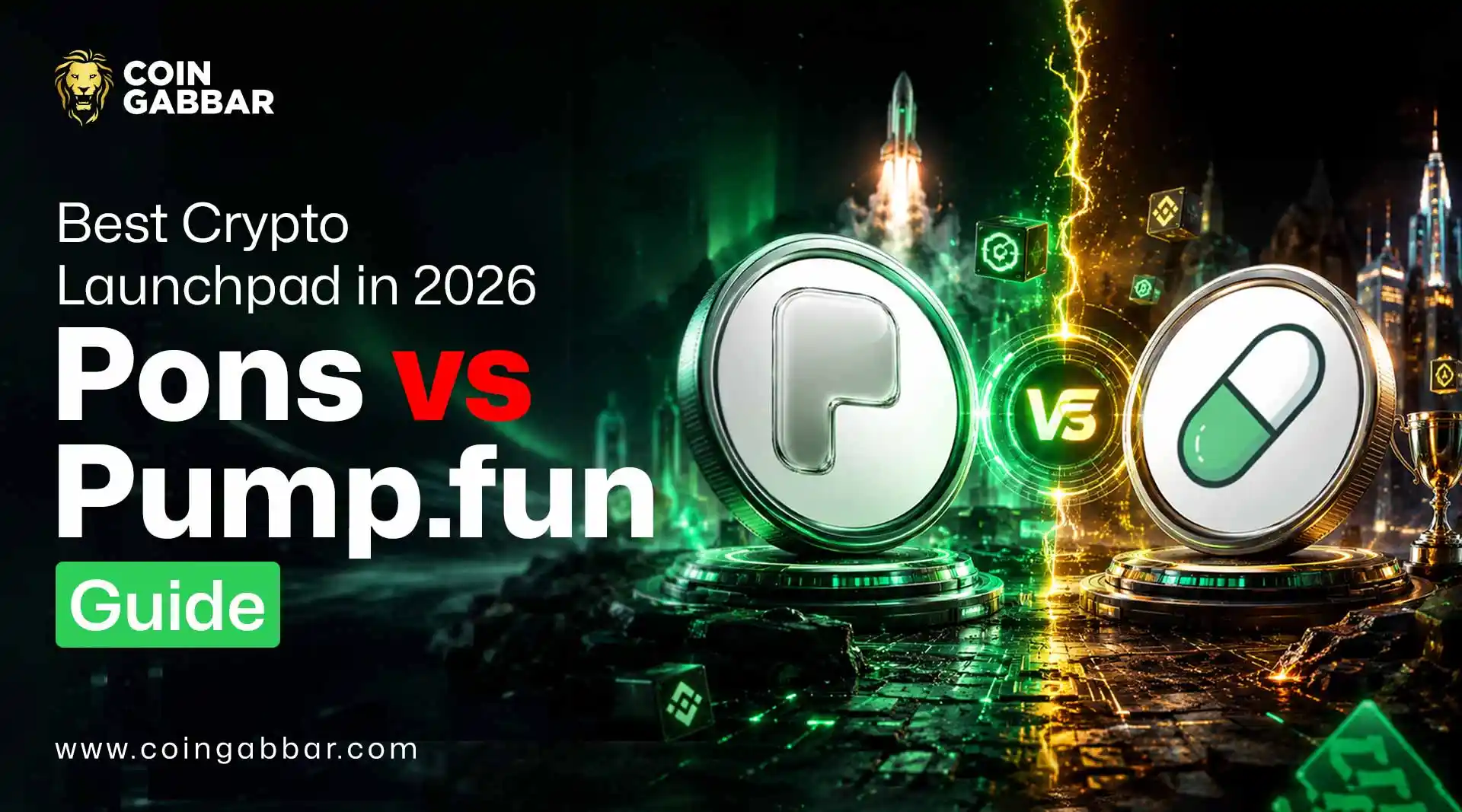
Pons vs Pump.fun: A Complete Comparison of Launch Features and Risks
Two very different chains, two very different approaches to launching a token that's the real story behind Pons vs Pump.fun. Both platforms let anyone create a token in minutes and both use a bonding curve to price it before it reaches a real liquidity pool, but the similarities mostly stop there. This breaks down how each works, what each charges, and which one might actually fit what you're trying to do, sourced directly from both platforms' own documentation.
Key takeaways
Pons runs on Robinhood Chain with liquidity that locks permanently at graduation; Pump.fun runs on Solana and migrates tokens to Raydium, where a creator still has to fund the migration cost.
Pons-uses either wallet caps or a decaying tax to slow snipers depending on version; Pump.fun relies mainly on its bonding curve's pricing mechanics and doesn't publish a dedicated anti-snipe feature the way Pons does.
Neither platform is safer by default, graduation and migration both just mean a token reached a new trading venue, not that it's a good investment.
What Is a Crypto Launchpad and How Does It Work?
A crypto launchpad is a platform that lets anyone create and launch a new token without needing to code a smart contract or set up liquidity manually. Instead of a team having to build a trading pool from scratch, the launchpad handles the technical side automatically minting the token, setting an initial price mechanism, and routing trading through either a bonding curve or a live pool from the moment the token exists.
Most modern launchpads, including both platforms covered here, follow a similar basic shape: a token launches, trades through some kind of automated pricing mechanism, and eventually either stays on that mechanism or moves into a more established liquidity venue. What differs between platforms chain, fee structure, and how liquidity behaves once a token graduates is exactly where crypto launchpads start to look very different from one another, as Pons and Pump.fun show clearly.
What Is Pons Launchpad?
Pons is a launch protocol built specifically for Robinhood Chain. You can browse launches, open any token to see its details, and trade straight from your own wallet pons never takes custody of anyone's funds. (Source: docs.ponsfamily.com)
Pons currently runs two live models. In its original version, a token launches straight into a Uniswap pool from block one, paired against WETH, with wallet caps in the first two blocks to slow down snipers. In its newer v2 model, a token starts on a bonding curve instead, and only gets a pool once that curve sells out a step called graduation, which creates a Uniswap v4 pool with liquidity locked permanently.
How Does Pons Launchpad Work?
However you launch on Pons, you're never trading against a central order book someone else controls; the price is always calculated by either the pool itself or the bonding curve, and every buy or sell is a transaction your own wallet signs.
Pons Launchpad Fees
Trading fees split between the token's creator and the protocol. Current launches keep a 70/30 split in the creator's favor; older, legacy-factory launches still honor the original 90/10 split. The protocol's own share doesn't just sit idle 80% of it funds an automated buyback of the token, which then gets burned, permanently reducing token's own circulating supply.
What Is Pump.fun Launchpad?
Pump.fun is a Solana-based platform where anyone can create a coin instantly, using its own bonding curve model to handle early trading before a token moves toward more standard liquidity. It became one of the fastest ways to launch a Solana memecoin precisely because it lowered that barrier so far.
How Does Pump.fun Work?
A new token on Pump.fun starts on the bonding curve, where price rises as buying pushes the token further along that curve and falls as selling pulls it back. Once a coin completes that curve phase, it graduates toward Raydium, Solana's on-chain automated market maker, where it trades in a more conventional liquidity pool alongside other Solana tokens.
Pump.fun Launchpad Fees
The fee structure includes creator fees, protocol fees, and LP fees baked into trading on the curve. Migrating a coin to Raydium isn't free either it costs roughly 1.5 to 2 SOL in protocol and LP fees, and if a developer can't cover that cost, the coin simply stays stuck in what's often called "pump.fun limbo," never reaching Raydium at all.
Pons vs Pump.fun: Head-to-Head Comparison
Feature | Pons-Launchpad | Pump.fun Launchpad |
Chain | Robinhood Chain | Solana |
Pricing model | Instant pool (v1) or bonding curve (v2) | Bonding curve |
Graduation destination | Uniswap v3 (v1) or v4 (v2) | Raydium |
Migration cost | Funded by the curve itself at graduation | Roughly 1.5–2 SOL, paid separately |
Liquidity lock | Permanent, no unlock function | Not specified as permanently locked |
Anti-snipe method | Wallet caps (v1) or decaying tax (v2) | Bonding curve pricing only |
Creator fee share | 70% (current) or 90% (legacy) | Set creator fee, alongside protocol and LP fees |
Which Is Better, Pons or Pump.fun?
That depends entirely on which chain you're already building or trading on, and what you value more. If Solana's massive existing memecoin trading volume and Raydium's established liquidity matter most to you, the ecosystem is hard to match; it's been the dominant Solana launchpad for a reason. If you're on Robinhood Chain and want a launch process where liquidity is locked permanently the moment it graduates, with no separate migration fee for the creator to come up with, the structure is built specifically around that guarantee.
Neither platform makes a token a good investment by default. On Pump.fun, a coin stuck without migration funding can sit in limbo indefinitely. On Pons, a token can still lose most of its value after graduation even with liquidity permanently locked a locked pool prevents a rug pull, not a bad outcome from real selling pressure.
How to Launch a Token on Pons vs Pump.fun
On Pons, you set a name, symbol, image, and links, pay a launch fee, and the entire supply mints straight to either the pool (v1) or the curve (v2) no presale bag held back for the creator. On Pump.fun, creation is similarly instant: anyone can create a coin, and it opens on the bonding curve immediately, with the creator responsible later for covering the Raydium migration cost once the curve sells out.
Best Crypto Launchpad for Beginners: Pons or Pump.fun?
For anyone launching or trading a token for the first time, ease of understanding matters as much as features. Pump.fun's single-track flow create, trade the curve, graduate to Raydium is simple to follow, and Solana's low transaction costs mean mistakes are cheaper while learning. Its risk for beginners sits mostly in speed: prices can move within minutes, and a coin stuck without migration funding offers a clear, painful lesson in why that 1.5 -- 2 SOL cost matters.
Pons, particularly its pons v2 model, adds one more concept to learn the bonding curve and its separate graduation step but pairs that with permanently locked liquidity once a token does graduate, removing one specific worry (a creator pulling liquidity) that beginners on other platforms sometimes have to think about. Neither platform removes the core risk of a new token losing value; they just handle different parts of that risk differently.
Final Word
Among crypto launchpads built around this same instant-creation, bonding-curve-adjacent model, Pons and Pump.fun solve a similar problem for two very different ecosystems. Pump.fun leans on Solana's speed and Raydium's deep liquidity, with migration costs and coin fate left partly in the creator's hands. Pons-leans on permanently locked liquidity and a protocol-funded buyback-and-burn cycle for its own token. Calling either one the definitively best crypto launchpad in 2026 depends less on features alone and more on which chain, and which trade-offs, actually fit what you're building or trading.
Disclaimer
This article is for informational purposes only and does not constitute financial or investment advice. Information is sourced directly from official documentation, and may change as either protocol updates. Cryptocurrency tokens can be highly volatile, illiquid, or lose all value. Always do your own research before transacting.
Also read:









.webp)




