Hyperliquid HIP -4 Upgrade: When Future Outcomes Become Tradeable

Hyperliquid HIP-4: How the New Market Trading Model Works
HYPERLIQUID HIP -4 UPGRADE has been gradually expanding beyond traditional perpetual trading through its HIP -4. Each major blockchain adds a new capability to the network - from native tokens and crypto liquidity mechanisms to permissionless perpetual markets.
The latest major HIP -4, which introduces a platform to Hyperliquid. It brings a new market structure based on defined events, fixed settlement conditions, and full collateralization, creating opportunities for prediction-style markets and other event-based financial products.
What is Hyperliquid?
Hyperliquid is a decentralized blockchain and trading ecosystem focused on providing fast, on-chain financial platforms. It operates its own Layer-1 blockchain, known as Hyperliquid L1, and supports products such as spot trading, perpetual futures, and newer platform types such as HIP-4 outcome markets.
What are Hyperliquid Improvement Proposals?
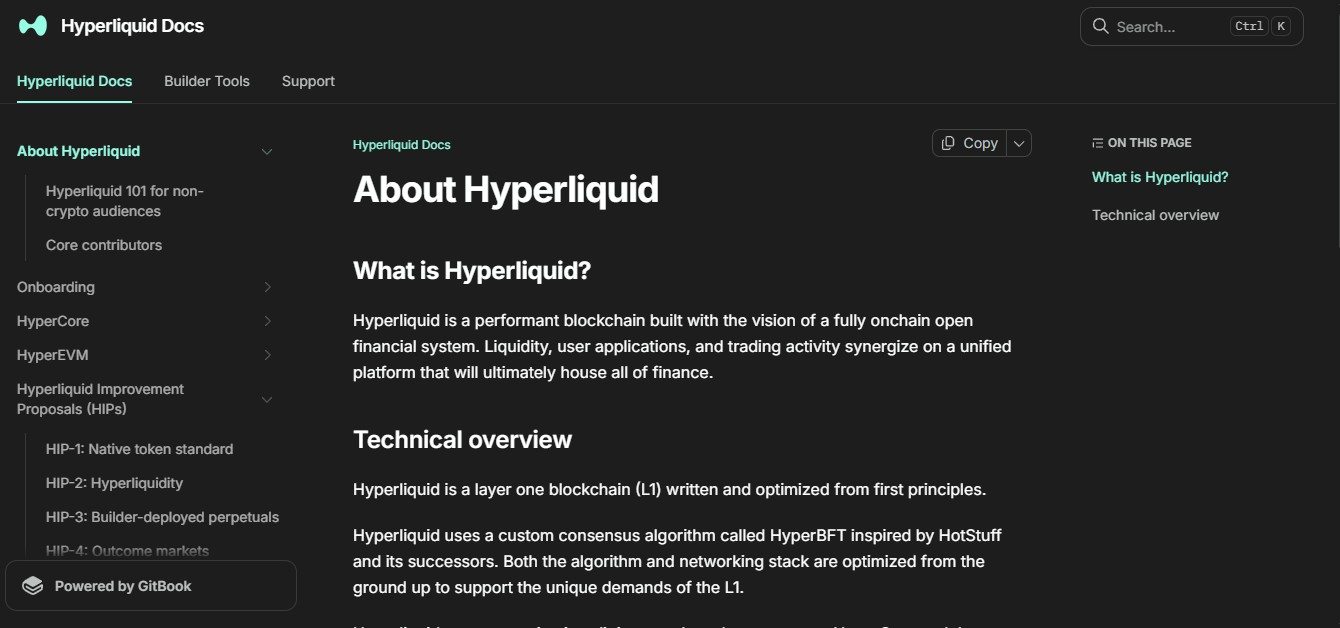
Hyperliquid Improvement Proposals (HIPs) are frameworks that introduce new functionality and financial infrastructure to the blockchain's ecosystem. Think of them as a framework through which Hyperliquid expands what can be created and traded on its infrastructure.
HIP -1: Native Token Infrastructure
HIP -1 introduces a framework for creating native tokens and their spot order books on Hyperliquid. It established the foundation for listing and trading new assets directly with Hypercore.
HIP -2: Solving the Liquidity Problem
Launching a token is not enough - it also needs buyers and sellers. HIP -2 introduced Hyperliquid, an automated mechanism designed to provide initial liquidity for newly launched assets and reduce the cold-start problem.
HIP -3: Permissionless Perpetual Markets
HIP -3 expanded the platform by allowing eligible builders to deploy their own perpetual futures results on Hypercore. This opened Hyperliquid’s infrastructure to a broader range of creators.
HIP -4: Outcome Market
HIP-4 introduces Outcome Markets, allowing traders to take positions on predefined events with specific settlement rules.
Building on these previous improvements introduced HIP -4, bringing a new type of market to its ecosystem: outcome markets.
What is HIP -4?
Hyperliquid HIP -4 is the framework for Outcome Markets.
A Market is built around a clearly defined event or condition. Instead of trading an asset continuously, users trade exposure to whether a particular result will occur.
For example, a market could be structured around a question such as:
“Will BTC's price be above a specified level at settlement?”
If the predicted result happens, the winning contract settles at its defined maximum value. If it does not happen, the opposing side wins.
Unlike perpetual contracts and futures, and their contracts are fully collateralized and do not use leverage, meaning there is no traditional liquidation mechanism.
How Does HIP -4 Work and What Makes it Different from Other Upgrades
The mechanics are understood through four major stages:
Market Creation: In HIP -4, each outcome result is created with clearly defined rules, including the event or question, possible results, expiration time, settlement conditions, and authorized data source.
These parameters establish exactly what traders are betting on and how the final result will be determined before trading begins.
Opening Call Auction: Before continuous trading begins, the result goes through an opening auction.
During this period, traders submit orders without immediate execution. The auction determines an initial clearing price and helps establish price discovery for a market with no trading history.
Continuous Trading: After the opening auction, the market moves to normal continuous order-book trading. This is where traders can buy and sell outcome positions based on their changing expectations.
For binary options, the price effectively represents the market's implied probability of an outcome.
For example, a YES contract trading around 0.70 can be interpreted as the market pricing roughly a 70% probability, although price is not a guaranteed or objective probability.
Settlement: At expiration, an authorized settlement mechanism determines the outcome.
The winning position receives the settlement value, while the losing position receives zero. The exact settlement process depends on the market's predefined rules and authorized data source.
Split, Negate and Merge: The Interesting Part
One of HIP-4's more powerful mechanics is the ability to manipulate related positions.
Split - A unit of collateral can be converted into a complete set of outcome positions covering all possible outcomes.
Negate - A trader can take the opposite exposure to a particular outcome without necessarily selling the entire related position.
Merge - Related outcome positions can be recombined back into the underlying collateral under the protocol's rules.
These mechanisms help make different outcomes composable and can improve capital efficiency when traders manage multiple related positions.
Why Is HIP -4 Important For Hyperliquid
This significantly expands what can be built on Blockchain.
Instead of limiting the platform to spot and perpetual futures, the network can now support markets based on discrete outcomes.
Potential applications include:
Crypto price predictions
Macroeconomic events
Protocol events
Sports and other event-based markets
Bounded options-like instruments
Structured financial products
Hedging around specific events
The bigger idea is to turn its trading infrastructure into a more general-purpose marketplace for different forms of financial exposure.
What Could Come Next for HIP -4?
The development of Outcome Markets could open opportunities for builders to create more specialized event-based products. As the framework evolves, permissionless market creation and additional event types.
This could turn HIP-4 into infrastructure for a wider range of prediction, event, and outcome-based markets.
Conclusion
It introduces outcome markets, expanding the platform beyond traditional spot and perpetual trading. By allowing traders to take positions on clearly defined events with fixed expiration and settlement rules, it creates new possibilities for prediction markets and other outcome-based financial products. Its fully collateralized structure and flexible market design make it an interesting development in on-chain applications.
Disclaimer
This content is for informational purposes only and is not financial or investment advice. Cryptocurrency and outcome markets involve risks, including potential loss of funds. Its features and market rules may change over time. Always check the latest official documentation before trading or making financial decisions.
Also read:







.webp)