Mirex Network Explained: A Complete Guide to MRX and LUM Tokens

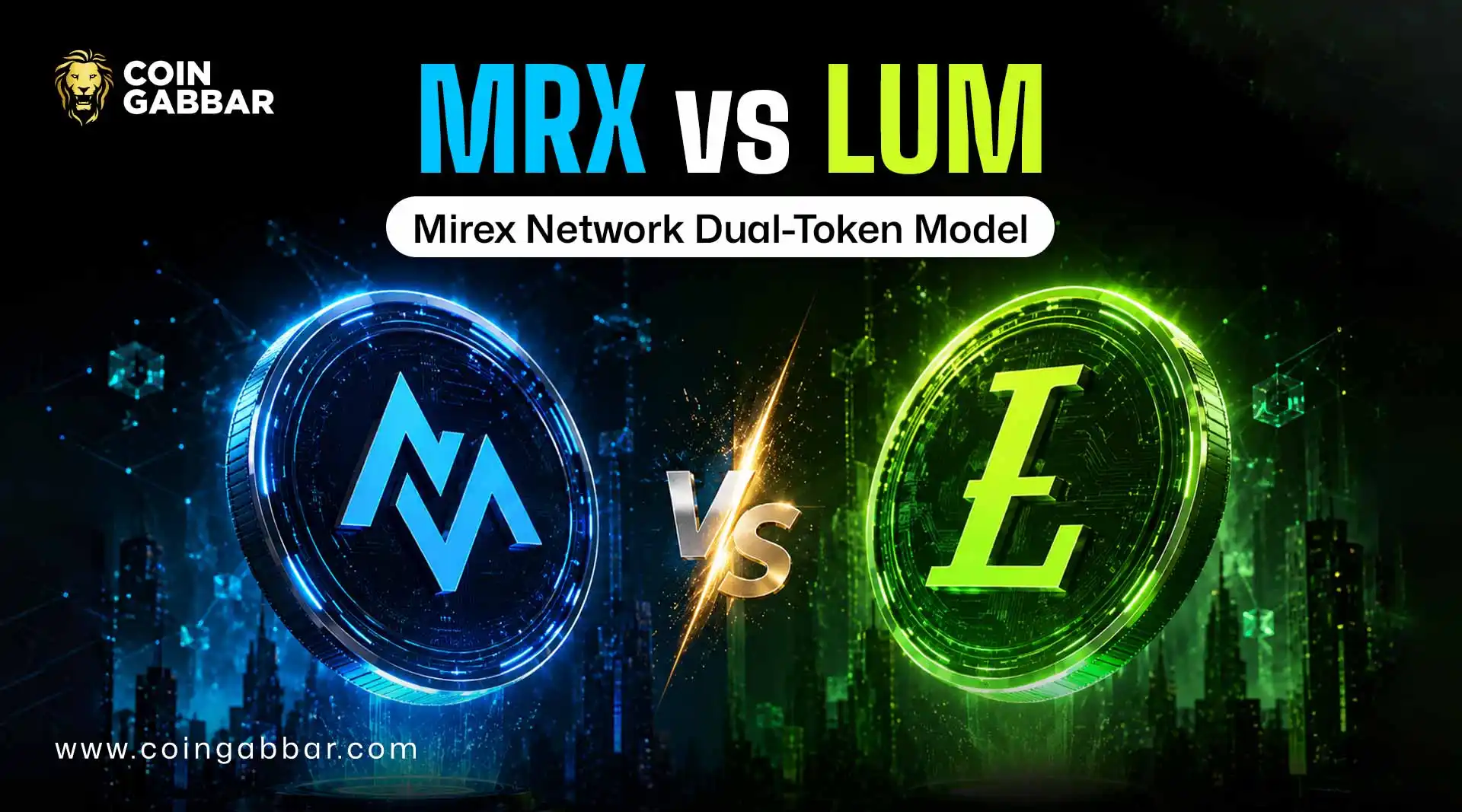
MRX vs LUM: How Mirex Network's Dual-Token Ecosystem Works
Most blockchain projects run on a single token. Mirex Network runs on two, and each one does a completely different job. Understanding that split rather than treating MRX and LUM as interchangeable is the key to actually understanding how this ecosystem works, based directly on Mirex's own official materials.
Key takeaways
MRX is a fixed-supply utility token that powers the MRX-20 blockchain itself gas fees, smart contracts, and network participation.
LUM (Lumira) is a separate utility layer pegged to the Swiss Franc, distributed through app-based mining and ecosystem activity rather than a token sale.
The two tokens are deliberately separated: MRX stays supply-controlled, while Lumira is built to absorb the ecosystem's day-to-day activity.
What Is Mirex Network?
Mirex Network is a blockchain ecosystem built around its own chain, MRX-20, running on a Proof-of-Stake-Authority consensus mechanism. Its core focus is real-world asset (RWA) tokenization converting ownership in real companies and assets into digital tokens that can be held, traded, and used within the ecosystem.
The project is backed by a specific corporate structure worth knowing: MIRA Network AG, based in Zug, Switzerland, and Lumira Solutions LTD, based in London, support the ecosystem as research and development companies, while a separate entity, Northstar Digital Assets Ltd, handles the actual token issuance. None of these entities are described as offering financial services, custody, or investment products Mirex's own materials frame both tokens as utility access tools, not investment contracts.
Understanding Mirex Network's Dual-Token Ecosystem
Two tokens. Two different purposes. One ecosystem that's how Mirex frames its own design. Rather than one token trying to handle both network infrastructure and everyday ecosystem activity, Mirex splits those jobs deliberately between MRX and LUM.
What Is MRX Token?
MRX is the native utility coin of the MRX-20 blockchain, and it's the token that keeps the network itself running. It powers:
Gas and transaction fees
Smart contracts and dApps
Tokenized services and RWA infrastructure
Network access and participation
As part of Mirex Network tokenomics, MRX's total supply is fixed at 27,000,000, a deliberately small number compared to most blockchain projects. Only 2,000,000 MRX enter circulation at the Token Generation Event, a tight float by design. MRX functions as the utility layer that lets the entire MRX-20 blockchain operate and grow, closer to how ETH powers Ethereum's own network activity than a typical governance token.
What Is LUM Token? What Is Lumira?
Lumira, or LUM, works on a fundamentally different model. Rather than a fixed, tightly controlled supply, Lumira is designed as a dynamic utility coin pegged to the Swiss Franc for price stability, with its value also tied to user engagement across the wider RWA ecosystem.
A portion of revenue generated through ecosystem activity including the token transaction fees is designed to flow into the Lumira liquidity pool. That means the growth and adoption of MRX, the MRX-20 blockchain, and Mirex's tokenized RWA eco-system are all directly tied to Lumira's long-term position, rather than Lumira existing as a standalone asset.
Lumira's initial supply sits at 250,000,000 LUM, distributed through the eco-system itself rather than a traditional token sale users can mine Lumira for free through the official Mirex mobile app by completing tasks, participating in tokenized events, and engaging with the platform, with release beginning after a set number of successful airdrops. The app is already live on both Google Play and the Apple App Store, which gives this token a different starting point than a typical presale-only project with no working product yet.
Difference Between MRX and LUM at a Glance
Feature | MRX | LUM (Lumira) |
Role | Native utility token of MRX-20 blockchain | Ecosystem growth and stability layer |
Supply | Fixed at 27,000,000 | Initial supply of 250,000,000 |
Value driver | Network usage: gas, smart contracts, staking | Ecosystem activity and user engagement |
Peg | None market-determined | Pegged to the Swiss Franc |
Distribution | Presale / launchpad allocation | Mined through the app, tasks, and airdrops |
Purpose | Powers the infrastructure | Designed to benefit from ecosystem growth |
How Does Mirex Network Work?
Put together, the two tokens work hand in hand rather than competing for the same role. MRX powers the infrastructure every transaction, smart contract, and validator action on MRX-20 runs through it. The eco-system then generates activity and revenue on top of that infrastructure. Lumira is designed to benefit from that growth, absorbing day-to-day eco-system engagement while staying anchored to the Swiss Franc for relative stability.
That structure is deliberate: MRX stays supply-controlled and scarce, while Lumira handles the higher-volume, everyday interactions a growing RWA ecosystem needs without putting pressure on MRX's fixed float.
Why Do Some Crypto Projects Use a Two-Token Model?
Mirex isn't inventing this pattern a two-token crypto model shows up across several established projects for a similar reason: separating scarce, infrastructure-critical tokens from higher-volume, activity-driven ones lets each token do its job without compromising the other. A tightly capped token trying to also absorb constant day-to-day transaction volume tends to face more volatility than one built purely around network security and governance.
Mirex's version of this split is explicit about it: MRX is the scarce, infrastructure token; Lumira is the volume-absorbing, stability-anchored one. Whether that separation holds up in practice will depend on how much real ecosystem activity Mirex generates once both tokens are fully live.
Final Word
Mirex Network built its entire structure around a simple idea one token for infrastructure, one for everyday ecosystem activity, working together rather than overlapping. MRX gives the MRX-20 blockchain its utility layer, fixed and scarce. Lumira gives the broader RWA-ecosystem a stability-anchored token designed to grow alongside real usage. Understanding that distinction is the clearest way to make sense of how the two actually relate to each other.
Disclaimer
This article is for informational purposes only and does not constitute financial or investment advice. Information is sourced from Mirex Network's official website and whitepaper and may change as the project develops. Cryptocurrency tokens can be highly volatile, illiquid, or lose all value. Always do your own research before transacting.








.webp)




