Solana Review: Utility, Tokenomics, Adoption and Key Risks

Solana has grown past its early label as a fast but unstable network.
Its DeFi protocols, stablecoin rails, trading infrastructure, and consumer apps have made SOL one of the most actively used assets in crypto.
Adoption alone, however, does not erase technical debt, inflation mechanics, or centralization concerns.
This Solana review looks at whether the network's utility, tokenomics, real-world adoption, and risk profile support its standing as a leading smart contract platform.
Key Takeaways
Solana is a high-throughput Layer 1 blockchain that combines Proof of History and Proof of Stake to process transactions at low cost.
SOL powers transaction fees, staking rewards, and network security across DeFi, NFT, and payment applications.
The token supply follows an inflationary model with a burn mechanism, ongoing staking emissions, and no fixed hard cap.
Ecosystem adoption is driven by DEX volume, stablecoin transfers, and developer activity, though bot-driven transactions remain a concern.
Key risks include historical outages, validator hardware requirements, MEV extraction, and competition from Ethereum Layer 2s.
What Is Solana, and How Does It Work?
Solana is a Layer 1 blockchain built for high-speed, low-cost execution of smart contracts.
Its design centers on Proof of History (PoH), a cryptographic timestamping method that orders transactions before consensus, letting validators process blocks faster than chains that rely only on Proof of Stake ordering.
Full technical documentation is available on the official Solana site.
The network runs on a leader-based validator, mAlpenglow, which produces blocks for a given slot while others verify the output.
This favors throughput over redundancy, which is why Solana can handle thousands of transactions per second at fractions of a cent in fees.
The trade-off is stricter hardware demands on node operators and a history of network halts when consensus has broken down.
What Is SOL Used For?
SOL is Solana's native asset and carries utility at the protocol level.
Users pay transaction fees in SOL to swap tokens, mint NFTs, or transfer assets.
Validators stake SOL to secure the chain and earn inflationary rewards, while delegators stake with validators to share in those yields.
Beyond fees and staking, SOL serves as collateral in DeFi protocols, as trading-pair liquidity on decentralized exchanges, and as the settlement layer for stablecoin transfers.
Consumer applications spanning payments and gaming also route activity through SOL-denominated transactions, giving the token demand tied to actual blockspace use rather than governance alone.
How Does Solana Tokenomics Work?
Solana's tokenomics follow an inflationary supply model offset by fee burning.
According to CoinMarketCap and CoinGecko, SOL's circulating supply sits at roughly 486 million tokens with no predefined maximum.
Inflation began at 8% annually and tapers by 15% each year toward a long-term floor of 1.5%.
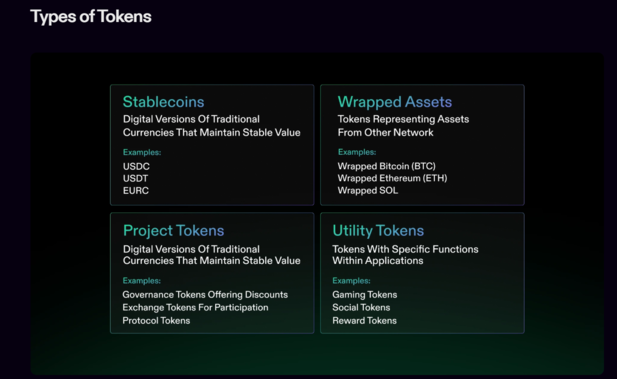
Validators earn inflationary emissions plus transaction fees, and a portion of every fee is burned, offsetting new issuance.
Staking participation stays high, with roughly 65-70% of circulating SOL typically delegated to validators.
This locks up supply but also concentrates influence among operators with the capital to run high-performance nodes.
Metric | Value |
|---|---|
Token | SOL |
Network type | Layer 1 |
Supply model | Inflationary with burn |
Initial inflation | 8% annually |
Long-term inflation floor | 1.5% |
Main utility | Fees, staking, security |
Consensus | Proof of Stake with Proof of History |
How Strong Is Solana Adoption in 2026?
Solana's adoption metrics rank among the highest in the Layer 1 sector.
DEX volume on Solana frequently rivals or exceeds Ethereum mainnet during peak activity, driven largely by memecoin trading and perpetual futures platforms.
Stablecoin supply on the network has grown substantially, with USDC and USDT making up most of the value locked.
Developer activity has expanded beyond finance into payments, physical infrastructure, and consumer apps.
Raw transaction counts still need context, though: a significant share of on-chain activity comes from automated trading bots and MEV arbitrageurs.
This confirms the network's low-cost efficiency but can inflate daily active address figures beyond organic user growth.
What Is on Solana's Roadmap?
Its roadmap centers on performance and client diversity. Alpenglow, a major consensus redesign, targets faster finality and better validator synchronization—a shift from incremental patches to a structural overhaul of how the network agrees on state.
Current priorities also include validator client diversification through Firedancer, an independent C++ client that reduces reliance on the original Rust-based validator software.
Scaling work focuses on state compression for NFTs and optimized data availability, aiming to preserve throughput while easing hardware strain on operators.
What Are the Key Risks of Solana?
Network reliability is the most visible risk.
Solana has suffered multiple outages since mainnet launch, including incidents in 2022 and 2024 where block production halted for hours.
Restart procedures have improved, but the leader-based architecture still creates a single point of failure during each slot.
Validator hardware requirements raise centralization concerns, since running a competitive node demands enterprise-grade equipment and bandwidth that favor well-capitalized operators in specific regions.
MEV and bot-driven activity add economic risk too: high-frequency arbitrage can congest priority fee markets and extract value from retail users.
SOL's inflationary supply also means holders face dilution unless staking yields outpace issuance, and competition from Ethereum L2s and emerging Layer 1s continues to press Solana's market share.
You can verify live network health and validator data directly on Solscan, Solana's official blockchain explorer.
Solana Review: Final Verdict
This Solana review concludes that the network is a technically capable Layer 1 with strong adoption and active development.
SOL derives real utility from fee payments, staking, and ecosystem demand.
Tokenomics are transparent but inflationary, and the roadmap includes meaningful upgrades through Alpenglow and client diversification.
The primary risks are operational rather than conceptual: outages, hardware centralization, and MEV extraction all require ongoing attention.
Solana is worth watching for users who need high-speed execution, but it comes with meaningful trade-offs.
Disclaimer: This article is for informational purposes only and should not be considered financial or investment advice. Crypto assets are volatile and carry risks. Always conduct your own research before making investment decisions.







.webp)




