NOCtura Presale: How the Solana Privacy Project Works

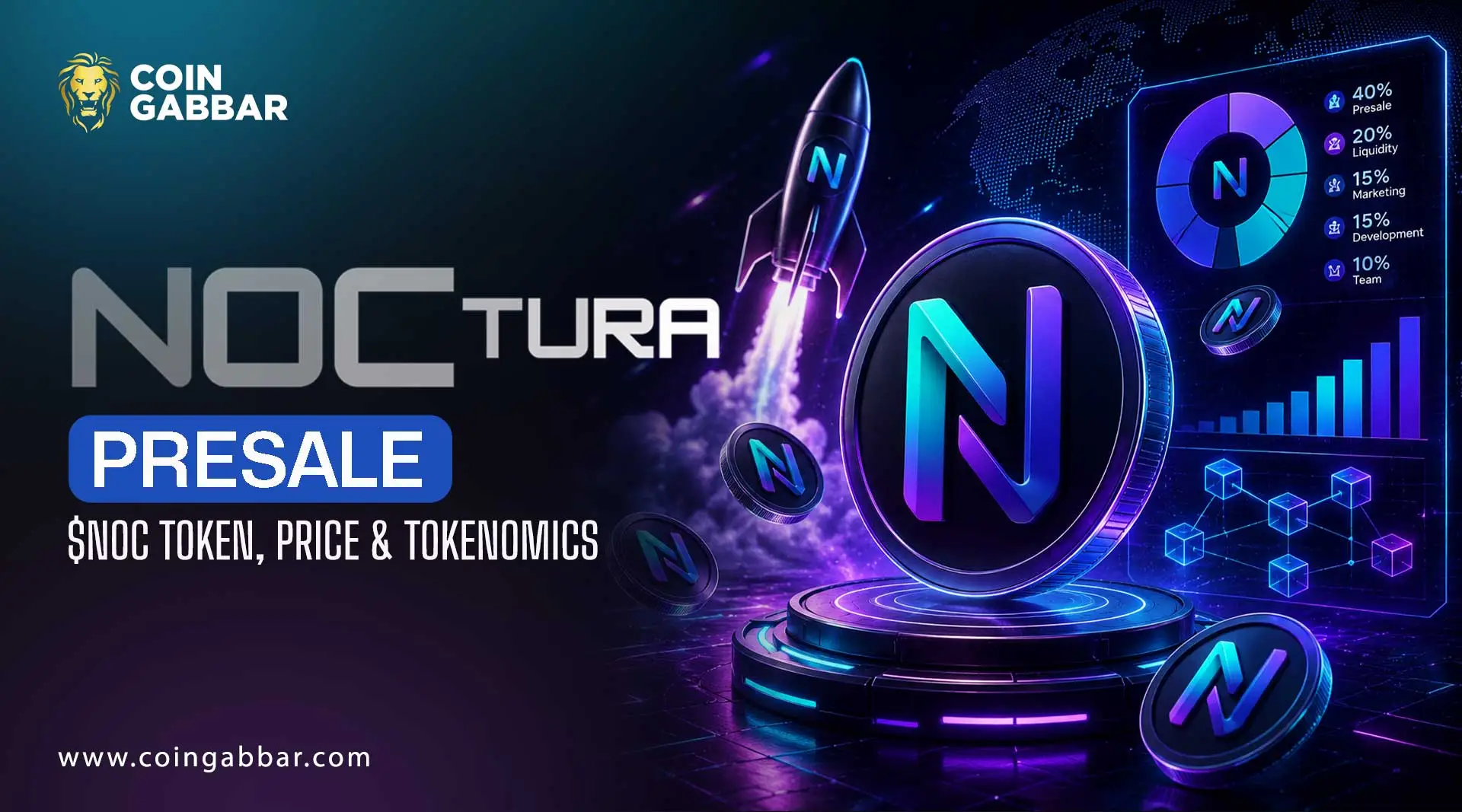
NOCtura Presale Explained: What to Know Before You Buy
Solana has never been a great place for privacy. Every swap, transfer, and wallet balance sits out in the open for anyone to see. NOCtura is trying to fix that with a shielded wallet that lets people move between a public Solana account and a private one, without leaving the ecosystem or bridging to a separate chain.
The project brands itself as a "compliance-first" privacy protocol — and that phrase is doing real work. Most privacy coins eventually get delisted from major exchanges over anti-money-laundering concerns. NOCtura's pitch is that it sidesteps that problem by building selective disclosure directly into the wallet, so users can prove specific facts to an exchange or regulator without exposing their whole transaction history.
This guide walks through what NOCtura's own whitepaper says about the token, how the presale pricing works, the tokenomics, and the risks the documentation itself flags — so you know what to check before connecting a wallet.
What Is NOCtura and How Does the Wallet Work?
According to Noctura's whitepaper (Version 3.0, May 2026), the project is a shielded privacy layer built on top of Solana — not a separate chain or rollup. Proofs are generated off-chain, then verified on-chain by lightweight Solana programs.
The core of it is a dual-mode wallet:
Transparent Mode — works like any standard Solana wallet; transactions stay fully public.
Shielded Mode — hides the sender, receiver, and amount using zero-knowledge proofs.
Shielded Swaps — lets users trade tokens privately, without revealing trading pairs or position sizes.
In plain terms, a zero-knowledge proof lets someone prove a transaction is valid without showing what's actually inside it. That's the mechanism the entire protocol is built around.
NOCtura also introduces View Keys and Audit Tokens — scoped, time-limited credentials that let a user prove something specific (like proof-of-funds) to an exchange or regulator, without handing over their full history. This is the piece NOCtura is counting on to survive exchange listings in a way fully anonymous coins usually can't.
How Does the NOCtura Presale Pricing Work?
The presale is selling 102,400,000 $NOC — 40% of the fixed 256,000,000 total supply — across 10 fixed-price stages, with 10,240,000 tokens released per stage.
Stage | Price ($) | Increase from prior stage | Cumulative gain vs. Stage 1 | Tokens per Stage |
1 | $0.1501 | — | 0.00% | 10,240,000 |
2 | $0.1723 | 14.79% | 14.79% | 10,240,000 |
3 | $0.1945 | 12.88% | 29.58% | 10,240,000 |
4 | $0.2167 | 11.41% | 44.37% | 10,240,000 |
5 | $0.2389 | 10.24% | 59.16% | 10,240,000 |
6 | $0.2611 | 9.29% | 73.95% | 10,240,000 |
7 | $0.2833 | 8.50% | 88.74% | 10,240,000 |
8 | $0.3055 | 7.84% | 103.53% | 10,240,000 |
9 | $0.3277 | 7.27% | 118.32% | 10,240,000 |
10 | $0.3499 | 6.77% | 133.11% | 10,240,000 |
Full stage breakdown, pulled directly from Section 8 of the V3.0 whitepaper. A Stage 10 buyer pays exactly 133.11% more than a Stage 1 buyer for the same token. Minimum purchase is $10; maximum is $25,600 per wallet. Buyers can pay in SOL, ETH, or BNB, or in USDT/USDC on Solana, Ethereum, or BNB Chain.
According to the whitepaper, the 10 stages sum to an exact $25.6 million hard cap.
Presale figures can move as a live sale progresses. Check the current stage, amount raised, and hard cap directly on noc-tura.io before doing anything.
How to Join the NOCtura Presale
The whitepaper and the project's own "how to buy" documentation lay out a fairly standard presale flow:
Go to the official site. The presale runs through noc-tura.io. The whitepaper specifically warns buyers to double-check the domain, since phishing sites that mimic presale pages are common in crypto.
Connect a compatible wallet. Buyers connect a Solana-compatible wallet (or an EVM wallet if paying via Ethereum or BNB Chain) directly on the presale dashboard.
Pick a payment currency. Options include SOL, USDT, and USDC on Solana; ETH, USDT, and USDC on Ethereum; and BNB, USDT, and USDC on BNB Chain.
Enter the amount to buy. Purchases are capped between $10 and $25,600 per wallet.
Confirm the transaction. Once confirmed in-wallet, the purchase is recorded against the current stage's price and allocation.
Wait for TGE to claim. Presale tokens stay locked until the Token Generation Event. At that point, buyers return to the official claimed dApp, connect the same wallet used during the presale, and either claim tokens directly or claim-and-auto-stake in one transaction.
One detail worth knowing: there's no separate claiming window to track. The whitepaper describes the claimed dApp as staying open indefinitely once it goes live, so late claimers don't lose their tokens.
What Is the $NOC Tokenomics and Supply?
Total supply is fixed at 256,000,000 $NOC. Here's the breakdown from the whitepaper:
Allocation | Percentage | Tokens | Unlock Details |
Presale (Community) | 40% | 102,400,000 | Locked until TGE, claimable at TGE |
Staking | 20% | 51,200,000 | Released via epoch-based emissions post-TGE |
Liquidity | 14% | 35,840,000 | Released at TGE for DEX/CEX pools |
Marketing | 6% | 15,360,000 | 25% at TGE, then 9-month linear vesting |
Community Rewards | 5% | 12,800,000 | Airdrops and engagement programs |
Team | 8% | 20,480,000 | 18-month cliff, then 24-month linear vesting |
Reserve | 7% | 17,920,000 | Emergency and protocol upgrades |
The team allocation is the number worth sitting with. An 18-month cliff — meaning zero team tokens unlock for a year and a half after launch — is longer than most presale-stage projects commit to. That's a genuine signal that the team is planning to stick around. What it doesn't tell you is who the team is — the whitepaper doesn't name individuals.
The Token Generation Event (TGE) is targeted for Q3 2026, tied to Solana mainnet activation. The document is explicit that this is contingent on audits being signed off first, not a fixed calendar date.
How Does Staking and Token Utility Work?
$NOC covers shielded transaction fees, priced at $0.0005 to $0.008 per operation — noticeably cheaper than Monero- or Zcash-style privacy fees. The project's argument is that the token is structurally necessary rather than a fee gimmick: paying fees in a variable third-party token would leak information about the size of a shielded transaction.
Post-TGE staking offers three lock tiers:
365-day lock: 128% target APR
182-day lock: 68% target APR
90-day lock: 34% target APR
These are described as nominal targets funded by emissions and protocol fees — not guaranteed yields. Actual returns depend on how much total supply gets staked and how fee revenue scales over time. Presale buyers who opt into auto-stake at claim reportedly get the full APR from day one, plus an 18-month zero-fee window on both wallet modes, per the whitepaper's investor-benefits section.
What Are the Main Risks of the NOCtura Presale?
A few things stand out from the documentation itself — not speculation:
Restricted jurisdictions. The whitepaper lists the United States among jurisdictions where shielded mode is currently disabled at the app level, pending regulatory clarity. That's a real limitation if you're a US-based reader hoping to use the privacy features.
Pending audits. As of the reviewed whitepaper version, several planned audits — including the verifier program and core ZK circuits — are marked "planned" or "TBA," not completed. The presale and claim contracts are described as audited or engaged, but the deeper cryptography review is still ahead.
The timeline is audit-gated, not fixed. The whitepaper is explicit that TGE fires only once every audit and sign-off gate for that stage is met — so the Q3 2026 target can move if an audit needs more remediation time.
Unnamed team. A fair-launch structure is a plus for decentralization, but it also means there's no publicly identified founder to hold accountable if plans change.
What Does the Data Say About NOCtura?
The strongest point in NOCtura's favor is technical honesty. The whitepaper openly retracts an earlier "65,000 TPS" claim and replaces it with a more conservative, compute-unit-based estimate — that's not something typical presale marketing tends to do. The 18-month team token cliff also points toward a project trying to build trust through mechanics rather than messaging alone.
The bigger unknown is execution risk sitting on top of genuinely complex technology. Shielded transactions, zero-knowledge proofs, selective disclosure, and staged audits are a lot to ship together, and each piece has its own way of going wrong. Before joining the presale, the two questions worth answering are simple: is the sale still open at the stage and price being claimed, and has the promised audit trail actually been published on the transparency page. Both are checkable — do that before connecting a wallet.
Conclusion
NOCtura is attempting something fairly specific in the Solana ecosystem: a privacy wallet built around selective disclosure and compliance from day one, instead of bolted on after the fact.
The tokenomics and vesting schedule are published in more detail than most presale-stage projects bother with, and the buying process itself follows a standard connect-wallet-and-buy flow. What's still open is whether the promised audits land on schedule. Read the current whitepaper and transparency page before treating any figure here as final.
Disclaimer:
This article is for informational purposes only and is not financial advice. Presale-stage crypto projects carry significant risk, including loss of funds. Always verify current details directly on NOCtura's official channels before participating.
Also read:







.webp)