Crypto Tax Deadline 2026: How Late Filing Penalties Could Reach 25%?


Crypto Tax Deadline 2026: October 15 Filing Near as CLARITY Act Stalls
The crypto tax deadline 2026 arrives on October 15, and less than two weeks remain to act. US digital asset holders who asked for more time earlier this year must now file their 2025 federal returns. Many are still sorting through exchange records, wallet histories, and incomplete broker forms.
At a Glance
-
October 15, 2026: Extended deadline to file 2025 federal returns.
-
April 2026: Original deadline to pay any tax owed.
-
Form 1099-DA: Brokers now report digital asset proceeds.
-
CLARITY Act news: Failed to advance in the Senate, 49 to 50.
-
Late filing: Penalties can reach 25% of unpaid tax.
Who Must File by October 15, 2026?
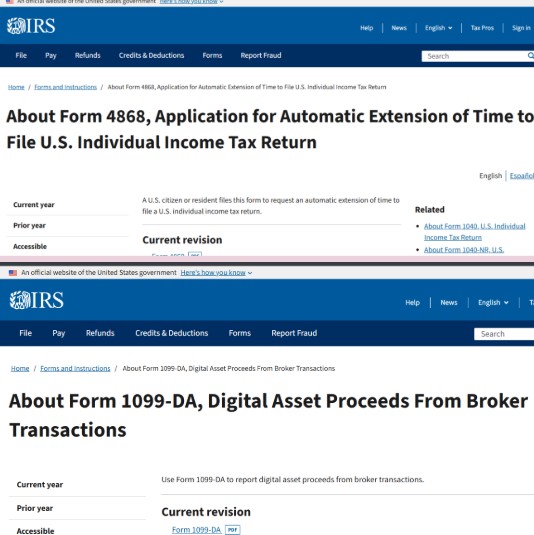
The date applies to taxpayers who filed Form 4868 before the spring deadline. That form gives an automatic six-month extension.
The extension covers filing only. It does not cover payment. Any tax owed still had to be estimated and paid by April 2026. Interest and late-payment charges may already be building on unpaid balances.
Anyone who has not filed yet should treat the cryptocurrency tax deadline October 15 as final.

Source: Wu Blockchain
What Crypto Investors Should Check Before Filing
Crypto tax filing 2026 is mostly a records exercise. Gains, losses, and income all need to match your own history. Review every taxable event from 2025, including sales, swaps, and staking rewards. Each one can affect your crypto capital gains tax 2026 bill.
| Crypto Tax Item | What to Check |
| Crypto sales | Proceeds and transaction dates |
| Cost basis | Purchase price and lots, where available |
| Crypto swaps | Asset received and asset disposed |
| Staking rewards | Income received and its value at receipt |
| Exchange activity | Match records with broker statements |
| Self-custody wallets | Rebuild any missing transaction history |
Tracking tools can help. Services such as CoinTracker pull exchange and wallet data, flag gaps against broker statements, and export figures for tax software. They turn a messy task into something closer to routine bookkeeping.
How Form 1099-DA Changes Crypto Reporting
Brokers have started reporting 2025 transactions on Form 1099-DA. For Form 1099-DA crypto reporting, the key number is gross proceeds. You can compare it with your own records to confirm what you sold.
Do not treat that figure as your final taxable gain. Cost basis may still be incomplete on the form. If it is missing or wrong, your personal records matter. Older lots and transfers between wallets often need to be rebuilt by hand.
This is also part of the broader digital asset tax 2026 picture. Broker reporting is making crypto look more like stocks on tax paperwork.
Source: IRS Website
What Happens If You Miss the Deadline?
A crypto tax penalty can add up fast. After the extension ends, the failure-to-file penalty starts at 5% of unpaid tax for each month. It stops at a 25% cap. A minimum penalty also applies once a return is more than 60 days late.
Filing late does not erase the tax you owe. Interest keeps running on unpaid amounts. Late returns with digital asset activity may also draw closer review. Anyone who cannot finish should file with the best records available and talk to a tax professional about fixing details later.
CLARITY Act News: Does It Change Your Taxes?
In mid-September, the Senate failed to advance the Digital Asset Market CLARITY Act. The vote was 49 to 50. Supporters needed 60 votes to move forward.
The result leaves broad market-structure rules unsettled for now. It does not move the crypto tax filing deadline. Your October 15 obligation stays the same.
Agencies are not waiting for Congress. The SEC and CFTC regulations have said they will keep developing SEC and CFTC crypto rules on trading, custody, and related topics. For taxpayers, that means gradual clarity on US crypto tax rules rather than one big legislative change. Lawmakers may return to the bill after the election cycle.
Crypto Tax Rules Are Tightening Abroad Too
The shift is not limited to the United States. In this week's crypto news, authorities in parts of Europe have expanded country-specific reporting templates. Jurisdictions across Asia and Australia continue to refine guidance on disposals, income events, and record-keeping.
As 2027 approaches, cross-border investors are finding it easier to map local rules onto transaction histories that were once hard to rebuild. Cost-basis tracking across wallets and venues is still complex, but the uncertainty that encouraged delay is shrinking.
Crypto Tax Timeline
| Date | Event |
| April 2026 | 2025 taxes originally due. Extensions did not move the payment date. |
| 2026 | Brokers began reporting 2025 transactions on Form 1099-DA. |
| Mid-September 2026 | Senate Vote 60 failed to advance the CLARITY Act, 49 to 50. |
| October 15, 2026 | Final filing date for extension filers. |
| 2027 | Agencies and lawmakers may keep refining crypto rules. |
Final Takeaway
The crypto tax deadline 2026 is close, and the extension only bought time to file, not time to pay. Reconcile your 1099-DA data, cost basis, exchange records, and wallet activity before you submit. Crypto market news reporting is settling into the same calendar and machinery that govern other assets, so early preparation pays off.
Disclaimer: This article is for general informational purposes only and is not tax, legal, or financial advice. Cryptocurrency involves risk, and tax rules vary by situation. Consult a qualified tax professional about your individual circumstances.






