Digital Rupee in 2026: Is RBI's CBDC Better Than UPI and Cash

What Is the Digital Rupee in 2026, and Who Can Use It
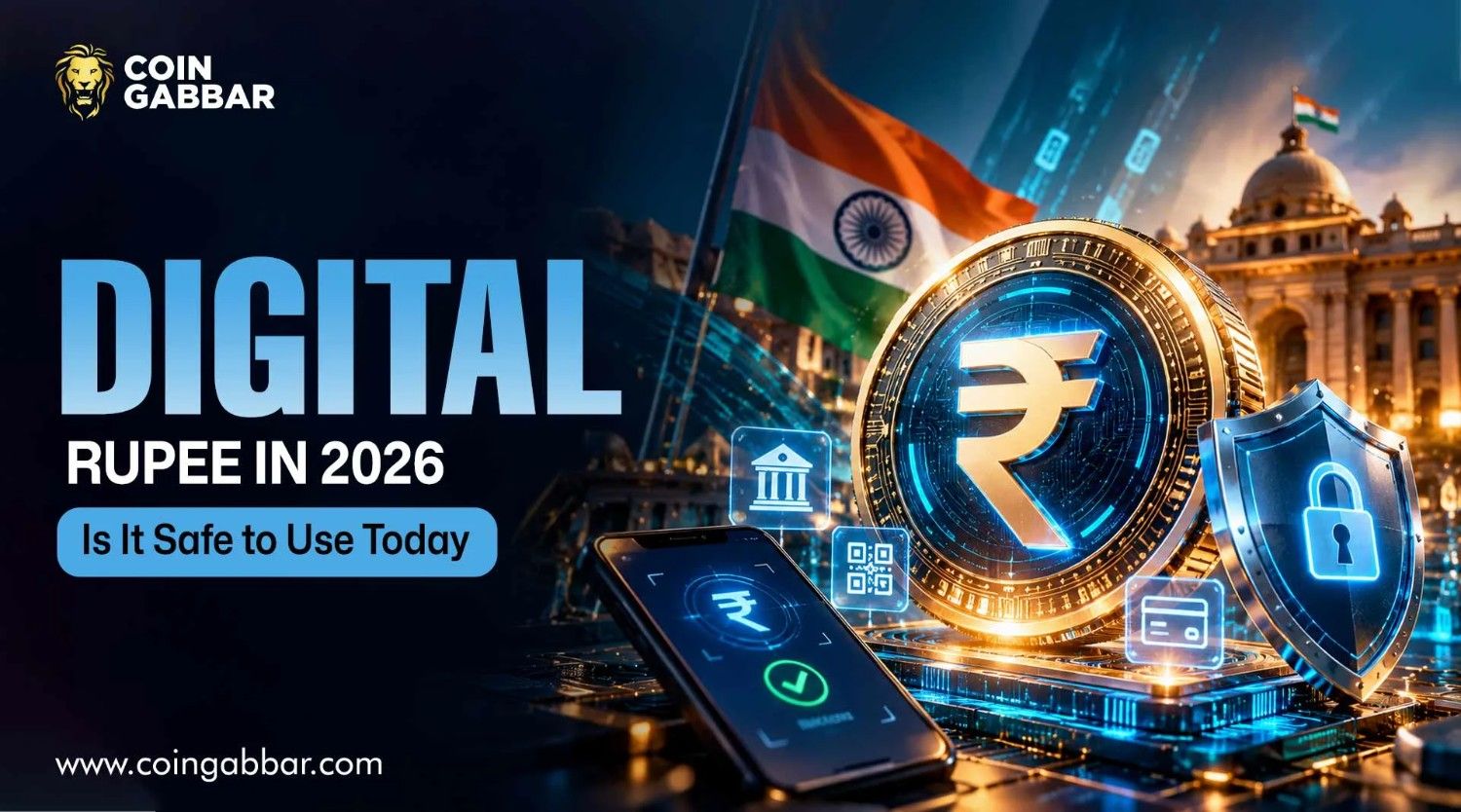
In 2026, the Digital Rupee will be cash in digital form that will be issued by the RBI. It is also legally valid, just like paper money. The only variation is in the location. It is kept in a cell phone wallet rather than a pocket.
UPI came first. It was launched by NPCI in 2016. e₹ was added by the RBI in December 2022. A version for banks began in November 2022, followed by one for the public a month later. It's still a pilot, so it hasn't been to everyone yet. It is often confused with UPI, stablecoins, etc. Just a quick glance at each reveals this.
e₹, UPI and Stablecoins: What Each One Is
Digital Rupee e₹: This is money issued by the RBI. One e₹ equals one rupee. It's the money itself, not a tool for sending it.
UPI: It's a payment system operated by NPCI. It transfers funds between bank accounts via apps. It isn't legal tender.
Stablecoins: These are crypto tokens that are tied to an item that is considered steady, like the U.S dollar. They are issued by private companies. The rules are still under discussion in India.
What Are the Real Benefits of the Digital Rupee in 2026?
No issuer risk because it is backed by the RBI.
Fixed value: The value of one e₹ is always ₹1. It doesn't run around like crypto.
Use offline: Tap-to-pay with NFC is in testing. This is an announcement made by the RBI during Global Fintech Fest 2025.
Greater privacy: It is considered to be more private than UPI, which is linked to a bank account.
Governments can restrict payments for specific uses: Programmable money. Businesses can include rules such as travel expenses.
Offline use matters a lot. Over 300 million Indians still have patchy internet.
UPI has its own strengths. Transfers are instant, and users generally pay no fees. Stablecoins could cut remittance costs, but India's formal channels are already quick and cheap.
How India's e-Rupee Works and Who Can Use It
There are two types. Retail e₹, or e₹-R, is for the public. Wholesale e₹, or e₹-W, is for banks. Retail wallets come from banks in the pilot. They handle payments between people and to shops.
The pilot hit 1 million transactions a day in December 2023. About six million users across 19 banks have been reported. Reported limits are ₹10,000 and ₹50,000.
Settlement differs too. An e₹ transfer arrives instantly as a token. An UPI payment goes through bank clearing first.
How to Use the e-Rupee Wallet Step by Step
The steps change a little from bank to bank. A common path looks like this:
Pick an e₹ app from a bank in the pilot.
Sign up and finish the ID checks.
Add e₹ from a linked bank account.
Pay a person or a shop, or scan a QR code.
Keep the balance under the pilot limits.
Some apps, like eRupee by SBI, can scan UPI QR codes at shops. Offline payments are meant for small amounts, reportedly under ₹500 in tests.
How Does the Digital Rupee in 2026 Work for Daily Payments?
UPI is significantly ahead in this regard when it comes to everyday expenditure. In mid-2025 it processed approximately 18-20 billion transactions monthly. Requires PIN, app, and a bank account. As of early 2026, only a small portion of the UPI volume was being used for e₹.
So where does e₹ fit? Small payments, places with weak internet, and cash-like privacy. One catch remains. Money can't go straight from an e₹ wallet to a UPI ID. The RBI is studying how the two could connect.
Is the Digital Rupee in 2026 Safe, Private, and Reliable?
It's RBI money, so no private issuer stands behind it. Stablecoins carry issuer and reserve risk. e₹ doesn't. Privacy is said to be better than UPI. Reliability is still being tested, since everything is in pilot.
e₹ vs UPI vs Stablecoins: Quick Comparison
Feature | e₹ | UPI | Stablecoins |
Issuer | RBI | NPCI runs the system; money stays in banks. | Private firms |
Legal tender | Yes | No | No |
Value | 1 e₹ = ₹1 | Bank deposits | Pegged to an asset, such as the dollar |
Offline use | Piloted via NFC | Needs internet | Needs internet |
India status | Pilot | Mass adoption | Regulation debated |
In short: e₹ is money, UPI moves money, and stablecoins are private tokens.
What Is Next for the Digital Rupee in 2026 and Beyond?
The next steps will be to expand the pilots, settle the majority of the land, and incorporate government payments, such as subsidies. Offline and programmable are still undergoing testing. The e-Rupee is also said to be laying the foundation for UPI's infrastructure and expanding the payment connections.
Policy sentiments are more pro-UPI and pro-e₹ when it comes to stablecoins. Remittances bolster the argument. India gets around $120 billion per year, which is a significant amount, and so it does matter that payments are cheaper across India's borders.
Digital Rupee in 2026 Risks: Common Mistakes Users Should Avoid
Forgetting that e₹ is not a cryptocurrency or UPI.
It is assumed that stablecoins are legal tender or have support from the RBI.
Using apps other than the bank's wallet to participate.
Not all shops can accept e₹, so please be aware of them.
Don’t forget rules can change while the piloting phase
Another pitfall is price fluctuations. Free-floating cryptocurrencies can come crashing down. In 2022, Bitcoin's price fell from approximately $69K to $16K.
Stablecoins attempt to do otherwise, but reserve risk persists. If the usage of a heavy amount of stablecoins is any indication, the RBI's grip on liquidity can also get weaker. Unauthorised/inauthentic apps can access information.
Expert Take: What Should Readers Watch?
The superior signal is UPI's scale. The primary concern is the delayed e₹ adoption. The big question now is when the pilot will turn into a full rollout. Please verify on RBI and bank websites.
Conclusion
The Digital Rupee in 2026 is real, but it's still a pilot. It leads daily payments. Stablecoins still face debate over rules. Each one does a different job: money, movement, and private tokens. Readers should stick to official bank wallets and check limits first.
Disclaimer
This article is for information only and is not financial or legal advice. Digital currencies and stablecoins carry risk, and rules can change. Readers should check official RBI and bank sources before use.









.webp)