Chainlink DeFi Ecosystem: Projects Building With LINK Technology

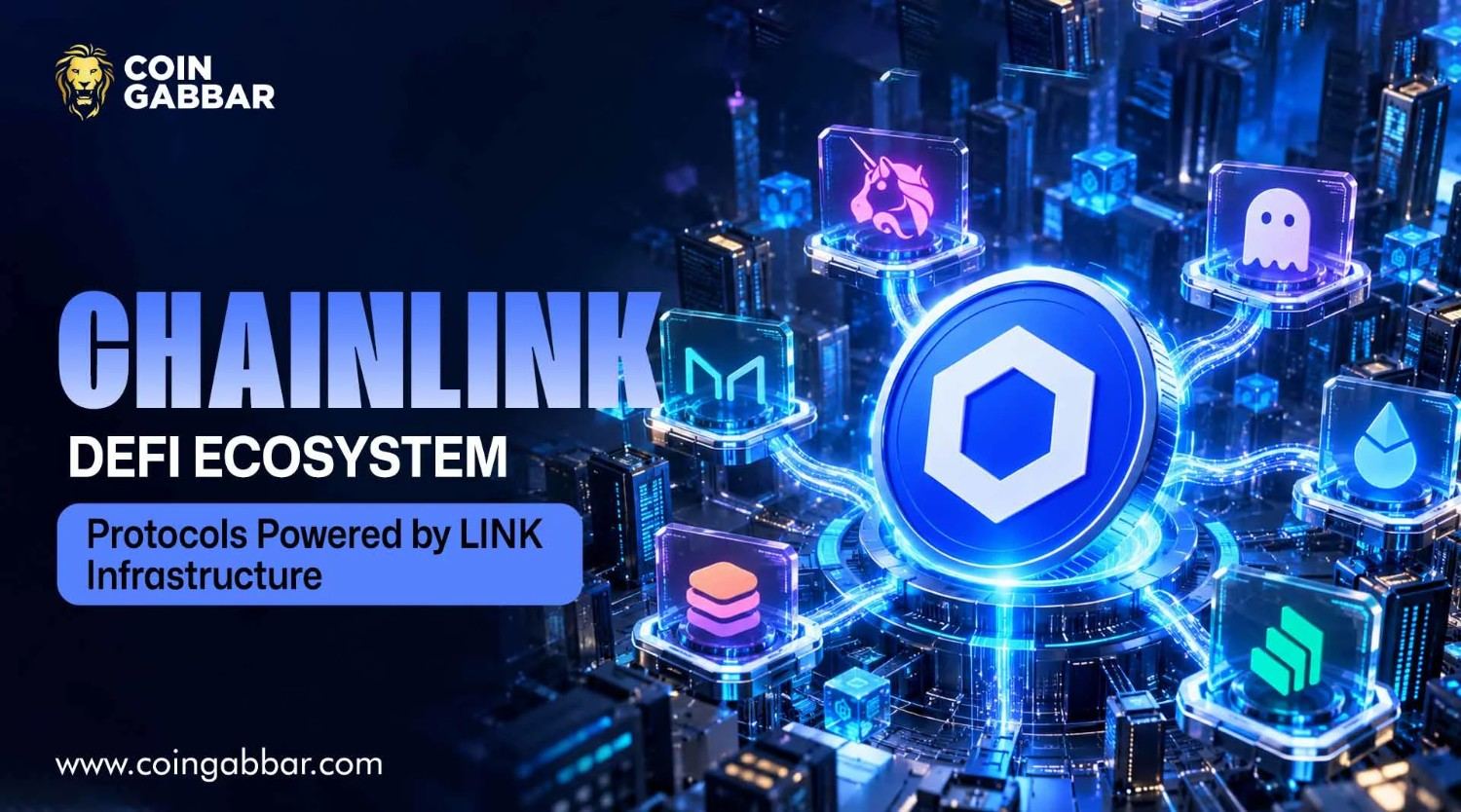
Inside the Chainlink DeFi Ecosystem and Its Growing Protocol Network
The Chainlink DeFi ecosystem is the group of lending, trading, stablecoin, and staking projects that use Chainlink oracle services to run their smart contracts. An oracle is a tool that carries outside data, such as asset prices, onto a blockchain.
Interest in the Chainlink DeFi ecosystem keeps rising for a simple reason. DeFi apps cannot work without reliable data. A lending market needs prices to spot unsafe loans. A derivatives platform needs fresh prices every second.
As of October 2026, the project's official pages name dozens of protocols across several chains. This article explains the tools, the projects, and the risks that sit behind the headline claims.
What Does the Chainlink DeFi Ecosystem Actually Mean?
DeFi is short for decentralized finance. It covers stablecoins, exchanges, money markets, and other financial products built with smart contracts. A smart contract is a program that runs on a blockchain and follows fixed rules.
The Chainlink DeFi ecosystem sits on top of that base. It is not one app or one chain. It is a set of protocols that share the same data, messaging, and automation tools.
Chainlink itself is a decentralized oracle network. The official education hub explainer describes the core problem behind the Chainlink DeFi ecosystem well. Blockchains can check data already stored on-chain. They struggle with prices, interest rates, and event results that come from outside.
LINK is the network's native token, the official site also lists staking and economics pages for it, which suggests the token plays a role in network security.
How Does Chainlink Data Reach DeFi Smart Contracts?
Two products matter most here: data feeds and data streams.
Data Feeds deliver price and reference data. The project says they pull premium data through sybil-resistant oracles, meaning networks that are hard to fool with fake identities. Independent node operators then publish verified values on-chain.
Data Streams target speed. The project describes them as high-throughput, low-latency market data built for perpetual futures, options, and other time-sensitive markets.
Why does the Chainlink DeFi-ecosystem rely on shared data instead of private oracles? Many early DeFi teams tried building their own. In an official interview, Aave's founder said his team started building an oracle and realized how much work it was. That is a project-published view, but it explains why shared infrastructure became popular.
A single data source is also a single point of failure. The project's educational material points out that centralized price collection leaves apps open to mismanagement or bribery.
Which Chainlink Tools Do DeFi Protocols Use?
Data is only the start. The official DeFi page lists several tools that protocols can combine.
| Tool | What it does | Typical DeFi use |
| Data Feeds | Decentralized price and reference data | Collateral pricing, peg protection |
| Data Streams | Low-latency market data | Perpetuals, options |
| CCIP | Cross-chain messages and token transfers | Multi-chain apps, stablecoin movement |
| Automation | Triggers on-chain functions | Liquidations, interest accrual, rewards |
| Functions | Custom off-chain compute and API calls | Custom protocol logic |
| Proof of Reserve | Verifies reserves of backed assets | Stable coins , BTC-backed tokens |
| Runtime Environment | Orchestrates oracle-powered workflows | Custom multi-step workflows |
CCIP stands for Cross-Chain Interoperability Protocol. It lets apps send data and tokens between blockchains. The project says it includes rate-limited security, a cap that slows large transfers.
The Chainlink DeFi-ecosystem now covers data, messaging, and automation, not only price feeds.
Which Projects Build in the Chainlink DeFi Ecosystem?
The official DeFi use-case page groups projects by sector. Logos on that page show a relationship. They do not show how deep each integration goes.
| Sector | Projects shown on the official page |
| Lending | Aave, Compound, Fluid, Kamino |
| Derivatives | GMX, MYX, Ostium, SynFutures |
| Stablecoins | Ripple, Maple, GHO, Paxos |
| BTCFi | Lombard, Solv, Botanix, Babylon |
| Tokenized assets | Ondo, Backed, OpenEden, Spiko |
| Liquid staking | Lido, Rocket Pool, Kelp, Renzo |
BTCFi means Bitcoin-based decentralized finance, a fast-growing corner of the Chainlink-DeFi-ecosystem. Liquid staking lets users keep a tradable token while their coins are staked elsewhere.
In DeFi lending protocols, the project says its tools help protocols price collateral and run liquidations. In stablecoins, Proof of Reserve checks backing, and price feeds help protect the peg. Peg means the target value, usually one US dollar.
Expert Analysis: What the Integrations Really Show
Three points stand out in the Chainlink-DeFi-ecosystem.
First, the Chainlink-DeFi-ecosystem has widened. Early DeFi-used oracles for prices. Today the same network also handles messaging, reserve checks, and automated triggers. That makes-Chainlink more like a service layer than a single feature.
Second, the newest growth areas are tokenized assets and BTCFi. Both need trusted off-chain facts, such as reserve balances or fund values. That is where oracle networks have a natural role.
Third, claims need careful reading. The project says its infrastructure has enabled tens of trillions in DeFi-transaction value and serves thousands of projects across 60+ chains. These are project claims. Transaction value is also not the same as total value locked, which measures funds currently deposited in protocols.
What Are the Main Risks to Consider?
A widely used oracle network is not risk-free. In the Chainlink-DeFi-ecosystem, several points deserve attention:
-
Dependency risk. If many protocols share one data provider, a serious fault could spread.
-
Protocol risk. An oracle cannot fix a bug inside a lending or trading contract.
-
Cross-chain risk. Moving assets between blockchains adds extra moving parts.
-
Market risk. LINK's price can fall even when integrations grow.
-
Claim risk. Partner logos and usage figures come from the project itself.
An audit or a famous partner is never a guarantee of safety. A partnership announcement also does not guarantee adoption.
Is the Chainlink DeFi Ecosystem Worth Watching Right Now?
The Chainlink-DeFi-ecosystem looks relevant because the same problems keep returning: reliable prices, safe cross-chain transfers, and verifiable reserves. The project is trying to cover all three, and the Chainlink-DeFi-ecosystem is where that effort shows up.
Still, relevance is not a prediction. Observers can check live feed lists in the official documentation and compare them with claims on the website. The original network design is outlined in the official whitepaper.
Market-focused observers often turn to LINK price prediction pages for potential market outlooks, with forecasts remaining uncertain.
Conclusion
The Chainlink-DeFi-ecosystem is a network of protocols that use Chainlink data, messaging, and automation to run lending, derivatives, stablecoins, BTCFi, and tokenized asset products.
What stands out is the breadth. Projects such as Aave, Lido, and GMX appear on the official page across very different DeFi-sectors.
What remains uncertain is depth and independence. Logos, usage totals, and partner quotes are published by the project. The next step is to check the official documentation, review each protocol's own audits, and read the project's whitepaper before drawing conclusions. The Chainlink-main-page gathers related background.
Disclaimer:
This content is for information only and is not financial, investment, or legal advice. Crypto assets are volatile and carry a high risk of loss. Research each project independently before making any decision.







.webp)