Ethereum News: ETH Price Near $2700, New Security Rules, BitMine Buys


Ethereum News: New Security Rules, 200M Gas Test and 6M ETH Holdings
Ethereum News Today is led by three stories. The Foundation is exploring a new way to check transaction results. Sepolia is running a 200 million gas stress test. BitMine now holds more than 6 million ETH.
ETH trades at $2,693.23, down 0.7% in 24 hours. Market cap is about $328.8 billion, and daily trading volume is near $10.66 billion. None of these stories is a mainnet change yet, but together they show where Ethereum is heading.
At a Glance
-
The Ethereum Foundation is exploring native transaction assertions that check a transaction's final result against preset rules.
-
EIP-7906 is one possible design, but it is not confirmed for any Ethereum latest upgrade.
-
Sepolia's gas limit rises from about 60 million to 200 million on October 6 at 13:53:36 UTC, and this is a testnet change only.
-
BitMine holds 6,016,414 ETH, about 4.9% of total supply, with roughly 84% staked.
-
ETH price stands at $2,693.23, down 0.7% in 24 hours, with a market cap near $328.8 billion.
Ethereum Explores a New Security Layer to Protect Transactions
The Ethereum Foundation's Trillion Dollar Security initiative is looking at native transaction assertions. The idea starts with a simple problem. A valid signature does not always guarantee the result you wanted.
With an assertion, a transaction carries rules about its final outcome. After the transaction runs, the network checks balances, contract storage, code and events against those rules. If the result breaks a rule, the transaction is rolled back.
EIP-7906 is one possible design. It is marked "Considered for Inclusion," but it is not confirmed for any upgrade.
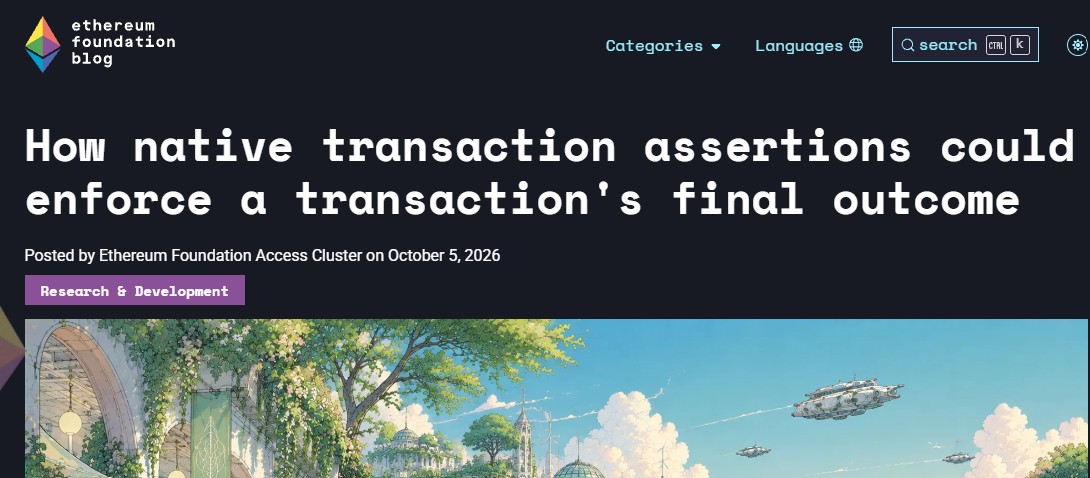
Source: Ethereum Foundation Access Cluster (October 5, 2026)
Could This Have Prevented the Bybit and Aave Losses?
The Foundation points to two costly cases. In the Bybit hack incident, which cost about $1.5 billion, signers approved a request that differed from what they believed they were signing. A rule that kept the approved Safe contract unchanged could have flagged the change.
In the Aave and CoW swap, a user turned about $50.4 million of aEthUSDT into tokens worth roughly $36,000. A minimum output rule, set independently of the quote shown, could have stopped it. This does not mean EIP-7906 would stop hacks. Attacks that steal private keys would still be a problem.
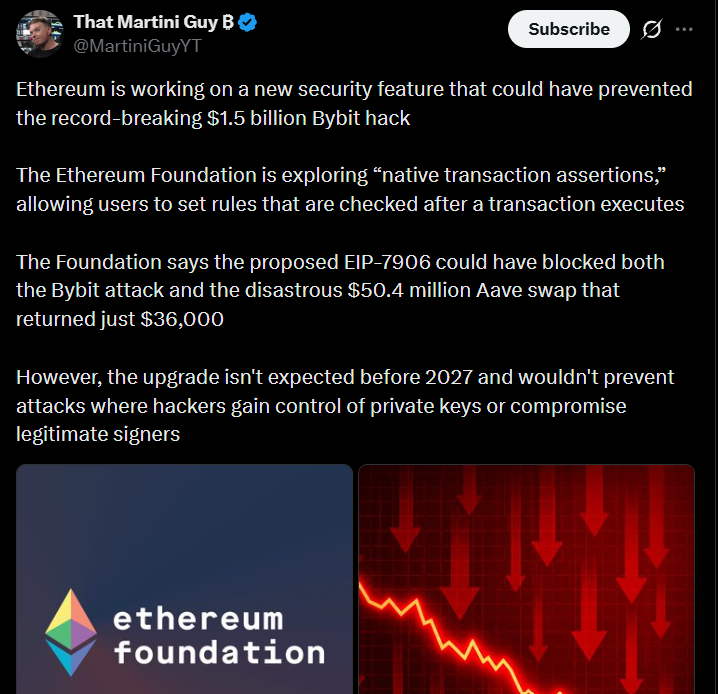
Source: The Martini Guy
How Ethereum Transaction Assertions Would Work for Users
The flow is simple: you sign, the transaction runs, and the final state gets checked. Rules could set a minimum amount received, cap spending, block new token approvals, limit balance changes, protect contract code, or require specific events.
This goes further than Clear Signing, which explains what a request does. It also goes further than simulation, which predicts a result that can change before inclusion. Assertions check what actually happened.
There is one key limit. The rule must come from a trusted source, such as the user's own intent, a wallet policy, or protocol logic. A hacked app could write a rule that allows the attack.
Ethereum's 200M Gas Test: What the Sepolia Upgrade Means
Prysm released an urgent v7.2.1 patch on Monday evening. It supports the Glamsterdam update rehearsal on the Sepolia testnet, set for 13:53:36 UTC on October 6.
The test lifts Sepolia's block gas limit from about 60 million to 200 million. That is more than three times the load. Developers want to see how validator hardware handles it and whether larger capacity could work on mainnet.
Validators on older clients would keep proposing 60 million gas blocks, which weakens the test. The new Prysm version proposes 200 million gas blocks by default. The 200 million setting applies only to Sepolia and has not been set on Ethereum mainnet.
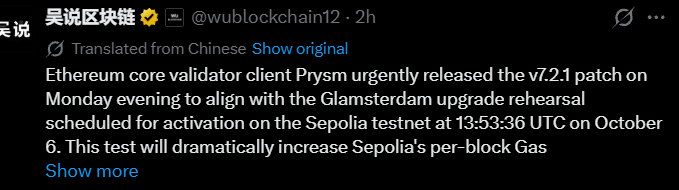
Source: Wu Blockchain
What Does the 200M Gas Test Mean for ETH Holders?
If future tests go well, Ethereum could fit more transactions in each block. Over time, that may help throughput and fees. But this test alone changes nothing for mainnet gas limits or the fees you pay today.
Vitalik Buterin Sees AI and Privacy as Ethereum's Next Big Shift
At the OKX NOW event, Vitalik Buterin called AI both the biggest opportunity and the biggest risk. He said AI already helps find protocol vulnerabilities and build complex cryptography.
He also expects AI to become a new user interface. That could remove some middle layers between users and blockchain apps. He said blockchain meets these problems first because so much money sits on-chain.
He predicts privacy tools like zero-knowledge proofs will mature within two years. He also expects lower transaction costs and a stronger focus on privacy.
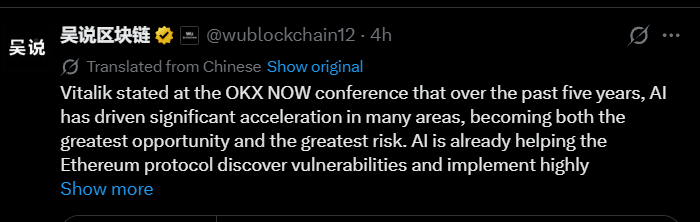
Source: Wu Blockchain
BitMine Now Holds 6.01M ETH: Why This Matters to the Market
BitMine Ethereum says it held 6,016,414 ETH as of October 4. That is about 4.9% of total supply. It bought 15,112 ETH in the past week.
About 5.067 million ETH, or roughly 84% of its holdings, is staked. The company's crypto, cash and marketable securities total about $17.4 billion.
Readers should watch three things: how concentrated institutional holdings become, how much ETH stays staked, and how large holders may influence the market. Large buying is not automatically bullish.
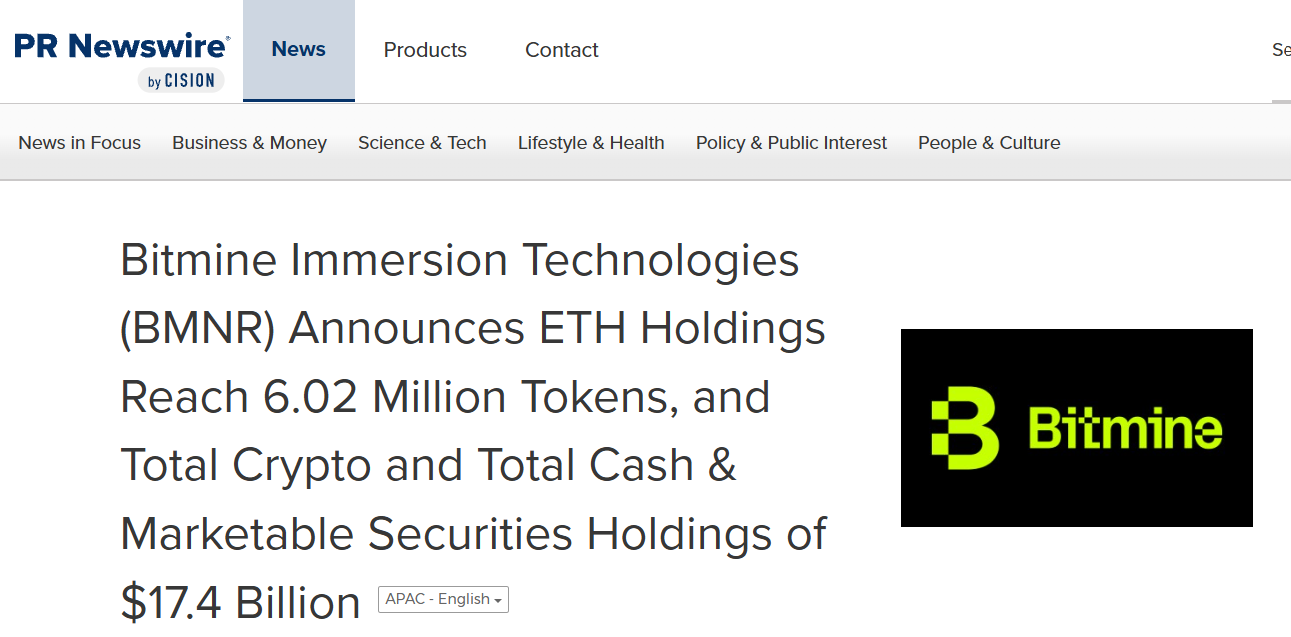
Source: BitMine announcement
Ethereum Price Today: ETH Falls 0.7% as Traders Watch Network Developments
ETH price today is holding near $2,693 despite a busy news cycle. Security research, scaling tests, institutional buying and AI and privacy plans are long-term themes. They are not clear triggers for a 0.7% daily move, and no single story should be blamed for it.
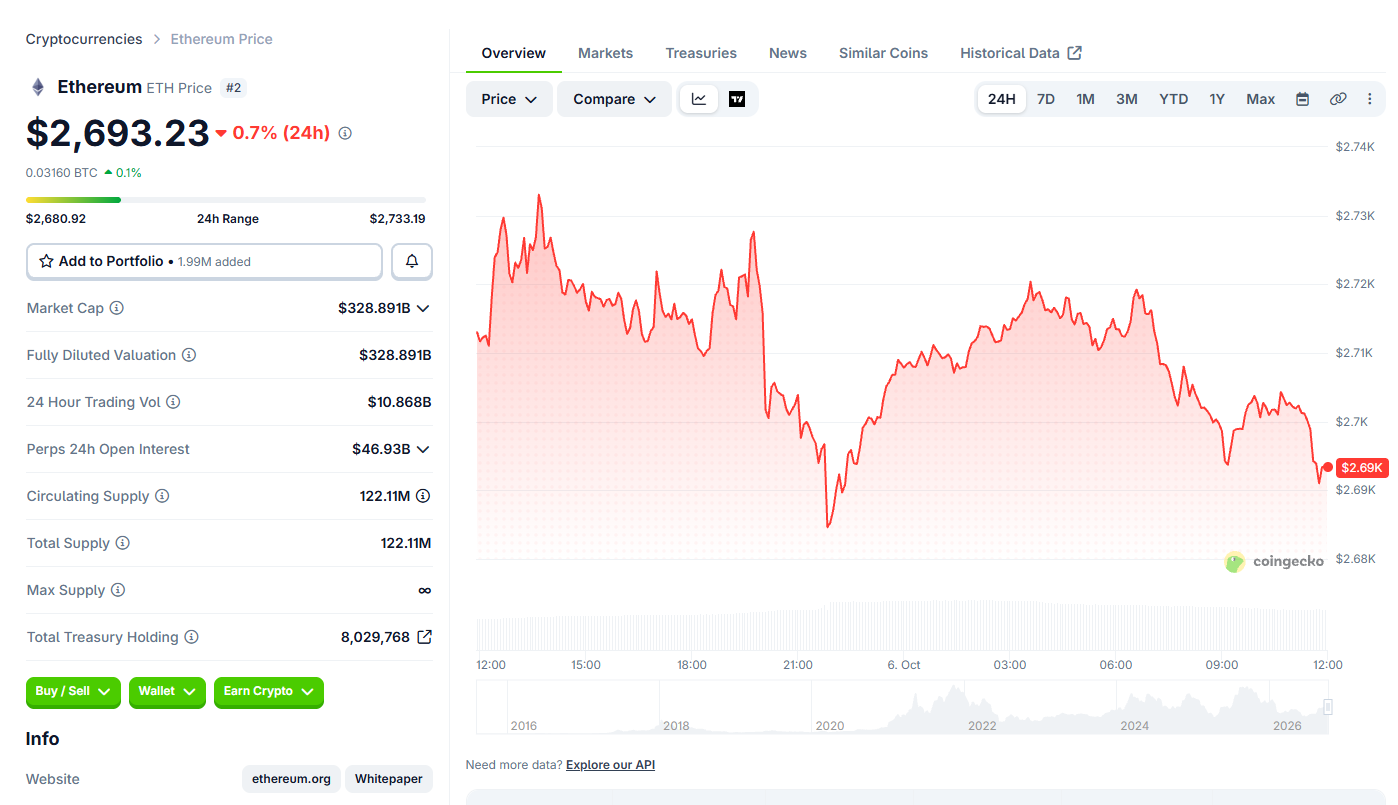
Source: CoinGecko Data
What Ethereum Users and ETH Investors Should Watch Next
-
Whether EIP-7906 moves toward real implementation
-
Results from the 200M gas Sepolia stress test
-
Whether higher gas limits become safe for mainnet
-
More institutional ETH buying and staking
-
Progress in privacy and zero-knowledge tools
-
ETH price, volume, and market cap
Conclusion
Ethereum News Today shows a network working on safer transactions, more capacity, deeper institutional exposure and easier everyday use. Transaction assertions could give users a final safety check, and the Sepolia test will show how far block sizes can grow.
BitMine's holdings and Vitalik's outlook add to the long-term picture. The assertion proposal and the 200M gas limit are not mainnet changes yet, so readers should follow official updates before concluding.
Disclaimer: This article is for information only and is not financial advice. Cryptocurrency prices are volatile. Do your own research and speak with a licensed advisor before investing.









