Cardano Real World Assets: Tokenization Possibilities

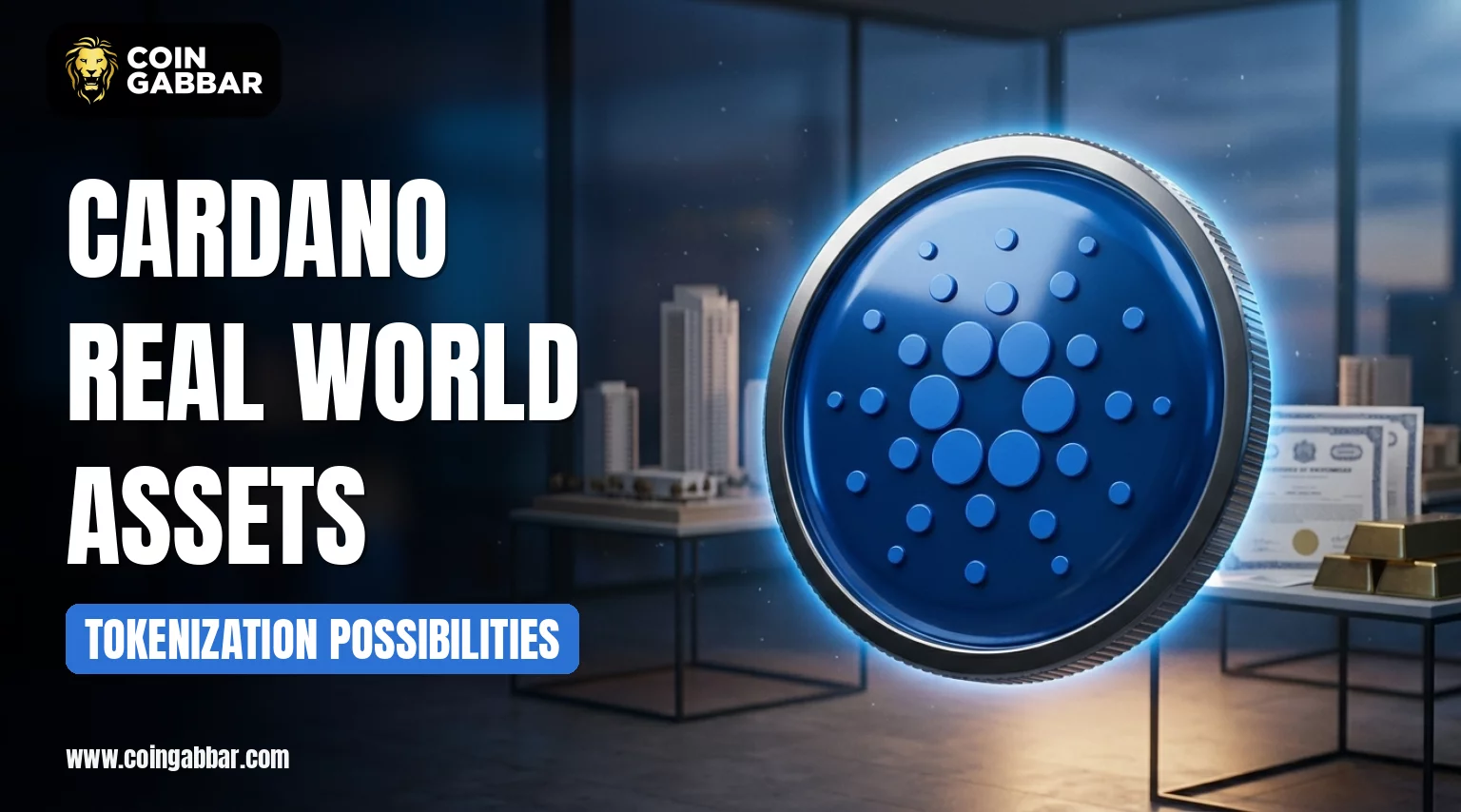
How Could Cardano Real World Assets Unlock New Possibilities?
Tokenizing a building, a bond or a bar of gold sounds easy. Put it on a blockchain, split it into pieces, let people trade. The hard part happens off-chain.
That's the real question behind Cardano real world assets. The official site says tokenization can divide ownership of physical assets into digital tokens that trade easily. Most readers want to know what's live and what's only possible.
This guide covers the basics, Cardano's tools, likely uses and the risks. If the term is new, what RWA tokenization means is a good place to start. Details were checked against official pages on 6 October 2026.
What Are Real World Assets in Blockchain?
Real world assets, or RWAs, exist off-chain. Think property, bonds and commodities. A token is a digital entry on a blockchain, and how an RWA blockchain works depends on what that entry legally represents.
Cardano real world assets follow the same logic. A token only matters if a legal claim sits behind it.
How Real World Assets Are Tokenized
The usual path has five steps:
A physical or financial asset exists off-chain
A legal structure represents it
An issuer mints a digital token
The blockchain records that token
Holders transfer ownership on-chain
Skip the legal step and the token is just a number. Paper records are the other weak spot. Cardano Foundation's academy video points to a $577 million loss where low-value material replaced nickel, and argues that on-chain identities and audit trails can improve verification.
Which Assets Can Be Tokenized?
Real estate, bonds, commodities, private credit, securities, art, collectibles and carbon credits are the usual examples. Each one carries different legal rules.
How Could Cardano Support RWA Tokenization?
The official tokenized assets page lists native tokens, low fees, regulatory awareness, formal verification and global access as Cardano's case. Those are project claims, not proof of adoption.
Cardano's Native Asset Model
Cardano real world assets would start with native tokens, which live on the ledger itself, like ADA. A basic token doesn't need its own smart contract. But it also follows whoever controls the address, so it can't enforce investor rules alone.
Smart Contracts and Programmable Assets
Programmable tokens add transfer rules. Holders can send them only when the issuer's rules approve, such as an allowlist of verified buyers. The proposed standard, CIP-113, is still under review. Contracts could also automate distributions for Cardano real world assets and connect to DeFi.
Security and Scalability
Low fees make small trades practical, according to the project. Formal verification is its stated approach to contract security. For Cardano real world assets, institutions value predictable costs and tested code. This article found no official throughput figure, so it quotes none.
What Types of Assets Could Be Tokenized on Cardano?
These are possibilities, not a list of live products. Cardano real world assets could span many categories, and RWA crypto projects show where activity actually exists.
Real Estate Tokenization
Tokens could offer fractional ownership with on-chain records and secondary trading. Local property law decides what the token legally means.
Bonds and Fixed-Income Assets
Issuance, ownership records and settlement could be automated, cutting paperwork.
Commodities and Precious Metals
Tokens could represent claims on stored goods, but only with proper custody and legal structures.
Private Credit and Alternative Assets
Loans and invoices are hard to sell. Tokens could make them easier to split and trade.
Carbon Credits and Environmental Assets
Public ledgers could make credit tracking and retirement more transparent.
Benefits of Cardano Real World Asset Tokenization
The official page lists these gains for Cardano real world assets. Treat them as potential outcomes, not promises.
Fractional Ownership
Smaller slices lower the minimum investment.
Greater Transparency
Ownership records are publicly verifiable.
Faster Settlement
Transfers could settle quicker than paper systems.
Improved Asset Liquidity
Tokens can trade around the clock, if buyers exist.
Programmable Ownership and Compliance
Smart contracts can enforce transfer rules.
Global Access to Tokenized Assets
Anyone with a wallet could hold eligible tokens, subject to local law.
What Challenges Could Limit Cardano RWA Adoption?
Cardano real world assets face hurdles beyond code.
Regulatory and Legal Requirements
Tokenizing an asset doesn't automatically transfer legal ownership. Tokenized assets can also fall under financial regulation.
Custody and Asset Verification
A blockchain can't confirm an asset exists. That's the oracle problem. Custodians and audits fill the gap.
Liquidity and Market Demand
A token still needs buyers and sellers.
Compliance and Investor Restrictions
KYC, AML and securities laws vary by country. Issuers may limit transfers to verified investors.
Smart Contract and Technical Risks
Bugs and oracle failures can hurt holders. The official page also warns that upgrade authority can change rules, so investors should know who holds it.
Cardano RWA vs Traditional Asset Tokenization
Cardano real world assets could change how records and transfers work. The table shows the contrast, and "potentially" is doing real work in it.
Feature | Traditional Asset System | Cardano-Based Tokenization |
Ownership records | Centralized | On-chain |
Settlement | Often slower | Potentially faster |
Fractional ownership | Limited | More flexible |
Transparency | Depends on intermediary | Blockchain-based |
Automation | Limited | Smart-contract enabled |
Global accessibility | Often restricted | Potentially broader |
On-chain records still need legal backing to count.
How Could Cardano RWA Connect With DeFi?
DeFi means financial services run by smart contracts instead of banks. Cardano real world assets could plug in several ways:
Lending against tokenized assets
Collateral for loans
Secondary markets
Yield-generating assets
Stablecoin integration
Liquidity pools, where traders swap tokens without a middleman
These are potential use cases. The official pages don't confirm live products for each one, so check a project's own documentation first.
What Could Drive Cardano RWA Adoption?
Cardano real world assets need more than good technology. These signals matter most:
Regulatory clarity
Institutional participation
Custody solutions and oracle infrastructure
Stablecoin growth and DeFi liquidity
Cross-chain links
Real-world partnerships
A partnership announcement doesn't guarantee adoption. Price moves don't either, so keep ADA price action separate from RWA progress.
What Is the Future of Cardano Real World Assets?
If legal frameworks, custody and liquidity keep maturing, Cardano could become part of the infrastructure behind tokenized assets. If they stall, Cardano real world assets stay an idea. This article makes no price predictions, and the outcome remains uncertain.
Cardano Real World Assets: Expert Take
Opportunity: Tokenization can connect traditional assets with blockchain infrastructure.
Strength: Native tokens and programmable-token work fit that goal.
Challenge: Legal ownership, compliance, custody and liquidity remain critical.
Outlook: Real-world implementation will matter more than the technology itself.
Conclusion
Cardano real world assets sit between a clear idea and unfinished execution. Official documents describe tokenization, native tokens and a transfer-rule standard still under review.
What remains uncertain is live adoption, since no official total was found. Check official pages and any issuer's legal terms next.
Disclaimer: This article is for educational purposes only and isn't financial advice. Crypto and tokenized assets carry high risk, including total loss. Research independently before making any decision.








.webp)