Chainlink DON Explained: How Decentralized Oracles Work

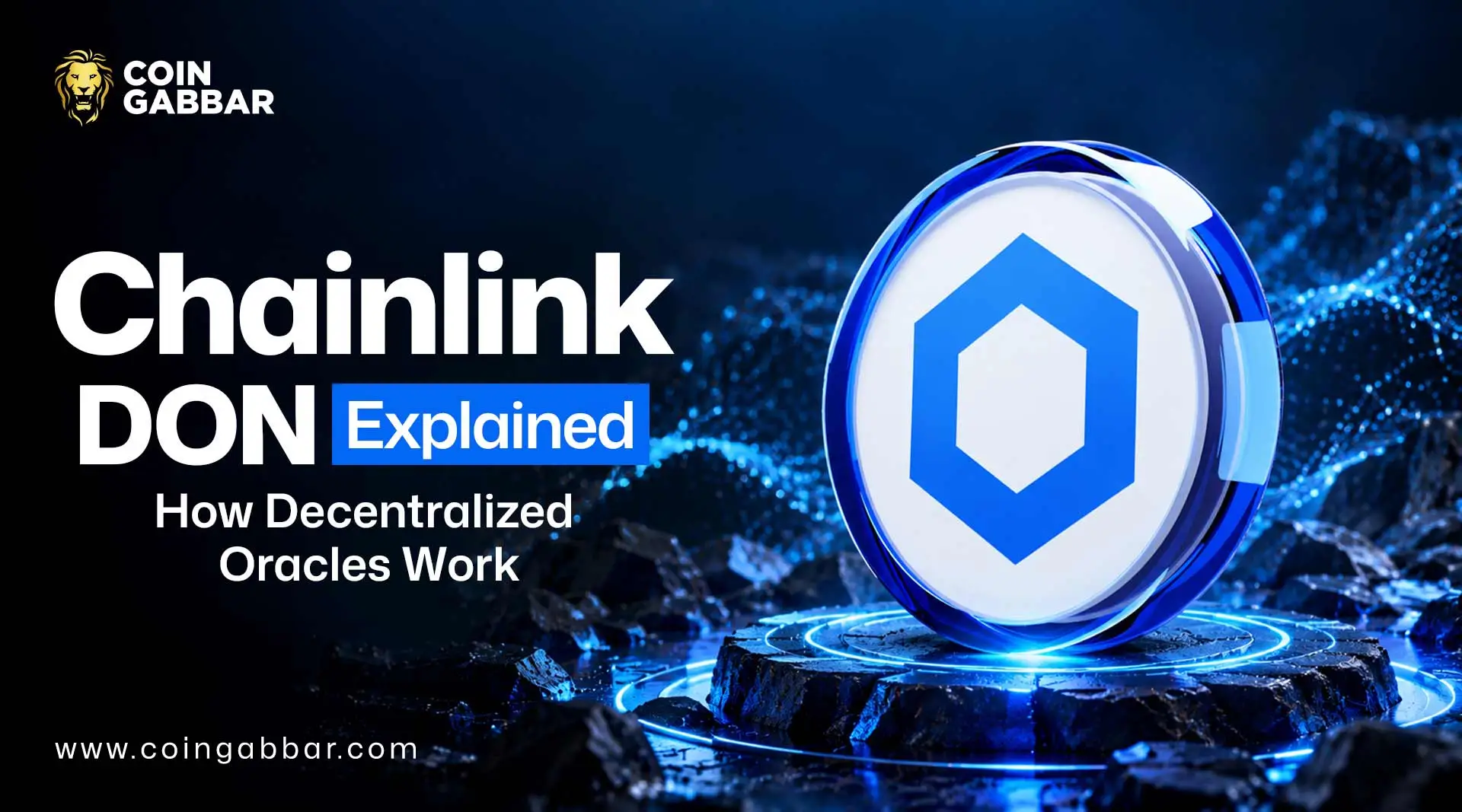
Chainlink is a blockchain oracle network. It links smart contracts to real-world data, like prices and events, and also passes cross-chain messages. Its LINK token pays node operators for this work.
A Chainlink DON is a group of independent nodes that deliver this data safely. No single server is needed. This guide covers the design, the way nodes agree, and the services built on top. Anyone who builds or studies Web3 can use it to judge oracle risk.
What Is Chainlink DON?
A Chainlink DON, short for Decentralized Oracle Network, is a group of independent node operators: They work together on one shared task. The task may be to fetch a price, or it may be to run custom code. It may also be to relay a message between blockchains.
Teamwork is the core idea. Every node runs the same software, but a different party runs each node on its own systems. The group agrees on one result; only that result goes on-chain. No single operator can decide the outcome alone.
Think of a committee, not a lone messenger. A messenger can lie, fail, or take a bribe. A committee must agree before it speaks; that is much harder to corrupt.
Why Smart Contracts Can’t Rely on a Single Oracle
Blockchains are deterministic by design. Every node must get the same result from a transaction. So a contract can’t just call a website, because web data changes every second and nodes would not agree on what they saw.
Oracles fix this, as they bring outside data on-chain in a controlled way. Trouble starts when one oracle does the whole job. That is a single point of failure, and the contract takes on every risk from that source.
Lending apps, derivative platforms, and stablecoin systems need accurate prices; one wrong value can cause bad liquidations. It can also drain a liquidity pool; that can happen in just a few seconds. A Chainlink DON cuts that risk; it spreads trust across many operators and many data sources.
How a Chainlink DON Works, Step by Step
The steps are the same for every service the network offers.
Request or trigger: A smart contract asks for data, and a schedule or condition starts an update.
Data collection: Each node asks several independent data providers. Many use aggregators that already combine many exchanges.
Local processing: Each node checks its own data.
Consensus: The nodes talk off-chain. They agree on one combined value.
Signed report: A quorum of nodes signs the agreed report.
On-chain delivery: One transaction sends the report to the target contract. The contract checks the signatures.
Steps 4 and 5 set a Chainlink DON apart from a basic oracle setup. The agreement happens before anything touches the chain.
Off-Chain Reporting and Byzantine Fault Tolerance
Older oracle designs had every node send its own transaction. That was costly and slow, and it got worse when the network was busy.
Off-Chain Reporting (OCR) changed this. Nodes run a peer-to-peer protocol off-chain. A leader node starts a round, and the others share what they saw. Together they build one report, and once enough nodes sign it, one transaction publishes the result.
The protocol is Byzantine fault-tolerant. In practice, the network still gives correct results if a minority of nodes fail or act with bad intent. The usual rule is that up to one third of nodes can misbehave.
Gas cost per update drops; more nodes can also join without raising on-chain costs. That is a big reason large data feeds can update often; they still stay affordable.
Services Built on Chainlink
A Chainlink DON is infrastructure, not a single product. Different networks are set up for different jobs.
Data Feeds: Combined market prices and reference data. They go on-chain at set times or when the price moves past a set limit.
Data Streams: Data Streams is a pull-based service for low-latency data. An app fetches a signed report when it needs one, then checks it on-chain.
Functions: Developers run custom JavaScript across the network. The code calls APIs and computes a result and then passes the output back to a contract.
Automation: Nodes watch for set conditions. They run contract functions at the right moment, which replaces centralized scripts and bots.
CCIP: The Cross-Chain Interoperability Protocol uses separate networks. They commit and execute messages between chains; an independent risk management layer backs them up.
Each service has its own node set and setup. The rule stays the same. Independent operators must agree before any output is accepted.
How Security Is Layered
Security comes from layers that work together. No one feature does it all.
Operator diversity: Operators are not all alike. Some are infrastructure firms. Others are established blockchain teams. This mix lowers the chance of shared failure.
Source diversity: Nodes don’t rely on one provider; they pull from several. If one source is wrong or manipulated, the combined value limits its effect.
Cryptographic verification: Reports come signed. The receiving contract checks the signatures first; only then does it use the data. A forged value gets rejected.
Economic incentives: Fees reward operators for accurate work. On supported services, staking adds financial costs for poor work. A track record influences which operators get picked.
Monitoring: Many feeds use deviation thresholds and heartbeat updates. Stale or odd data is easier to spot.
No design removes all risk. Still, layers like these make manipulation costly and hard.
Where Oracle Networks Are Used Today
DeFi price data is the most visible use case. Lending markets use feeds to value collateral, and perpetual exchanges use fast reports to mark positions. Stablecoin projects use reserve data to verify backing.
Tokenized asset platforms use oracle networks for net asset values and proof of reserve checks. Insurance contracts can pay out on verified weather or event data. Games use verifiable randomness; this shows an outcome is fair and provable.
Across all of these, the Chainlink DON plays the same part. It is the trust layer between the blockchain and anything off-chain.
Risks and Limits Developers Should Watch
A Chainlink DON improves oracle security. But responsibility still sits with developers.
Integration errors: Even a well-secured feed can be misused. Contracts should check data freshness. They should also handle extreme values.
Market conditions: Thin or manipulated markets can show up as weak prices in the combined data.
Network dependency: An app that relies on one service inherits its availability profile.
Configuration choices: Heartbeat and deviation settings decide how fresh the data stays. Slower settings save cost, and they also add exposure.
Oracle design belongs in the threat model from day one. It is not an afterthought.
Final Thoughts
The Chainlink DON model solves a basic Web3 problem. How can outside data reach the chain without a single point of trust? Independent operators, off-chain consensus, signed reports, and economic incentives work together. They deliver data that contracts can verify.
For builders, the takeaway is simple. Pick the service that fits the speed and cost needs, and check data inside the contract. Also plan for edge cases. For analysts, knowing how the network works gives a stronger lens for judging protocol risk.
On-chain finance is growing into tokenized assets and cross-chain apps. Reliable oracle infrastructure will matter even more. Learning how this network works today puts readers ahead of that curve.
Disclaimer: This article is for informational purposes only and does not constitute financial, investment, or trading advice. Readers should do their own research and consult a qualified professional before trading or investing in cryptocurrency.







.webp)




