SwarmBase Protocol: Exploring AI Agents, SWARM Token and Its Ecosystem

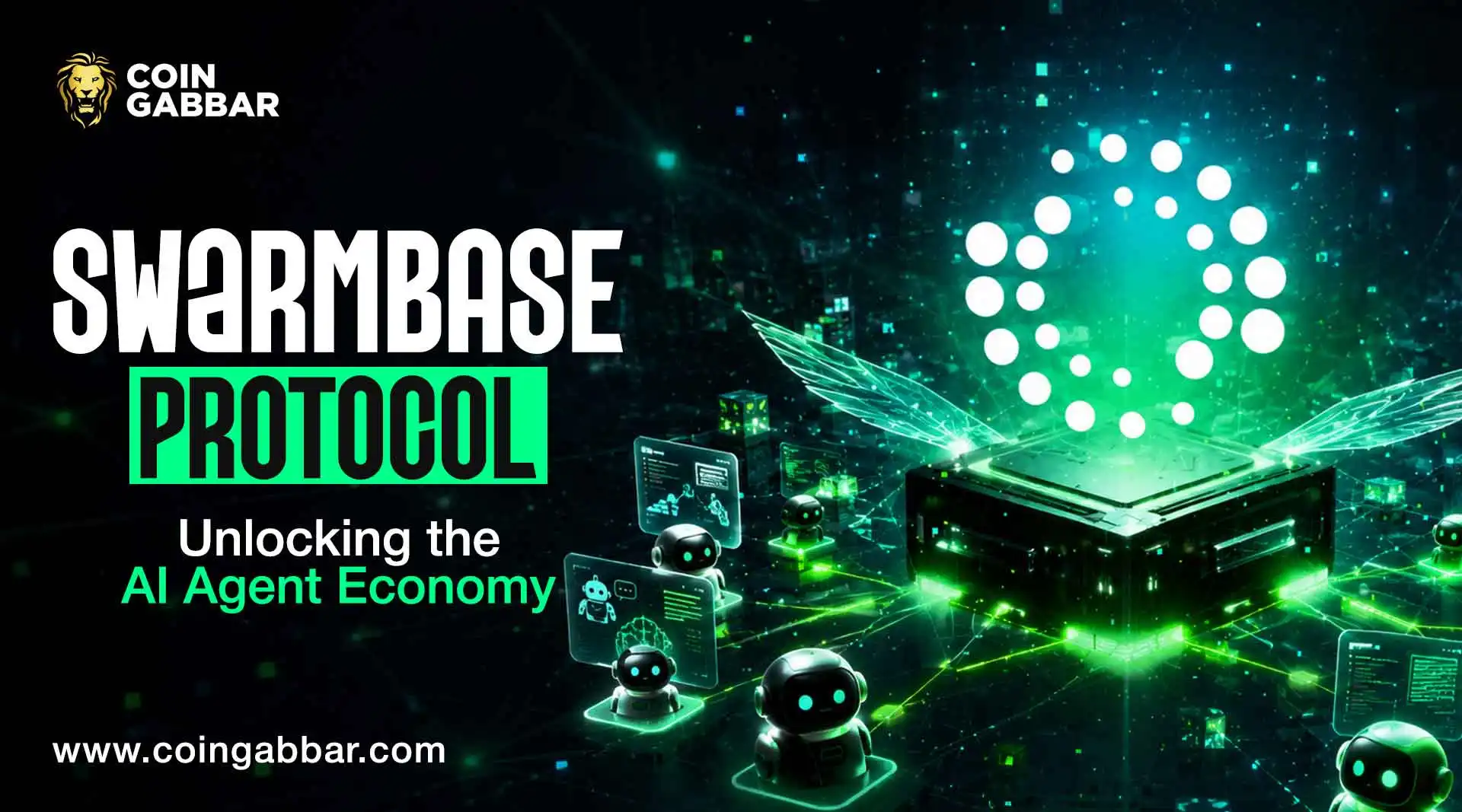
SwarmBase Protocol: How On-Chain AI Agents and SWARM Work Together
Autonomous AI agents are everywhere in crypto conversations right now, but most projects stop at "AI-powered" without explaining how agents actually coordinate with each other at scale. The SwarmBase protocol takes a more specific approach: it's built entirely around letting thousands of AI agents work together on-chain, with reputation, identity, and payments all tracked directly on the blockchain rather than hidden inside a centralized backend.
Key takeaways:
SwarmBase gives AI agents verifiable on-chain identity and reputation through smart contracts called SwarmCore and SwarmBadge, rather than treating agents as anonymous bots.
The SWARM token functions as the platform's access, staking, and payment layer, and it's currently live and trading on BNB Smart Chain.
$SWARM runs on a public reputation system called SwarmScore, which directly determines token allocation at launch a genuinely different approach from a standard presale.
What Is SwarmBase?
SwarmBase is an agentic AI infrastructure platform that lets developers build, deploy, coordinate, and monetize swarms of autonomous AI agents. Rather than running each agent in isolation, the network is designed so agents can be deployed anywhere from small groups of 10 up to swarms of 10,000 or more, coordinating with each other with latency measured in milliseconds.
The core idea behind SwarmBase AI is turning individual, isolated agents into something closer to a composable, trustable workforce agents that can be verified, ranked, and paid based on real performance rather than just existing as disconnected scripts.
How Does SwarmBase Work?
At the technical core of the $SWARM blockchain ecosystem sit two smart contracts: SwarmCore and SwarmBadge. SwarmCore acts as the coordination layer, registering agents on-chain and providing the execution environment where they interact and complete tasks with minimal overhead. SwarmBadge works alongside it as a non-transferable NFT badge system, permanently recording an agent's or participant's verified milestones and achievements.
Together, these contracts support an agent marketplace, where builders can publish, discover, and monetize autonomous agents rather than keeping them locked inside a single closed application. A points and reputation engine sits on top of this, rewarding real usage, daily activity, and long-term contribution rather than just initial sign-ups.
Risk to know: Because so much of the value here depends on the coordination layer working correctly under real load, any smart contract vulnerability in SwarmCore or SwarmBadge would directly affect agent identity and reputation records across the whole network.
What Is the SwarmBase Token (SWARM)?
SWARM is the native utility token behind the entire SwarmBase ecosystem. It's structured around three core uses: access to the platform and premium agent capabilities, staking to secure agent reputation and unlock higher account tiers, and payments and settlement across the agent marketplace itself.
Technically, SWARM is a BEP-20 token issued on BNB Smart Chain, which keeps it compatible with the wider BNB Chain trading and wallet infrastructure rather than requiring a separate custom chain. The protocol's smart contracts have been audited by Hashlock, an independent security firm, adding a layer of third-party review to the coordination and badge contracts underpinning the system.
SwarmBase Tokenomics Explained
Understanding how does the SWARM token work starts with SwarmScore, the project's on-chain reputation metric. SwarmScore combines on-chain activity registration, daily check-ins, badges earned, and referrals with off-chain Task Credits earned through interacting with the platform's AI agents, producing a Combined Score used for both ranking and rewards.
That score isn't just a leaderboard number. At the token generation event, a participant's SwarmScore directly determines their SWARM allocation, with holders of higher-tier badges receiving priority or enhanced allocation on top of the baseline. Three badge tiers exist: Pioneer, open to everyone; Builder, requiring 1,000 SwarmScore; and OG, capped at a fixed 5,000 total spots.
SwarmBase Token Distribution and Vesting Schedule
Beyond SwarmScore-based allocation, $SWARM has published a full supply breakdown ahead of its token generation event, set for Q3 2026. Total supply is fixed at 1,000,000,000 SWARM, split across nine allocation categories:
Allocation | % of Supply | Tokens | TGE Unlock | Cliff | Vesting |
Community | 20% | 200,000,000 | 50% | None | Remainder vests over time |
Ecosystem Rewards | 16% | 160,000,000 | 30% | None | Remainder vests over time |
Team | 15% | 150,000,000 | 0% | 12 months | 24 months linear |
Liquidity | 12% | 120,000,000 | 100% | None | CEX/DEX at launch |
Strategic Round | 10% | 100,000,000 | 0% | 12 months | Linear |
Marketing | 8% | 80,000,000 | 25% | None | Remainder vests over time |
Treasury | 8% | 80,000,000 | 0% | None | Per schedule |
Reserve | 6% | 60,000,000 | 0% | None | Locked |
Strategic Partners | 5% | 50,000,000 | 0% | 12 months | Linear |
Source: SWARM tokenomics
Why the Insider Lock Structure Is Worth Noting
One detail stands out from the rest of the schedule: Strategic Round, Strategic Partners, and Team allocations 30% of total supply combine carry a full 12-month cliff with zero unlocks in Year 1. That means none of the categories most associated with insiders, early backers, or the founding team can sell a single token until a full year after TGE.
This is a genuinely stronger structure than many presale-stage projects offer, where insider allocations sometimes begin unlocking within weeks of launch. It doesn't eliminate risk entirely a 24-month linear vesting for the Team allocation still means steady new supply entering the market well into 2028 but the absence of any Year 1 insider unlock is a concrete, verifiable commitment rather than just a marketing claim.
SwarmBase Roadmap and Upcoming Features
Beyond the core coordination layer, $SWARM has already rolled out a dedicated research tool under the SwarmBase AI banner, built for deep research, market intelligence, and on-chain analysis requests directly through the platform. The points and referral system remains active, with referrers earning SwarmScore immediately when someone registers through their link, plus milestone bonuses as that referral stays active over time extra points at their 3rd, 7th, 30th, and 90th check-ins.
With SWARM already trading and the badge and scoring systems live, the next real test for the SwarmBase roadmap is whether agent marketplace activity and genuine third-party agent deployment scale up to match the coordination infrastructure already built.
Conclusion
The SwarmBase protocol stands out by building real on-chain infrastructure SwarmCore, SwarmBadge, and SwarmScore around coordinating AI agents, backed by a vesting schedule that locks 30% of insider-linked supply for a full year with zero Year 1 unlocks. Whether that trust signal translates into real agent marketplace adoption is what's worth watching next. For more information check official whitepaper.
Disclaimer
This article is for informational purposes only and does not constitute financial advice. Tokenomics and TGE details are based on information published by the project and may change before launch. Always do your own research through official channels before making any investment decisions.








.webp)