SwarmBase Tokenomics: Understanding $SWARM Supply and Distribution

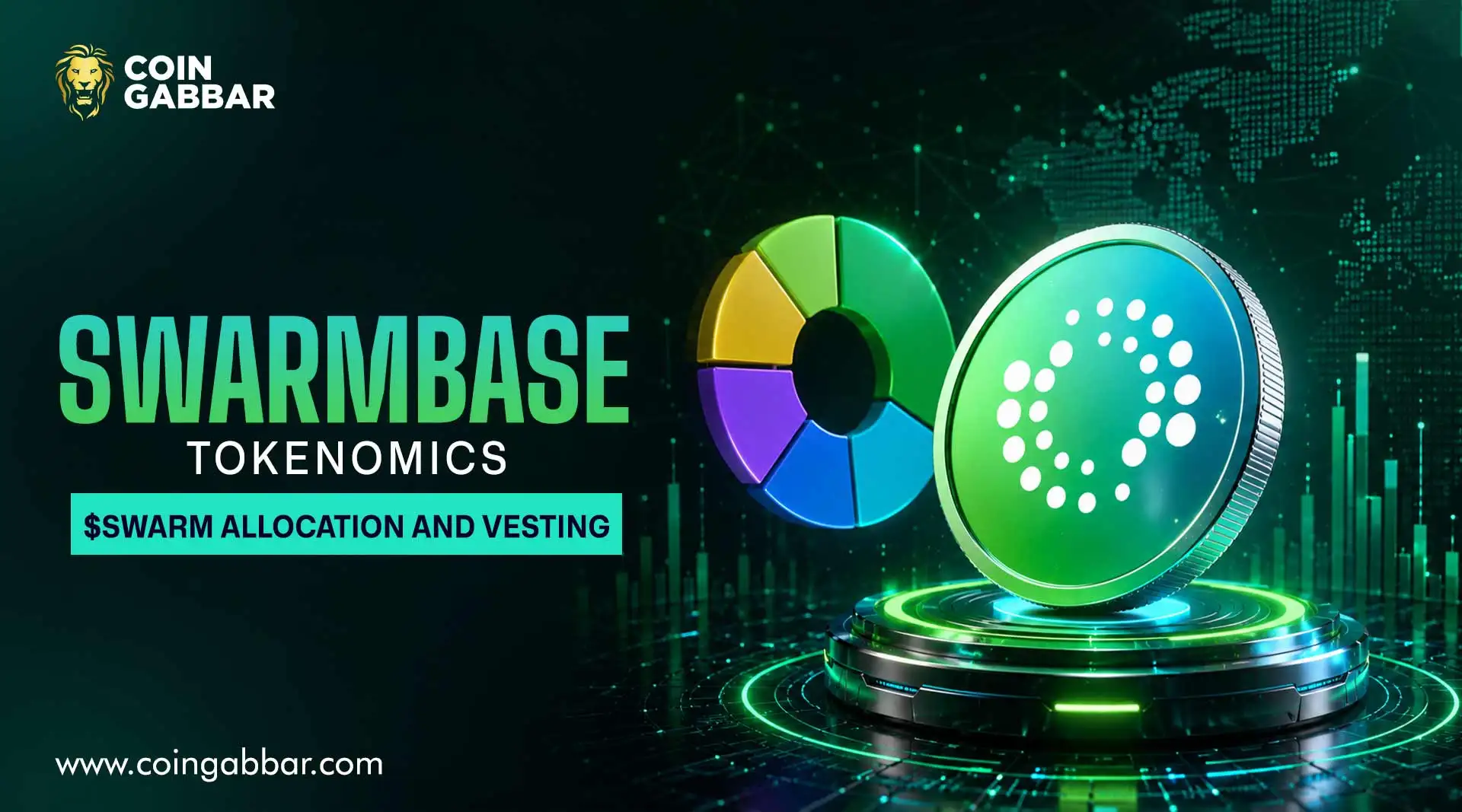
SwarmBase Tokenomics: Breaking Down $SWARM Supply, Utility and Vesting
Tokenomics can make or break a crypto project. Yet most investors skim past allocation tables and vesting cliffs, only to get burned later when insiders dump their bags. The SwarmBase protocol does not hide behind vague promises. Its $SWARM token comes with fixed supply, enforced on-chain locks, and a distribution model that puts the community first. In this guide, we break down every number, every cliff, and every contract safeguard so you know exactly what you are dealing with before making a single move.
Key Takeaways
Over 71% of supply stays locked at TGE: Only 28.8% of $SWARM tokens enter circulation on Day 1. That heavy lock-up creates real scarcity and keeps early sell pressure under control.
Insiders get nothing for 12 months straight. The Team, Strategic Round, and Strategic Partners together hold 30% of the total supply. Every single one of these buckets unlocks 0% at TGE and faces a hard 12-month cliff. No exceptions.
The contract has zero manipulation mechanics: No mint function, no proxy upgradeability, no blacklist, and no transfer fees. The BEP-20 contract is stripped down, audited-friendly, and designed to prevent rug-pull architecture.
SwarmBase Tokenomics: Inside the $SWARM Allocation and Vesting Model
Crypto launches often feel like magic tricks. You see the hype, you buy the token, and then you watch insiders cash out while you hold the bag. The SwarmBase protocol refuses to play that game. Its token design is built on one simple idea: show every card on the table.
This article is your complete SwarmBase tokenomics breakdown. We will walk through the allocation buckets, the lock-up rules, the contract safeguards, and the vesting mechanics that separate $SWARM from the typical pump-and-dump crowd. No filler. Just facts you can act on.
What Is $SWARM?
$SWARM is the native utility token of the SwarmBase ecosystem. It runs on BNB Smart Chain as a BEP-20 token. The total supply is permanently fixed at 1,000,000,000 tokens with 18 decimals. There is no mint function. No future inflation. No hidden supply shocks.
The token serves a consumptive and operational role within the protocol. It is not marketed as an investment product, and the team makes no promises of yield, returns, or price appreciation. That level of honesty is refreshing and rare.
At TGE, 288,000,000 tokens (28.8%) hit the market. The other 712,000,000 tokens (71.2%) stay locked. That is a heavy lock-up ratio, and it signals one thing: the builders are thinking long-term.
SwarmBase Token Allocation: Every Bucket Explained
The SwarmBase token allocation spreads one billion tokens across nine categories. Here is the full breakdown:
Table
Allocation | Tokens | % | TGE Unlock | Cliff | Vesting |
Community | 200,000,000 | 20% | 50% | None | Remainder per schedule |
Ecosystem Rewards | 160,000,000 | 16% | 30% | None | Remainder per schedule |
Team | 150,000,000 | 15% | 0% | 12 months | 24 months linear |
Liquidity | 120,000,000 | 12% | 100% | None | CEX/DEX |
Strategic Round | 100,000,000 | 10% | 0% | 12 months | Linear |
Marketing | 80,000,000 | 8% | 25% | None | Remainder per schedule |
Treasury | 80,000,000 | 8% | 0% | None | Per schedule |
Reserve | 60,000,000 | 6% | 0% | None | Locked |
Strategic Partners | 50,000,000 | 5% | 0% | 12 months | Linear |
Community leads with 20% the single biggest slice. Ecosystem Rewards follows at 16%. Together, these two buckets control 36% of the entire supply. That is a massive bet on users and growth, not insiders.
The Team gets 15%, but with a catch: 0% unlock at TGE. They wait a full year before seeing a single token. After that cliff, vesting stretches across 24 months linearly. The same rule applies to the Strategic Round (10%) and Strategic Partners (5%). All three are locked for 12 months with zero exceptions.
Liquidity receives 12% and unlocks 100% at TGE. This ensures real trading volume from minute one. LP tokens are not left exposed they are locked via an independent third-party service.
Marketing holds 8% with a 25% Day 1 unlock. Treasury and Reserve take 8% and 6% respectively, giving the project operational runway and emergency reserves.
SwarmBase Vesting: The Insider Lock Rule
The SwarmBase vesting schedule is where this project earns its credibility. Most launches let early investors dump within weeks. Here, the rules are hard-coded.
Here is a focused view of the SwarmBase token vesting structure:
Table
Category | % | TGE | Cliff | Vesting Style |
Community | 20% | 50% | None | Scheduled |
Ecosystem Rewards | 16% | 30% | None | Scheduled |
Team | 15% | 0% | 12 months | 24 months linear |
Liquidity | 12% | 100% | None | Instant |
Strategic Round | 10% | 0% | 12 months | Linear |
Marketing | 8% | 25% | None | Scheduled |
Treasury | 8% | 0% | None | Scheduled |
Reserve | 6% | 0% | None | Locked |
Strategic Partners | 5% | 0% | 12 months | Linear |
30% of the total supply, Team, Strategic Round, and Strategic Partners is fully locked for 12 months. That means zero insider unlocks in Year 1. No early dumps. No backdoor deals. Just a full year of shared patience.
All of this is enforced through on-chain contracts at TGE. Recipients use multisignature wallets and independent time-lock contracts. You cannot negotiate with a smart contract. The code executes exactly as written.
After the cliff, linear vesting kicks in. Tokens release gradually, month by month. This prevents sudden supply floods and keeps sell pressure predictable.
Source: Official Swarm whitepaper
Token Contract Design: Stripped Down and Secure
The $SWARM contract keeps things brutally simple. It implements the full BEP-20 interface and stops there.
No mint function after initial creation
No proxy upgradeability rules cannot be changed later
No blacklist wallets cannot be frozen arbitrarily
No fee-on-transfer what you send is what they get
Transfer events comply strictly with BEP-20 standards. This ensures full compatibility with block explorers, indexers, and exchange pipelines.
Supply distribution happens in two clean steps. First, allocation addresses are set. Then, the full supply moves in a single transaction. After that, control disperses into time-locked and multisig structures. It is anti-rug architecture by design.
Why This Tokenomics Model Stands Out
The SwarmBase tokenomics framework fixes problems most projects pretend do not exist.
Community-first. Over one-third of the supply rewards users and ecosystem participants. That is not marketing speak. That is 360 million tokens.
Insider discipline. A 12-month cliff for 30% of supply forces the team and early backers to prove themselves before cashing out. Linear vesting after that keeps them aligned for years.
Liquidity clarity. 12% unlocked at TGE means real markets from Day 1. Third-party LP locking means that liquidity stays put.
No hidden mechanics. No rebase. No transfer tax. No upgradeable proxy that could rewrite the rules overnight. Just a fixed-supply token with transparent flows.
Permanent scarcity. With no mint function, holders never face silent dilution. One billion tokens is all there will ever be.
The Bottom Line
Tokenomics is where trust is built or destroyed. The SwarmBase protocol builds it through radical transparency. From the $SWARM token allocation table to the strict SwarmBase vesting rules, every decision protects the community and binds insiders to long-term success.
If you are exploring the SwarmBase ecosystem, start with the numbers above. Understand the unlock schedules. Study the contract design. Know where the supply flows. This SwarmBase tokenomics breakdown gives you every tool you need to evaluate the project with confidence.
In a market full of vague whitepapers and hidden cliffs, $SWARM delivers hard data and harder locks. That combination is worth paying attention to.
Disclaimer
This article is for informational and educational purposes only. It does not constitute financial advice, investment recommendation, or solicitation to buy, sell, or hold any cryptocurrency. The author has no affiliation with the SwarmBase protocol team. Token prices are volatile, and past or present tokenomics structures do not guarantee future performance. Always conduct your own research (DYOR) and consult a licensed financial advisor before making any investment decisions. All data presented is sourced from publicly available project documentation and is accurate to the best of the author's knowledge at the time of writing.
Also read:








.webp)




