7 Crypto Narratives Heading Into 2027: A Beginner's Guide


Crypto narratives usually start as social media stories. The ones that last start as laws, filings, and bank pilots. With prices weak and fear high, seven crypto narratives still stand on official records. Each section below names the theme, cites the source, and says what to watch next.
Key Takeaways
Every theme here rests on a statute, a regulator's notice, or a company's own report.
The crypto narratives with firm dates are stablecoin rules (2028), bank networks (first half of 2027), and Ukraine's tax (July 2027).
Official data shows progress, not price direction.
How Were These Crypto Narratives Chosen?
Each of the seven crypto narratives needed an official document and a date or a number. Price forecasts and social media buzz were left out. Market figures come from public trackers and are labelled that way.
1. Stablecoins Get a Federal Rulebook
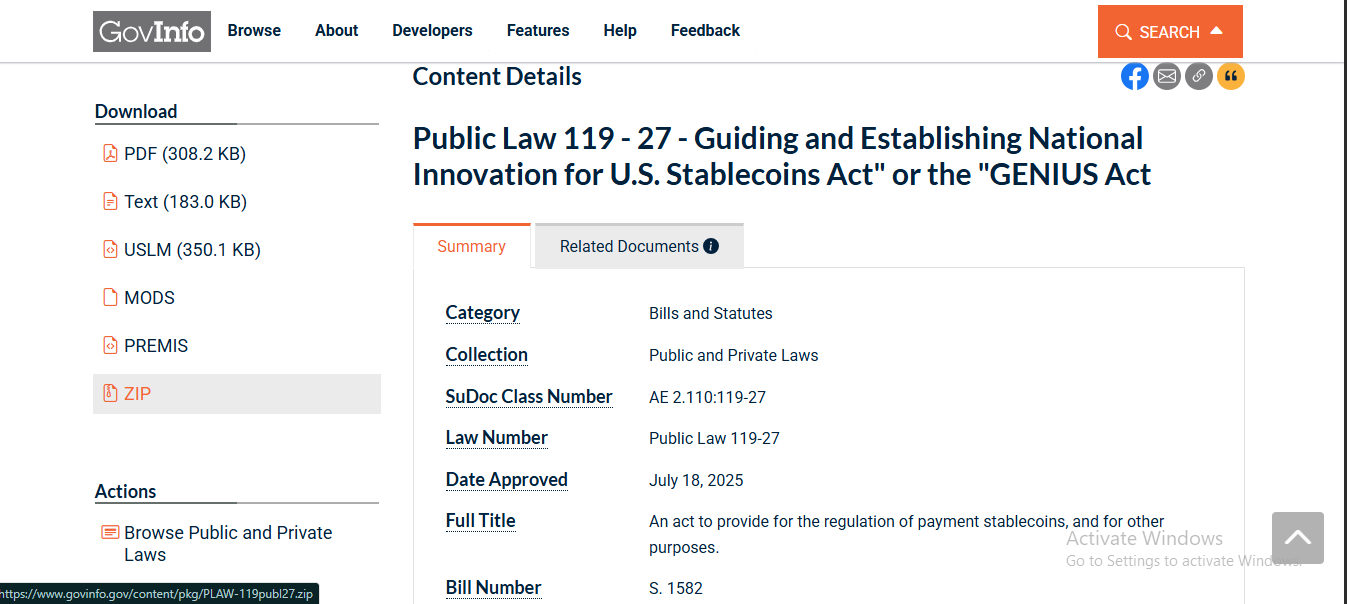
The GENIUS Act became Public Law 119-27 on 18 July 2025. It sets the first US stablecoin regulation. Issuers must hold at least $1 of reserves for every $1 issued, in cash, insured deposits, or Treasury bills of 93 days or less. Monthly reserve reports must be examined by an accounting firm.
Issuers may not pay interest. Three years after enactment, US platforms may offer only permitted issuers' coins, with limited exceptions,as per the official text. Market trackers show supply near $283 billion, down about 5% in a month.
Source: GovInfo
2. Banks Test Tokenized Deposits
Swift said on 9 July 2026 that its blockchain ledger was ready for initial use. Seventeen banks on six continents are preparing live pilots of tokenized deposits. On 24 September, The Clearing House said it chose Quant for its On-Chain Money Initiative, a network targeted for the first half of 2027. A tokenized deposit stays a claim on the issuing bank. That makes tokenized real-world assets a banking story as much as a crypto one.
3. ETFs Move Beyond Bitcoin
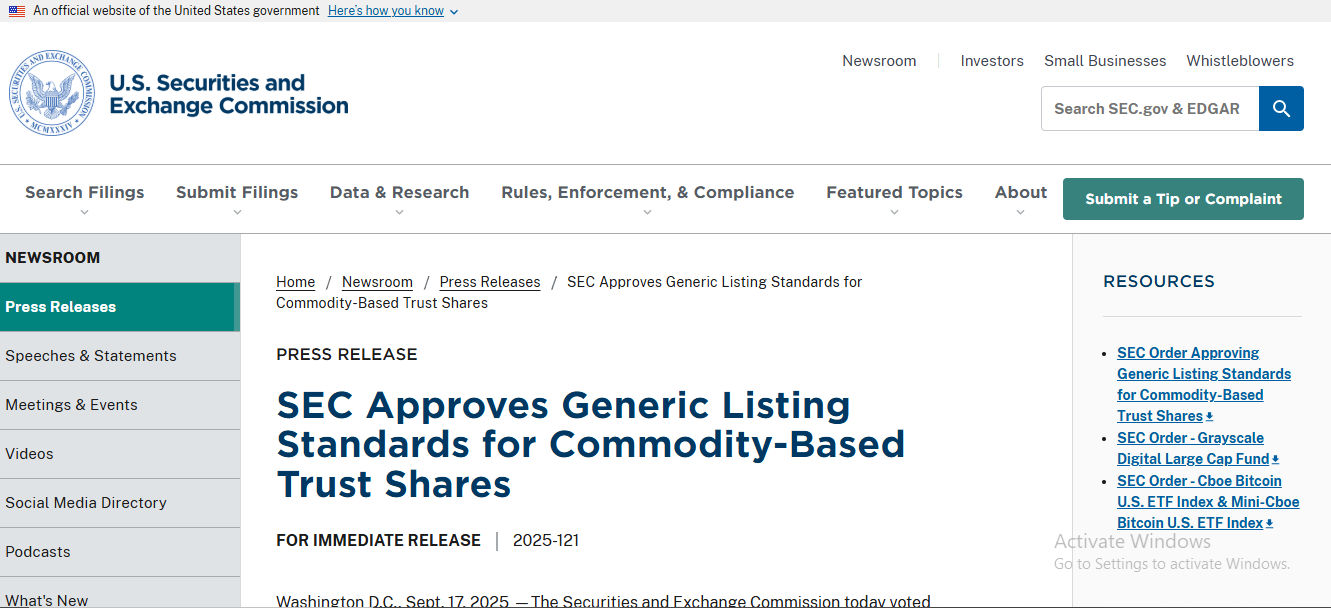
On 17 September 2025, the SEC approved generic listing standards. Exchanges can now list qualifying commodity-based trust shares without a separate rule filing, as the SEC announcement states. It approved the Grayscale Digital Large Cap Fund the same day. Those rules help explain why crypto ETFs for Solana and other coins now trade. Among 2027 crypto narratives, this one has the weakest flows. US spot Bitcoin ETFs lost about $3.47 billion in November through the 19th, per market trackers.
Source: SEC Official Website
4. Prediction Markets Face New Rules
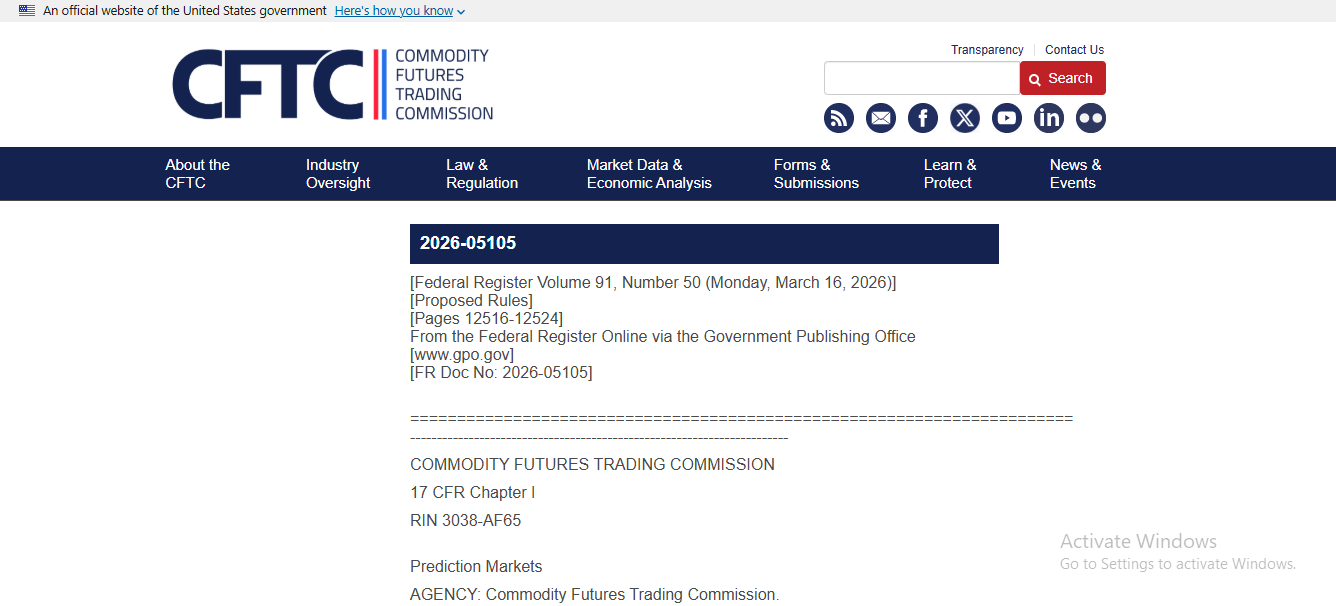
The CFTC's March 2026 notice shows how fast event contracts grew. Exchanges listed about five a year from 2006 to 2020, 131 in 2021, and about 1,600 in 2025. The agency said applications to register prediction market exchanges more than doubled in a year. It also withdrew its 2024 proposal in February 2026, per the official notice. Public comments closed on 30 April 2026.
Source: CFTC's Official Announcement
5. Crypto Rules Go Global
Regulation is the crypto narrative with the clearest calendar. On 25 November 2026, Ukraine's parliament passed its virtual assets law, 271 to 8.
The Ukraine crypto law taxes profits at 23% and starts on 1 July 2027, pending the president's signature. On 24 November, South Korea's Financial Services Commission unveiled a Digital Asset Basic Act. It would end the nine-year ICO ban and cap exchange shareholders at 20%, or 34% with approval. The National Assembly must still pass it.
6. Security Becomes a Market Theme
Binance's own incident report says an attacker used an internal signing service on 29 October 2026. The attacker then abused Ethereum's EIP-7702 feature through 50 signing transactions. Because the wallet used multiparty computation, no single key could revoke the delegation quickly. Binance cleared it at 00:10 UTC on 30 October and estimated the loss near $6.3 billion. EIP-7702 has been live since the Pectra upgrade in May 2025.
What to watch
Signing-policy upgrades and custody audits after the Binance hack.
7. Programmable Money Meets AI Agents
This is the earliest of the seven. Swift said its ledger starts with tokenized deposits and 24/7 cross-border payments. It will consider programmable money and agentic commerce later. Swift gave no volume figures. Still, programmable rails and smart wallets are the base layer such ideas need, so the theme belongs among the 2027 crypto narratives.
Conclusion: Which Crypto Narratives Will Matter Most?
The strongest crypto narratives share one trait: they have dates. Stablecoin rules reach US platforms by 2028, bank networks target the first half of 2027, and Ukraine's tax starts in July 2027. ETFs, prediction markets, and security fixes move on shorter, less certain clocks. Readers should follow the statutes and filings behind each story and treat price calls with care.
Disclaimer: This article is for information and education only. It is not financial, investment, tax, or legal advice. Crypto prices are volatile, and rules can change. Readers should do their own research before making any decision.