Best Crypto Presale to Buy Now? Check Entry Valuation First
Searching for the best crypto presale to buy now usually leads to lists ranked by hype. This page helps you compare crypto presales to buy by what you actually pay for each one: presale price, total supply, entry valuation, initial FDV & TGE market cap.
This page helps readers compare crypto presales based on entry price, token economics, and valuation.
Each project is reviewed for its current presale price, total supply, and estimated entry valuation where data is available.
Initial FDV and TGE market-cap information are considered to provide a clearer view of token valuation.
The page provides valuation research for comparison and does not represent a recommendation to buy any token.
Presale Risk Notice
Crypto presales involve high risks and are not a recommendation to buy, sell, or invest.
CoinGabbar's research is based on publicly available project information and may change as new data becomes available.
Always verify the latest project details, presale terms, and official links on the project's official website before making any decision.
Maxi Doge ($MAXI) – MEME Coin Powered Ecosystem
Last Updated:
Maxi Doge$MAXI
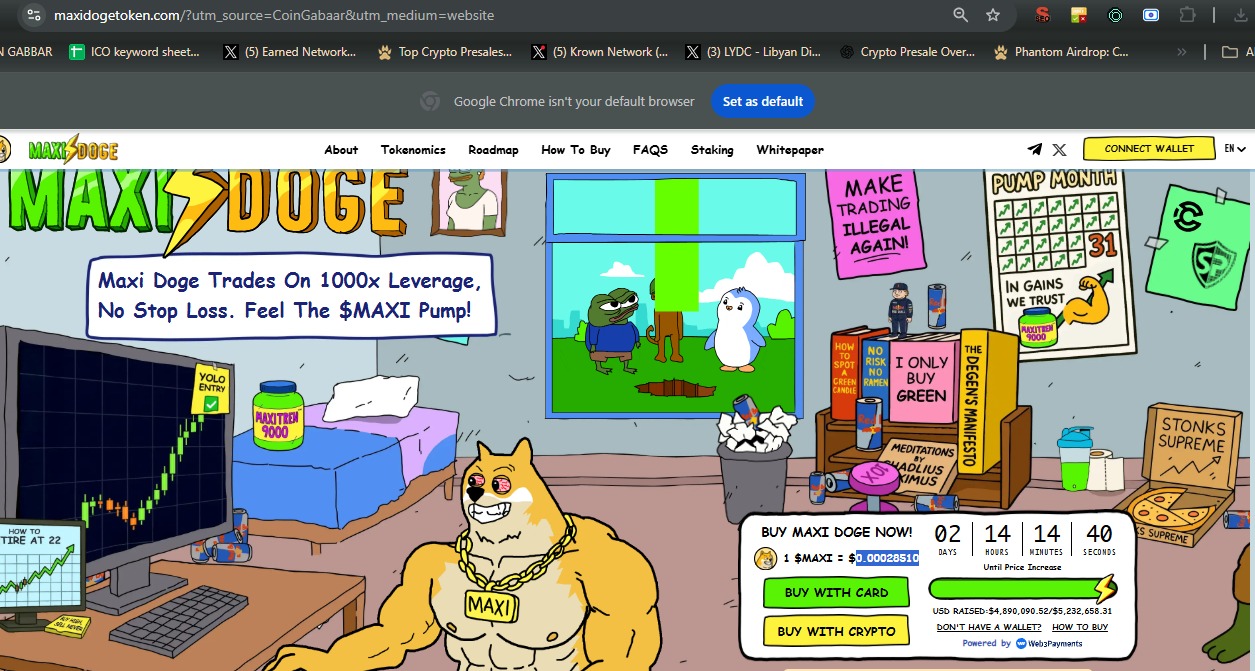
Maxi Doge is a meme coin featuring a muscular Doge mascot. It blends gym culture, high-leverage trading memes, and community-driven hype, reflecting the bold spirit of risk-taking crypto traders.
The Maxi Doge presale is an Ethereum-based meme coin project focused on trading culture, staking and community rewards. Its ERC-20 token has a published total supply of 150.24 billion tokens.
As of November 25, 2026, MAXI is priced at $0.00028510, with $4,889,862.37 raised toward a displayed target of $5,232,369.13, reaching about 93.45% of its project-reported funding target.
Why This Presale Is Featured
Maxi Doge is featured in Best Crypto Presales, Meme Coin Presales and Ethereum Crypto Presales based on its tokenomics, roadmap, community activity and blockchain integration.
Category
Evaluation Metric
Assessment
Best Crypto Presales
Tokenomics
Strong — Fixed Supply, No Mint, Defined Vesting
Best Crypto Presales
Roadmap Progress
Partial — 2 Completed, 2 In Progress, 8 Planned
Meme Coin Presales
Community Virality
Very High
Meme Coin Presales
Social Engagement
High
Ethereum Crypto Presales
Ethereum Ecosystem Fit
Native — ERC-20 Token
Ethereum Crypto Presales
Ethereum Integration
Strong
Project Fundamentals
Security Audit
SolidProof and Coinsult named as audit providers.
Project Fundamentals
Token Utility
Staking, community rewards and planned trading contests.
MAXI Presale Pros and Cons
Pros
Cons
Ethereum-based ERC-20 token.
Published token allocation.
Reported fundraising of $4.89 million.
Staking reward model.
Two named audit providers.
Unverified team identity.
Large 40% marketing allocation.
Unverified liquidity lock.
No confirmed listing date.
High meme coin volatility.
Editorial Note: Category ratings reflect editorial assessments. Fundraising figures are project-reported. Featured status does not guarantee investment safety or future returns.
Pro Tip
Before buying MAXI, compare the official Ethereum contract address with the SolidProof audit and check the latest whitepaper. Review the staking APY, claim rules, and token release schedule. Also check the 40% marketing allocation and confirm any exchange listing directly with the exchange. A public audit does not guarantee investment safety or future returns.
Tapzi ($TAPZI) – Gaming Powered Ecosystem
Last Updated:
Tapzi$TAPZI
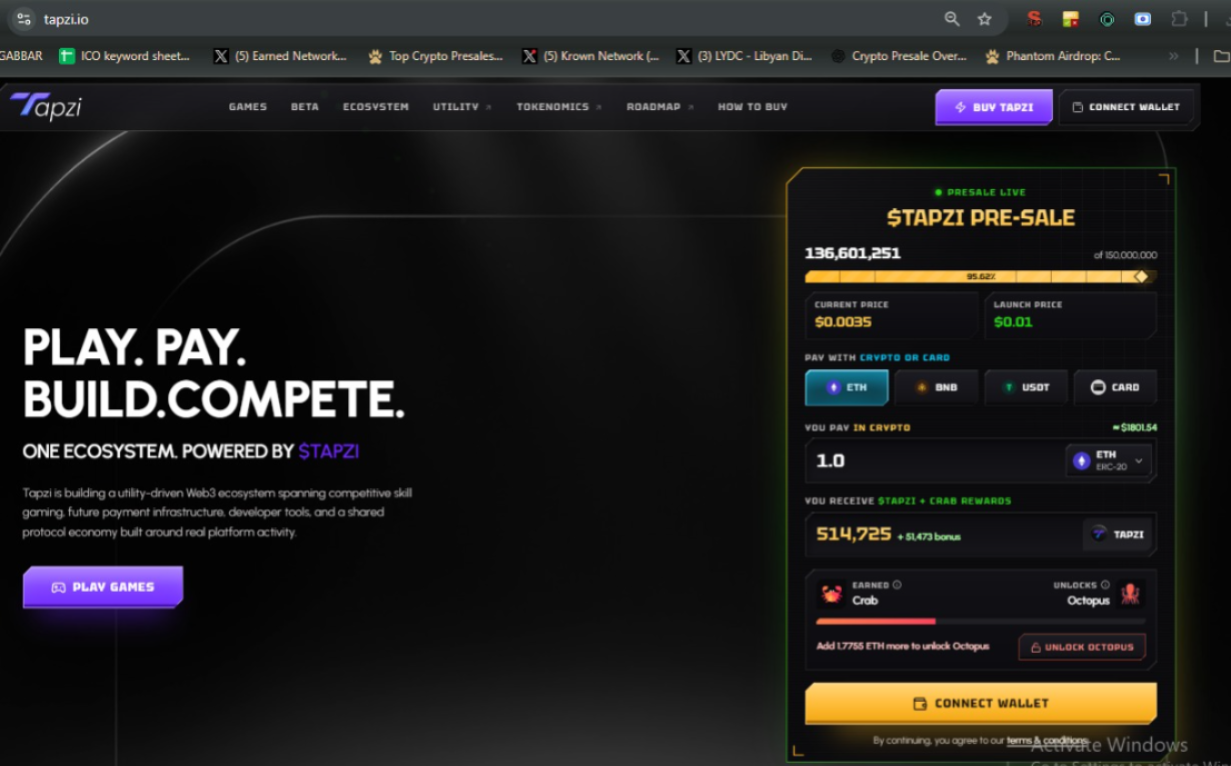
Tapzi (TAPZI) is a BNB Chain skill-gaming presale with a $0.0035 advertised price, $17.5M indicative entry valuation and published token unlock and vesting schedules.
Tapzi (TAPZI) is a BNB Smart Chain gaming project developing skill-based games, tournaments and blockchain rewards. Its wider ecosystem includes planned payment tools and developer infrastructure.
Tapzi Presale: Price, Tokenomics and Launch
The Tapzi presale advertises a price of $0.0035 per token. With a fixed supply of 5 billion TAPZI, its indicative Entry Valuation is $17.5 million.
At the planned $0.01 launch price, published token unlocks imply a $14.875 million modeled launch valuation. The project previously reported a $20 million initial market cap. These figures require reconciliation, as unlocked supply may differ from circulating supply.
Why Tapzi Presale Is Featured for Research
Tapzi is shortlisted for its published tokenomics, detailed vesting schedule, reported gaming beta and third-party security assessment. Launch valuation and future liquidity remain key risks.
Metric
What We Searched
What We Found
Valuation
Entry FDV and TGE Market Cap
$17.5M entry FDV and $14.875M modeled launch valuation. The older $20M estimate requires reconciliation.
Token Utility
Gaming and ecosystem use cases
Skill-based games, tournaments and planned developer tools.
Tokenomics
Supply and vesting
5B supply, 20% presale allocation and 25% presale unlock at TGE.
Smart Contract
Audit and team KYC
SolidProof token contract assessment and team KYC listing.
Development
Product and roadmap
Public gaming beta reported. Payment and developer tools remain planned.
Liquidity
Launch liquidity
20% liquidity allocation. Actual deployment remains unconfirmed.
Tapzi Presale Pros and Cons
✓ Pros
✕ Cons
✓ Calculable $17.5M entry FDV
✓ Published TGE unlock schedule
✓ Defined skill-gaming utility
✓ Reported public gaming beta
✓ SolidProof token contract audit
✓ Third-party team KYC listing
✕ Conflicting launch valuations
✕ Inconsistent presale progress
✕ Contract ownership not renounced
✕ 75% of presale tokens unlock later
✕ Unproven sustained player adoption
✕ Unconfirmed listing and liquidity
Pro Tip
Compare Tapzi's $17.5M entry FDV with its published TGE unlock schedule. Explore the gaming beta, check liquidity plans and review the difference between its reported and modeled launch valuations.
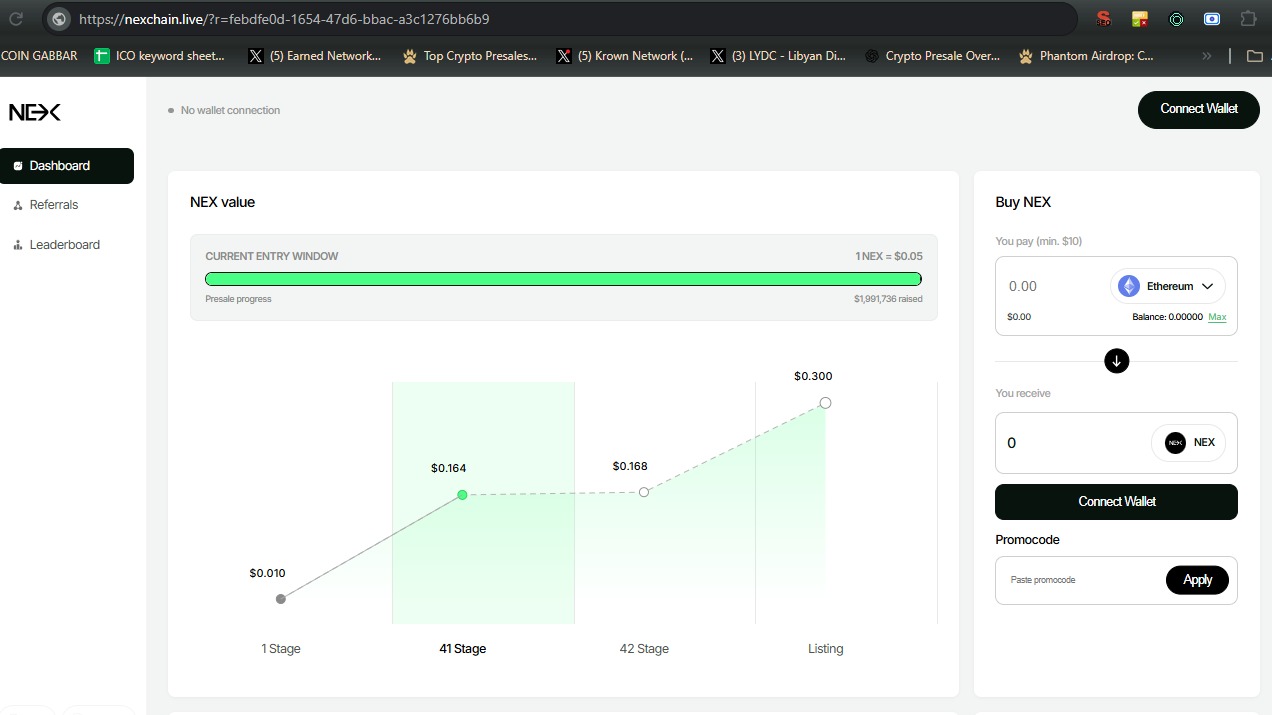
Nexchain (NEX) is an AI-focused Layer 1 blockchain presale with a $0.05 advertised entry price, $50M indicative entry valuation and $8.5M project-reported TGE market cap, subject to clarification.
Nexchain (NEX) is an AI-focused Layer 1 blockchain designed to detect risky transactions. Its planned token utility includes network fees, staking, governance and AI security tools. The project reports a public testnet and token contract audits.
Nexchain Presale: Price, Tokenomics and Launch
The Nexchain presale advertised a promotional price of $0.05 per NEX on November 10, 2026. With a total supply of 1 billion tokens, its indicative Entry Valuation is $50 million. The project reports an estimated TGE Market Cap of $8.5 million, but its launch valuation figures require clarification.
Public sale tokens represent 30% of the supply. The planned TGE is December 12–18, 2026, followed by a targeted mainnet launch in early 2027.
Why Nexchain Presale Is Featured
Nexchain is shortlisted for its AI use case, published valuation data, tokenomics and reported testnet progress. However, launch valuation and token unlock conditions require further clarification.
Network fees, staking, governance and planned AI risk-analysis tools.
Tokenomics
Supply, allocation and vesting
1B NEX supply with 30% allocated to public sale. Initial unlock terms remain unclear.
Smart Contract
Audit and team KYC
CertiK token contract audit available. Team KYC and full network audit remain unconfirmed.
Development
Product and roadmap
Public testnet reported. AI tools and mainnet remain under development.
Community
Social and developer activity
Public social channels and reported developer activity.
Nexchain Presale Pros and Cons
✔ Pros
✖ Cons
✓ Published entry valuation
✓ Defined AI blockchain use case
✓ Public testnet reported
✓ CertiK token contract audit
✓ Published token allocation
✕ TGE valuation discrepancy
✕ Unclear token unlock terms
✕ Incomplete network audit
✕ No verified CertiK team KYC
✕ Mainnet still under development
Pro Tip
Test Nexchain's public explorer and check its AI risk-assessment features before judging the token's utility. CertiK's audit covers the NEX token, not the full Layer 1 network. Review the two partially resolved centralization findings and confirm the public-sale unlock schedule before participating.
Remittix (RTX) – Blockchain Powered Ecosystem
Last Updated:
RemittixRTX
Remittix (RTX) is an Ethereum-based PayFi project focused on cross-border payments and crypto-to-fiat transfers. The final token launch, exchange listing and claim dates remain unconfirmed.
Remittix Presale 2026: RTX Price and PayFi Overview
The Remittix presale is an Ethereum-based crypto project focused on PayFi, cross-border payments and crypto-to-fiat transfers. Its ERC-20 token, RTX, has a published total supply of 1.5 billion tokens. The project ecosystem includes a crypto wallet, payment services, trading features and a proposed Earn program.
As of November 25, 2026, the reported RTX presale price is $0.3500, with a stated launch price of $0.46. The project displays $1,778,888 remaining until launch. The revised launch schedule and exchange trading dates remain unconfirmed.
Why This Presale Is Featured
Remittix is featured for provisional review in Best Crypto Presales to Buy and Legit Crypto Presales based on its calculated valuation metrics, published security assessment and Ethereum token disclosures. Final category approval depends on verification of the supporting financial and security data.
Category
Evaluation Metric
Assessment
Best Crypto Presales to Buy
Entry Valuation
$525 Million FDV — calculated using the $0.35 presale price and 1.5 billion RTX supply.
Best Crypto Presales to Buy
TGE Market Cap
$345 Million (Projected) — based on the stated $0.46 launch price and self-reported circulating supply of 750 million RTX.
Legit Crypto Presales
Smart Contract Audit
Published CertiK token contract assessment.
Legit Crypto Presales
KYC Verification
Official KYC confirmation required.
Legit Crypto Presales
Contract Verification
Ethereum ERC-20 token. Audit and deployed contract addresses require matching.
Project Fundamentals
Token Utility
PayFi, cross-border payments, governance and ecosystem rewards.
Project Fundamentals
Tokenomics
1.5 billion RTX total supply, with an initial FDV of $690 million at the stated launch price.
Project Fundamentals
Development
Wallet development, PayFi testing, fiat currency expansion and a proposed Earn program.
Project Fundamentals
Fundraising Progress
Project dashboard reports $1,778,888 remaining until launch.
Revised launch and listing dates remain uncertain.
Liquidity and token unlock risks remain.
Advertised Earn yields involve financial risks.
Editorial Note: Valuation figures are calculated from published and project-reported data. TGE market cap is a projection, not an observed market value. Category inclusion supports research and comparison and does not guarantee legitimacy, investment safety or future returns.
Pro Tip
Verify the Remittix contract address, CertiK audit scope and current team verification status. Check the latest RTX price, revised launch schedule and token claim terms. Reported fundraising figures do not guarantee liquidity, product adoption or investment safety.
Minotaurus ($MTAUR) – Gaming Powered Ecosystem
Last Updated:
Minotaurus$MTAUR
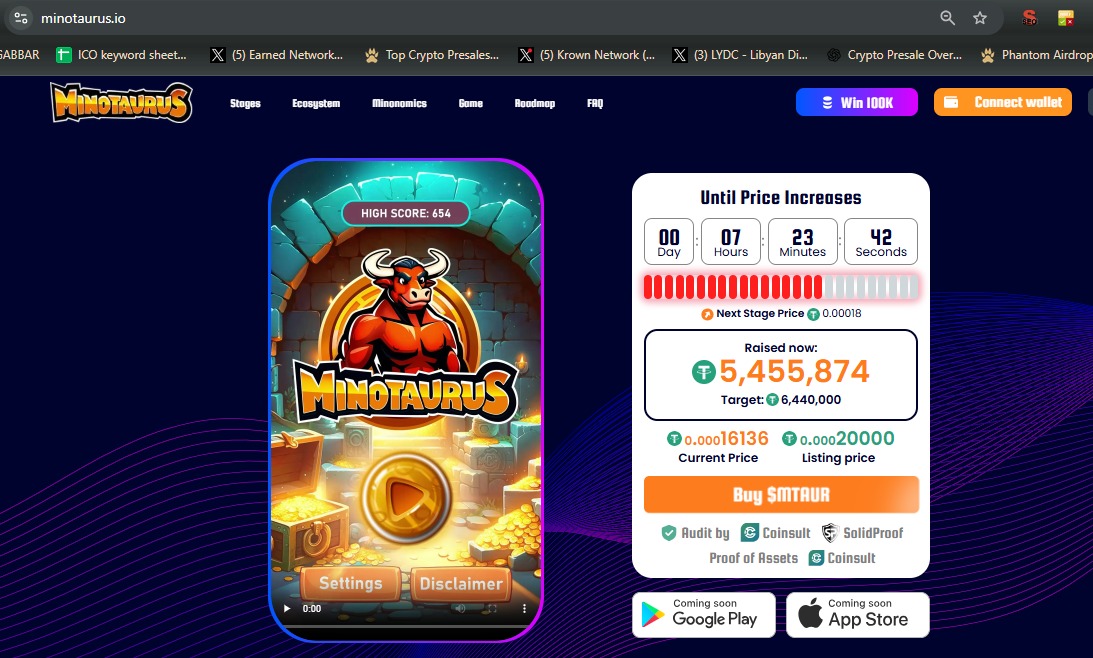
Minotaurus (MTAUR) is a BNB Chain gaming presale with a $16.136M indicative entry valuation, a project-estimated $5.6M TGE market cap and planned maze-based gameplay.
Minotaurus (MTAUR) is a BNB Smart Chain gaming project developing a maze adventure with creature battles, character upgrades and in-game purchases. Its planned gaming economy uses MTAUR tokens.
Minotaurus Presale: Price, Tokenomics and Launch
Based on the supplied presale price of $0.00016137 and a total supply of 100 billion tokens, Minotaurus has an indicative Entry Valuation of $16.136 million. The project publishes an estimated TGE Market Cap of $5.6 million and an advertised listing price of $0.00020.
The presale accounts for 60% of the total supply. Vesting terms, the final launch date and initial trading liquidity require further clarification.
Why Minotaurus Presale Is Featured
Minotaurus is shortlisted for its published valuation metrics, tokenomics, gaming roadmap and token contract security references. However, game development and launch liquidity remain key risks.
Metric
What We Searched
What We Found
Valuation
Entry FDV and TGE Market Cap
$16.136M indicative entry FDV and $5.6M project-estimated initial market cap.
Token Utility
Gaming applications
Planned character upgrades, in-game items and special features.
Tokenomics
Supply and allocation
100B total supply, 60% presale and 10% liquidity.
Smart Contract
Audit and KYC
SolidProof assessment referenced. Anonymous team.
Vesting
Token unlock conditions
Official sources describe different vesting periods.
Development
Game and listing progress
Game development and DEX listing planned.
Minotaurus Presale Pros and Cons
✔ Pros
✖ Cons
✓Calculable entry valuation
✓Published $5.6M initial market cap estimate
✓Defined gaming token utility
✓Published tokenomics
✓Token contract audit references
✓Published development roadmap
✕Conflicting vesting information
✕High 60% presale token allocation
✕Anonymous project team
✕Finished game launch unconfirmed
✕No fixed TGE or listing date
✕Liquidity lock remains planned
Pro Tip
Compare Minotaurus's $16.136M indicative entry FDV with its project-reported $5.6M initial market cap. Check the current token price, vesting terms, launch supply and planned liquidity before participating.
Last updated: · By CoinGabbar Research · Reviewed by Anisha Dawar
Quick answer: No presale can be called the best one to buy now from its token price alone. A low price is not a low valuation, because entry valuation is the presale price multiplied by total supply. Compare that figure, how much supply unlocks at TGE & any launch target the project states before you decide. This is research, not a recommendation.
Presale risk notice: Crypto presales involve high risk and nothing on this page is a recommendation to buy, sell or invest. Figures come from public project information, may change, and are often project-reported rather than independently verified. Always check the latest terms and official links on each project’s own website.
Crypto Presales to Buy: What This Page Compares
Each listing above is read through the same five valuation lenses.
Metric
What it tells you
How to read it
Presale price
What one token costs at the current stage
Only compare with another project’s price after adjusting for supply
Entry valuation
Presale price × total supply
The valuation you are buying into today
Initial FDV
Token price × total supply at launch
Comparable across projects when both figures are published
TGE market cap
Launch price × circulating supply at TGE
Shows how much value is tradable on day one
Token economics
Allocation, utility and vesting
Explains how supply is released after launch
Start with the comparison table, then open a project profile for its utility, token economics, development progress and risks. Treat every figure as a research input, not a verdict.
How to Calculate Entry Valuation
Entry valuation = presale price × total supply
This is the project’s fully diluted valuation (FDV) at the price you would pay today. Here is a worked example with two illustrative projects. They are not real presales.
Project A
Project B
Presale price
$0.0003
$0.035
Total supply
150 billion
100 million
Entry valuation
$45 million
$3.5 million
Project B’s token costs about 117 times more per token, yet Project A’s entry valuation is about 13 times higher. That is why comparing token prices alone gives an incomplete picture.
Presale Price vs Valuation: Why a Low Price Can Mislead
A low token price tells you how many tokens a given amount buys. It does not tell you how much of the project’s total value you are paying for. Large total supplies make tiny prices look cheap, while small supplies can make a higher price look expensive when the valuation is actually modest.
Valuation is also not the same as value. A lower entry valuation does not make a presale better, and a higher one does not make it worse. What valuation does is let you ask a fair question: is this price reasonable for the product, team and stage of development I can verify?
From Presale to TGE: Circulating Supply and TGE Market Cap
The number most people see after launch is market cap, not FDV. TGE market cap = launch price × circulating supply at TGE. The gap between the two matters. The MC/FDV ratio is circulating supply divided by total supply at the same price. A low ratio means a large share of tokens can still unlock later.
Example with an illustrative Project C:
Total supply: 2 billion tokens at $0.01, so FDV is $20 million
20% of supply circulating at TGE, so TGE market cap is $4 million
MC/FDV ratio: 0.20, meaning 80% of supply is still locked or unreleased
To estimate this yourself you need three things: the allocation table, the share of presale tokens unlocked at TGE, and the vesting schedule for team, treasury and other categories. If a project does not publish them, TGE market cap cannot be calculated, and we say so rather than guess. Also watch for allocation tables that do not list the presale share at all. That is a reconciliation flag, not a detail to skip.
What a Stated Launch Target Implies
Some projects state a target listing price. You can convert it into a valuation:
Target FDV = stated launch price × total supply
For an illustrative project with 1 billion tokens, a presale price of $0.0042 and a stated target of $0.02, entry valuation is $4.2 million and target-implied valuation is $20 million. That is arithmetic, not a forecast. A stated target is a project’s own figure, and the useful question is whether the valuation it implies is plausible for the product at that stage.
We show target-implied valuation only where a project publishes a launch price, and we never say it will be reached.
How Entry Valuation Climbs During a Presale
Most presales raise their price stage by stage, so your entry valuation rises with every stage. For Project B above (100 million supply), three published stages would look like this:
Stage price
Entry valuation
$0.025
$2.5 million
$0.035
$3.5 million
$0.05
$5.0 million
Two habits help here. Note the stage you would actually buy at, and compare its valuation with the final-stage and target valuations. Also compare funds raised with FDV: $5 million raised against a $45 million FDV means roughly 11% of the valuation has been funded. Raised amounts are usually project-reported, so verify them where you can.
Where to Buy Presale Crypto
Presale tokens are normally sold on the project’s own site, and sometimes through launchpad or IDO platforms. After TGE, a token may also trade on a DEX or exchange.
Official project site: buy only through the link published by the project’s verified channels, and check the URL character by character.
Wallet and network: use a wallet that supports the project’s blockchain, and send only the payment tokens it accepts, such as USDT or ETH.
After TGE: confirm the official contract address before buying on a DEX, and read the claim and vesting rules first.
Best Crypto Presale to Invest In for 2026 and 2027: A Valuation Lens
A “2026” or “2027” label on a presale tells you very little. What matters is the dates the project has actually confirmed: when the sale ends, when TGE happens, and when trading begins. A presale with no confirmed TGE date cannot be placed in either year.
Before deciding, work through five questions:
What is the entry valuation at the stage I would buy?
How much supply is circulating at TGE, and what is the MC/FDV ratio?
What do the vesting schedules say about future unlocks?
Is the valuation implied by the stated target plausible for the product today?
Am I using money I can afford to lose?
What to Check Before Buying a Crypto Presale
Look beyond the advertised price. Review the project’s valuation, token supply, vesting, utility, development progress, contract information and launch plans.
Check the current presale price and sale stage.
Multiply price by total supply to get entry valuation.
Check the expected circulating supply at TGE.
Review investor, team and treasury vesting schedules.
Understand the token’s actual utility.
Check contract, audit and security information where available.
Review development progress and the roadmap.
Confirm the official website and contract from the project’s verified channels.
A low token price by itself is not evidence that a presale is undervalued.
Risks and Downsides to Consider Before Investing in a Presale
A presale that looks attractive on valuation can still carry substantial risk.
Low price can be misleading: a small token price does not mean a low valuation.
Supply can change the picture: a large total supply or future unlocks can sharply change valuation and circulating supply.
TGE estimates can change: expected launch prices and circulating supply may not be final before launch.
Liquidity may be thin: a stated launch plan does not guarantee enough trading liquidity.
Prices can move quickly: presale and post-launch prices can be highly volatile.
Reported figures may not reconcile: raised amounts, supply and allocations are often project-reported and can conflict across a project’s own documents.
Project risk remains: a favorable valuation does not mean the project will deliver its product or reach adoption.
CoinGabbar does not guarantee that any presale listed here will increase in value, generate returns, or suit a particular person.
How CoinGabbar Compares Presales on This Page
We review crypto presales from an entry and valuation perspective, and we do not rank them. The order of the listings is not a ranking.
Metric
What we check
What we look for
Entry valuation
Presale price and stated total supply
A clear view of the valuation at the presale price
Initial FDV
Token price and total supply
A comparable fully diluted valuation where both figures are published
TGE market cap
Expected circulating supply and launch pricing information
An estimate of valuation at token generation, only where enough data exists
Token economics
Allocation, utility and vesting structure
How supply is distributed and released
Presale price
Current and stated stage price
Clearly disclosed pricing that can be compared
What we don’t do: we don’t score or rank projects, we don’t project returns, and we don’t treat a low price as a better opportunity. Figures reflect information available at the time of review and can change.
Glossary
Presale price: The price of a token at a given presale stage.
Entry valuation: The implied valuation based on the presale price and total supply.
Fully diluted valuation (FDV): Token price multiplied by total token supply.
TGE market cap: The estimated market cap when a token begins circulating at its token generation event.
MC/FDV ratio: Circulating supply divided by total supply at the same price. A low ratio means more tokens may still unlock.
Circulating supply: Tokens expected to be available in the market at a given time.
Total supply: The total number of tokens created or planned.
Token allocation: How total supply is split among the presale, team, treasury, liquidity, community and others.
Vesting: A schedule that releases tokens gradually instead of all at once.
Token generation event (TGE): When a project’s token is created or becomes available under its launch plan.
Conclusion
The best crypto presale to buy is not something a token price can tell you. Entry valuation, TGE circulating supply and vesting show what you are paying for, and your own research on the product, team and risk decides the rest. Use the table above as a starting point and verify every figure on the official site before you act.
Keep Researching Crypto Presales
Apply the valuation checks above to every presale you shortlist, then continue with:
Always verify details on each project’s official website before acting.
Disclaimer: This content is for informational purposes only and is not financial, investment or legal advice. Crypto presales are high-risk, and you can lose all of your funds. Verify project information and local regulations before acting.
Multiply each presale price by total supply to get entry valuation, then compare TGE market cap, token economics and vesting. Comparing token prices alone can be misleading.
Initial fully diluted valuation, or FDV, can be estimated by multiplying the token price by the total token supply. The calculation assumes the stated price applies across the full supply.
Entry valuation is an estimate of the project's fully diluted valuation based on the presale token price and total token supply. It can help users compare the starting valuation of different projects.
CoinGabbar focuses on entry valuation and TGE market cap, while also reviewing available token economics, presale pricing, supply, and launch information. The page is designed for comparison, not a personal investment recommendation.