AI Crypto News Today: Fake Claude Tutorials Hide a $517K Trap


AI Crypto News Today: How Did Fake Tutorials Drain $517K?
This week's biggest AI Crypto News Today story isn't a hack in the traditional sense; it's something sneakier.
Victims weren't tricked into clicking a bad link or approving a shady permission.
They were talked into building and funding their own wallet drainer, one line of copied code at a time.
Source: WuBlockchain on X
How The Scam Actually Works
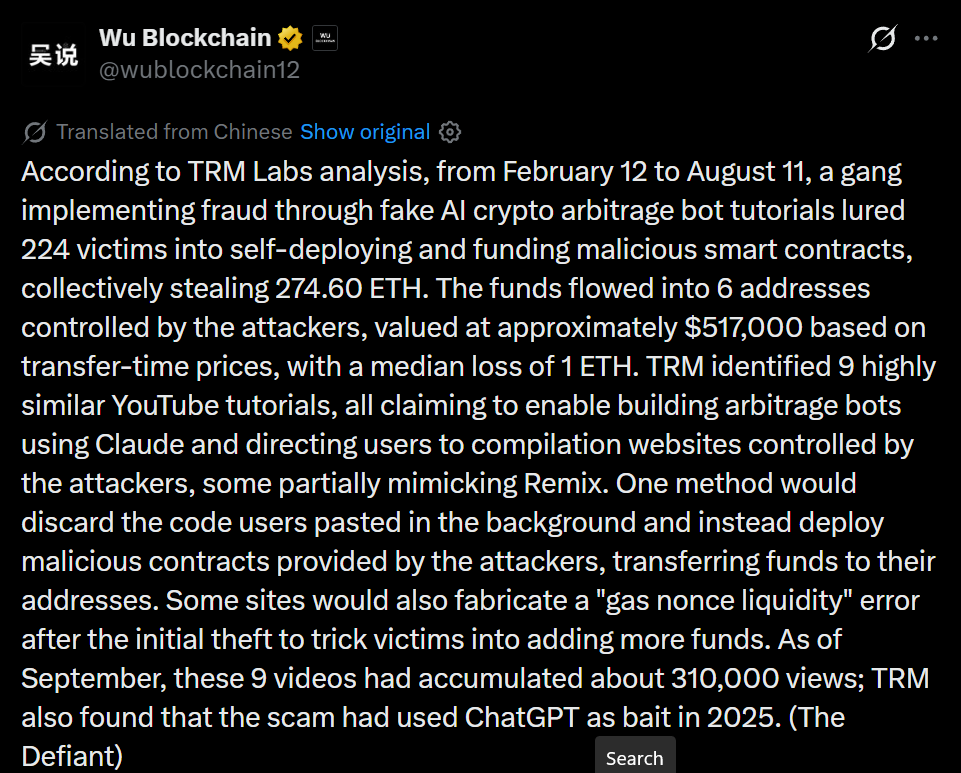
Blockchain intelligence firm TRM Labs traced the operation back to YouTube tutorials promising to teach viewers how to build an AI-powered arbitrage bot using Claude, one of the clearer examples of AI Crypto News Today turning into an actual criminal playbook.
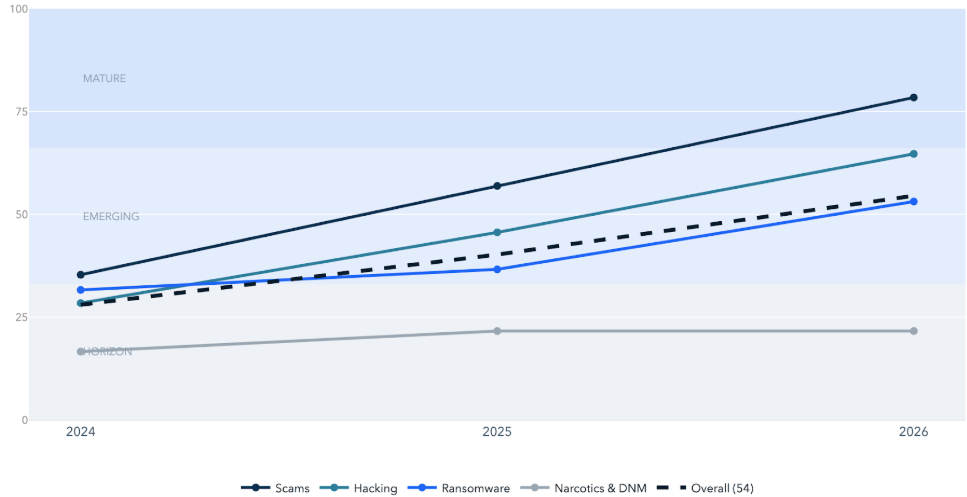
The videos walk viewers through setting up a wallet, copying provided code, deploying a smart contract, and funding it, all steps a target carries out personally, using their own wallet.
Source: TRM Labs
TRM identified nine nearly identical tutorials spread across different channels, each styled as an independent creator's work.
Scripts matched almost word for word, several claimed the exact same profit figures down to the decimal, and some used AI-generated presenters to fake variety across channels.
The Hidden Swap That Deploys The Drainer
Here's where the scam actually turns malicious. Every tutorial links to a code compiler site the operators built themselves, styled to resemble the legitimate tool Remix.
That site never compiles what the victim pastes into it.
-
A background script discards the victim's pasted source code entirely
-
A different contract, fetched from the operator's own server, gets compiled instead
-
That hidden contract forwards any balance above 0.05 ETH straight to the attacker
-
The transfer triggers the moment the victim clicks Start or Withdraw: the exact button the tutorial tells them to press
Some compiler sites added a second layer afterward: a fabricated "gas nonce liquidity" error message, telling victims their bot was stuck and needed more funds added to fix it.
TRM notes that isn't a real Ethereum concept at all, it exists purely to squeeze a second transfer out of an already-drained victim.
Why Wallet Security Never Caught It
This is the part that makes today's AI Crypto News Today update worth understanding closely, because it breaks the usual defense playbook entirely.
| Typical Drainer Attack | This Scam |
| The victim clicks a phishing link. | No link involved; the target deploys the contract themselves. |
| Someone connects to a spoofed site. | The person uses their own wallet directly. |
| A user signs a suspicious approval. | Every transaction looks like a normal, self-initiated action. |
| Security tools can flag known patterns. | Wallet warnings and phishing blocklists never trigger. |
Since nothing about the transaction pattern looks abnormal, the fraud hides in plain sight.
The Numbers Behind 224 Victims
Per TRM's tracing, 234 malicious smart contracts were deployed and funded by targets between February 12 and August 11, 2026, one of the clearer figures behind this AI Crypto News Today story.
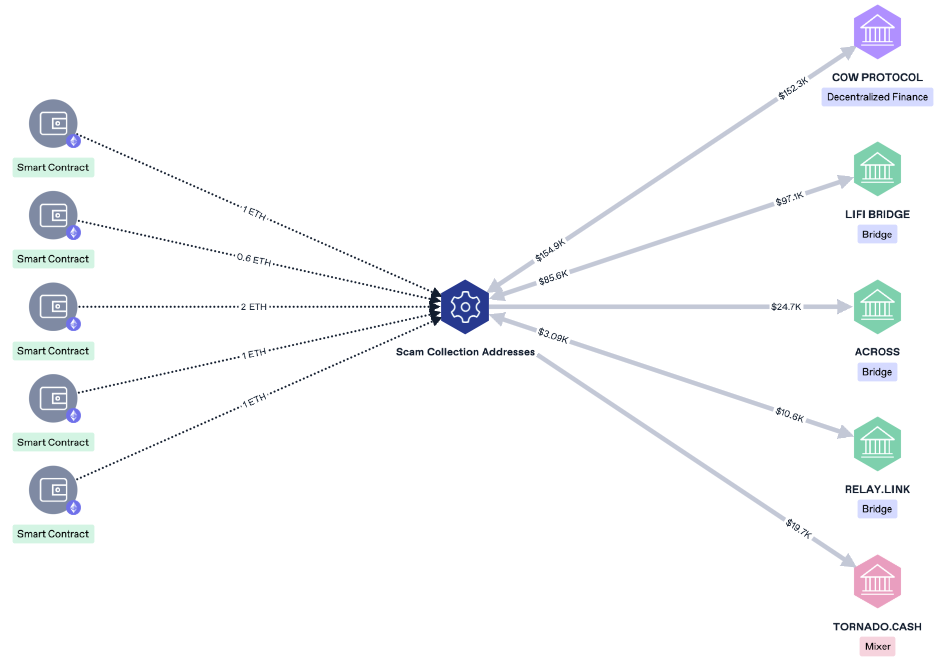
That activity funneled into six wallets controlled by the operators, totaling 274.60 ETH, worth roughly $517,205 at the time of each transfer. The median individual loss came to 1 ETH.
From there, the stolen funds moved through decentralized exchanges, cross-chain bridges, and at least one mixer, with no centralized exchange appearing anywhere in the outbound trail, according to TRM's analysis.
As of September 2026, the nine identified videos had collectively pulled in roughly 310,474 views, and TRM noted the same underlying scam previously used ChatGPT as its bait back in 2025 before shifting to Claude branding this year.
How To Avoid Getting Drained
TRM's clearest takeaway: the danger isn't the wallet, the code shown on screen, or even the AI branding; it's the compiler.
Anyone following a coding tutorial that links to its own custom deployment tool, rather than an established, independently verifiable development environment, is trusting a black box with real funds.
A polished video, a familiar AI name, and an active comment section don't confirm that the code actually deployed on-chain matches what's shown on screen.
Disclaimer
This article is for educational and informational purposes only and should not be considered financial or investment advice. Always conduct your own research before making investment decisions.