Arkham Pump.fun Integration Adds Wallet Intelligence to Terminal


Address Labels Reach a Memecoin Trading Tool
The Arkham Pump.fun integration brings wallet labels to the Pump.fun terminal. The Terminal is a trading interface built for memecoins.
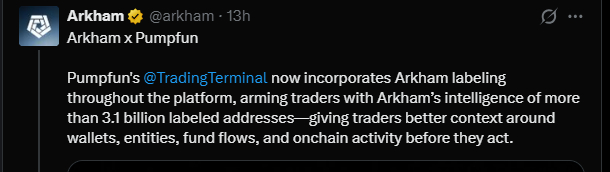
The firm shared the update in an X thread dated October 8, 2026. This report covers what changed, what the labels show, and what traders should verify.
Facts Confirmed in the Official Thread
According to Arkham, the thread confirms three points about the update.
Labeling is incorporated throughout the terminal platform.
The dataset includes more than 3.1 billion labeled addresses.
The stated aim is added context for traders on wallets and activity.
The second post, also dated October 8, 2026, offers two next steps. Users can open the terminal through a trade link. Developers can follow another link to the developer API page. Both posts come from the firm’s own X account, which makes them primary sources for this report.
Source: Official X Post
Four Types of Context the Labels Cover
The thread names four areas of context. The table explains each term in plain words.
Context area | Plain meaning |
Wallets | Addresses that hold or send tokens |
Entities | Funds, firms, or people linked to an address |
Fund flows | Crypto moving between wallets |
Onchain activity | Transactions recorded on a public blockchain |
The Arkham Pump.fun integration aims to attach a name to anonymous addresses. A label may point to a fund, an exchange, or an individual when that link is known. Together, these four areas show who holds a token, where funds go, and what happened onchain.
Why Wallet Data Matters in Fast Markets
Memecoin trading moves quickly, and many wallets carry no public name. Public ledgers show every transaction, but they rarely show who sent it. Token launches can draw many new buyers in a short time.
Users often check who holds a token before they act. Labels can shorten that check, but they do not replace research.
Common research steps in this space include:
Reviewing the largest holders of a token.
Checking whether several wallets move funds together.
Comparing wallet data with project documents and official posts.
Wallet tracking and onchain analytics are common research methods across crypto. Placing this data inside a trading tool may reduce the need for separate dashboards. The Arkham Pump.fun integration follows that approach.
Expert Opinion
The update adds research context, not trading signals. A label describes who may control an address. It does not show intent or predict price moves.
Any labeling system can be incomplete or outdated. The posts reviewed for this report do not explain how often labels update. Users should cross-check key addresses before relying on them.
Seen this way, the Arkham Pump.fun integration is one more data source. Its value depends on label accuracy and coverage.
Conclusion
The Arkham Pump.fun integration places labeled address data inside the terminal, according to the thread dated October 8, 2026. The posts focus on context for wallets and fund flows. They do not mention fees or price changes.
For now, the update is best read as a data feature, not a market event. Further details on label coverage and update frequency may appear on the firm’s official X account. Readers can watch that account for confirmed changes.
YMYL Disclaimer: This article is for educational and informational purposes only. It is not financial advice, a price prediction, or a guarantee of returns. Crypto assets carry risk, so readers should do their own research.









