Banks and Public Blockchains: Why Banks Still Hesitate With Crypto

Why Are Banks and Public Blockchains Still Struggling to Build Trust?
Banks love the idea of money that settles in seconds, at any hour. Yet many still keep away from open blockchains. Is it ego, or is it fear? This guide looks at the tension between banks and public blockchains, using a recent paper from MIT and J.P. Morgan.
Banks don’t mainly distrust the technology. They distrust risks they can’t control on open networks, such as censorship, front-running, and unwanted tokens and fees that reach sanctioned parties.
Competition worries are real too. Fixes exist, but many sit in protocols and rules, not in a bank’s own hands.
Do Banks Really Distrust Crypto or the Rules It Runs On?
Not exactly, and the difference matters. Banks already move money on private blockchains. Their worry is open networks, where nobody can say no to a stranger. Banks and public blockchains clash over control, not over the code.
The June 2026 paper comes from MIT’s Digital Currency Initiative and J.P. Morgan’s Kinexys unit. It says public chains offer open, shared systems. But banks face “structural risks and concerns” built into the design.
So the real question is less “ego or fear” and more “who is liable when something goes wrong?” Our piece on the final battle against cryptocurrencies covers the older turf war between banks and public blockchains.
What Do Banks Want From Public Blockchains in the First Place?
Banks want what open chains offer. They run all day and all night. Anyone can build on them, so apps connect with ease. The paper calls them open, shared systems.
Fed Governor Christopher Waller gave an example in a speech, according to a report of it. A tokenized stock bought on a Saturday, when many bank systems are closed, could settle at the same moment as its payment. Netting could also cut the cash needed for big trade volumes.
That is a strong pull. The hesitation is not about whether the idea works. It is about the cost of one wrong move.
What Four Risks Do Banks Say Keep Them Off Public Chains?
The paper names four. Front-running is when others see your pending trade and jump ahead. Censorship is when a valid transaction is skipped or delayed, even by accident.
Unsolicited tokens are coins sent to a bank’s wallet that it never asked for. The sender could be a sanctioned party. The fourth risk is gas fees, which can end up with a sanctioned validator.
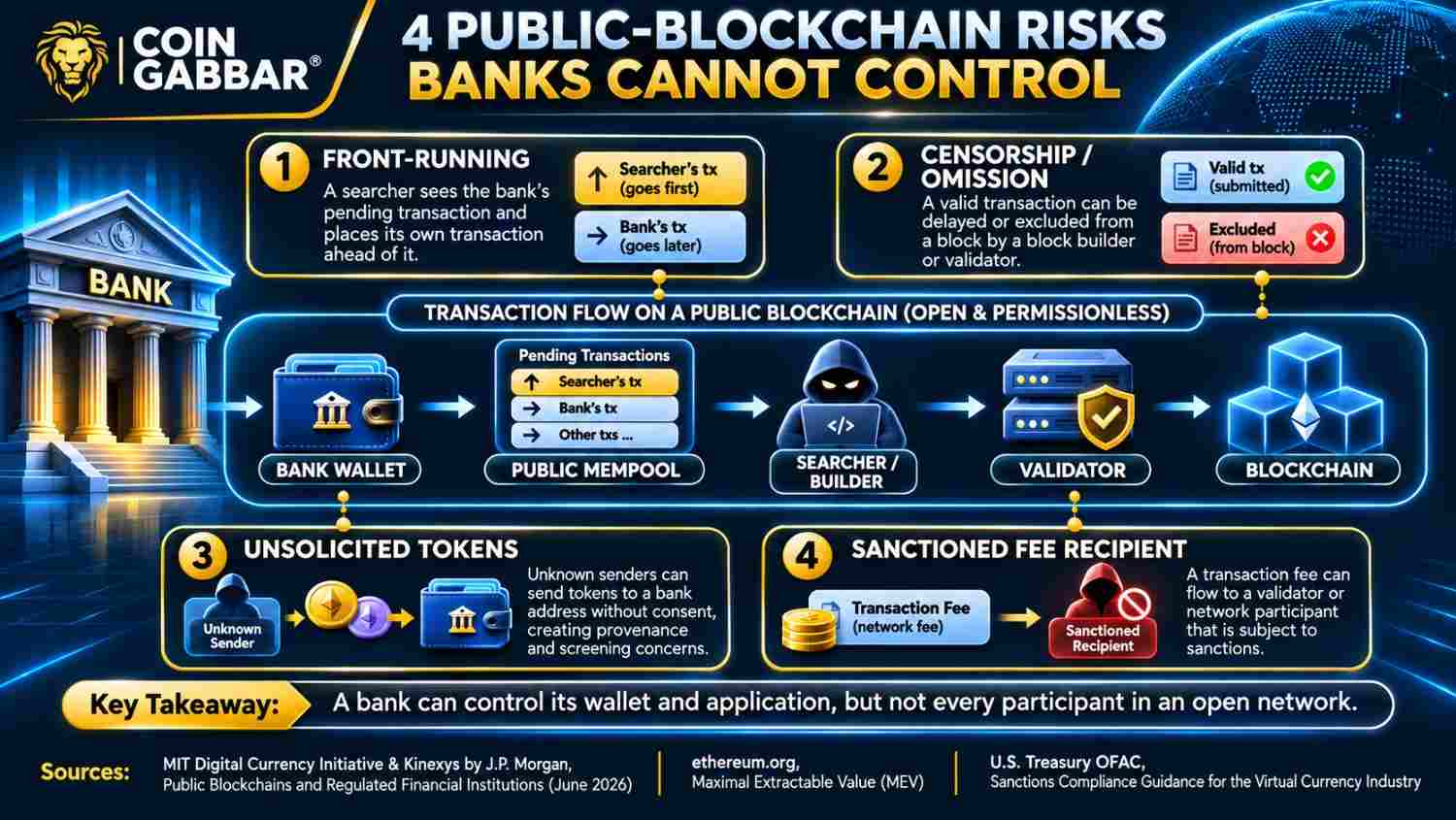
The first image lists all four. The authors say fixes in apps and smart contracts mostly treat symptoms. Lasting fixes sit in the protocol and its rules, where a bank has little say.
Why Is a Sanctioned Validator a Problem for Banks?
Anyone can run a validator on a public chain. On Ethereum it takes 32 ETH. The paper warns that open entry means sanctioned entities “cannot be barred from participating.”
Banks face strict liability. The report says a party can be held liable whatever its intent. One fee paid to the wrong validator could break a rule.
Power is also concentrated. The report says MEV-Boost, a tool that lets outside builders assemble blocks, built over 90% of recent Ethereum blocks. Fewer than 100 builders did the work. One built 45% in January 2026. The second image shows more.
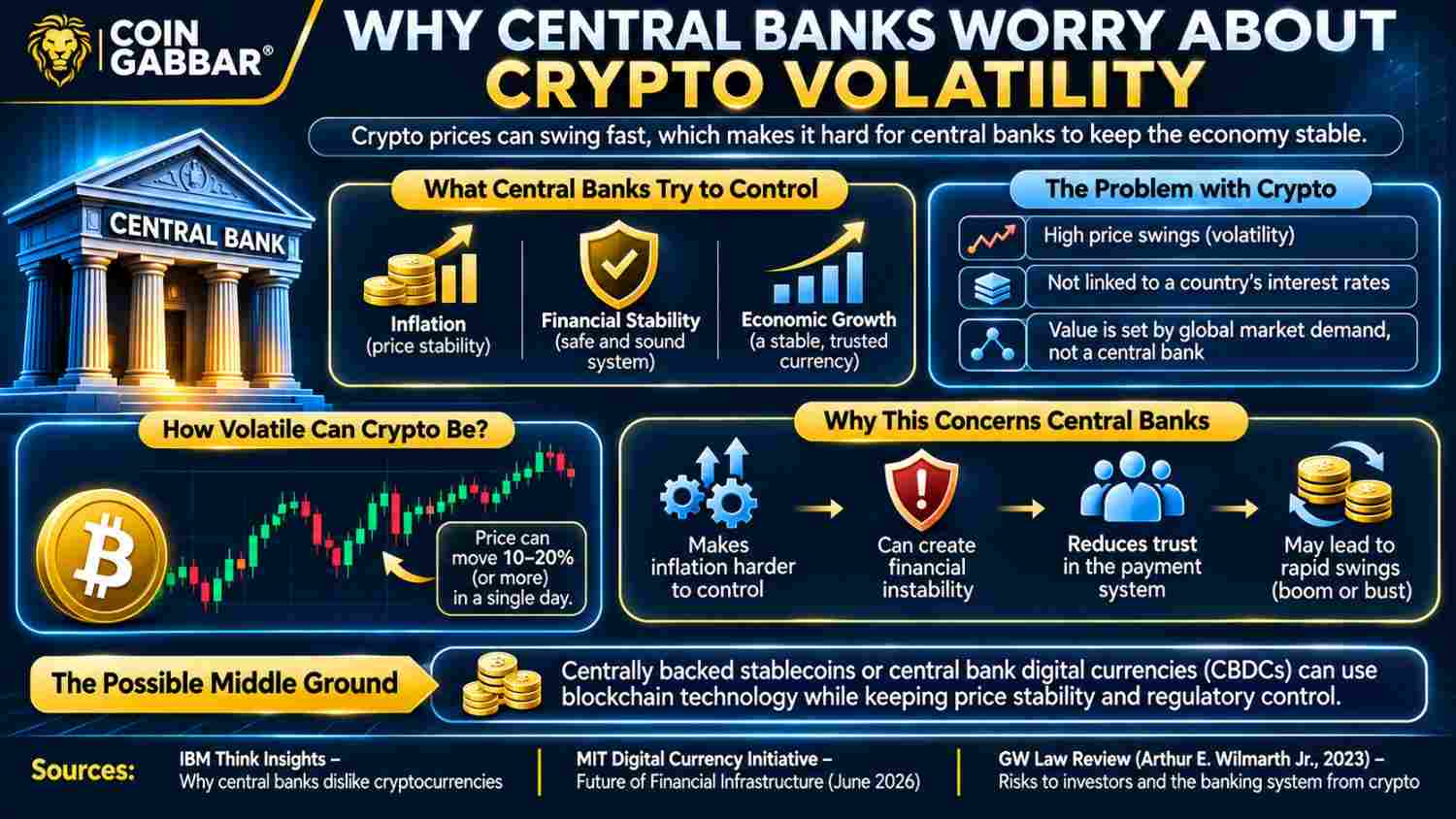
Is the Real Reason Fear of Competition and Lost Control?
Competition is real. Waller spoke to a bank conference on 17 November 2026. A report of the speech says he sees blockchain forcing established firms to compete. Banks are building their own chains, forming consortiums, or partnering with crypto firms.
Losses shape trust too. A 2023 law review paper notes that crypto’s market value fell from nearly $3 trillion in November 2021 to under $790 billion by December 2022. Three US banks with crypto ties failed in March 2023. Its author wants tougher rules. That is one view among many.
The newer evidence points to liability first and rivalry second. Ego is hard to measure, and no source here shows it.
How Are Banks Working Around Public Chain Risks Today?
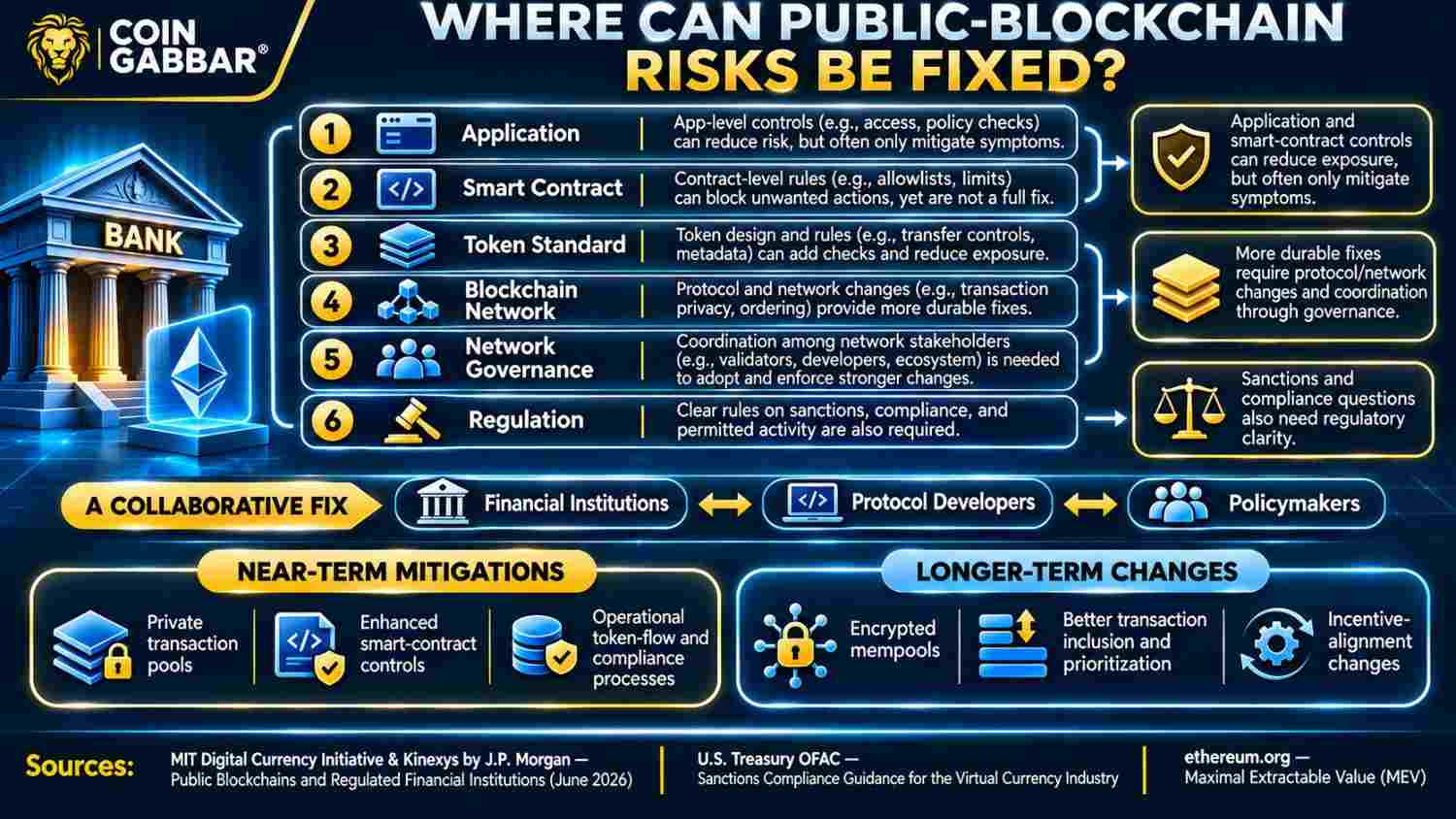
Near term, the paper says banks can use private transaction pools and stronger contract controls. They can also set routines for token flows and compliance. These cut the risk but don’t remove it.
Some firms are moving inside the banking system instead. Our guide to national trust bank crypto charters explains how an OCC charter lets firms handle custody and settlement under bank-style rules. Such banks don’t take deposits or make loans.
Waller expects stablecoins, tokenized deposits, and tokenized money market funds to coexist. The third image shows the full fix timeline.
What Would Develop Trust in Between Banks and Public Blockchains?
Later on, the paper points to encrypted mempools, fairer transaction inclusion, and new incentives. These need wide support across the network.
Rules matter too. The authors want clear guidance on front-running, sanctions exposure and unsolicited tokens. Waller named open questions as well. Who is to blame for smart contract fraud, lost keys, mistaken transfers, and assets stuck on “zombie chains”?
Until those answers arrive, many banks will stay careful. Their pace comes from law and liability, not a lack of interest.
Expert Opinion: Is It Ego, Fear, or Real Risk for Banks?
CoinGabbar analysis suggests bank hesitation toward public blockchains comes mainly from liability and loss of control, with competition a real but secondary factor. The basis is the MIT and J.P. Morgan risk list, the Fed speech, and the 2022 crash record.
Disclaimer: This article explains research and speeches. It is not financial, legal, or tax advice. Rules, bank plans, and crypto prices can change; nothing here is promised or assured, and you can lose money in crypto. Speak to a qualified adviser first.