Bitcoin SegWit Explained: What Changed Inside Bitcoin?

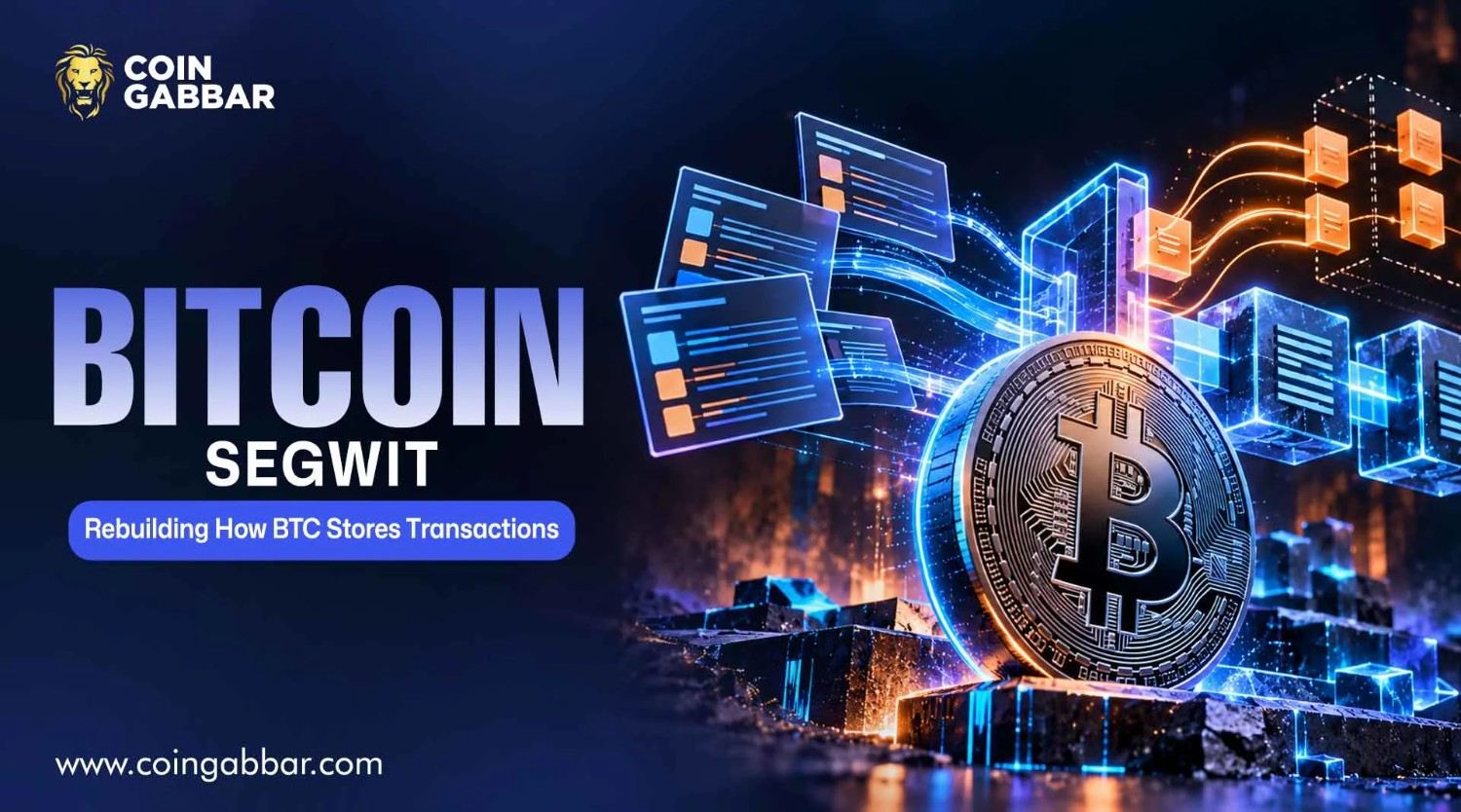
How Bitcoin SegWit Reshaped Transaction Data and Block Capacity
Bitcoin-SegWit is one of the most important changes ever made to the Bitcoin network, yet most users never noticed it happen. There was no new coin, no airdrop, and no price event attached to it. The upgrade simply changed how transaction data is arranged inside every block.
The change went live on August 24, 2017, and it still shapes how wallets, fees, and newer features work today. This article explains what the name means, which problems the upgrade addressed, how a SegWit transaction differs from an older one, and which limits remain. Claims made by the developers are separated from confirmed facts throughout.
What Does Bitcoin SegWit Actually Mean?
SegWit is short for Segregated Witness. The word "segregated" means separated, while "witness" is the technical term for the signature data that proves a sender is allowed to spend their coins.
In plain terms, Bitcoin-SegWit moves signature data into its own section of a transaction instead of mixing it with everything else. The sender, receiver, and amount stay in one place, and the proof of ownership sits in another.
That sounds like a minor tidy-up. Bitcoin-SegWit turned out to be the foundation for several later improvements, which is why the upgrade gets so much attention years after launch.
What Problem Was Bitcoin SegWit Built to Solve?
Two separate problems were pushing developers toward a fix. The first was block capacity, and the second was a flaw known as transaction malleability.
The block size ceiling
Before the upgrade, each Bitcoin block was capped at 1 megabyte. As more people sent transactions, blocks filled up and users competed by offering higher fees to get included sooner.
Simply raising the cap was a contentious idea inside the community. Bitcoin-SegWit offered a different route, which was to fit more transactions into the same space by treating signature data more efficiently.
The malleability flaw
Every Bitcoin-transaction has an ID, a unique fingerprint used to track it. Before SegWit, that ID was calculated using the signature data too.
A third party could slightly alter a signature without invalidating the payment, and the transaction ID would change. The money still arrived, but software tracking the original ID could get confused. This made it risky to build second-layer payment systems on top of Bitcoin.
How Does Bitcoin SegWit Work Inside a Transaction?
The key idea is that the transaction ID is now calculated without the witness data. Signatures no longer affect the ID, so nobody can change it by tweaking a signature after the fact.
The upgrade also introduced a new way of measuring block space called block weight. According to the official specification in BIP 141, a block can hold up to 4,000,000 weight units. Regular transaction data counts as 4 units per byte, while witness data counts as only 1 unit per byte.
That discount is the reason Bitcoin-SegWit transactions are cheaper to include. Signature data takes up a large share of a typical transaction, so counting it at a quarter of the usual rate frees real room in each block.
How Did the Upgrade Reach Activation?
Bitcoin-SegWit was activated as a soft fork. That means the new rules were backward compatible, so older nodes kept accepting blocks even if they did not understand the new transaction type.
Miners signalled support over several months; the upgrade was locked in on August 9, 2017, and it activated at block 481,824 on August 24, 2017. Nothing forced users to switch. Wallets had to add support first, and each user then had to move funds to a SegWit address to benefit.
That voluntary design explains why Bitcoin-SegWit adoption spread gradually instead of overnight.
What Benefits Did Bitcoin SegWit Bring?
Bitcoin-SegWit delivered several practical changes, although the size of each benefit depends on how a wallet is used.
Lower fees per transaction: a native-SegWit input takes up roughly 68 virtual bytes, compared with about 148 for a legacy input. Savings vary with network demand.
Extra block capacity: the weight system lets blocks hold more transactions than the old byte cap allowed.
A fix for malleability: transaction IDs can no longer be altered through signature changes, which supports Lightning Network payments and similar layered systems.
Cleaner upgrades: SegWit-introduced script versioning, which let developers add features later without disrupting older rules.
That last point is easy to overlook. The Taproot upgrade, activated in November 2021, was built on the versioning system that SegWit-created.
How Do SegWit Addresses Look Different?
The address a wallet shows can reveal which format it uses. The differences matter because each type has different fee levels and compatibility.
Address Type | Starts With | Notes |
Legacy | 1 | Original format, highest fees |
Wrapped SegWit | 3 | SegWit-inside an older-style wrapper, widely compatible |
Native SegWit | bc1q | Lowest fees among the SegWit v0 types |
Taproot | bc1p | Uses Witness version 1, introduced in 2021 |
Wrapped SegWit was a bridge. It allowed wallets that could not yet send to the newer bc1 format to still pay someone using SegWit-rules. The official Bitcoin wallet directory lists wallets by platform and feature, which helps when checking whether a wallet supports native SegWit.
Expert Analysis: What Did the Upgrade Really Change?
The most useful way to judge Bitcoin-SegWit is to separate what it did from what it was sometimes expected to do.
It did not make Bitcoin dramatically faster. Blocks still arrive roughly every ten minutes, and the base layer still processes a limited number of transactions per second. The gain was efficiency and flexibility, not raw speed.
Bitcoin-SegWit did make Bitcoin safer to build on. Fixing malleability removed a technical obstacle for payment channels, and script versioning gave developers a clean path for later upgrades.
This is analysis, not a verified outcome. The same reasoning could be challenged by those who believe a larger block limit would have been a simpler fix.
What Are the Limits and Risks of Bitcoin SegWit?
Bitcoin SegWit is not a cure-all, and a few caveats are worth keeping in mind.
Benefits only apply to people who actually use SegWit addresses. Sending to a legacy address still works, but that transaction will be larger and more expensive.
Fees depend mostly on network demand. A SegWit-transaction costs less than a legacy one in the same conditions, yet total fees can still rise sharply when the network is crowded.
Finally, an upgrade being sound at the protocol level does not protect against user mistakes, phishing, or lost keys. The original Bitcoin whitepaper describes a system built on cryptographic proof, but safe storage remains the holder's responsibility.
Conclusion
Bitcoin-SegWit separated signature data from the rest of a transaction, introduced block weight, fixed transaction malleability, and opened the door to later changes such as Taproot. It reached the network as a backward-compatible soft fork on August 24, 2017.
What stands out is how much Bitcoin SegWit-achieved without altering Bitcoin's supply or core rules. What stays uncertain is how far its design continues to shape future upgrades and how quickly remaining legacy usage fades.
Disclaimer:
This article is for educational purposes only and does not constitute financial, investment, or legal advice. Cryptocurrency is volatile and carries risk, so independent research is essential before making any decision.








.webp)