Coinbase Prediction Market Targets 2027 US Launch After $200M Revenue


Coinbase Prediction Market Launch Plan Advances With CFTC Approval
Coinbase plans to launch its own prediction market event contracts in the US in the first half of 2027, according to a November 19, 2026 report. The contracts would serve both retail and institutional customers.
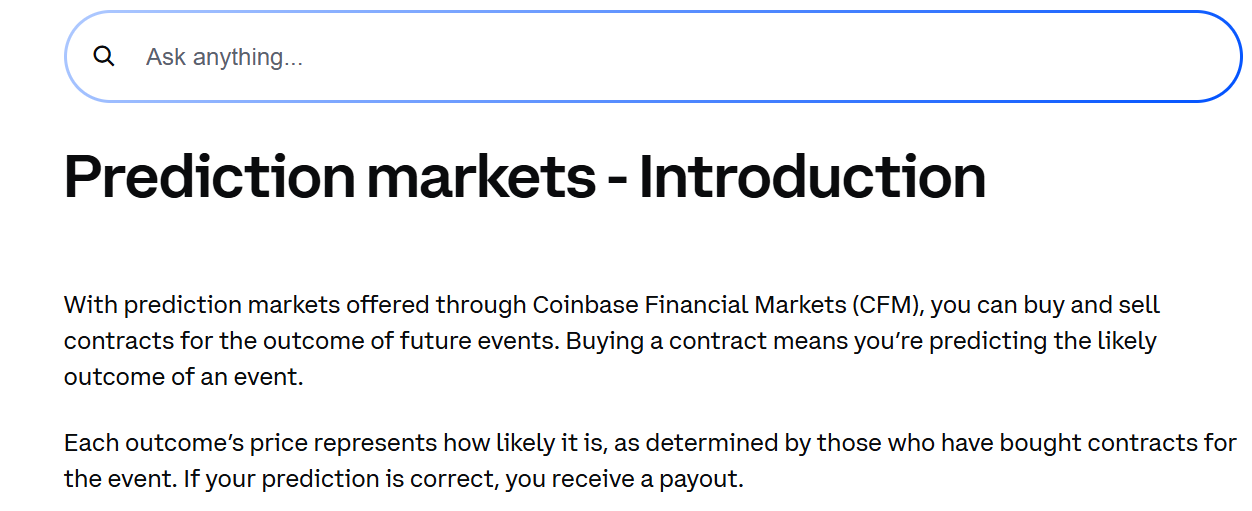
The Coinbase prediction market business currently runs through a partnership with Kalshi. An in-house platform could give Coinbase more control over which contracts it lists and how much trading revenue it keeps. The business is already sizable, with an annualized revenue run rate above $200 million in the third quarter of 2026.
At a Glance
| Key Detail | Information |
| Company | Coinbase |
| Planned launch | First half of 2027 |
| Market | United States |
| Target users | Retail and institutional customers |
| Current partner | Kalshi |
| Planned model | In-house prediction market contracts |
| Q3 2026 revenue run rate | More than $200 million annualized |
| Regulatory development | CFTC approval for its clearinghouse in September 2026 |
| Acquisition | The Clearing Company, announced December 2025 |
Coinbase Prediction Market Plans: What Reported
Bloomberg, citing people familiar with the matter, says Coinbase is preparing internally operated event contracts for US customers. The reported window is the first half of 2027.
This is a report, not an official launch announcement. In the supplied reporting, Coinbase has not shared a full launch schedule, the supported event categories, or final product details.

Sources: Wu Blockchain and Bloomberg (November 19, 2026)
Why Coinbase Is Moving Beyond Its Kalshi Partnership
Today, Coinbase acts as a broker. Trades settle on Kalshi’s exchange. Moving in-house would change that setup.
Greater Control Over Event Contract Listings
With its own contracts, Coinbase could decide what to list instead of relying on a partner’s menu. Possible categories include economic data, elections, sports, and crypto outcomes. These are examples only, and none are confirmed listings.
Coinbase Could Retain More Trading Revenue
An in-house model could reduce reliance on a third party and let Coinbase keep a larger share of trading fees. That does not guarantee higher profits. Building and running a platform brings its own costs and risks.
Source: Official Post
Coinbase Prediction Market Revenue Crosses $200 Million Run Rate
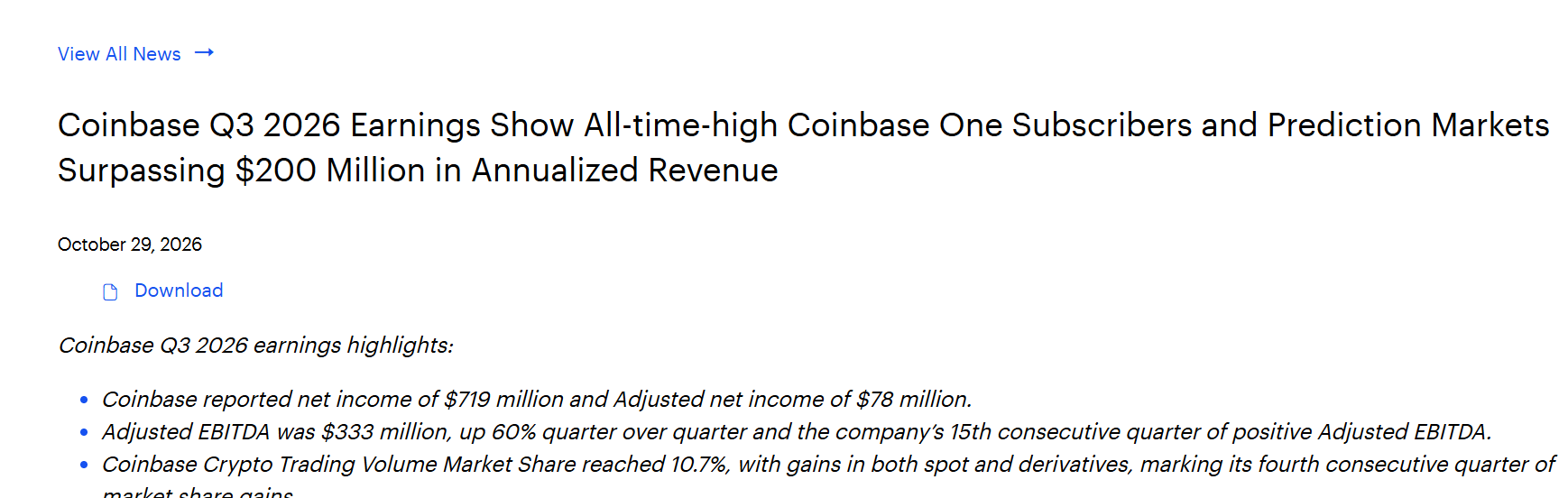
Coinbase’s prediction market segment passed a $200 million annualized revenue run rate in the third quarter of 2026. CFO Alesia Haas described it as one of the company’s fastest-growing new revenue streams during the October earnings call.
An annualized run rate takes recent results and projects them across a full year. It is not the amount Coinbase actually earned in the quarter. Actual revenue could be lower or higher if trading activity changes.
The figure matters because Coinbase wants income that does not depend only on crypto trading, which can swing sharply. Prediction markets are one way to diversify.
Source: Coinbase Q3 2026 earnings
The Clearing Company Acquisition and CFTC Approval
Acquisition of The Clearing Company
In December 2025, Coinbase announced an agreement to acquire The Clearing Company, a prediction market startup. The deal is relevant because it gives Coinbase talent and technology for building its own prediction market infrastructure.
CFTC Approval for Its Own Clearinghouse
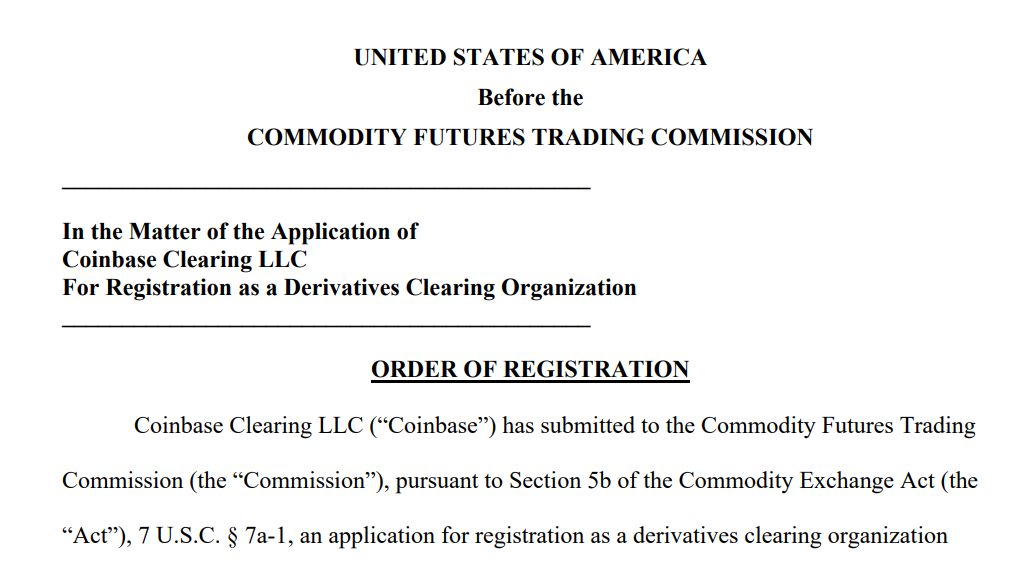
In September 2026, the Commodity Futures Trading Commission approved Coinbase to operate its own clearinghouse. A clearinghouse sits between buyers and sellers and helps ensure trades are settled. That role is central to derivatives and event contracts.
Clearinghouse approval does not necessarily mean every planned contract has separate regulatory clearance. Each product may face its own review.

Source: The Clearing Company deal (December 2025)
Coinbase Prediction Market Timeline
| Date | Development |
| Dec 2025 | Coinbase announces an agreement to acquire The Clearing Company |
| Sept 2026 | Coinbase receives CFTC approval to operate its own clearinghouse |
| Oct 2026 | CFO Alesia Haas confirms plans for proprietary events, without a target date |
| Q3 2026 | Prediction market business exceeds $200 million annualized revenue run rate |
| H1 2027 | Reported target period for in-house contracts |
Source: CFTC records on Coinbase’s clearinghouse approval (September 2026).
What Coinbase’s In-House Prediction Markets Could Mean for US Users
Users could see broader control over which contracts are available. Fees and product features may also change. Both retail and institutional participants are expected to have access.
Still, the supplied report has not disclosed the interface, contract types, eligibility rules, pricing, or fees. Readers should treat any claims about the user experience as speculation for now.
Regulatory Challenges and the US Prediction Market Landscape
Events operate inside a regulated derivatives framework overseen by the CFTC. The sector has grown fast, and state oversight bodies have taken a closer look. A key debate is whether some contracts cross into gambling under state law.
The reporting does not say Coinbase’s planned platform has faced enforcement action. Even so, federal and state rules could shape which contracts are offered and where residents can access them.
What Coinbase Has Confirmed and What Remains Unclear
| Reported or Established | Not Yet Detailed |
| Planned launch in H1 2027 | Exact launch date |
| US retail and institutional customers | Supported states and jurisdictions |
| Existing Kalshi partnership | Whether or when the partnership will end |
| Clearinghouse regulatory approval | Complete list of contracts |
| Q3 revenue run rate above $200M | New platform fee structure |
Conclusion
Coinbase news appears to be shifting from a partner-run model to its own prediction market. The Clearing Company deal, the CFTC clearinghouse approval, and the $200 million run rate all support that direction.
The first half of 2027 is a reported target, not a confirmed launch date. Details on contracts, fees, and the Kalshi market relationship are still missing. If the plan goes ahead, the Coinbase prediction market could become a larger part of the company’s push beyond conventional crypto trading.
Disclaimer: This article is for informational purposes only and is not financial or investment advice. Prediction market contracts and crypto assets carry risk, including the loss of all funds. Details of the reported launch may change. Do your own research and consult a licensed professional before making financial decisions.






