Crypto Adoption: Why Some Networks Grow and Others Fail


Why Some Crypto Networks Win Users While Others Fail: The Pi Lesson
Crypto adoption is the share of users, builders, and money that stay on a blockchain after launch. Sign-ups alone do not count.
Launching a token is easy. Building a network that people return to is hard. Pi Network shows both sides. It began in 2019 and ran in closed phases for years. It opened to outside trading on 20 February 2025. Our Pi Network 2019 to 2026 guide tracks that path.
This guide covers growth and risk. It uses a MIT Sloan study, WisdomTree data from May 2026, and Pi’s own numbers. They show what splits growth from fade-out.
Networks grow when launch buzz turns into repeat use. Research suggests the first users matter more than their count.
Ecosystem data shows that daily users, money flows, and builders tell different stories. Pi shows the gap between signed-up and verified users. Judge crypto adoption by retention, liquidity, and builders.
What Is Crypto Adoption, and How Is It Different From Hype?
Hype measures attention. Token prices, posts, and sign-ups all show interest.
Crypto adoption measures use. It asks which wallets return, which apps people open, which money stays, and which builders keep shipping.
Economist Hanna Halaburda argued in 2017 that a coin has no use without a network. That idea still frames the question. Our guide to what cryptocurrency is covers the basics.
Why Do Early Adopters Decide Whether a Network Takes Off?
In October 2014, MIT gave all 4,494 undergraduates access to Bitcoin. Christian Catalini and Catherine Tucker tracked who kept using it. Their MIT Sloan working paper shares the result.
Students who usually adopted first but got access later than peers were more likely to reject it. The effect was strongest when the delay was easy to see. Their exit also cut use among other students.
This was one campus and one coin in 2014. Our reading is that launch order and early user care can shape a network for years.
How Did Pi Network Get From Doubt to an Open Network?
Pi launched in March 2019. A closed mainnet began in December 2021. The open network went live on 20 February 2025.
Years of delay made many observers ask if it would ever arrive. The date settled that. It did not settle a harder question: will people keep using it?
Our Pi community growth strategy explainer shows how the base was built.
Does Crypto Adoption Show Up in Sign-Ups or Verified Users?
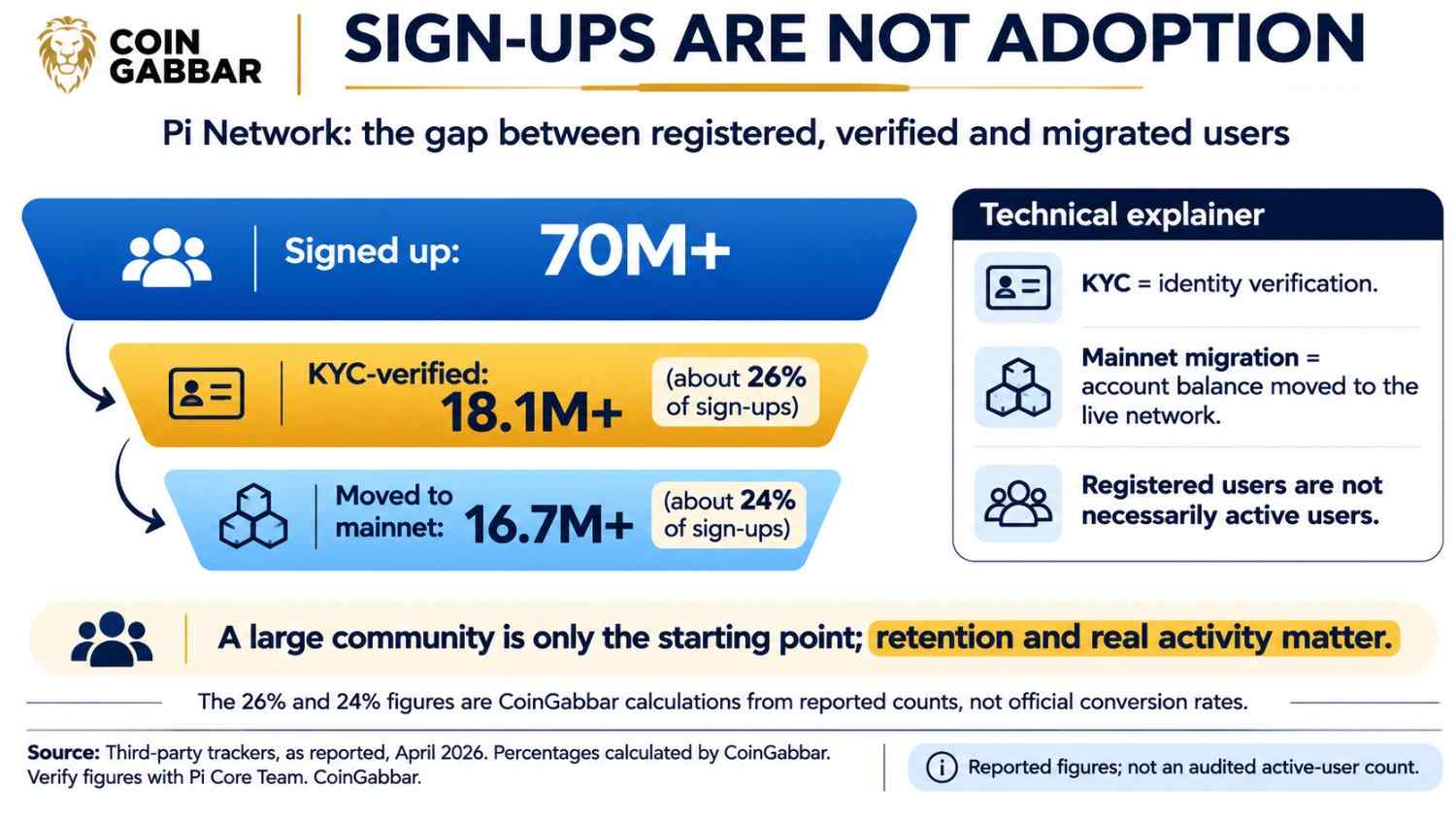
Outside trackers reported three Pi counts as of April 2026. They were over 70 million signed up, about 18.1 million KYC-verified, and about 16.7 million moved to mainnet. See the Pi Core Team figures.
By our division, verified users are about 26% of the signed-up total. Moved users are about 24%.
KYC is an identity check, so some gap is by design. These counts come from outside trackers, not an audit. They show that signed-up users and active users are two different groups.
Which Blockchains Hold the Most Daily Users in 2026?
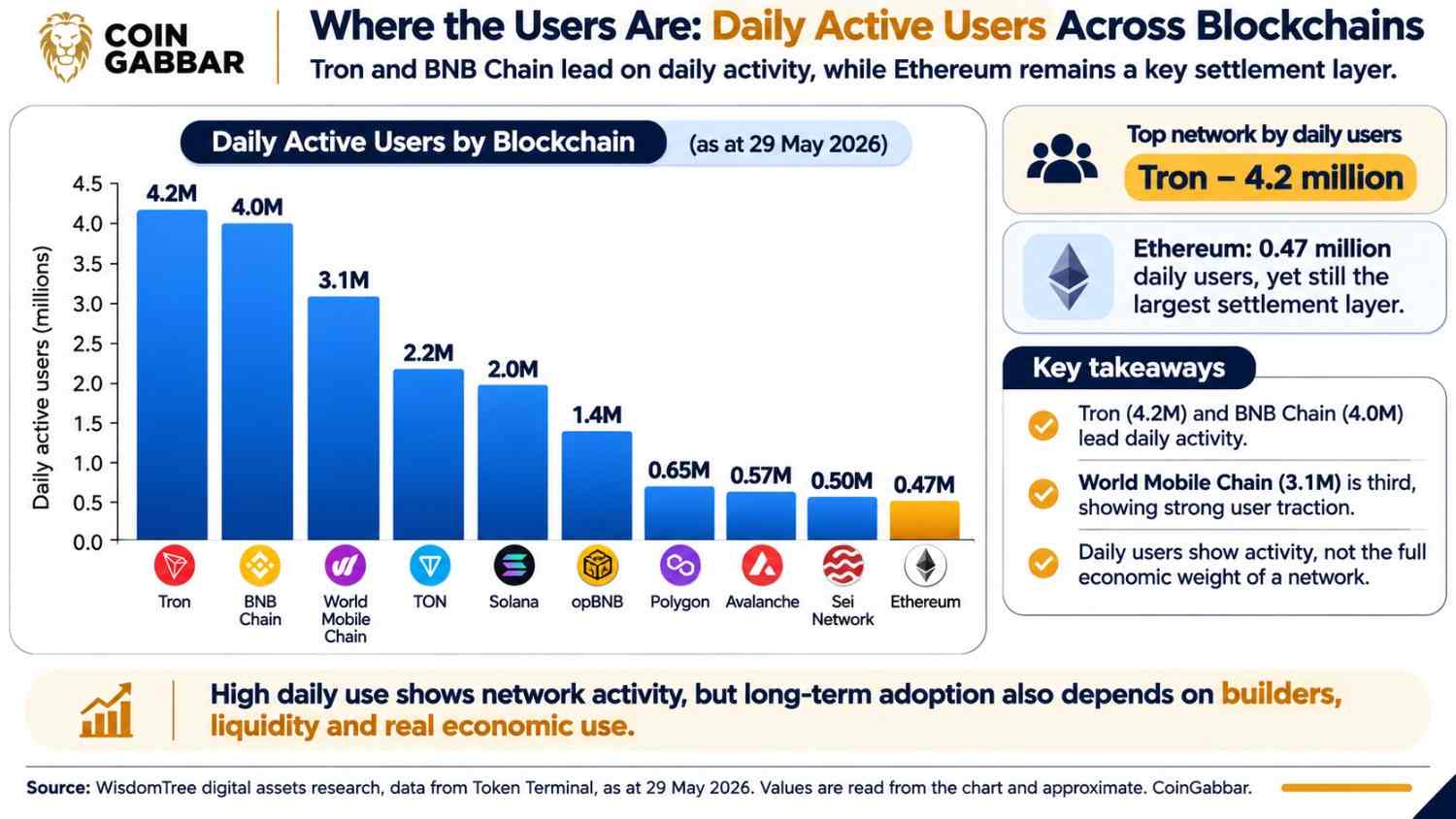
WisdomTree’s digital assets research uses Token Terminal data as at 29 May 2026. Tron leads with about 4.2 million daily users. BNB Chain follows with about 4.0 million, then World Mobile Chain with about 3.1 million.
Ethereum ranks tenth with about 0.47 million. WisdomTree still calls it the largest settlement layer. Our Ethereum guide explains its role. So daily users and economic weight are not the same thing.
WisdomTree adds that short-term rewards attract tourists. Strong ecosystems create permanent residents.
Where Does Capital Move When Networks Compete for Liquidity?
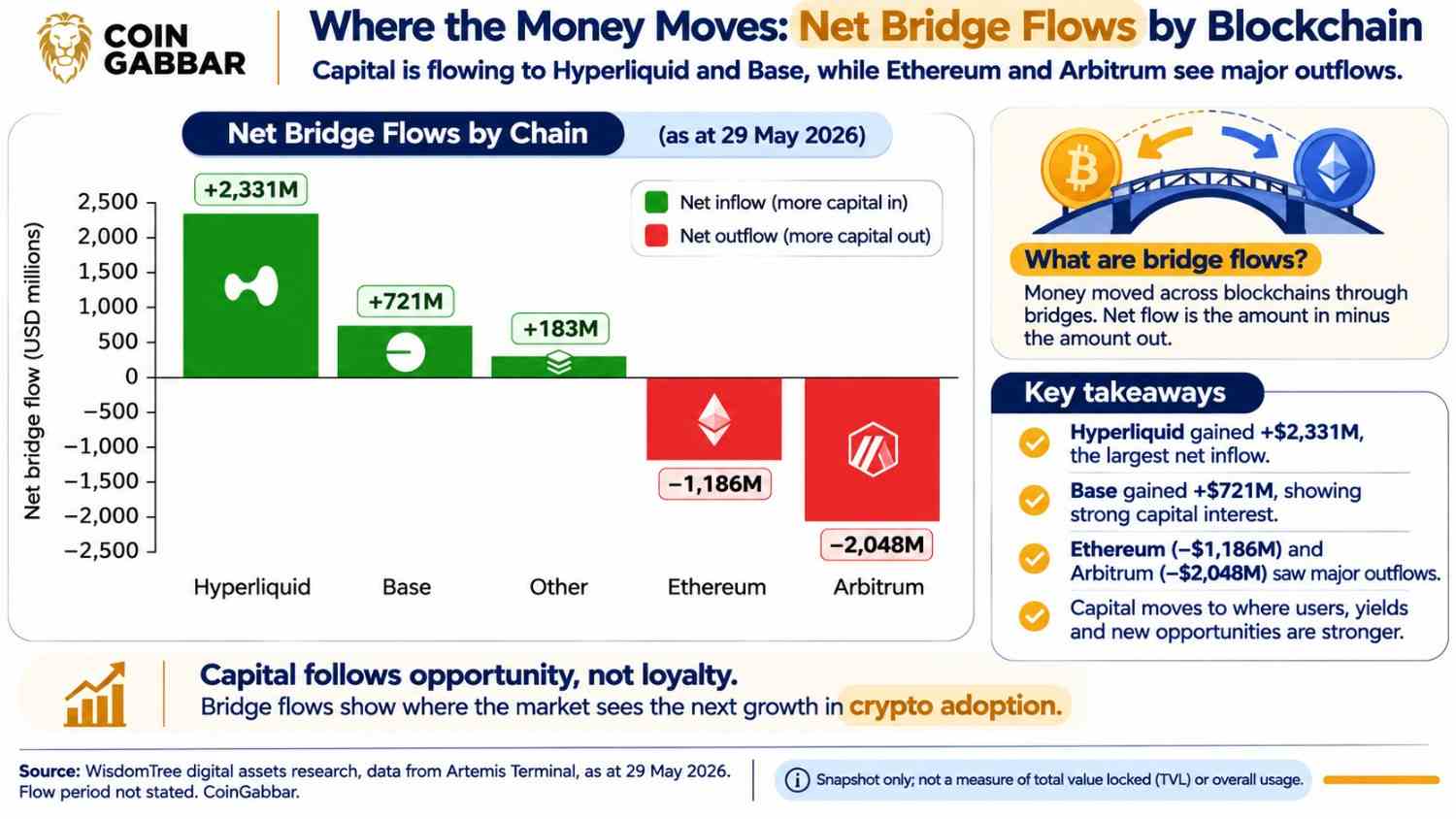
The same report shows net bridge flows in millions of dollars. The source is Artemis Terminal, as at 29 May 2026. Hyperliquid gained $2,331 million. Base gained $721 million.
Arbitrum lost $2,048 million. Ethereum lost $1,186 million. The report does not state the flow period, so read these as a snapshot. Our guide to cross-chain bridges explains how they work.
One reading is that money follows opportunity, not loyalty. A network can keep users and still lose liquidity. That is why crypto adoption needs both measures.
What Do the Research Sources Say About Crypto Adoption Together?
Each source covers a different stage. The MIT study looks at who stays after first access. WisdomTree looks at daily users and money moves. The Pi counts look at who completes verification.
Read together, none of them treats sign-ups as success. MIT links early exits to weaker later use. WisdomTree ties lasting growth to builders, returning users and money that stays. Pi’s gap shows how many sign-ups never reach a verified state.
They also differ in age and method. MIT is a 2014 campus test. WisdomTree is a May 2026 snapshot. The Pi counts come from outside trackers. Treat the overlap as a pattern, not proof.
What Limits and Risks Affect Crypto Adoption Metrics?
Rewards can inflate numbers. An airdrop can pull in users who vanish the day the payouts stop.
Counting methods differ, too. One wallet isn’t one person, and a verified user isn’t always an active one. Figures from 2014, 2025, or even May 2026 don’t tell you what is happening today.
None of these metrics proves a network is safe or worth owning. WisdomTree notes that leaders can lose their spot. A hack, a new rule, or a rival can change activity fast. Check the primary documents before you lean on any figure.
Key Terms in Network Adoption: What Do They Mean?
Network effect: The more people use a network, the more useful it becomes.
KYC: The checks on your ID are a platform made before it opens your account.
Mainnet: the real blockchain, as opposed to a testnet.
Bridge: A way to transfer assets from one blockchain to another.
Net flow: the gap between money coming in and money going out.
Expert Opinion: Does Crypto Adoption Follow Users or Builders?
CoinGabbar analysis suggests adoption follows retention and builders more than sign-ups. Three sources point the same way. Early MIT exits cut later use. WisdomTree ties lasting growth to builders and sticky liquidity. And by our division, verified Pi users are only about a quarter of the signed-up total.
Four questions test any network. Are builders still shipping? Do users come back? Does liquidity stay? Is the verified base growing?
No single metric settles it. Ethereum has the fewest daily users among the top ten, yet WisdomTree still calls it the largest settlement layer. This view rests on research findings, reported network data, and our own sums. It is not a forecast.
Key takeaways
In a 2014 MIT test, early adopters who got access late were more likely to quit.
Pi reportedly has over 70 million signed-up users but about 18.1 million KYC-verified ones (April 2026).
Tron and BNB Chain led daily users in May 2026. Ethereum ranked last of the top ten.
Net bridge flows ran from Arbitrum and Ethereum toward Hyperliquid and Base.
Disclaimer: This article is for information only. It is not financial, legal or tax advice. Nothing here is promised or assured, and crypto prices swing hard. Networks can fail or change, and rules differ in every country, so you can lose money. Talk to a qualified adviser before you invest.