What Aligned Layer Tokenomics Reveal About the $ALIGN Token

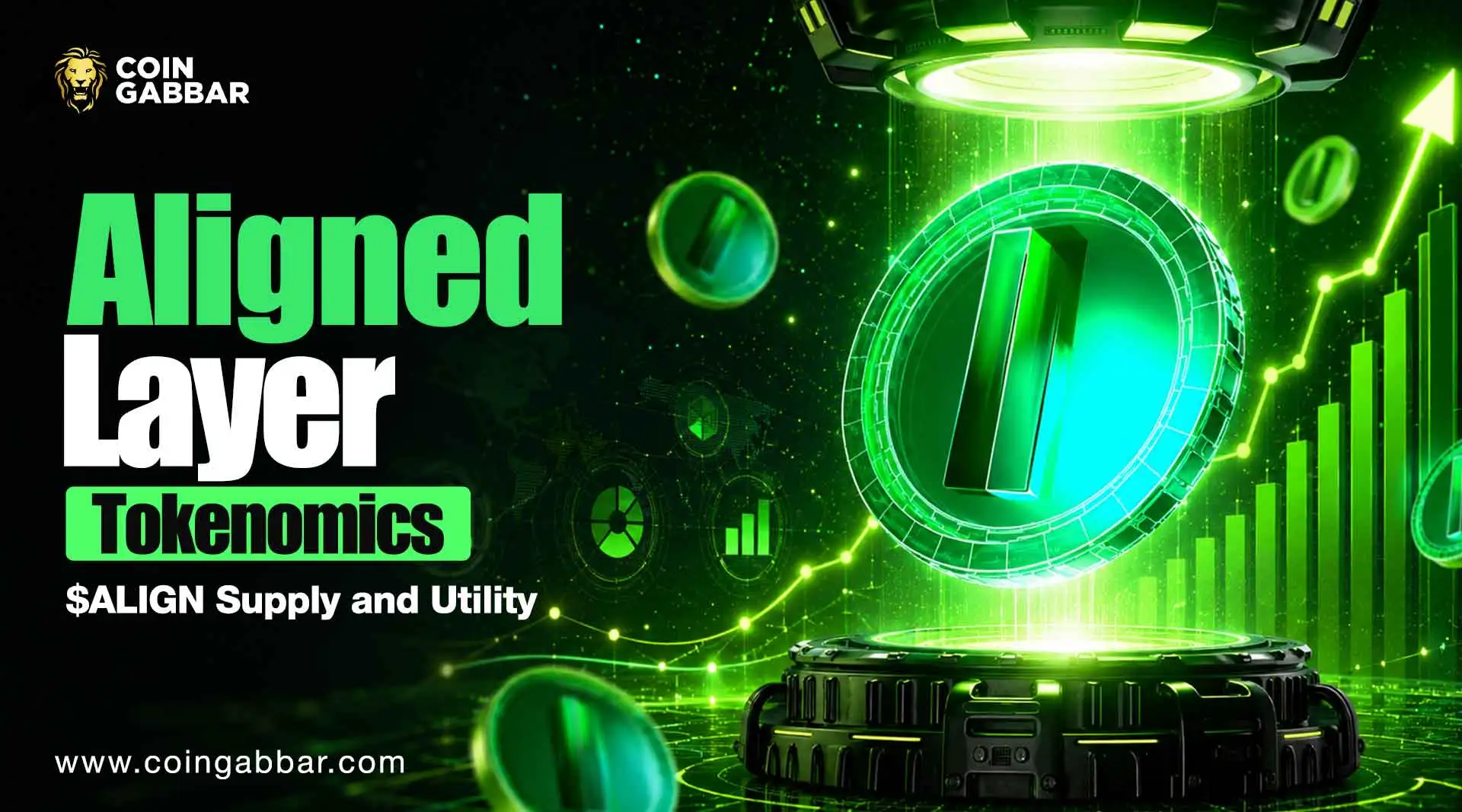
Aligned Layer Tokenomics: $ALIGN Supply and Utility Explained
Aligned is building infrastructure that turns Ethereum into a financial backend. Its stack covers proof verification, proof aggregation, rollups, and wallets. The $ALIGN token sits at the center of this system. This Aligned Layer tokenomics breakdown covers supply, allocation, vesting, and utility. Every figure below comes straight from Aligned's own published updates. No estimates, no filler.
Key Takeaways
-
Total supply is fixed at 10 billion ALIGN tokens, with roughly 16% circulating at TGE.
-
Team and Investor allocations carry a 12-month cliff before any tokens unlock.
-
ALIGN pays for proof verification, aggregation, rollup, and wallet services across the stack.
What Is Aligned?
Aligned provides a one-click stack for fintechs and enterprises building on Ethereum. The platform reduces the cost and latency of zero-knowledge proof verification. Its live products include a Proof Verification Layer and a Proof Aggregation Service. Aligned Layer is also developing Wallet-as-a-Service and Rollup-as-a-Service platforms. A RISC-V zkVM is in active development as well, built alongside partner teams.
This broad build-out is why Aligned Layer crypto watchers track the project closely. Aligned also partners with builders like Sovra for digital identity work and Loom Finance for revenue-based financing. Both integrations plug directly into the wider stack.
$ALIGN Token Overview
ALIGN is an ERC-20 token native to the Aligned ecosystem on Ethereum.
| Metric | Figure |
| Total Supply | 10,000,000,000 ALIGN |
| Initial Circulating Supply (TGE) | ~16% |
| Token Standard | ERC-20 |
| Network | Ethereum |
The Aligned token design has evolved since it was first announced. Every Aligned Layer token in circulation still traces back to that same fixed 10 billion cap. its own tokenomics update post confirms the supply itself never changed. What changed was how that supply gets split.
Original 2024 Allocation vs Updated 2026 Split
Aligned Layer first shared its tokenomics structure in December 2024. The structure was simple, with four main buckets.
Original Allocation (Dec 2024):
-
Ecosystem & Community — 44%
-
Team — 23.5%
-
Investors — 22.5%
-
Foundation — 10%
By April 2026, It had expanded its product suite considerably. The team revised the allocation model to reflect this growth, as laid out in their ALIGN tokenomics update.
Updated Allocation (April 2026):
| Category | % of Supply |
| Team | 23.50% |
| Investors | 19.71% |
| Ecosystem | 18.00% |
| Future Provisions | 16.61% |
| Foundation | 11.40% |
| Airdrop | 8.74% |
| Community Sales | 2.04% |
The team share stayed nearly identical. Investors dropped slightly. A new Airdrop category and Future Provisions bucket now exist. These didn't appear in the original plan at all.
Vesting Schedules by Category
Vesting terms vary sharply depending on which bucket tokens fall into.
-
Team & Investors: 0% unlocked at TGE, 12-month cliff, then 40% unlocks with 18-month linear vesting after.
-
Foundation: 37.83% unlocks at TGE, remainder vests over 30 months.
-
Ecosystem: 3.23% unlocks at TGE after a 6-month cliff, then 24-month linear vesting.
-
Future Provisions: 40.24% unlocks at TGE, 6-month cliff, 24-month linear vesting after.
-
Community Sales: 32.72% unlocks at TGE across CoinList and Echo tranches.
-
Airdrop: 44.36% unlocks at TGE, split across five distribution waves.
Locked Team and Investor tokens for a full year is a meaningfully conservative choice. Many presale projects unlock insider tokens far sooner than this.
Airdrop Structure and Eligibility Waves
The Airdrop allocation rewards early supporters across five separate waves. Wave 1 covered engineers and researchers who contributed to open-source ZK projects. Wave 2 rewarded active Discord community members. Wave 3 recognized Galxe quest participants, the largest single group. Wave 4 honored distinguished contributors like Protocol Guild and L2BEAT. Wave 5 extended tokens to holders of the ecosystem projects, including Starknet and Scroll.
More than 160,000 wallets registered for the Aligned Genesis Drop before it closed. Wallets holding 10,000 tokens or fewer received their full allocation right at Token Generation Event. Larger allocations follow a 12-month linear vesting path instead. This structure rewards smaller, more distributed holders with faster access to their tokens.
ALIGN Token Utility
ALIGN token isn't just a governance or speculative asset. It powers real service payments across the stack.
-
Pays fees for Proof Verification Layer usage
-
Covers costs on the Proof Aggregation Service
-
Used for Rollup-as-a-Service (RaaS) transactions
-
Supports Wallet-as-a-Service (WaaS) operations
-
Enables dual staking to help secure the network
This utility model was first outlined in the original tokenomics and roadmap announcement, which also detailed the project's early product rollout plan. Under that original design, applications could pay per proof of stake ALIGN for unlimited monthly verification access. Stakers who secure the network earn a share of protocol fees in return. This dual-use model ties token demand directly to actual platform usage, not just speculation.
Coin Gabbar Analysis
A locked one-year cliff on Team and Investor tokens is a strong long-term signal for holders. It reduces early sell pressure that often hits presale tokens right after launch. The pivot from a simple four-category system to a seven-category model also shows the project scaling its economic design alongside real product growth. Ecosystem allocation dropping from 44% to 18% is worth watching closely though. That shift moves more supply toward Team, Investors, and Future Provisions combined. Whether that supports long-term decentralization or concentrates control more tightly will depend on how Future Provisions tokens actually get deployed.
Final Thoughts
Aligned's tokenomics reflect a project that grew significantly between its first announcement and its 2026 update. The fixed 10 billion supply never changed. What shifted was the internal split, the token vesting discipline, and the sheer breadth of utility ALIGN now serves. For anyone researching Aligned Layer tokenomics before engaging with the ecosystem, the vesting cliffs and category shifts are the details that matter most. Always verify current figures directly before making any decisions.
Disclaimer: This article is for informational purposes only and does not constitute financial advice. Cryptocurrency investments carry significant risk, including potential loss of capital. Please conduct your own research before investing.





.webp)