Why Ethereum Glamsterdam Upgrade Matters for ETH Investors?

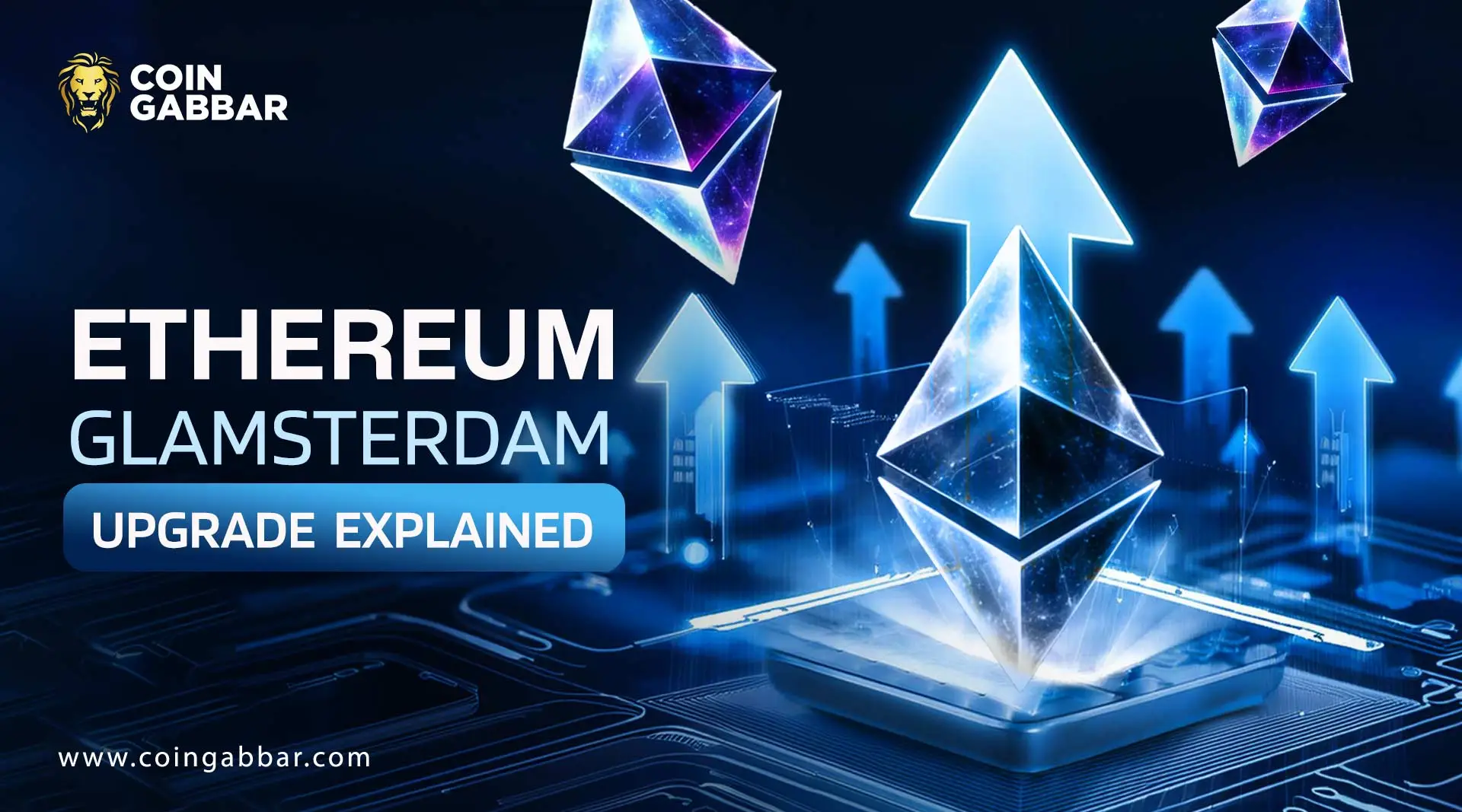
Why Ethereum Glamsterdam Upgrade Matters for Long-Term ETH Investors?
What is the Ethereum Glamsterdam Upgrade?
This is Ethereum's next major hard fork, planned for the first half of 2026.
The name blends two things:
"Amsterdam" — the execution layer upgrade, named after Devconnect's location
"Gloas" — the consensus layer upgrade, named after a star
It follows the Fusaka upgrade and picks up right where it left off — but goes much further on Layer 1 scaling, parallel processing, and sustainability.
One line summary: Glamsterdam makes Ethereum faster, cheaper, and more sustainable without sacrificing decentralization.
Why Does This Upgrade Matter for Investors?
Ethereum's long-term value is tied to how well it scales. This upgrade directly tackles the biggest blockers slow transactions, rising gas fees, and database bloat.
More capacity + lower fees = more users, more apps, more ETH demand.
This is a direct improvement to Ethereum's investment case.
The 4 Core Goals of Glamsterdam
Goal | What It Means |
Scale L1 | Process more transactions at Layer 1 |
Parallel Processing | Run many transactions simultaneously |
Network Sustainability | Keep storage costs manageable |
Network Resilience | Make the network more stable and fair |
Key Upgrades Explained Simply
1. Enshrined Proposer-Builder Separation (ePBS) — EIP-7732
This is the headline feature of Glamsterdam.
Right now, Ethereum uses third-party software (relays) to handle block building. It's not fully trustless and creates bottlenecks.
ePBS bakes this process directly into the protocol.
Removes reliance on third-party middleware
Expands data propagation window from 2 seconds → 9 seconds
Allows much larger blocks without stressing the network
Makes builder payments trustless and transparent
Investor angle: More throughput = more capacity for DeFi, NFTs, and L2s to settle on Ethereum L1.
2. Block-Level Access Lists (BALs) — EIP-7928
Today, Ethereum processes transactions one by one — like a single-lane road.
BALs give the network a map of every transaction's dependencies upfront, so unrelated transactions can be processed simultaneously.
Enables parallel transaction processing
Faster node syncing (no need to replay all transactions from scratch)
Sets the foundation for massive future throughput gains
In plain terms: Ethereum goes from a one-lane road to a multi-lane highway.
3. Gas Fee Improvements
The Ethereum gas fee update in Glamsterdam has two parts:
Lower base transaction fees (EIP-2780)
Standard ETH transfers between existing accounts become up to 71% cheaper
Only the essential work is priced — no bloated base fees
Accurate state storage pricing (EIP-8037 & EIP-8038)
Fees for creating new accounts or smart contracts are updated to reflect real storage costs
Prevents database bloat that could slow the network over time
Gas limits can be safely raised as the network scales
4. Network Sustainability — Preventing Database Bloat
Without fixes, Ethereum's state (database) could grow by ~200 GiB per year at a 100M gas limit.
Glamsterdam's sustainability EIPs ensure:
Storage fees accurately reflect hardware costs
Home stakers can keep running nodes on affordable hardware
Ethereum's decentralization is preserved long-term
This is what sets Glamsterdam apart — it doesn't just scale, it scales responsibly.
Network Resilience Improvements
Two smaller but important changes for stakers:
Exclude Slashed Validators from Proposing (EIP-8045)
Penalized validators are removed from the block proposer queue
Prevents missed slots and network slowdowns during mass slashing events
Fairer Exit Queue (EIP-8080)
Closes a loophole that let high-balance validators exit faster than small stakers
All exits now share a fair queue — democratizing liquidity for all stakers
Investor angle: A fairer, more stable network = more confidence for institutional stakers entering Ethereum.
User & Developer Experience Upgrades
Same wallet address across all chains (EIP-7997)
Developers can deploy apps to the exact same address on Ethereum and all L2s
Users get one unified wallet address everywhere — no confusion, no lost funds
ETH transfer logs (EIP-7708)
Every ETH transfer now emits a log (like ERC-20 tokens already do)
Makes it easier for exchanges and bridges to track deposits reliably
Larger smart contracts (EIP-7954)
Max contract size raised from ~24KiB to 32KiB
Developers can build more complex applications on Ethereum
Glamsterdam vs Previous Upgrades — At a Glance
Upgrade | Key Focus |
Pectra | Max validator balance raised to 2,048 ETH |
Fusaka | Foundational refinements, blob scaling |
Glamsterdam | Layer 1 scaling, parallel processing, gas reform |
What This Means for the ETH Roadmap 2026?
The Ethereum Glamsterdam Upgrade is a critical milestone in Ethereum's long-term roadmap. It moves the network closer to:
High-throughput L1 — safe, scalable, and decentralized
Cheaper everyday use — ETH as a genuine medium of exchange
Sustainable growth — hardware stays manageable, home staking stays viable
For investors watching Ethereum's blockchain update cycle, Glamsterdam signals that Ethereum is executing on its roadmap — and building the infrastructure for the next wave of adoption.
Final Takeaway
The Ethereum Glamsterdam Upgrade is not just a technical patch — it's a structural transformation.
It tackles Ethereum's three biggest challenges at once: speed, cost, and sustainability. By introducing parallel processing, enshrining proposer-builder separation, reforming gas fees, and future-proofing node hardware requirements, Glamsterdam positions Ethereum to compete with faster blockchains while staying decentralized.
For beginners: this means cheaper, faster ETH transactions are coming. For investors: this directly strengthens Ethereum's performance upgrade story and long-term fundamentals.
Keep an eye on testnet announcements for the exact launch date — and remember, no action needed on your ETH holdings.
Disclaimer: This blog is for informational and educational purposes only and should not be considered financial or investment advice. Cryptocurrency markets are highly volatile, so always do your own research before making any investment decisions.