GXT Exchange Mining Phase 3: Reserve Tokens Locked for 10 Years

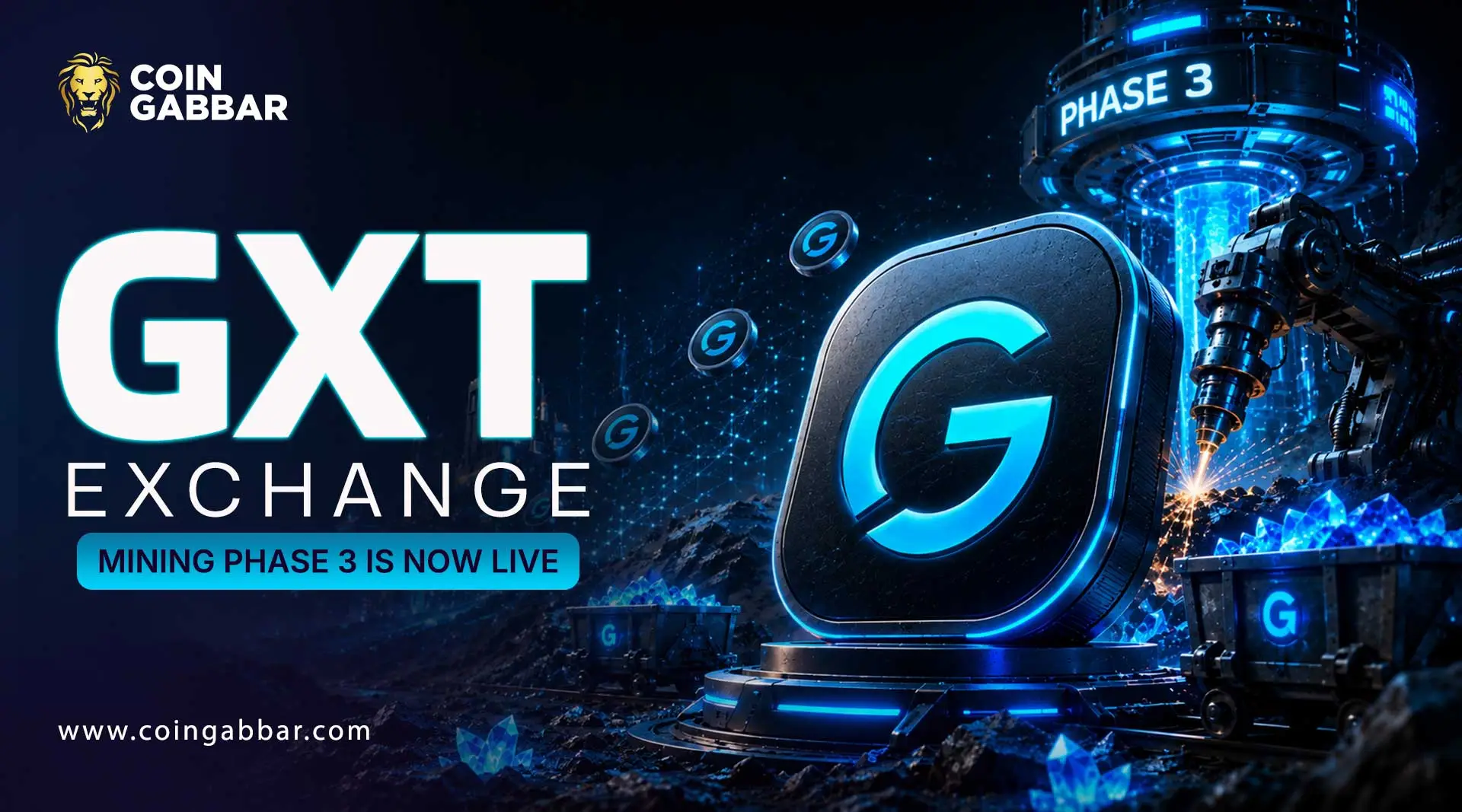
GXT Mining Phase 3: 10-Year Reserve Token Lock & Key Details
Crypto exchanges love to dress up ordinary sign-up bonuses as "mining programmes", and GXT Exchange Mining Phase 3 is the latest one asking for attention. The platform says it launched in 2026 and now serves customers across more than 180 countries with spot trading, futures, staking, a self-custody wallet, and a native utility coin called GXT.
Before anyone deposits a single rupee or dollar, it helps to know what this mining phase actually offers, how the token is split up, and where the real risk sits. Anyone comparing this to other early-stage projects can browse current crypto presale listings for context on how similar programmes are structured.
What Does GXT Exchange Actually Do?
GXT Exchange positions itself as a hybrid platform. It runs a centralised exchange for spot and futures trading, but it also layers in Web3 features like peer-to-peer trading, a self-custody wallet, and a launchpad programme for new token listings.
The stated mission is to make trading, custody, and on-chain activity more open while staying compliant with regulation. Readers unfamiliar with exchange jargon can check the crypto term dictionary for quick definitions of launchpad, self-custody, and P2P trading.
On the compliance side, the exchange claims to follow an AML and CTF framework built around the FATF Recommendations, the EU's AMLD6 directive, and the US Bank Secrecy Act. New users go through identity checks and sanctions screening before they can trade, and accounts flagged as higher risk face closer monitoring.
Suspicious transactions are supposed to be reported within the timelines set by local law, and records are kept for five years. Full detail on that US framework sits with the Bank Secrecy Act, for anyone who wants the primary source rather than the project's own summary.
GXT Tokenomics: Where the 300 Million Tokens Go
GXT is the exchange's native utility token, and the project caps total supply at 300 million tokens. According to the published token distribution schedule, 100 million tokens unlock at the Token Generation Event, which includes 30 million set aside specifically for mining rewards.
| Allocation | Tokens | % of Supply | Vesting |
| Community & Mining | 100,000,000 | 33.3% | 100% unlocked at TGE (includes 30M mining rewards) |
| Team & Advisors | 60,000,000 | 20.0% | Vested over 48 months |
| Liquidity & Market Making | 50,000,000 | 16.7% | Reserved for exchange liquidity, 0% at TGE |
| Private Investors | 30,000,000 | 10.0% | Vested over 48 months |
| Marketing & Operations | 30,000,000 | 10.0% | Vested over 48 months |
| Reserve | 20,000,000 | 6.7% | Locked for 10 years |
Community and mining rewards get the single largest slice, and all of it unlocks at once rather than trickling out over years. Team, private investor, and marketing allocations vest over four years, which is fairly standard for reducing early sell pressure. The liquidity bucket stays locked until the exchange needs it for market-making, and the reserve is untouched for a decade.
What Can You Actually Do With GXT?
The token isn't just a mining reward. GXT Exchange lists several use cases for holders: trading fee discounts of up to 50% on spot and futures markets, staking through the platform's Earn programme, access to the Launchpad for new token projects, voting rights on platform governance, mining rewards paid around the TGE, a planned buyback-and-burn mechanism, and a future payment card for spending crypto directly.
Some of these, the pay card and buyback programme especially are roadmap items, not live features yet. It's worth studying presale evaluation tips before treating any of these promises as guaranteed.
How to Join the Mining Programme
Getting into GXT Exchange Mining Phase 3 follows the same basic flow as most centralised exchanges. First, create an account using an email address and a secure password. Second, complete KYC verification, which is required before any deposits or withdrawals are allowed.
Third, fund the account through crypto or fiat P2P deposits, then start trading or participating in the mining programme. Users curious about similar reward programmes can also check ongoing airdrop programmes for comparison, though KYC completion here is worth flagging without it, funds can't move in or out, and mining rewards likely can't be claimed either.
What's Coming Next
GXT Exchange has laid out a fairly long roadmap. It includes the Token Generation Event itself, top-tier centralised exchange listings, DEX listings for deeper liquidity, on-chain governance voting, the buyback-and-burn mechanism, a dedicated Layer 1 blockchain, and OTC services for institutional clients.
A crypto debit card is also planned, reportedly free for the first 1,000 buyers in the Stage 1 presale. These remain project commitments rather than confirmed launches, and timelines on this kind of roadmap tend to shift. Investors watching for the launch can track the broader crypto events calendar for related listing announcements.
Risks to Consider
-
Market risk: token value can swing sharply, and losses are possible.
-
Leverage risk: futures trading can magnify both gains and losses.
-
Liquidity risk: thin trading volume can cause price slippage.
-
Technology risk outages or bugs could disrupt trading or withdrawals.
-
Regulatory risk rule changes in any operating country could affect access.
-
Counterparty risk: using a centralised exchange means trusting it with custody of funds.
-
Taxation risk gains from trading or mining may be taxable depending on jurisdiction.
Conclusion
GXT Exchange Mining Phase 3 fits the standard playbook for exchange-linked mining rewards: sign up, verify identity, fund the account, and earn tokens tied to a broader tokenomics structure. The 300 million token supply, the mining allocation, and the four-year vesting for team and investor tokens all suggest a reasonably structured plan on paper.
Disclaimer
This article is for informational and educational purposes only and is not financial advice. GXT Exchange's claims about its mining programme, tokenomics, and roadmap come from its own published materials and have not been independently verified.
Also read: