Orbaic Networks: From ACI Utility to AI Integration

What is Orbaic Networks? A Fresh Take on Layer 1 Infrastructure
Orbaic Networks is a decentralized Layer 1 blockchain ecosystem built to offer fast, scalable, secure, and accessible infrastructure for Web3 applications. It runs on Proof-of-Stake (PoS) consensus and is EVM-compatible, so developers can build with the same Ethereum-friendly tools they already know.
The Orbaic Networks project pitches itself as a high-performance blockchain, one meant to serve as the backbone for developers, validators, and decentralized applications alike.
What Sets It Apart?
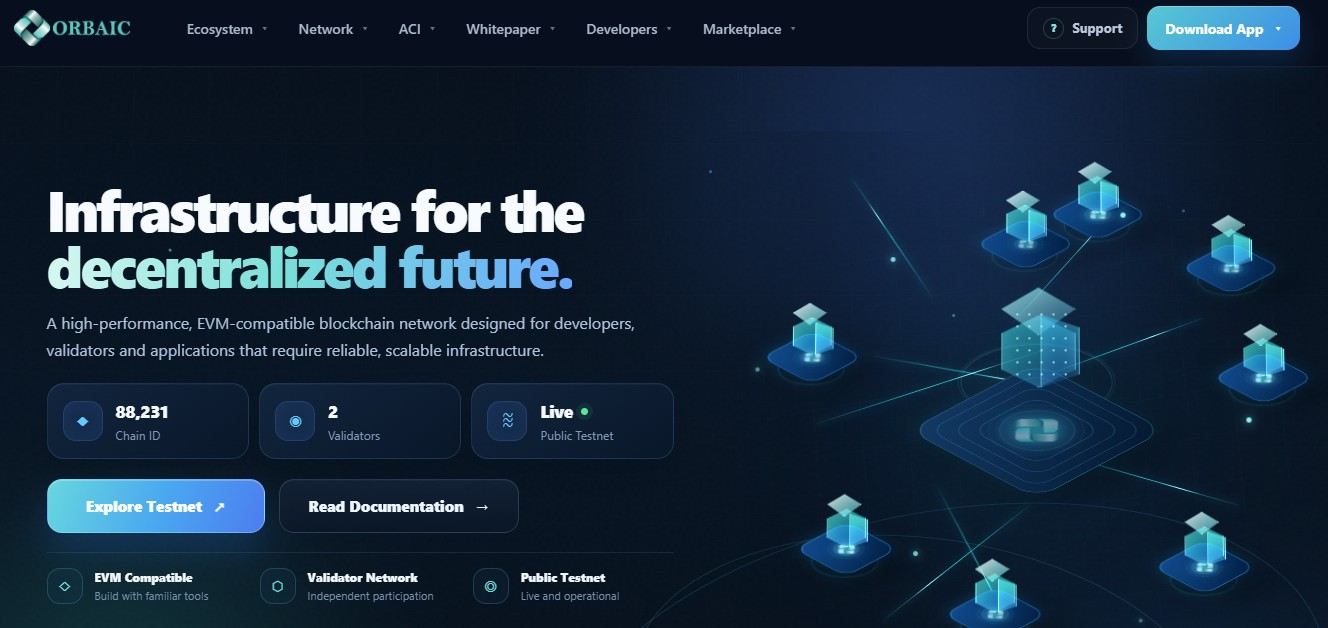
A Single-Layer Architecture: Rather than leaning on external protocols, Orbaic describes itself as a one-layer blockchain, keeping transaction processing contained within its own network.
Proof-of-Stake Consensus: The network validates transactions and produces blocks through Proof-of-Stake. Compared to older, energy-heavy approaches, the project claims this model is a more efficient way to do it.
EVM Compatibility: Because the current infrastructure is EVM-compatible, developers can build applications using familiar Ethereum-based tooling instead of learning something new from scratch.
A Developer and Validator Ecosystem: Independent validators can join the network, and the site backs this up with a validator network plus outside resources aimed at developers looking to get involved.
Features Worth Noting
Security-First Design: The project puts a lot of weight on protecting users through multi-layer network security.
A Zero-Fee Vision: It talks up a vision of zero transaction fees, something worth verifying against the current network documentation since terms like this can shift.
Mobile Mining: There's a mobile mining ecosystem too, with apps listed for both Android and iOS on the official site.
Portable Payments: Digital payments that travel with the user are framed as part of the broader practical-use vision.
Developer Resources: Documentation, a developer portal, public endpoints, GitHub resources, and validator onboarding tools round out what's offered to builders.
ACI: What's It Actually For?
ACI is the native asset powering the Orbaic Networks. Based on the project's own documentation, its roles break down like this:
Transaction Utility: It covers network transactions.
Smart Contracts: It acts as the native asset within smart contracts.
Network Participation: It's used to incentivize participants.
Mining Ecosystem: It rewards network participants as part of the mining setup.
Future Ecosystem Services: There are plans to extend its utility into a marketplace and other applications down the line.
What Can Actually Be Built Here?
The Orbaic Network is designed with several Web3 use cases in mind.
Smart Contracts let developers create programmable, self-executing applications and agreements.
DeFi is on the roadmap too, with plans for lending, borrowing, liquidity, and yield-related services.
NFTs get their own place in the plan, an ecosystem where users can trade ACI for NFTs and, potentially, move those NFTs across other blockchain networks.
Digital Assets and a Marketplace: The current site lists P2P trading, an NFT marketplace, tokenized digital assets, and merchant payments among its products, though a number of these are still marked "Coming Soon."
Why the AI Angle Is Interesting
What makes Orbaic Networks stand out a bit is its AI integration roadmap. Down the line, the project talks about Layer 1 functionality paired with partnerships involving AI leaders.
It's an interesting mix, blending mobile participation with Layer 1 infrastructure so that users engage through mobile mining while, at the same time, helping build out validator infrastructure.
The Roadmap: From Blockchain to AI
The published Orbaic roadmap breaks down into four phases.
Phase 1, Foundation: It centers on mobile mining apps, ecosystem development, ACI token generation, and fundraising.
Phase 2, Network Development: Shifts focus toward the testnet, the NFT ecosystem, Web3 and smart contracts features.
Phase 3, Expansion: This is where mainnet deployment happens, alongside interoperable chains, DeFi integration, and global growth efforts.
Phase 4, Ecosystem Growth: Here, the emphasis lands on token distribution, exchange listings, strategic partnerships, and AI integration. The most recent update on Phase 4 progress was dated June 17, 2026.
What's Coming to the Ecosystem
This part of the Orbaic Networks site lists P2P trading, an NFT marketplace, digital assets, and merchant payments, though several of these are still tagged "Coming Soon" for now.
Worth pointing out: the project doesn't see blockchain transactions as the end goal. It's clearly aiming for something broader, one that folds in payments, digital assets, applications, and other Web3 services along the way.
Wrapping Up
Orbaic Network is building a scalable, developer-friendly Layer 1 ecosystem on Proof-of-Stake consensus with EVM compatibility.
Between its focus on developers, validators, decentralized apps, digital assets, DeFi, NFTs, and the AI integration planned for later, the project is positioning itself as more than just another blockchain; it's aiming to be a wider piece of Web3 infrastructure.
Whether that vision holds up will come down to adoption, how the ecosystem actually grows, and whether the planned features get delivered on schedule.
Conclusion
Orbaic Network is developing a PoS-based, EVM-compatible Layer 1 ecosystem focused on scalability, security, developer accessibility, and decentralized participation. Its native asset is ACI, and it plays an important role in transactions, smart contracts, system participation, and rewards.
Orbaic Network’s roadmap is interesting because it moves from a mobile mining foundation -> testnet and Web3 tools -> mainnet and DeFi -> token distribution, partnerships, and AI integration. It aims to connect these areas through the project's blockchain infrastructure, broader Web3, and future AI.
Disclaimer
This article is for informational purposes only and should not be considered financial, investment, trading, or legal advice. Information about Orbaic Network, ACI, its roadmap, token utility, and planned features may change as the project develops. Readers should conduct their own research and verify information through official Orbaic sources before making any investment or financial decision.








.webp)