Worldcoin Explained 2026: Full Update and Guide

Worldcoin Explained 2026 : WLD Tokenomics and Supply Explained
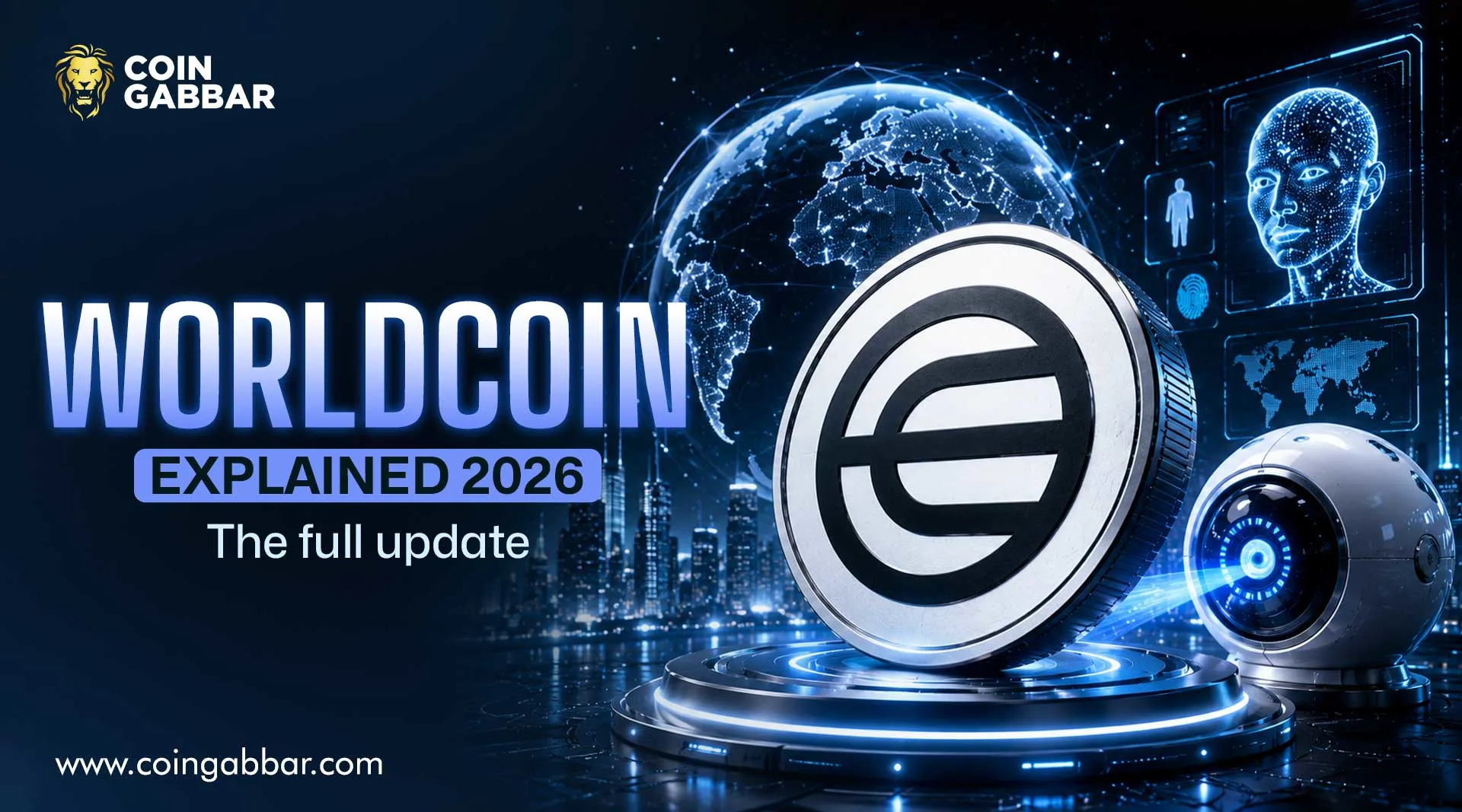
Few crypto projects have generated as much debate as Worldcoin explained 2026 is now simply called World.
Co-founded by OpenAI CEO Sam Altman, the project set out with an ambitious goal: build a global system that proves someone is a real, unique human being, without forcing them to hand over personal information every time they go online.
This breaks down exactly where the project stands today, well past its early "scan your eyes, get free crypto" reputation. It now sits at the intersection of digital identity, blockchain infrastructure, and the fast-growing of AI agents. Below, we cover its core products, tokenomics, full roadmap, and how it stacks up against the crypto giants it's often compared to.
What Is Worldcoin ?
The Worldcoin platform is built around four connected pillars:
World ID is a privacy-preserving credential that proves a user is a unique human, using zero-knowledge proofs so no personal data actually needs to be shared.
WLD App: the wallet and main access point for managing identity, assets, and mini apps.
World Chain, an Ethereum Layer 2 network designed specifically around verified human users.
WLD the ecosystem's native token.
Verification that happens through is called the Orb, which scans a person's iris and generates a cryptographic proof of uniqueness without storing an identifiable image.
That proof can then be reused across supported apps, letting a platform confirm "this is a real, unique human" without collecting any further personal details.
How World ID Fits Into Everyday Apps
This is where the Worldcoin Explained 2026 story has quietly become more relevant. Verified ID holders on Chain get priority blockspace and free gas allowances, giving the network a practical incentive layer that goes beyond simple token speculation, according to data tracked by MetaMask's price page.
On the partnership side, adoption has picked up noticeably through 2025 and into 2026. Reporting from Rest of notes that struck integration deals with Tinder, Zoom, and DocuSign in April 2026 to help those platforms verify real users, even as the biometric ID system remains banned or under investigation in several countries.
Other integrations tracked by industry analysts include Razer on the gaming side, Match Group in dating, an upcoming Visa debit card project, and Coinbase, which expanded WLD trading access in the US.
WLD Tokenomics
Back in July 2023, WLD launched with a hard cap of 10 billion tokens. Most of that supply, a full 75%, was set aside for the World Community, while the rest got split between Tools for Humanity's investors, the core team, and a reserve fund.
The biggest tokenomics headline out of 2026, though, is the cut to the unlock rate.
Starting July 24, 2026, protocol reduced daily token emissions by 43%, automatically slowing the pace at which new WLD enters circulation, a move aimed squarely at easing sell pressure on the token.
Detail | Value |
|---|---|
Token | WLD |
Launch date | July 24, 2023 |
Initial max supply | 10 billion |
Community allocation | 75% |
2026 unlock cut | 43% (from July 24, 2026) |
Worldcoin's 2026 Roadmap
The roadmap has shifted noticeably from "sign up more verified users" to "become infrastructure other companies build on." The major milestones this year include:
World ID 3.0 (April 2026): A significant upgrade introducing account-based architecture, secure key rotation, account recovery, and session management, making World ID more portable and enterprise-ready.
Token unlock reduction (July 2026): The 43% cut to daily emissions.
World Chain scaling (2026–2030): As things scale up, expect throughput to climb, the list of mini apps to keep growing, and WLD to work its way deeper into how the network actually runs.
AI agent verification tools: New infrastructure built specifically to tell real humans apart from AI agents and bots online.
Enterprise and consumer integrations: The rollout keeps expanding gaming, dating, payments, and identity-verification partners, which are all in the mix.
World vs Bitcoin, Ethereum, and Solana
Feature | World | Bitcoin | Ethereum | Solana |
Core focus | Human identity + blockchain | Digital money | Smart contracts | High-speed apps |
Native token | WLD | BTC | ETH | SOL |
Built-in proof of humanity | Yes. | No | No | No |
Blockchain | World Chain | Bitcoin | Ethereum | Solana |
AI/bot-resistant focus | High | Low | Ecosystem-dependent | Ecosystem-dependent |
Bitcoin remains focused on being decentralized money. Ethereum provides the base layer for smart contracts and DeFi tokens . Solana is optimized for speed and throughput.
The differentiator is that none of these networks has a native, built-in way to verify that a crypto wallet belongs to an actual, unique human, which is exactly the gap the world is trying to fill.
World and the AI Agent Problem
As AI agents increasingly browse, transact, and act autonomously online, websites face a new challenge: telling human traffic apart from a legitimate AI agent or an outright bot.
This is exactly where the WLD conversation is headed. World is positioning World ID as a proof-of-human layer for this scenario, giving developers tools to verify whether a request is coming from a real person, an authorized agent, or something else entirely.
If AI-driven traffic keeps growing the way it has, this could become one of the project's most important long-term use cases, and a big reason why Worldcoin Explained 2026 keeps coming up whenever people talk about the future of online identity.
Risks Worth Knowing
The still carries real risk, and any honest has to reckon with that. Regulatory scrutiny over biometric data collection has already led to bans and investigations across multiple countries, according to Rest of World's reporting.
Privacy advocates haven't stayed quiet either. NSA whistleblower Edward Snowden is one of several voices who've openly pushed back against the iris-scanning model. Then there's the other layer of uncertainty, token supply dynamics, WLD price volatility, and simply how hard it can be to get your hands on an Orb in the first place.
At the end of the day, it won't be verified-user counts that decide World ID's fate; it'll be whether real businesses actually adopt it. That's the question any serious worldcoin Explained 2026 conversation keeps circling back to.
Final Thoughts
This story is really about a pivot: from a crypto airdrop project to an identity infrastructure layer aimed at the AI era.
World ID 3.0, the WLD unlock cut, World Chain's expansion, and a fast-growing partner list all point in the same direction, proof of humanity becoming a practical, everyday tool rather than a novelty.
Whether it succeeds now depends less on how many people scan their iris and more on whether developers and platforms actually build on top of it.
Disclaimer:This is written purely for informational purposes and isn't financial, investment, or legal advice. Worldcoin and WLD, like most crypto assets, come with real volatility.
Prices can swing sharply within just a few hours, and what's happened before is never a promise of what comes next.
Regulatory rules around biometric verification and digital identity are also still evolving in a lot of countries, so whatever's true today about ID or WLD could easily change without much warning.